Turn any garment inside out and the seams tell you how it was made, how it will wear and how easy it will be to alter.
This guide covers the main types of seams in clothing: what each one is, how to spot it on the inside of a garment, and why it matters when you are thrifting or planning an alteration. If you are about to shorten a pair of trousers, our How to Hem Pants guide is the practical companion to this one, since hems and seams meet at the bottom of every leg.
The word is old. According to the Online Etymology Dictionary, “seam” comes from Old English, meaning a “junction made by sewing together the edges of two pieces of cloth”, from a Proto-Indo-European root meaning “to bind, sew”. A seam is built from stitches, so if the stitch names below are new to you, start with our Types of Stitches guide.
Seam types at a glance
| Seam | Key feature | Typically found on |
|---|---|---|
| Plain seam | Two layers sewn face to face, raw edges inside | Most garments |
| Overlocked seam | Plain seam with serged, looped edges | Mass-produced clothing |
| French seam | Raw edges fully enclosed in a narrow tube | Sheer blouses, lingerie, fine dresses |
| Flat-felled seam | Folded, interlocked and topstitched flat | Jeans, work shirts |
| Bound seam / Hong Kong finish | Raw edges wrapped in binding | Unlined jackets, coats |
| Topstitched seam | Extra stitching on the outside | Denim, workwear |
| Lapped seam | One layer overlaps the other | Leather, suede, felt |
| Princess seam | Curved shaping seam on the front or back | Fitted dresses, blouses, jackets |
| Seamless knitting | Body knitted in the round | Traditional ganseys, some knitwear |
Everyday seam types
Plain seam
Wikipedia’s seam article calls the plain seam “the most common type of machine-sewn seam”. It “joins two pieces of fabric together face-to-face”, leaving a seam allowance with raw edges inside. Spot it: a single line of stitching on the outside and two flaps of fabric inside, often pressed open or to one side. Thrift note: wide seam allowances leave room to let a garment out, while narrow ones do not.
Overlocked (serged) seam
Per the same article, on mass-produced clothing seam allowances “are usually finished with an overlock stitch using a serger, which trims the seam allowance as it stitches.” Spot it: a band of looped thread wrapping the raw edges inside. Thrift note: check that the loops are complete along stress points; fuzzy or broken serging is where fraying starts.
Princess seam
A commonly used term for curved seams that run from the shoulder or armhole down the front or back, shaping a garment without darts. Spot it: long curved lines on the bodice of a fitted dress or jacket. Thrift note: these seams give a tailor more places to take a piece in.
Enclosed and reinforced seams
French seam
According to Wikipedia, in a French seam “the raw edges of the fabric are fully enclosed for a neat finish.” It is first sewn wrong sides together at a 1/4-inch seam allowance, trimmed to 1/8 inch, then folded and sewn again so the first seam is trapped inside. Spot it: a narrow, clean tube of fabric inside the garment with no raw edges or serging. Thrift note: French seams on a sheer blouse or slip are a common sign of careful construction.
Flat-felled seam
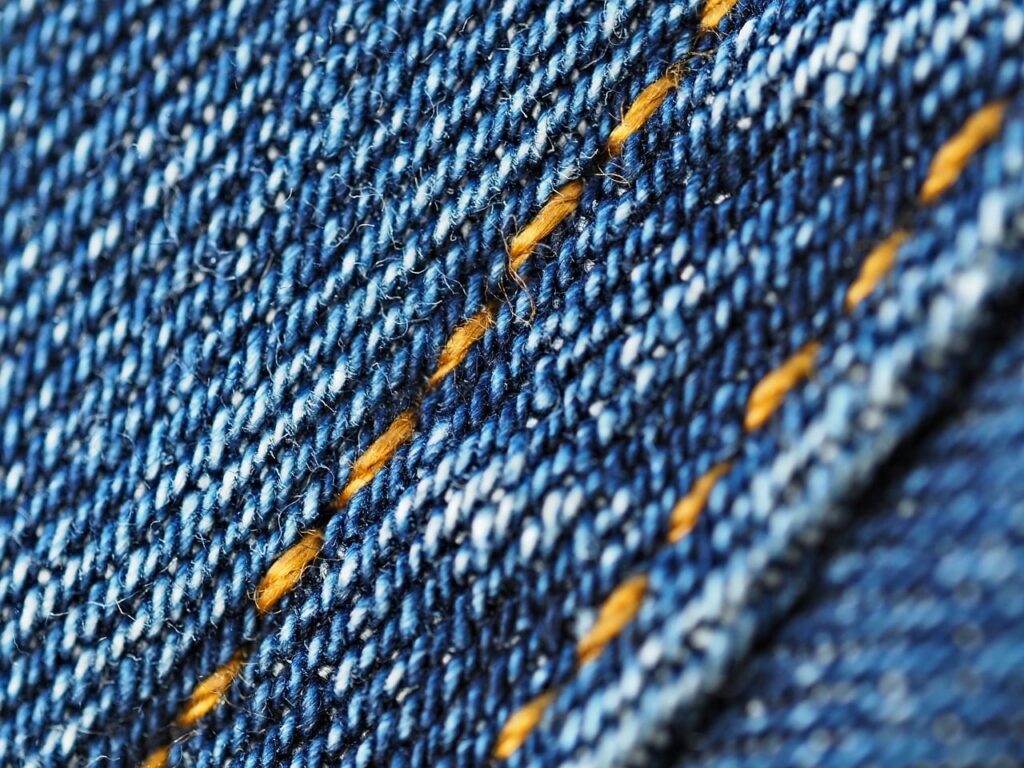
Wikipedia describes the flat-felled seam as a reinforced, folded seam found in the “inseam, yoke, and crotch seam of jeans”. Spot it: two parallel rows of stitching on the outside with the edges folded into each other, so no raw edge shows on either side. Thrift note: this seam is built to take strain, which is one reason it is common on denim. Our What Is Denim? Twill Weave, Indigo and How Jeans Fade guide covers the fabric side, and How to Hem Jeans and Keep the Original Hem explains why the thick seam at the hem needs care.
Bound seam and Hong Kong finish
In a bound seam, per Wikipedia, the raw edges are enclosed in a strip of folded binding made of fabric, lace or net. The Hong Kong finish is a commonly named variant. Spot it: a narrow strip of contrast fabric wrapped around each seam allowance, often inside unlined jackets. Thrift note: bound seams suggest a piece was made to look tidy inside, which matters on anything you will wear open.
Topstitched and triple-stitched seams
A topstitched seam adds rows of visible stitching on the outside to hold allowances flat and add strength. Carhartt, for example, describes its R01 duck bib overalls as having “triple-stitched main seams”. Spot it: parallel lines of stitching, often in contrast thread. Thrift note: look for straight rows without skipped stitches, especially on Carhartt Jackets for Men and other workwear.
Lapped seam
A commonly used term for a seam where one layer overlaps the other and is stitched flat, often used on materials that do not fray, such as leather, suede and felt. Spot it: one edge laid on top of another with stitching near the edge.
Seamless construction
Some knitwear avoids side seams altogether. The V&A’s Staithes gansey, a fisherman’s jersey, was worked in the round without side seams, in “vertical panels with alternate cable and double moss stitch”. See our Types of Knits guide for more on knitted construction.
How to check seams when thrifting
- Turn the garment inside out.
- Look at the side seams and note the finish: serged, French, bound or flat-felled.
- Pull gently on each seam at the underarms, crotch and pocket corners.
- Check for gaps, broken thread or fraying at the edges.
- Look at the seam allowance width if you plan to let the piece out.
These steps are a common method rather than an official standard. A small split in a plain seam is often a quick fix with a backstitch; a Hand Sewing Kit on Amazon covers most of these repairs, and a Seam Ripper on Amazon makes it easier to unpick and resew neatly. The 5/8-inch seam allowance you may see in home-sewing patterns is common usage rather than a universal rule, so measure the actual allowance before planning an alteration.
Top-selling match on Amazon
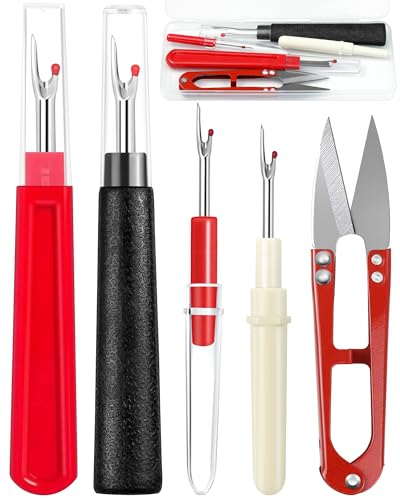
- Versatile Seam Ripper: Expertly crafted for durability, these seam rippers feature a red mini protection…
- Wide Application: Ideal for a variety of applications, this set is perfect for sewing, DIY crafts…
Top-selling match on Amazon

- ✅ Mini Hand Sewing Kit, Ready When You Need It: 18 thread colors at 33 yards each, plus…
- 🧵 Built for Hand Repairs, No Machine Needed: reattach a button, close a popped seam, take up a…
Types of seams FAQ
What is the most common type of seam?
The plain seam, which Wikipedia calls the most common machine-sewn seam. On mass-produced clothing its edges are usually overlocked.
What is the difference between a French seam and a flat-felled seam?
Both enclose raw edges. A French seam tucks them inside a narrow tube on the wrong side and suits fine fabrics. A flat-felled seam folds the edges into each other and stitches them flat, showing two rows of stitching outside, and is used on jeans.
Do better clothes have better seams?
Seams are one useful clue, not a guarantee. Enclosed or bound seams, straight stitching and generous allowances are common signs of care. Fabric, fit and condition matter too; see Types of Fabric.
Where do seams meet hems?
At every sleeve and leg opening. Our Types of Hems guide covers the finishes used there.
How do you fix a split seam by hand?
Turn the garment inside out, pin the two edges together along the original seam line and sew over the gap with a small backstitch. Start a little before the split and finish a little past it so the new stitches overlap the intact ones, then knot the thread securely on the inside. Match the thread colour to the fabric. If the serged edge has frayed, trim loose threads first, and leave seams on lined tailoring to a tailor.
Shop the look on Amazon
Everything you need to build a secondhand-style wardrobe, delivered. We may earn a commission on purchases.