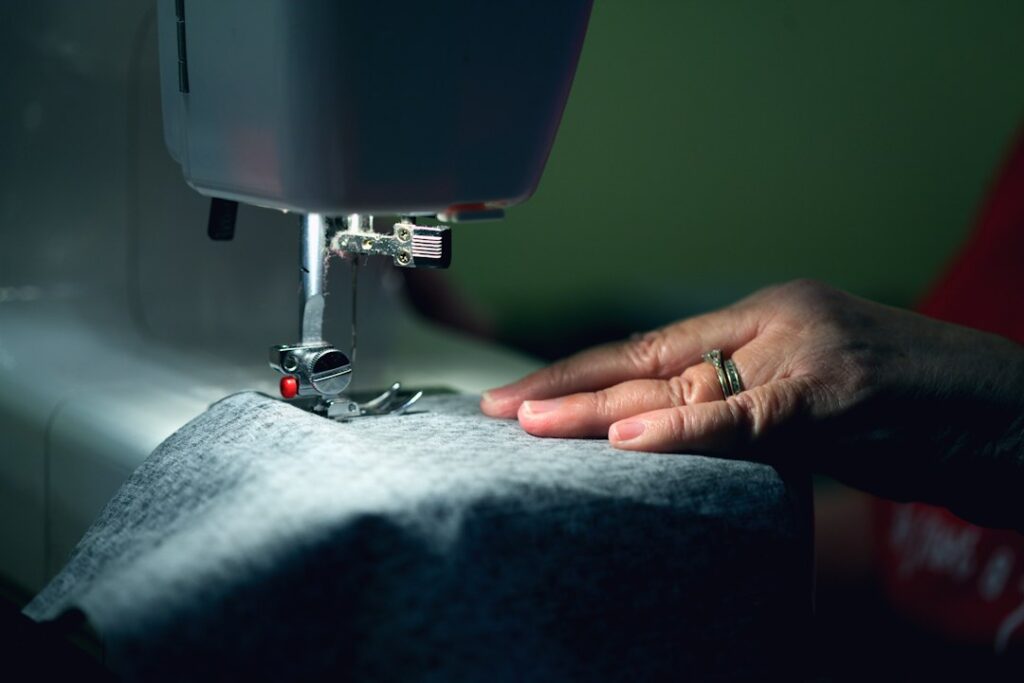
Pants that are a little too long are one of the easiest fit problems to fix, and you have three good options: sew the hem by hand, run it through a machine, or press it up with fusible hem tape.
This guide shows how to hem pants and trousers at home, step by step, with the core technique drawn from New Mexico State University (NMSU) Extension’s guide to making garment hems. It covers marking the length, a hand blind hem, a machine blind hem, how to hem pants without sewing using hemming tape, and the jobs worth handing to a tailor. Deciding how long you want them is the first step, so for jeans in particular see our How Long Should Men’s Jeans Be? Length Guide by Style guide before you cut anything.
Step 1: Decide the finished length
Hemming is easy to do and hard to undo once fabric is cut, so take your time on the length.
- Put the pants on, along with the shoes you plan to wear with them most.
- Stand straight in front of a mirror.
- Fold the hem under at each leg until it lands where you want it on the shoe.
- Pin the fold in place at the front, back and sides of each leg.
- Take the pants off and measure the new length from the crotch seam to the fold. This is your finished inseam.
- Check that both legs measure the same, unless your legs differ and you want them to.
If you know your inseam already, you can mark the length with a ruler instead. Our How to Measure Inseam (for Pants and Jeans) guide explains how to find it on a pair that already fits. Length choices such as a full break, slight break or no break are personal style, not rules.
Step 2: Decide the hem depth
According to NMSU Extension, pants and jacket hems are usually 1 to 2 in (2.5 to 5 cm) deep, while skirts, dresses and coats are usually 2 to 3 in. For trousers, that means you need the finished length plus 1 to 2 in of fabric to turn up, plus a little extra if you plan to fold the raw edge under.
- Lay the pants flat, inside out.
- Mark the finished length line with chalk on each leg.
- Measure down from that line by your chosen hem depth and mark a cutting line.
- Cut along the cutting line, keeping it parallel to the finished length line.
- Finish the raw edge so it will not fray. Common methods are zigzag stitching, an overlocker (serger), or turning the edge under a short way and pressing.
- Fold the hem up along the finished length line and press it with an iron.
- Pin the hem in place, matching the side seams of the hem to the side seams of the leg.
A Sewing Hem Gauge And Tailors Chalk on Amazon makes it much easier to keep the hem depth even all the way around the leg.
Method A: Hand blind hem stitch
The hand blind stitch, which NMSU Extension notes is also called a tailor’s hem, is the classic finish for dress trousers. Done well, the stitches do not show from the right side. NMSU describes it as suited to non-stretch, non-ravelling fabrics.
NMSU’s guidance: with the raw edge finished, work small horizontal stitches between the garment and the hem, 1/8 to 1/4 in from the edge and about 1/4 to 1/2 in apart, without pulling the thread tight. When hand hemming, pick up only one thread of the garment fabric with each stitch, and lock the stitches every 12 in or so.
- Thread a fine hand-sewing needle with a single strand of thread matched to the fabric, and knot the end.
- Fold the top edge of the pinned hem back toward the right side by about 1/4 in, so the garment fabric is exposed just above the hem.
- Bring the needle out through the hem allowance, just below its edge, so the knot sits out of sight inside the fold.
- Pick up a single thread of the garment fabric just above the hem.
- Move along about 1/4 to 1/2 in and take a small stitch through the hem allowance.
- Pick up another single thread of the garment fabric.
- Continue around the leg, alternating between garment and hem, keeping the thread relaxed.
- Every 12 in or so, take a small locking stitch in the hem allowance.
- When you reach the start, lock the thread with a few small stitches in the hem allowance and trim.
- Unfold the hem edge, press lightly from the inside, and check the right side for visible stitches.
Method B: Machine blind hem
Many sewing machines have a blind hem stitch and foot. NMSU Extension describes a machine blind hem as durable and fairly inconspicuous, and suited to sportswear in sturdy fabrics. It recommends taking as narrow a “bite” into the garment as possible.
- Prepare and press the hem as in Step 2.
- Fold the hem back toward the right side so only a small edge of the hem allowance sticks out.
- Fit the blind hem foot and select the blind hem stitch.
- Practise on a scrap of the same fabric first.
- Line up the fold against the foot’s guide.
- Sew slowly around the leg so the zigzag part of the stitch just catches the fold.
- Unfold the hem and press it flat.
For casual pants, a simple straight-stitch hem sewn from the right side is another common method. It shows on the outside, which suits chinos and work pants but looks out of place on dress trousers.
Method C: How to hem pants without sewing (hemming tape)
Fusible web, sold as hemming tape, is a heat-sensitive adhesive that bonds fabric when you apply heat, moisture and pressure. It is a quick option for people who do not sew. NMSU Extension gives several practical rules for using it:
- Test on a scrap of the fabric first.
- Press with the iron; do not slide it.
- Keep the web at least 1/4 in from the cut edge.
- Use strips 3/4 to 1 in wide, or 2 in for heavy fabrics.
- Do not use it on sheers or laces.
- Mark and cut the hem as in Steps 1 and 2.
- Fold the hem up and press a sharp crease along the finished length.
- Open the fold and lay a strip of hemming tape inside, at least 1/4 in below the cut edge.
- Fold the hem back down over the tape.
- Cover with a damp pressing cloth.
- Press the iron down firmly for the time the tape’s packaging gives, then lift and move to the next section without sliding.
- Let the hem cool fully before handling or wearing.
A roll of Iron On Hemming Tape For Pants on Amazon is inexpensive. Check the garment’s care label before using heat; our How to Iron a Shirt in 7 Steps guide covers reading iron settings, and the label always has the final word. Fusible hems are less durable than stitched ones through many wash cycles, and they are harder to let down later.
Top-selling match on Amazon

- Convenient Iron-On Application: Experience the convenience of iron hem tape adhesive! No need to sew; just apply…
- No Sew Solution: Say goodbye to sewing stress with hem tape no sew! This innovative adhesive tape is…
- Temporary Hemming Solution: Suitable for temporary hem tape needs, our product ensures your pants, dresses, and…
How to hem trousers vs jeans
The methods above suit most trousers, chinos and casual pants. Jeans are different: the thick denim hem is usually sewn with heavy topstitching, and many people want to keep the factory fade at the hem. Our How to Hem Jeans and Keep the Original Hem guide covers the common original-hem method in detail.
When to see a tailor
A plain hem on unlined trousers is a reasonable home project. It is common practice to take these jobs to a tailor instead:
- Lined trousers, where the lining has to be hemmed separately.
- Cuffed (turn-up) trousers, which need extra fabric and careful pressing.
- Tapering the leg or changing the waist.
- Suit trousers and anything on a suit, where the trousers and jacket should match in finish.
- Expensive or delicate fabrics where a mistake would be costly.
A tailor will usually pin the length while you wear your shoes. Bring the shoes you plan to wear, and say what kind of break you prefer. For dressier outfits, our Men’s Formal Wear guide covers how trousers fit into the bigger picture.
Common mistakes
- Cutting before pinning. Always pin and check the length while wearing the shoes before you cut.
- Uneven hem depth. Measure from the fold at several points around the leg.
- Pulling hand stitches tight. NMSU notes blind stitches should not be pulled tight, or the hem puckers and shows from the right side.
- Sliding the iron on hemming tape. Press and lift, as NMSU advises.
- Using fusible tape on sheer fabric. NMSU says it is not suitable for sheers and laces.
- Skipping the edge finish. Unfinished raw edges fray inside the hem.
Thrift note
Secondhand trousers are often a size or two too long, and they are often priced low enough that a home hem is worth trying. Before buying, check the inseam with a tape measure, and if you want to lengthen a pair, look for a deep hem allowance inside the leg. Pair this skill with How to Sew a Button and most small faults on thrifted pants become quick fixes.
Frequently asked questions
How deep should a pants hem be?
NMSU Extension says pants and jacket hems are usually 1 to 2 in (2.5 to 5 cm) deep. Skirts, dresses and coats are usually 2 to 3 in.
Can I hem pants without sewing?
Yes. Fusible hemming tape bonds the hem with heat, moisture and pressure. NMSU advises testing on scrap fabric first, pressing rather than sliding the iron, and not using it on sheers or laces.
What is a blind hem stitch?
A blind hem stitch catches only a thread or two of the garment fabric so the stitches do not show on the right side. NMSU Extension notes the hand version is also called a tailor’s hem.
Is a hand hem or a machine hem better?
Both work. NMSU describes the hand blind stitch as suited to non-stretch, non-ravelling fabrics, and the machine blind hem as durable and fairly inconspicuous for sportswear in sturdy fabrics.
How much does it cost to hem pants at a tailor?
Prices vary widely by city and by the job. Plain hems usually cost less than lined, cuffed or original-hem jobs. Ask for a quote before leaving the pants.
How do I hem pants with a cuff?
Cuffed trousers need extra fabric folded and pressed in a specific way. It is a common job to take to a tailor, especially on dress trousers.
Can you make pants longer by letting down the hem?
Pants can be lengthened only by the amount of fabric folded up inside the existing hem, so check the hem allowance on the inside of the leg first. Unpick the old stitching, press the fabric flat, mark the new finished length, finish the raw edge and sew a shallower hem. The old fold line often stays visible, especially on darker or faded fabrics, and steam pressing with a damp cloth can soften it. A faced hem using a separate strip of fabric can gain a little extra length.
Shop the look on Amazon
Everything you need to build a secondhand-style wardrobe, delivered. We may earn a commission on purchases.