A denim jacket is one of the few pieces that works across seasons, decades and dress codes. The trick is matching the fit, length and wash to how you actually dress.
Few garments earn their keep like a good denim jacket. It layers over a summer dress, sits under a wool coat in winter, and looks equally right with tailored trousers or worn-in jeans. But “denim jacket” covers a wide range of shapes, weights and colors, and the version that flatters one person can swamp another. This guide walks through every decision that matters, so you can choose a jacket you will reach for rather than one that lives at the back of the wardrobe.
Why the denim jacket is a wardrobe staple
The appeal is durability plus versatility. Denim is a hard-wearing cotton twill that softens with age instead of falling apart, and the jacket silhouette has stayed recognisable for a century. That longevity is also why the category is so deep: you will find everything from a slim fitted denim jacket to a slouchy oversized jean jacket, and the label on the rack rarely tells you which you are holding.
The four decisions that matter
Before you shop, settle four things: fit (how close it sits to the body), length (where the hem lands), wash (the depth and tone of the blue), and weight (how heavy and structured the fabric feels). Get those right and almost any classic jean jacket will work. Get them wrong and even a well-made piece feels off. Everything below is organised around those four levers.
Fit and silhouette
Fit is the single biggest driver of how a jacket reads. The same wash looks polished in a structured cut and casual in a boxy one. There are five common silhouettes worth knowing.
Fitted and structured
A structured denim jacket nips in slightly at the waist and holds its shape, which reads tidy and works well under a coat or over a dress. It is the most “put together” of the options and the easiest to wear to work.
Classic and boxy
The classic trucker sits straight up and down with a hint of room, the shape most people picture. A boxy or drop-shoulder denim jacket takes that further, with dropped seams and a square hem for a relaxed, current look.
Oversized and cropped
An oversized cut is deliberately roomy and layers over knitwear, while an oversized black jean jacket gives the same slouch in a moodier color. At the opposite end, a cropped jean jacket or short jean jacket ends near the waist to lengthen the leg and pair neatly with high-rise bottoms.
| Silhouette | How it sits | Best for |
|---|---|---|
| Fitted | Close, slight waist shaping | Layering under coats, a tidy look |
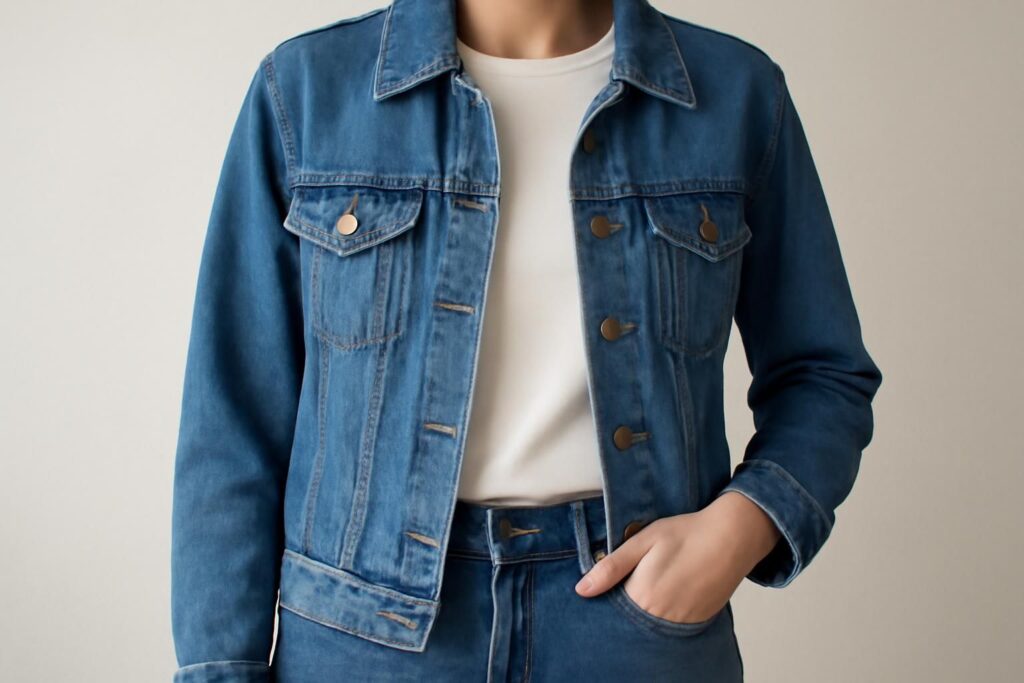
| Classic trucker | Straight with light ease | Everyday wear, most body types |
| Boxy / drop-shoulder | Square, relaxed shoulders | Current, casual styling |
| Oversized | Roomy, made to layer | Over knits, streetwear looks |
| Cropped | Ends at or above the waist | High-rise bottoms, longer leg line |
Top-selling match on Amazon

- Classic Denim Fabric: Crafted from comfortable cotton denim that is medium weight, soft, and breathable…
- Distressed & Oversized Design: Features a loose boyfriend-style silhouette with dropped shoulders for a relaxed…
- Advanced Layering Piece: The ultimate layering core for your wardrobe. Layer it over simple tees, tanks, or…
Length: where the hem lands
Length changes proportion as much as fit does. A shorter jacket draws the eye up and lengthens the legs; a longer one covers the hips and reads more like a coat.
Cropped and hip-length
Cropped hems stop at the natural waist and flatter anyone who wants to emphasise leg length. A hip-length denim jacket is the traditional trucker length, ending right at the hip bone, and it suits nearly everyone.
Mid and long
A mid-length denim jacket or medium-length style falls a few inches below the hip and offers more coverage without the bulk of outerwear. A long-length denim jacket reaches the thigh and blurs into denim coat territory, which is a strong choice when you want one layer to do the work of a jacket and a coat.
| Length | Where it ends | Effect |
|---|---|---|
| Cropped | Waist or above | Lengthens the leg, pairs with high-rise |
| Hip-length | At the hip | Balanced, the classic default |
| Mid-length | Below the hip | More coverage, still casual |
| Long | Thigh or lower | Coat-like, warmer, more formal |
Top-selling match on Amazon

- Women's jean jacket is made of 100% cotton, soft and comfortable fabric, durable denim offers…
- Constructed with cozy in mind, this women's jean jackets has a classic fit. Collar, two chest…
Washes and colors
Wash sets the mood. The same shape can look rugged, polished or playful depending on the depth of the indigo and how it is finished.
Dark, mid and light
A dark-wash denim jacket is the most versatile and the most refined; it dresses up easily and reads almost like a blazer with trousers. Mid-wash is the friendly everyday middle ground, and light wash leans casual, summery and vintage-inflected.
Black, white and cream
Black and white are the neutral alternatives to blue. A cream denim jacket or cream jean jacket is soft and warm-toned, flattering against most skin tones and easy to style with tan and camel.
Colored and distressed
A coloured denim jacket brings a wardrobe some personality, while distressing adds worn-in character. A cropped distressed style pairs a shorter cut with faded, frayed detailing for a lived-in feel. If you want something with more visual interest, browse the more unusual denim jackets and cute jean jackets edits for prints, patches and unexpected finishes.
Fabric weight and stretch
Denim is sold by weight, usually in ounces per square yard. Heavier denim (around 12 oz and up) is stiffer, warmer and holds a crisp shape, which is why structured jackets tend to use it. Lighter denim drapes softly and suits warmer weather.
Lightweight and summer options
A lightweight jean jacket or summer-weight jacket uses a thinner cotton so you can layer without overheating. A pure cotton denim jacket with little or no stretch ages beautifully but has less give at first.
How much stretch you want
A small amount of elastane makes a fitted jacket more comfortable through the shoulders and arms, which matters if you plan to wear it buttoned. Rigid, non-stretch denim looks sharper and moulds to you over time, but size it with a little room if you want to layer underneath.
Lined and sherpa versions for cold weather
Denim on its own is windproof but not especially warm. Lining changes that. The classic cold-weather version is a sherpa jacket, where a fleece pile lines the body and often the collar.
Sherpa and fleece linings
A sherpa denim jacket adds real insulation while keeping the trucker shape, and a sherpa-lined version works as genuine outerwear from autumn through early spring. Because the lining adds bulk, size up if you want to wear a thick sweater beneath it.
When to choose a denim coat instead
If you need serious warmth and coverage, a denim coat or a plus-size denim coat option gives you length and weight in one piece. Think of it as the jacket’s outerwear sibling for the coldest months.
Choosing for your body and proportions
There is no single flattering shape; there is only the shape that balances your proportions. Use fit and length together to create the line you want.
By height and frame
If you are shorter, a cropped or hip-length cut keeps the torso from looking cut in half. A petite jean jacket is worth reading up on before you buy, because petite sizing shortens sleeves and body length in the right places. Taller frames can carry longer and oversized cuts with ease.
Sizing across the range
Denim is made for every body. An XS denim jacket serves smaller frames without the sleeves swimming, while a plus-size fit guide covers the points that matter at the fuller end of the range, like across the bust and upper arm. Buy for your widest measurement and let the shoulders lead the decision.
Balancing proportion
Pair a cropped jacket with a longer skirt or wide-leg trouser, and a longer jacket with something slimmer underneath. The goal is contrast: when the jacket is voluminous, keep the bottom half leaner, and vice versa.
The best denim jacket brands
Levi’s is the reference point every other brand is measured against, but plenty of labels make excellent jackets at different prices. Where you shop should follow your budget and the fit you are after.
Levi’s and heritage denim
Levi’s invented the modern trucker, and its Trucker and Ex-Boyfriend cuts remain the benchmark for shape and durability. If you want the classic done properly, start here and use it to calibrate what “good” feels like.
High street: Gap, Wrangler, Zara and H&M
Gap makes reliable, mid-priced classics; browse the Gap denim jacket and Gap jean jacket ranges for straightforward truckers. Wrangler is the other American heritage name, and its Wrangler denim jackets have a rugged, workwear cut. For trend-led shapes, a Zara jean jacket moves with the season, while an H&M denim jacket is an easy, affordable entry point. On a tight budget, the cheaper denim jackets edit rounds up solid options that punch above their price.
Where women’s ranges live
For women’s cuts specifically, the women’s denim jacket, denim jackets for ladies and ladies’ denim jacket pages gather styles across brands, and the women’s jean jacket selection is a good place to compare fits side by side.
Top-selling match on Amazon

- Slim fit
- The original denim jacket since 1967
Buying vintage denim jackets
Vintage denim is where the real character lives. Older jackets were often made from heavier, higher-quality cotton, and the fades are genuine rather than factory-applied. Levi’s is the most collected, and small details date a jacket to a decade.
Reading the Levi’s era
A vintage Levi’s jacket guide walks through the tells: pocket shape, stitching, the tab color and the number of pleats. Broadly, a 1960s Levi’s jacket is rarer and more collectible, a 1970s Type III brings the two-pocket shape most people recognise, and a 1980s jacket is more attainable and easier to wear daily.
Where to look and what to check
Start with the vintage Levi’s denim jacket and vintage denim for women selections, then verify condition before you commit. Check the underarms and cuffs for wear, confirm the buttons and rivets are intact, and read the notes on vintage Levi’s fit, since older sizing runs smaller and boxier than modern equivalents.
Top-selling match on Amazon

- Standard fit
- Levi’s branded metal buttons and tapered “V” stitches make it instantly recognizable
How a denim jacket should fit and sizing
Fit lives in the shoulders. The seam should sit at the edge of your shoulder, not halfway down your arm, unless you are deliberately choosing a dropped-shoulder or oversized cut.
The fit checklist
Buttoned, a classic jacket should close without pulling across the chest, with just enough room for a light layer. Sleeves should end at the wrist bone. The hem should sit where you intend it to, so decide on length before you judge the size.
Sizing up or down
If you plan to layer over knitwear, size up one. If you want the jacket close for wearing over tees and dresses, take your true size. When in doubt, prioritise the shoulder fit and accept slightly roomier sleeves, which are easier to live with than a tight shoulder.
Care and washing
Denim needs far less washing than most people think, and over-washing is the fastest way to fade and weaken it. Air it between wears and spot-clean small marks.
Washing and drying
When it does need a wash, turn it inside out, use cold water and a gentle cycle, and skip the tumble dryer. Line-drying preserves the color and the shape. Wash dark and raw denim separately for the first few cycles, as the indigo can bleed.
Keeping the shape
Hang the jacket on a sturdy hanger rather than folding it, so the shoulders keep their line. If the denim softens more than you like over time, a cold wash and line-dry will crisp it up again.
Styling a denim jacket
The jacket is a natural finishing layer, so the styling question is usually what to put under and around it. A quick primer on what to wear with a denim jacket and, for women’s outfits specifically, women’s denim jacket outfits covers most occasions.
With jeans and the denim-on-denim rule
Denim-on-denim works when the two washes contrast rather than match exactly. A guide to wearing a denim jacket with jeans spells out the pairings, and the short version is to separate the tones: a dark jacket over lighter jeans, or the reverse. For bottoms beyond jeans, the pants that pair with a jean jacket notes cover trousers, chinos and more.
Over dresses and skirts
Throwing a jacket over a dress is the fastest way to make it day-appropriate. See a jean jacket over a dress for combinations that balance a floaty hem with structured denim; a cropped jacket suits a maxi, while a longer one anchors a mini.
Layering
For cold weather, layer a jacket under a wool coat, or wear a sweater jean jacket style that combines knit sleeves with a denim body. A denim shirt jacket is the lighter in-between layer for transitional weather. When you want a curated starting point, a Womens Denim Jacket on Amazon search brings up well-reviewed options across the fits above.
Top-selling match on Amazon

- WARDROBE STAPLE. Come rain or shine, a classic denim jacket will always have your back. This…
- ELEVATED CLASSIC. Finished with a button closure, this wardrobe classic will give you the look…
Frequently asked questions
Are denim jackets still in style?
Yes. The denim jacket is a perennial rather than a trend, and it has stayed in rotation for decades. What shifts is the fashionable silhouette, currently leaning boxier and slightly oversized, but a classic trucker never really goes out.
What is the most versatile denim jacket color?
A mid-to-dark blue wash is the most flexible. Dark denim dresses up almost like a blazer, while mid-wash reads relaxed but still tidy. Black and cream are strong second choices if you want a neutral that is not blue.
Should a denim jacket be tight or loose?
It depends on the look. A close fit reads polished and layers neatly over dresses and tees, while a loose or oversized cut is more casual and made for wearing over knitwear. In both cases the shoulder seam should sit correctly, at the shoulder edge for a classic fit.
What is the difference between a jean jacket and a denim jacket?
Nothing. “Jean jacket” and “denim jacket” are two names for the same garment, with the terms used interchangeably depending on region and habit. Both refer to a jacket made from cotton denim twill.
How do I know if a vintage Levi’s jacket is genuine?
Check the red tab, the button stamps and the care label, and compare the pocket and stitching details against a dated reference. Genuine vintage also shows honest wear in predictable places, like the cuffs and elbows, rather than uniform factory distressing.
Can I wear a denim jacket with jeans?
Yes, as long as the two washes contrast rather than match exactly. Pair a dark jacket with lighter jeans or vice versa, and break up the denim with a different-colored top or shoes so it does not read as a single block.
How often should I wash a denim jacket?
As rarely as you can manage. Airing it between wears and spot-cleaning marks keeps it fresh, and a full wash every several wears is plenty. Frequent washing fades the color and shortens the life of the fabric.
What length of denim jacket is most flattering?
Hip-length suits the widest range of bodies because it balances the torso and legs. Shorter frames often prefer a cropped cut to lengthen the leg line, while taller frames can carry mid and long lengths comfortably. Match the length to your bottoms for the best proportion.
Is an H&M denim jacket a good buy compared with Levi’s or Wrangler?
An H&M denim jacket is best seen as an easy, affordable entry point, while Levi’s remains the benchmark for shape and durability and Wrangler offers a rugged, workwear cut. If you buy a budget jacket, judge it on the same levers as any other: check the cotton content and fabric weight, make sure the shoulder seam sits at your shoulder edge, and confirm buttons and stitching are solid, since lighter denim softens and wears faster.
Can a denim jacket be tailored if it doesn’t fit right?
A denim jacket can be tailored in some places but not others. Sleeves can usually be shortened, and a tailor can take in the side seams to slim the body. Shoulders are the hard part, because the yoke and seams make them difficult to alter, so buy for the shoulder fit first. Shortening the hem changes the waistband and bottom stitching, which is possible but costly, so choosing the right length at purchase is easier.
Shop the look on Amazon
Everything you need to build a secondhand-style wardrobe, delivered. We may earn a commission on purchases.