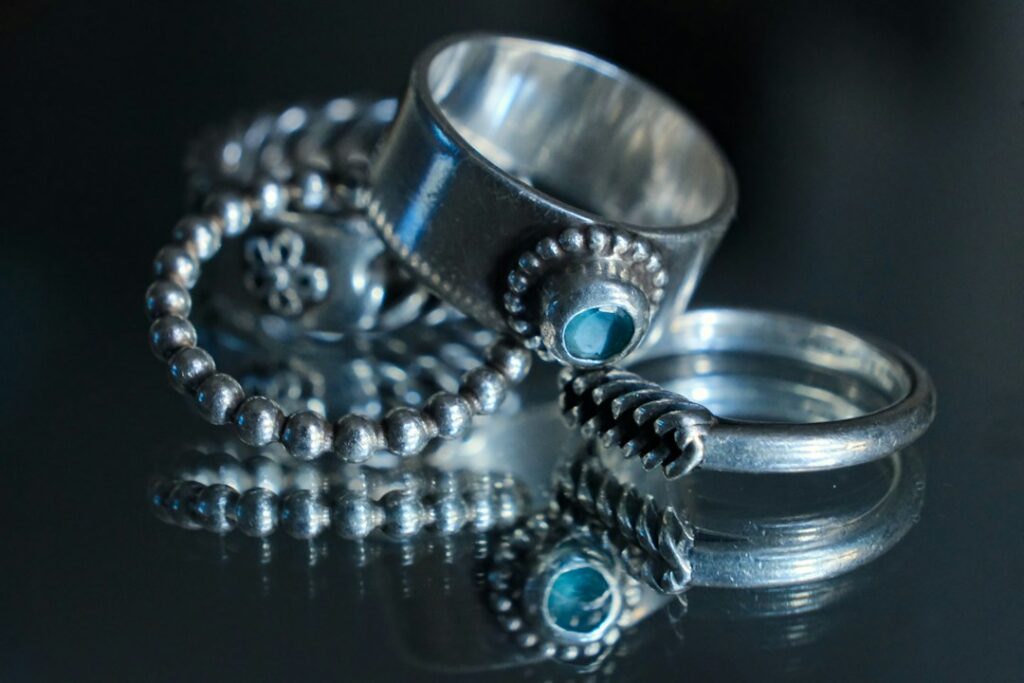
Thrift-store silver ranges from sterling rings to plated serving spoons, and the small marks stamped into the metal say a lot about which one you are holding.
Learning how to tell real silver mostly comes down to reading marks. Under FTC rules, words like “Sterling” and “coin silver” have minimum purity levels, and US law expects a maker’s trademark beside any silver quality mark. Plated pieces use different marks again. A loupe and a few minutes are enough to read what a piece claims, while a jeweler can confirm it. Once you have a sterling piece home, our How to Clean Sterling Silver Jewelry and Remove Tarnish guide explains how to care for it.
Quick checks at a glance
| Mark or sign | What it means | Source |
|---|---|---|
| 925, Sterling, Ster., Sterling Silver | At least 925/1,000 pure silver (92.5%) | 16 CFR § 23.5 |
| Coin, Coin Silver | At least 900/1,000ths pure silver | 16 CFR § 23.5 |
| Maker’s mark next to the quality mark | Expected by law alongside a silver quality mark | 15 U.S.C. § 297 |
| EP, EPNS, “silver plate” | Commonly used to indicate plating | Common advice |
| Tarnish | Proves nothing on its own | Common advice |
What a sterling silver stamp means
The FTC Jewelry Guides (16 CFR § 23.5) say “Sterling Silver,” “Sterling,” “Ster.” or “solid silver” may be used only if the item is at least 925/1,000 pure silver, which is 92.5%. That is why sterling is so often stamped simply “925”. “Coin” or “coin silver” requires “at least 900/1,000ths pure silver.”
The same section says silver-coated items must not be called “silver” unless the term is qualified to show the item is only coated. So a plated tray shouldn’t be sold as plain “silver”.
The maker’s mark rule applies to silver too
The National Gold and Silver Stamping Act (15 U.S.C. § 297(b)) requires a manufacturer or dealer who applies a gold or silver quality mark to also apply “a trademark of such persons, which has been duly registered or applied for registration under the laws of the United States”. It must be applied by the same method as the quality mark, in lettering at least as large, and as close to the quality mark as possible.
So a “925” on US-market jewelry normally sits beside a maker’s mark. A lone 925 is a reason to look harder, not proof the piece isn’t genuine. Marks wear down, older and foreign-made pieces follow other conventions, and a stamp can be misapplied.
Silver plated vs sterling: reading the marks
Only the “Sterling / Ster. / 925” marks are backed by the FTC text above. Beyond that, these are commonly used marks rather than legal definitions:
- EP usually stands for electroplated.
- EPNS usually stands for electroplated nickel silver, a plated base metal.
- “Silver plate” or “silverplate” means a silver coating over another metal.
Plated pieces can be attractive and useful. They just aren’t sterling, and they should be priced as plate. Gold-coloured pieces stamped 925 may be vermeil, which the FTC defines as sterling plated with gold. Our How to Tell If Gold Is Real guide covers those gold terms.
How to check silver step by step
These are common steps rather than an official method. They tell you what a piece claims and whether it is worth a professional look.
- Find where marks usually sit: the clasp, the inside of a ring band, the back of a pendant or the underside of a spoon handle.
- Read the marks with a 10x loupe. Jewelry Loupe 10X Magnifier on Amazon
- Note whether you see 925, Sterling, Ster. or Coin.
- Look for a maker’s mark close to the quality mark.
- Look for EP, EPNS or “silver plate”, which point to plating.
- Check worn edges and high points for a different colour metal showing through.
- For anything priced as sterling, ask about returns or take it to a jeweler before you pay a sterling price.
Top-selling match on Amazon
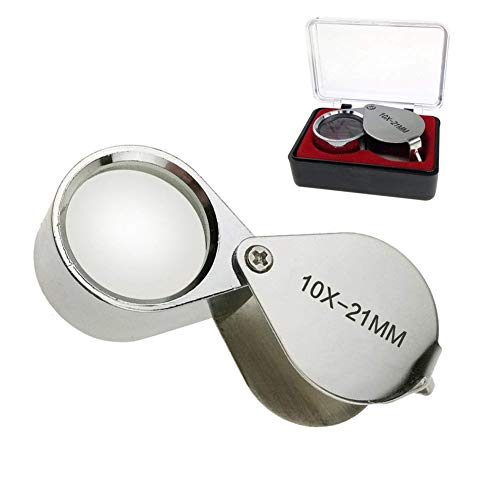
- Loupes 10x with high quality lens for extra sharpness and clarity, small and foldable
- You can get an extremely close view of the tiniest details
Why tarnish isn’t a test
A common belief is that real silver always tarnishes and plated pieces don’t, or the reverse. Tarnish alone does not prove an item is sterling or plated. Both can darken, and some pieces are coated to slow tarnish. Treat it as neutral.
Home tests: what to skip
Magnet, ice, bleach and acid “silver tests” circulate widely online. No named source checked for this guide describes them, so they aren’t included, and none of them can confirm silver content.
Never try a bleach test. Bleach is a hazardous chemical, and according to Poison Control, mixing it with acids or ammonia releases toxic chlorine gas. Acid testing marks the metal and belongs with a jeweler or assayer.
Red flags
- “Silver” with no qualifier on a piece that looks plated.
- A 925 stamp with no maker’s mark on a piece sold as new US-market jewelry.
- EP or EPNS marks on an item priced as sterling.
- Copper or yellow metal showing at worn edges.
- A seller who says a stamp “proves” a piece is real.
A thrift note
Thrift stores often sort silver loosely, so sterling can end up in the costume tray and plate in the locked case. Read every mark, and price your offer on what the marks say. Our How to Thrift guide covers what else to check before buying, Types of Chains helps you name what you’ve found, and if you resell, How to Sell on Depop explains how to describe pieces accurately. To keep sterling bright between cleanings, store it in an anti-tarnish pouch or a polishing-cloth wrap. Anti Tarnish Jewelry Pouches on Amazon
Top-selling match on Amazon
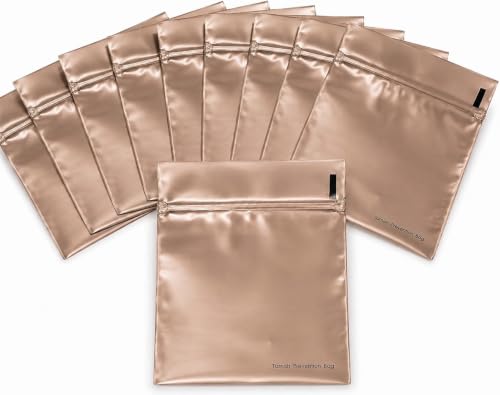
- Guard Against Everyday Damage: Shields silver jewelry from corrosive gases, moisture, and airborne tarnish triggers…
- Tarnish-Free Confidence: Crafted to lock out humidity and oxidation for up to 3 years of shine protection.
- Stores Beautifully & Securely: Elegant, soft interior keeps your cherished items scratch-free and safe in storage…
Shop the look on Amazon
Everything you need to build a secondhand-style wardrobe, delivered. We may earn a commission on purchases.
FAQ
What does 925 mean on silver?
It means the piece claims to be at least 925/1,000 pure silver, the FTC’s threshold for “Sterling”.
Is coin silver the same as sterling?
No. Under 16 CFR § 23.5, coin silver needs at least 900/1,000ths pure silver, while sterling needs at least 925/1,000.
What does EPNS mean?
It is commonly used for electroplated nickel silver, a plated item rather than sterling.
Does real silver tarnish?
Sterling can tarnish, but so can plated pieces. Tarnish on its own doesn’t tell you which you have.
How do I clean thrifted silver?
Our How to Clean Sterling Silver Jewelry and Remove Tarnish guide covers gentle methods, and How to Clean Jewelry at Home (by Metal and Stone) covers mixed-metal pieces.
Is nickel silver real silver?
Nickel silver is not real silver. As general metal knowledge, it is an alloy of copper, nickel and zinc that contains no silver despite the name. On thrift pieces, EPNS is commonly used for electroplated nickel silver, meaning a silver coating over that base metal. Under the FTC Jewelry Guides, only items of at least 925/1,000 pure silver can be called sterling, so EPNS pieces should be priced as plate.