Sterling silver darkens with time, and that is normal chemistry rather than a sign of poor quality. The gentlest fix is usually the best one.
Learning how to clean sterling silver well is mostly about restraint. The methods museum conservators prefer are slow and gentle, while many quick fixes remove silver along with the tarnish. This guide explains what sterling actually is, what tarnish is made of, and the step-by-step methods the Canadian Conservation Institute (CCI) describes, along with the common home approaches and the shortcuts worth skipping. If you are shopping for new pieces, our Amazon Jewelry roundup covers affordable options, and our broader How to Clean Jewelry at Home (by Metal and Stone) guide covers other metals and gemstones.
Before cleaning any piece, check the maker’s care instructions. Pieces set with stones, plated items and antiques may need different handling, and no single method is safe for every item.
What sterling silver is
In the US, the word sterling has a legal meaning. Under the FTC Jewelry Guides (16 CFR § 23.5), an item may be called “Sterling Silver,” “Sterling,” “Ster.” or “solid silver” only if it is at least 925/1,000 pure silver, which is 92.5%. That is why sterling is often stamped 925. The remaining 7.5% is other metal. In common jewellery practice that is usually copper, added because pure silver is very soft, and that copper content matters when choosing cleaning products, as the CCI’s warning about ammonia below shows.
Silver-plated and silver-tone pieces are a different thing: a thin layer of silver, or just a silver colour, over another metal. They need even gentler cleaning, because rubbing too hard can wear through to the base metal.
What tarnish is and why it forms
According to the CCI, tarnish is a thin dark layer made mainly of black silver sulfide. It forms when sulfur compounds in the air, such as hydrogen sulfide, react with the silver. The CCI also notes that salts and oils from skin can mark silver.
Understanding this explains two things. First, tarnish is a surface layer, so you only need to remove that thin film, not scour the metal underneath. Second, limiting the piece’s contact with air is the best way to slow tarnish down, which is why storage matters as much as cleaning.
What you need
- A silver polishing cloth, such as a Silver Polishing Cloth Jewelry on Amazon
- Mild dish soap and warm water
- A soft brush (a soft toothbrush works)
- Cotton swabs
- Soft, lint-free cloths for drying
- Optional: precipitated calcium carbonate, for the paste method the CCI describes
Top-selling match on Amazon

- Easy To Use: The multi-layer, double-sided design of the silver polishing cloth easily removes…
- Note: Jewelry Polishing can be reused, but not washable.
Step-by-step: how to clean sterling silver
Method 1: Wash off everyday dirt
Skin oils, lotion and grime can sit on top of tarnish and make silver look duller than it is. Washing first is a common method that sometimes does most of the work on its own.
- Fill a small bowl with warm water and add a drop of mild dish soap.
- Dip the piece and let it sit for a minute or two.
- Brush gently with a soft brush, paying attention to chain links and engraved areas.
- Rinse in clean warm water.
- Dry thoroughly with a soft, lint-free cloth.
Skip soaking if the piece has porous or glued-in stones, pearls or a hollow construction. Wipe it instead.
Method 2: Polishing cloth for light tarnish
For light tarnish, the CCI describes silver polishing cloths as a gentle option. This is how to polish sterling silver with the least risk.
- Make sure the piece is clean and dry.
- Hold it on a flat, soft surface such as a folded towel.
- Rub the cloth over the tarnished area with light, straight strokes.
- Turn to a clean section of the cloth as it darkens.
- Buff with a plain soft cloth to finish.
Keep polishing cloths away from plated pieces you do not want to wear through, and from soft stones the cloth could scuff.
Method 3: Calcium carbonate paste for heavier tarnish
For heavier tarnish, the CCI describes a paste of precipitated calcium carbonate and water. Precipitated calcium carbonate is a fine powder, much gentler than many household abrasives.
- Mix a small amount of precipitated calcium carbonate with water to a smooth paste.
- Apply a little to a soft cloth or cotton swab.
- Rub gently over the tarnished area.
- Rinse off all the paste with clean water.
- Dry the piece completely with a soft cloth.
Method 4: Silver dip, used locally
Commercial silver dips act fast. The CCI says dips work faster on tarnish than on silver, but should be applied locally with a cotton swab, not by dropping the whole piece in. If you choose to use one:
- Read the product’s label and ventilate the room.
- Dip a cotton swab into the solution.
- Touch it only to the tarnished area, briefly.
- Rinse the area well with clean water.
- Dry thoroughly.
The CCI says not to use dips on hollow objects, where liquid gets trapped inside. Keep dips away from stones and pearls as well.
How to untarnish silver: methods to avoid or use with care
Plenty of popular hacks promise instant results. Here is what the CCI says about the main ones.
- Multi-purpose metal polishes. The CCI warns against these as too abrasive for silver.
- Ammonia-containing polishes. The CCI warns against these because ammonia dissolves copper, and sterling contains copper, which can lead to corrosion.
- The aluminium foil and soda method. The aluminium and sodium carbonate electrochemical method is a common home hack. The CCI says it leaves a dull finish and should not be used on hollow objects, where liquid gets trapped.
- Full immersion in dips. The CCI recommends applying dips locally with a swab instead.
Common household advice also cautions against toothpaste and baking soda scrubs on fine silver, since they can be abrasive, though the CCI guidance used here does not address them directly. When in doubt, choose the gentlest method first.
How to clean a silver necklace
Chains are fiddly because tarnish settles between links. A common method:
- Unclasp the chain and lay it flat on a soft cloth.
- Wash it in warm soapy water, brushing gently along the length.
- Rinse and pat dry, then lay it flat to finish drying.
- Pull the chain slowly through a folded polishing cloth for light tarnish.
- For a pendant with stones, clean the chain and the setting separately and keep stones out of any dip.
For tangled chains, our Layered Necklaces guide has tips on storing and wearing several at once.
Silver with stones or pearls
The stone dictates the method, not the silver. GIA says warm soapy water and a soft brush is a safe default for many stones, including emerald, tourmaline, moonstone, peridot, tanzanite and opal. GIA also says never to use ultrasonic or steam cleaners on emerald, opal, pearl, moonstone, peridot, sardonyx, turquoise, tanzanite or zircon. For pearls, GIA advises wiping with a soft, damp cloth after each wear. Turquoise, often set in silver, is sensitive to heat, acids and chemicals, per GIA, so keep it away from dips and polishing pastes. Our Birthstone Chart covers stones month by month.
How to keep silver from tarnishing
Prevention saves polishing. The CCI suggests storing silver in sealed polyethylene bags with acid-free tissue, and adding activated charcoal and silica gel to absorb sulfur compounds and moisture.
- Store each piece in its own small sealed bag, such as Anti Tarnish Jewelry Storage Bags Zip on Amazon.
- Add acid-free tissue around delicate pieces.
- Drop a silica gel packet into your jewellery box or drawer.
- Put jewellery on after lotion and perfume, a common habit that keeps residues off the metal.
- Wipe pieces with a soft cloth after wearing to remove skin oils, which the CCI notes can mark silver.
Top-selling match on Amazon
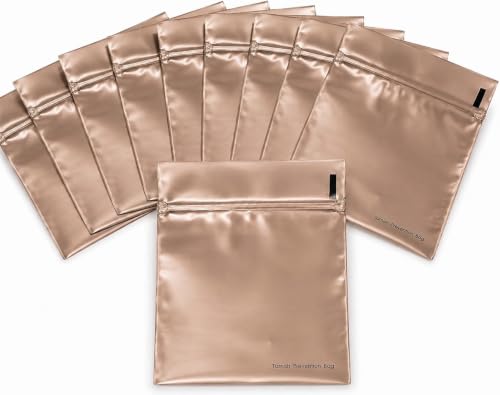
- Guard Against Everyday Damage: Shields silver jewelry from corrosive gases, moisture, and airborne tarnish triggers…
- Tarnish-Free Confidence: Crafted to lock out humidity and oxidation for up to 3 years of shine protection.
- Stores Beautifully & Securely: Elegant, soft interior keeps your cherished items scratch-free and safe in storage…
Many people find that wearing silver regularly and wiping it afterwards keeps it brighter than leaving it in a drawer, though that is common advice rather than a conservator’s rule.
Cleaning thrifted silver
Thrift stores and estate sales are good places to find sterling, as covered in our Thrift Store Jewelry Finds guide. Before cleaning a secondhand piece:
- Look for a 925, Sterling or Ster. stamp. Under the FTC Guides, these terms require at least 92.5% silver.
- Check for hollow construction, such as lightweight bangles or beads, and avoid dips on those.
- Check for plating wear, where a darker metal shows through on edges.
- Start with soapy water, then a polishing cloth, before anything stronger.
Some people prefer the dark tarnish in engraved recesses on vintage pieces, since it shows off the detail. Gentle cloth polishing leaves those recesses darker while brightening raised areas.
Shop the look on Amazon
Everything you need to build a secondhand-style wardrobe, delivered. We may earn a commission on purchases.
FAQ
What is the best way to clean sterling silver at home?
Start gentle: wash with mild soap and warm water, then use a silver polishing cloth for light tarnish. For heavier tarnish, the CCI describes a paste of precipitated calcium carbonate and water.
Does sterling silver tarnish?
Yes. According to the CCI, tarnish is mainly black silver sulfide, formed when sulfur compounds in the air react with silver.
Is the foil and baking soda method safe?
The CCI says the aluminium and sodium carbonate method leaves a dull finish and should not be used on hollow objects. Many people prefer a polishing cloth for that reason.
Can I use ammonia to clean silver?
The CCI warns against ammonia-containing polishes because ammonia dissolves copper, which sterling contains, and can cause corrosion.
What does 925 mean on silver?
It means 925 parts per 1,000 silver, or 92.5%. Under the FTC Jewelry Guides, that is the minimum for the term sterling.
How often should I clean sterling silver?
There is no fixed schedule. Wipe pieces after wearing and polish when you see tarnish. Good storage reduces how often you need to.
Working with gold instead? See How to Clean Gold Jewelry Safely.
Can you wear sterling silver in the shower?
Plain water will not ruin solid sterling silver, but showering in it regularly tends to dull it faster. Soap and shampoo leave a film, and the CCI notes that skin salts and oils can mark silver, so pieces worn wet need wiping and drying more often. Chlorinated pools and hot tubs are harder on silver, and plated or silver-tone pieces can wear through sooner. Taking silver off to wash, then drying any piece that gets wet with a soft cloth, keeps it brighter.