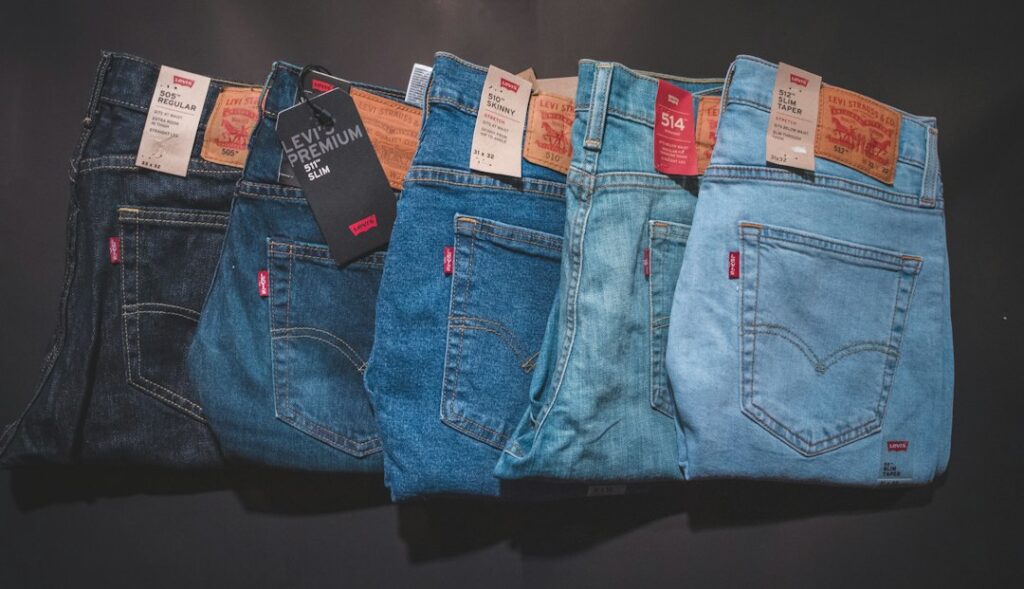
Loose thrifted jeans can usually be brought in, either with careful heat on all-cotton denim or with a few seams. The right route depends on the fabric and on where the extra room is.
There are two ways to approach how to make jeans tighter: shrink the fabric, or sew the extra room out. Heat works best on all-cotton, non-preshrunk denim and changes the whole pair a little at a time. Sewing works on any denim and lets you target one spot, such as a gapping waist or wide lower legs. This guide covers both, explains why stretch denim needs a different plan, and flags the jobs better left to a tailor. Our full guide to How to Shrink Jeans goes deeper on the shrinking side, and if your jeans are too tight instead, see How to Stretch Jeans.
Quick answer
For all-cotton jeans, wash them hot and dry them on high heat, stopping the dryer about every 5 minutes to check the fit, then finish by air-drying, as HowStuffWorks describes. For stretch jeans, skip the heat and sew instead: take in the inseam or outseam to taper the legs, add back-waist darts, or add elastic inside the waistband. Leave yoked waist alterations to a tailor.
Check the fabric first
- Preshrunk denim. According to Levi’s Help Center, “Most Levi’s jeans are preshrunk and should experience little to no shrinkage when cared for according to the garment care instructions.” So heat may change the fit of a preshrunk pair very little.
- Raw or Shrink-to-Fit denim. This is where heat has the most effect. For its STF raw denim, Levi’s says: “Use hot water for more shrinkage.”
- Stretch denim (spandex or elastane on the label). Whirlpool advises that hot washing or drying can damage spandex and ruin the stretch, and a P&G scientist quoted by Martha Stewart says heat makes spandex brittle. The result tends to be baggier over time, not tighter, so don’t hot-dry stretch jeans to tighten them. See What Is Spandex (Elastane, Lycra)? Stretch Fiber Explained for more on the fibre.
What you need
- A washer and dryer (for the heat method)
- An iron and a spray bottle (for spot shrinking)
- Pins, tailor’s chalk, a seam ripper and matching heavy-duty thread, such as Heavy Duty Denim Thread on Amazon
- Denim or jeans needles if you sew by machine, like Denim Sewing Machine Needles on Amazon
- Optional: Buttonhole Elastic on Amazon for an adjustable waist
Top-selling match on Amazon

- Universal For Sewing Machine: Our sewing machine needles are suitable for most home sewing machines
- Heavy Duty Size: 30Pcs heavy duty sewing machine needles. 10pcs Size 90/14 for thin and thick fabrics…
- Premium Material: Made of strong iron alloy, sturdy and durable, which has high hardness, sharp needle…
Top-selling match on Amazon

- Perfect Heavy Duty Sewing Kit: This fully-packed sewing kit contains all the necessary tools to sew for most of…
- Sewing Thread: 12 colors sewing thread, made of high quality material, very smooth and durable. 12…
- Sewing Awls: leather stitching kit contains 3 type awls with different functions, long straight…
Method 1: Shrink all-cotton jeans with heat
This method follows HowStuffWorks. Results vary and can’t be fully controlled or undone, so go in small steps.
- Check the label is 100% cotton (or close to it) with no spandex.
- Turn the jeans inside out to reduce fading.
- Wash them on the hottest setting the label allows.
- Move them to the dryer on high heat.
- Stop the dryer about every 5 minutes and try the jeans on.
- When they are close to the fit you want, take them out and let them finish air-drying.
Shrinkage comes from water and agitation as well as heat, according to a P&G scientist quoted by Martha Stewart, not from hot water alone.
Spot-shrink the waistband
Levi’s shrink guide also lists spot-ironing damp areas such as the waistband. Mist the waistband, press it with a hot iron (cotton setting) until dry, and try the jeans on. Repeat if needed. This targets the waist without changing the legs much.
Method 2: Take in the waist
These are common sewing methods, and the dart idea is the same one used in How to Take In a Dress. A gap at the back waist is the most frequent fit issue on secondhand jeans.
Back-waist darts
- Put the jeans on inside out and pinch the excess at the centre back or either side of it.
- Pin each pinch into a dart that tapers to a point a few inches below the waistband.
- Mark the dart lines with chalk and take the jeans off.
- Stitch from the waistband down to the point, then backstitch to lock it.
- Try them on before trimming anything.
Elastic inside the waistband
- Unpick a short section of the inner waistband at the back.
- Thread a length of elastic through, anchoring one end at a side seam.
- Pull the elastic until the back waist sits where you want, then stitch the other end.
- Close the opening.
For waist alterations on jeans with a yoke (the V-shaped panel across the back), a tailor is usually advised, because the waistband, yoke and belt loops all have to be taken apart and rebuilt.
Method 3: Taper the legs
- Turn the jeans inside out and put them on.
- Pin along the inseam (inside leg) from the knee down to the hem, taking the same amount on both legs.
- Take them off and chalk a smooth line from the pins back to the original seam above the knee.
- Baste along the line and try them on.
- Stitch, then trim and finish the seam allowance.
- Re-hem if the hem was opened. See How to Hem Jeans and Keep the Original Hem for that step.
The inseam is usually easier to taper than the outseam, which on many jeans is a flat-felled or topstitched seam. Our guide to Types of Seams explains the difference.
What not to do
- Don’t hot-dry stretch denim to tighten it. Heat damages spandex.
- Don’t shrink in one long hot cycle without checking. Shrinking can’t be undone.
- Don’t cut seam allowance off before you have tried on the basted fit.
- Don’t expect a set number of inches from heat. Results vary by fabric.
When to see a tailor
A tailor is the better choice for yoked waists, jeans that need several inches out, lined or heavily embellished pairs, and any jeans you would hate to get wrong. Levi’s also mentions its own Tailor Shop in its shrink guide.
Thrift note
Secondhand jeans have usually been washed many times, so heat may do little to a thrifted pair. If the fit is only slightly loose, a pair of darts or an elastic insert is a cheap fix. If the jeans are a size or more too big, compare your measurements to a chart such as the Levi’s Size Chart for Men and keep looking for a closer fit.
Shop the look on Amazon
Everything you need to build a secondhand-style wardrobe, delivered. We may earn a commission on purchases.
FAQ
Can you make jeans tighter without sewing?
On all-cotton denim, heat washing and drying may tighten them a little. On stretch denim, a belt or an elastic insert is the low-effort option.
How do I take in the waist of jeans?
Add back-waist darts or elastic inside the waistband. For yoked waists, see a tailor.
Will hot water make my jeans tighter?
Water, agitation and dryer heat together can shrink cotton. Hot water alone is not the whole story, and preshrunk jeans may change very little.
How do I tighten loose jeans at the knees?
Cotton denim commonly bags at the knees with wear. A wash usually brings it back. For a permanently slimmer leg, taper the inseam.