A thrifted dress that is a little roomy is often an easy fix, as long as the dress is simple in construction and you take the changes in small, even steps.
Knowing how to take in a dress lets you buy for fabric, color and style on the thrift rack, then adjust the fit at home. Most simple dresses can be taken in along the side seams, along a center back seam, or by adding or deepening darts. This guide covers the tools, a step-by-step method for each option, and the dresses that are better left to a tailor. If you are also shortening the dress, our guide on How to Hem Pants covers hand and machine hems that work for skirts and dresses as well.
Quick answer
Put the dress on inside out, pin evenly along both side seams where it is loose, and mark the new line with chalk. Baste along the marks, try it on, then stitch the final seam, tapering the new line back into the original seam at each end. Trim and finish the seam allowance. For shaping at the bust or waist, darts are an alternative to side seams.
What you need
- Pins and tailor’s chalk or a washable fabric marker
- A sewing machine (or needle and thread for hand stitching)
- Thread matching the dress
- A seam ripper, measuring tape and scissors
- A mirror, or a friend to help pin
A basic Sewing Kit With Tailors Chalk on Amazon covers most of this list, and a Seam Ripper on Amazon is worth having to hand for unpicking basting.
Top-selling match on Amazon
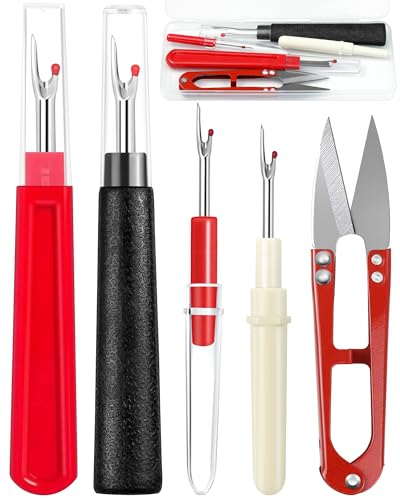
- Versatile Seam Ripper: Expertly crafted for durability, these seam rippers feature a red mini protection…
- Wide Application: Ideal for a variety of applications, this set is perfect for sewing, DIY crafts…
Top-selling match on Amazon

- Tailor'S Chalk: 4 Colors Available (Blue, Red, White, Yellow)
- Clear Fabric Marker: Ideal for Tailoring, Sewing, Quilting
- Sewing Chalk: Can Be Removed by Washing, Patching, or Using Alcohol
Measure and plan
Take in evenly on both sides. As a rough guide, and a common method rather than a rule, a 1-inch reduction in total spread across two side seams means about 1/4 inch per seam edge. Small, even changes keep the grain and side seams hanging straight. Our guide to How to Measure Your Waist for Clothing Sizes explains taking measurements, and the Women’s Dress Size Chart shows how sizes vary between brands.
Methods
Method 1: Take in the side seams
This common method suits unlined dresses with plain side seams.
- Put the dress on inside out.
- Pin evenly along both side seams, starting where it is loosest, often the waist.
- Take it off and mark the pinned line with chalk on both sides.
- Check both sides measure the same and adjust the marks if needed.
- Baste along the marks with long stitches.
- Try the dress on right side out to check the fit, including sitting and raising your arms.
- Stitch the final seam with a regular stitch length.
- Taper the new line gradually into the old seam at the top and bottom so there is no step.
- Remove the basting, trim the seam allowance and finish the raw edge.
- Press the seam.
Method 2: Take in the back seam
If the dress has a center back seam without a zipper, pinning and stitching that seam can take in the back alone, following the same pin, mark, baste and try-on steps. If the back seam holds a zipper, the zipper has to come out and go back in, which is more involved. Our guide on How to Fix a Zipper explains the zipper parts if you are deciding whether to try it.
Method 3: Add or deepen darts
According to Wikipedia, darts are folds, tucks coming to a point, sewn into fabric to take in ease and give shape to a garment, especially at the bust, and they are used across many kinds of clothing to tailor a garment to the wearer’s shape. That makes them useful for taking in a dress at the waist or back without touching the side seams.
- With the dress on inside out, pinch the excess fabric into a vertical fold at the back waist or front waist.
- Pin the fold so it tapers to a point at each end.
- Mark the dart lines with chalk and make the matching dart on the other side the same size.
- Baste and try on.
- Stitch from the widest point towards the tip, sewing off the fold at the point.
- Tie the thread ends rather than backstitching at the tip, then press the dart towards the center or down.
Finishing the seam
Wikipedia describes the plain seam as the most common machine-sewn seam, joining two pieces face to face and leaving a seam allowance with raw edges inside. On mass-produced clothing, the same source notes, seam allowances are usually finished with an overlock stitch. At home, a zigzag stitch over the raw edge is a common substitute. Our guides on Types of Seams and Types of Stitches explain the options. If the hem also needs adjusting, NMSU Extension’s hand blind stitch (also called a tailor’s hem) is a neat follow-up, covered in our How to Hem Pants guide.
What not to do
- Do not take in only one side, as the side seam can twist towards the front or back.
- Do not trim the seam allowance before trying on the final fit.
- Do not take in so much that the dress pulls when you sit or move.
- Do not iron over pins.
When to take it to a tailor
As a common rule of thumb, leave these to a tailor: lined dresses, beaded or sequined dresses, bias-cut dresses, dresses with a zipper in the side seam, and formal or wedding gowns. These involve extra layers, delicate fabrics or seams that can hang unevenly if changed.
Thrift note
When thrifting a dress, check the seam allowances inside. A wider allowance gives more room to adjust later, and a dress that fits at the shoulders is usually simplest to take in elsewhere. If a jeans find needs work too, see How to Fix a Hole in Jeans.
Shop the look on Amazon
Everything you need to build a secondhand-style wardrobe, delivered. We may earn a commission on purchases.
FAQ
How do you take in a dress at the waist?
Pin the side seams evenly at the waist and taper back to the original seam above and below, or add darts at the back or front waist. Baste and try on before final stitching.
How much can you take in a dress?
It depends on the dress and seam allowance. As a rough guide, a 1-inch total reduction means about 1/4 inch per seam edge on two side seams. Larger changes can affect how the dress hangs, so a tailor may be the better option.
Can you take in a dress without a sewing machine?
Yes, a backstitch by hand can sew a new side seam. It takes longer, and a machine stitch is usually more even.
Is it better to take in the side seams or add darts?
Side seams take in the overall width. Darts add shape at a specific point, such as the waist. Many alterations use one or the other depending on where the dress is loose.