
The fastest way to date vintage Harley Davidson shirts is the neck tag plus the hem. A licensee tag (3D Emblem’s black-and-gold tag, an R.K. Stratman copyright line on a Hanes Beefy-T, or a Holoubek label) on a single-stitched body points to roughly the 1980s to mid-1990s. A double-stitched hem and an imported tag usually point later.
That is the short answer. The longer one matters because Harley graphics are widely reproduced, and the copyright year printed under the graphic is not the year the shirt was made. This guide sits inside the thrift and resale guides hub and covers the licensee eras, the tag-by-tag checklist collectors use, how to read dealer backs, and what actually moves value. Every date below is a range or an earliest-possible date drawn from collector sources, not a production date, and where collectors disagree the disagreement is shown.
The quickest dating clue for vintage Harley shirts
Start at the collar. Harley-Davidson merchandise from the 1980s and early 1990s was produced by outside licensees, and each one left a fingerprint. Per trade press, R.K. Stratman of Wentzville, Missouri was “granted one of 12 original Harley-Davidson merchandising licenses” in 1983 and printed on the Hanes Beefy-T from the start. A collector-historian interviewed by Defunkd says 3D Emblem of Fort Worth, Texas was among the first authorized sellers once Harley took control of its licensing. Holoubek Inc. of Wisconsin made Harley tees sold only through dealerships.
Then flip the hem. Single stitching on both sleeves and the body “strongly suggests pre-1996”, per one Las Vegas vintage shop, though every stitching rule has exceptions. A licensee tag plus a single-stitched hem plus a matching copyright line is the strongest quick read you can get without a reference library. For the stitching side in depth, see the guide to single stitch T-shirts.
Harley shirt licensee and label eras
The table below summarizes the licensee clues collectors rely on. Treat each range as approximate.
| Era / maker | Label and print features | Dating note |
|---|---|---|
| AMF ownership (1969 to 1981) | No single licensee tag to look for; check general clues (fiber label, care label, union label) | AMF owned Harley from 1969; the management buyback was official by mid-June 1981, per a secondary history |
| 3D Emblem, pre-license | “Simple 5 color designs,” per the Defunkd historian, before the black-and-gold tag | No confirmed start year for 3D Emblem’s Harley license |
| 3D Emblem, licensed | Black-and-gold neck tag (made by a Pennsylvania company); “3D Emblem Ft. Worth, Tx” printed under the art, often with artist initials and the ® mark; airbrush-style prints credited to Dave Gardner from 1983 | Per the historian, Harley production stopped “in the early ’90s, around 94” |
| R.K. Stratman | Hanes Beefy-T blanks; copyright lines such as “©1992 / 1991 R.K. Stratman Inc. – Licensed Harley product” | License dates to 1983 per trade press; Beefy-T red-and-blue block tag runs roughly 1985 to 1995, per one retailer |
| Holoubek Inc. | Dealer-exclusive tees, fleece and casualwear; listings show RN 72199 | Tenure reported as 20 or 30 years (sources conflict); VF Imagewear agreed to buy its assets in Dec 2004, with closing expected Jan 2005 |
| Transitional blanks | Mixed stitching (single on one hem, double on another); Made in Mexico tags | Mixed stitching “common 1994 to 1998”; Mexico is the usual transitional origin, roughly 1996 to 2002, per one seller |
| Later imports | Double stitching on all hems; Bangladesh or Cambodia origin | Double on both hems is “post-1996 in most cases”; Bangladesh/Cambodia usually post-2005, per one seller |
Two notes on that table. First, one online guide describes “3D Emblem (also known as 3D Emblem Corp or Holoubek)”. Defunkd’s historian places 3D Emblem in Fort Worth, while Holoubek was a separate Wisconsin company, so collectors treat them as two different licensees. Second, the 2XL detail is a useful trap: per the same historian, 3D Emblem did not offer 2XL or 3XL sizes in the early 1980s, and those sizes arrived around 1984 to 1985. A 2XL tag on a shirt sold as a 1981 3D Emblem deserves a hard second look.
How to tell if a Harley shirt is vintage: step-by-step checklist
Work through these in order. No single clue settles a date; agreement between several clues is what builds confidence.
1. Read the neck tag
Identify the blank and the licensee. A 3D Emblem black-and-gold tag, a Hanes Beefy-T tag on a Stratman print, or a Holoubek label each narrows the window. Fruit of the Loom, Screen Stars and other blanks also turn up, and the tag-era windows collectors use for those are covered in the vintage band tees guide. A jeweler’s loupe such as a Jewelers Loupe Magnifier 30X on Amazon helps read faded tag print and small copyright text.
Top-selling match on Amazon

- Precision Instrument: Ideal for gems, jewelry, coins, stamps, rocks, watches, hobbies, antiques, models…
- Dual Lens Loupes: Equipped with a primary lens of 30x22mm and a supplementary lens of 60x12mm. The…
- Illuminating Led Light: This LED loupe illuminates your subject at the right angle and amount, ensuring the…
2. Check the stitching
Look at both sleeve hems and the bottom hem. One line of stitching on all three is the classic early profile. Two parallel lines on all three usually means a later blank. Mixed stitching points to a transitional or premium blank. Reprinters often use mid-2000s blanks that are already double-stitched, so a double hem under a supposed 1980s graphic is a red flag.
3. Read the print and copyright line
The copyright year is the earliest possible year for the design, not the year the shirt was printed. A design copyrighted in 1991 could be printed for years afterward. On 3D Emblem shirts, check for the printed “3D Emblem Ft. Worth, Tx” line, the artist initials and the ® mark. Collectors cite wrong spacing, or missing initials or ®, as a common sign of a counterfeit. On Stratman shirts, look for the “Licensed Harley product” wording alongside the R.K. Stratman name.
4. Read the back
Dealer shirts usually carry the Harley graphic on the front and the selling dealership and city on the back. That is why the same front design exists with dozens of different backs. A dealer back does not date a shirt by itself, but a dealer name, a city and a front design that all agree with the tag era add up.
5. Check care, RN and origin labels
These general clues apply to any American garment:
- Care label: the FTC Care Labeling Rule was issued in late 1971 and in force from July 1972, so a permanent care label points to 1972 or later. Symbol-only care labels on U.S. garments point to mid-1997 or later. A missing care label proves nothing, because labels get cut out.
- RN number: an RN dates when the company registered with the FTC, not when the shirt was made. The current RN series dates to 1959, and the FTC’s registration system goes back to the 1940s. The FTC has a public RN look-up, which is handy for identifying the maker behind a tag.
- Country of origin: Cornell’s ILGWU timeline says “Made in the U.S.A.” labelling became mandatory on domestic garments in 1985. Global apparel quotas ended on Jan 1, 2005, and one seller’s heuristic puts the big offshore move of U.S. blank makers between roughly 1996 and 2005.
- Union label: an ILGWU or ACTWU label points to before 1995/96, and a UNITE label to 1995 to 2004. Many makers were never unionized, so a missing union label means nothing.
6. Measure against the tag
A real vintage tag sewn into a newer shirt is a known trick. Lay the shirt flat and measure pit to pit with a Soft Tape Measure For Clothes on Amazon, then compare it against the size on the tag and against other shirts from the same blank era. A chest measurement that is far off for the tag’s size and era is worth questioning.
Top-selling match on Amazon
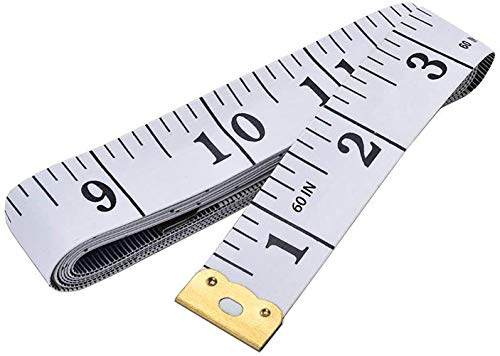
- Measuring Range: 0 to 60 inches and 0 to 150 centimeters. There is a centimeter scale on the back…
- Great Material: Tailor Vinyl tape measure won't stretch or deform, provides superior measurement…
- Operate And Read: Black markings on bright white tape is big enough for you to read, the tape has…
Reproductions and how they slip through
Harley graphics are a frequent target for reproductions. Counterfeiters print on worn vintage blanks because an old tee and tag lend credibility. They copy copyright lines word for word. They reuse real tags. The defence is the same layered check above: a print that looks right on a blank from the wrong era, a 3D Emblem shirt without the Fort Worth line, or a supposed early-1980s shirt in a size that was not yet offered.
Fabric helps too. Per one vintage shop, 50/50 cotton-poly blends are common through the 1970s, 1980s and early 1990s, while ringspun cotton becomes the default from the mid-1990s onward. A heavy, slubby ringspun body under an early-1980s print does not fit the pattern. None of these rules is absolute; they just shift the odds.
If you already date denim, the logic is familiar. The same habit of cross-checking tag, construction and origin is what the guide to identifying vintage Levi’s walks through, and the label-by-label method in vintage Levi’s tag identification transfers well to tees.
Vintage Harley Davidson t-shirt value: what moves the price
There is no reliable price chart for vintage Harley shirts, and any guide quoting a fixed figure for a design is guessing. What drives value is consistent across the market:
- Condition. Graphic cracking, holes, stains and pit staining all cut value. Some wear is accepted on a 40-year-old tee; heavy damage is not.
- Licensee and tag. Collectors seek out 3D Emblem shirts in particular, and a clean, legible tag supports the story.
- Design and rarity. Airbrush-style 3D Emblem artwork, short-run designs and event shirts draw the most attention. Common dealer designs with many back variations are easier to find.
- Size and fit. Wearable sizes sell faster. Measure and list pit-to-pit and length rather than trusting the tag.
- Demand. Harley graphics cycle in and out of fashion, which moves asking prices more than any tag detail.
For context on the ceiling, Defunkd reported that a 1988 3D Emblem “Road Rebel” variant sold for $13,500 in December 2024. Treat that as an outlier sale of a rare design, not a benchmark for the shirt in a thrift bin. The practical approach is to look at completed sales of the same design, same licensee and similar condition before setting a price.
If you plan to sell, the guide to selling vintage clothing online covers photographing tags and hems so buyers can verify the era, and the eBay fees breakdown shows what a marketplace takes before you set a floor. Photograph the neck tag, both hems, the copyright line and the dealer back; those four shots answer most buyer questions.
Where vintage Harley shirts turn up
Thrift stores, estate sales and flea markets still produce Harley tees, often mixed in with modern dealer shirts that look similar at a glance. Sort fast by checking the collar and the hem before reading the graphic. A shirt that passes both is worth a closer look; one that fails both usually is not. The broader criteria for what counts as vintage, and how age ranges are defined, are in the guide to true vintage clothing.
The verdict
Date a Harley shirt from the inside out. The licensee tag and the hem stitching tell you more in five seconds than the graphic does in five minutes, and the copyright line only sets the earliest year the design could exist. A 3D Emblem, R.K. Stratman or Holoubek tag on a single-stitched body is a strong sign of a 1980s to mid-1990s shirt; a double-stitched, imported blank under a 1980s graphic is the most common reprint profile. Where collectors disagree, as on Holoubek’s tenure or the exact end of single stitching, the honest answer is a range. Value follows condition, licensee, design rarity and current demand, and the rare five-figure sale tells you about the top of the market, not the shirt in your hand.
Shop the look on Amazon
Everything you need to build a secondhand-style wardrobe, delivered. We may earn a commission on purchases.
FAQ
How can you tell if a Harley shirt is vintage?
Check the neck tag for a licensee such as 3D Emblem, R.K. Stratman or Holoubek, then check the hems for single stitching. Read the copyright line as the earliest possible design year, and confirm with the care label, RN and country of origin. Several agreeing clues are needed; no single one settles it.
What does the copyright date on a Harley shirt mean?
It marks when the design was copyrighted, which is the earliest year the print could exist. Designs were often printed for years after that date, and reprints copy the line exactly.
Are 3D Emblem and Holoubek the same company?
Collectors treat them as two separate licensees. A Defunkd historian places 3D Emblem in Fort Worth, Texas, while Holoubek was a Wisconsin company whose Harley apparel was sold only through dealerships.
Why do vintage Harley shirts have dealership names on the back?
Dealer shirts carried a shared Harley graphic on the front and the selling dealership and city on the back. The same front design therefore exists with many different backs.
How much is a vintage Harley Davidson t shirt worth?
It depends on condition, licensee, design rarity, size and current demand. Exceptional pieces have sold for thousands, such as a 1988 3D Emblem “Road Rebel” variant Defunkd reported at $13,500, but that is an outlier. Compare completed sales of the same design and condition before pricing.