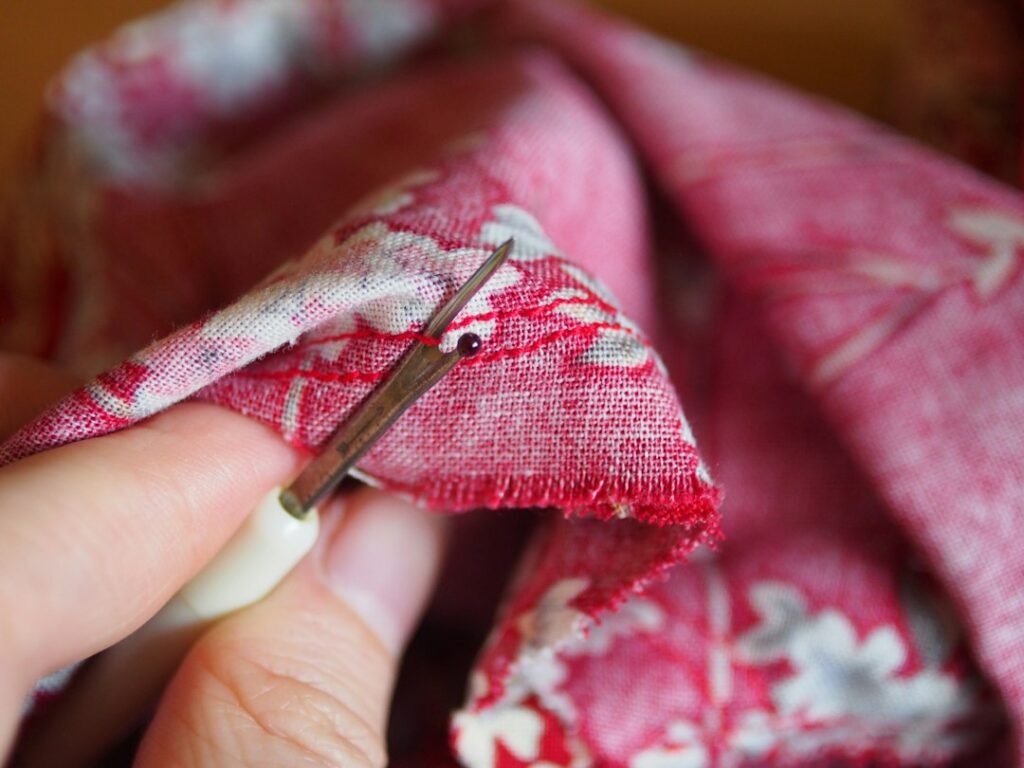
A single stitch T shirt has one line of stitching at the sleeve and bottom hems instead of two parallel lines. Most major U.S. blank makers single-stitched their tees into the early-to-mid 1990s and switched to double stitching mostly between the mid and late 1990s, so a single hem is a strong, but not conclusive, sign of vintage.
That “not conclusive” matters. Collectors have found double-stitched shirts from the 1970s and 1980s, licensed shirts kept single stitching later than plain blanks, and modern reissues now copy the single hem. This guide, part of the thrift and resale guides hub, explains how to read the hem, what the sources say about the switch, and how to confirm a date with the tag, print and care labels.
What is a single stitch shirt?
Look at the bottom hem and sleeve cuffs from the outside. A single-stitch tee shows one row of stitching. A double-stitch tee shows two parallel rows, made by a two-needle coverstitch. That is the whole difference in construction. Sellers treat the single hem as “a premium feature of a vintage t-shirt,” a quote ThriftCon attributes to Jimmy Applegath.
Single stitch vs double stitch: what each hem suggests
| Hem pattern | What it suggests | Source |
|---|---|---|
| Single on both sleeves and body | “Strongly suggests pre-1996”; generally 1970s, 1980s and early 1990s | Keep It Classic; Ragstock |
| Mixed (single on one hem, double on another) | Transitional or premium blank, “common 1994 to 1998” | Keep It Classic |
| Double on both | “Post-1996 in most cases”; “chances are good it’s a newer shirt (late-’90s and beyond)” | Keep It Classic; ThriftCon |
| Single on a licensed tee | Many licensed tees stayed single-stitch until about 2000, with many moving to double by 2003 | One vintage seller |
| Single on a modern reissue | Screen Stars has been reissued with “Single Needle” stitching and a vintage wash | Complex |
Keep It Classic names Hanes, Fruit of the Loom, Screen Stars, Anvil and Tultex as major U.S. blank makers that single-needle hemmed most blanks into the early or mid 1990s, with two-needle the default “by 1996 to 1998 for most lines.” Some premium blanks kept single stitching into the early 2000s. There is no single industry-wide switch year, and no manufacturer documentation of the change has been found.
Why the switch happened
Nobody has a definitive answer. ThriftCon lists the reasons people cite: double stitching was quicker on the machines, it hid flaws and reduced the need for skilled labor, and cheaper fabrics needed more contact points. Its author’s best guess is NAFTA, which took effect in 1994, and the rise of Chinese manufacturing, with several causes probably at work together. Defunkd calls the free-trade link a theory. Treat any confident single explanation with suspicion, and the same goes for claims that one hem is stronger than the other, since sources contradict each other.
How to confirm a single stitch vintage date
The hem gets a shirt onto the “maybe” pile. These steps decide it.
1. Check the tag
Identify the blank or merch company and match it to known tag eras. The vintage band tees guide covers Screen Stars, Winterland, Brockum and Giant windows, and vintage Harley-Davidson shirts covers licensee tags such as 3D Emblem and R.K. Stratman. A loupe such as a Jewelers Loupe Magnifier 30X on Amazon helps read worn tags.
Top-selling match on Amazon

- Precision Instrument: Ideal for gems, jewelry, coins, stamps, rocks, watches, hobbies, antiques, models…
- Dual Lens Loupes: Equipped with a primary lens of 30x22mm and a supplementary lens of 60x12mm. The…
- Illuminating Led Light: This LED loupe illuminates your subject at the right angle and amount, ensuring the…
2. Check the stitching against the graphic
Reprinters often use mid-2000s blanks that are “already double-stitched” with 1980s graphics, per Keep It Classic. A double hem under a 1980s design is a red flag. A single hem under a 1980s design is consistent but not proof.
3. Read the print and copyright line
A copyright year is the earliest year the design could exist, not the print date. Designs were printed for years afterward.
4. Check care, RN, origin and fabric
A permanent care label points to July 1972 or later. An RN dates the company’s FTC registration, not the shirt. One seller’s heuristic puts Mexico as the common transitional origin around 1996 to 2002. Fabric helps too: 50/50 blends are common through the 1970s, 1980s and early 1990s, and ringspun cotton becomes the default from the mid-1990s onward, per Keep It Classic.
That layered approach is the same one used for denim; see identifying vintage Levi’s and vintage Levi’s tag identification. For where single-stitch tees fit within the wider definition of vintage, see true vintage clothing.
Selling single-stitch tees
Single stitching adds appeal, but value still comes down to the tag, graphic, condition, size and demand. Photograph both sleeve hems and the bottom hem alongside the tag so buyers can check the construction. The guide to selling vintage clothing online covers listing basics, and the eBay fees breakdown shows what a marketplace takes.
The verdict
A single stitch T shirt is one of the fastest sorting clues in a thrift bin: single hems mostly mean a blank from before the mid-to-late 1990s, and double hems under an old graphic usually mean a reprint. But it is a first filter, not a verdict. Exceptions run both ways, licensed shirts lagged plain blanks, and Screen Stars reissues now copy the single hem. Confirm with the tag, print, care label, origin and fabric before calling a shirt vintage.
Shop the look on Amazon
Everything you need to build a secondhand-style wardrobe, delivered. We may earn a commission on purchases.
FAQ
What is a single stitch shirt?
A T-shirt with one row of stitching at the sleeve and bottom hems, rather than the two parallel rows of a double-stitch (two-needle) hem.
Does single stitch mean a shirt is vintage?
Usually it suggests a blank from before the mid-to-late 1990s, but not always. Modern reissues use single-needle hems, so confirm with the tag and other clues.
When did T-shirts switch from single to double stitch?
Mostly between the mid and late 1990s, varying by maker. Some premium and licensed blanks kept single stitching into the early 2000s.
Is single stitch better than double stitch?
Sources disagree on durability. Collectors value single stitching mainly as an age signal, not a quality one.
Do single stitch tees sell for higher prices than double stitch?
Single stitching adds appeal, and sellers treat it as a premium feature of a vintage T-shirt, but it does not set the price on its own. Value still comes down to the tag, graphic, condition, size and demand. A single hem under a 1980s design is consistent with age, not proof, and Screen Stars reissues now copy it. When selling, photograph both sleeve hems and the bottom hem alongside the tag.