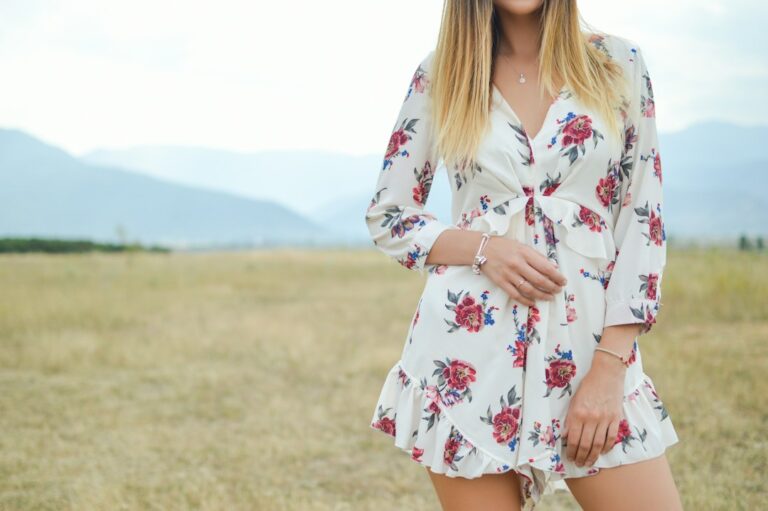

A scarf goes around your neck, a shawl goes around your shoulders, and a wrap sits somewhere in between. The lines blur, but size and how you wear it usually settle the question.
The short answer to shawl vs scarf is size and placement. In common usage, a shawl is the larger piece, often square or triangular, and it is draped over the shoulders and upper body. A scarf is narrower and worn mainly around the neck. A wrap is a commonly used retail term for a large rectangular piece that can be worn either way, as a scarf in cold weather or as a shawl over an evening dress. For the full range of shapes and fabrics, our Types of Scarves hub is the place to start. Below you will find a side-by-side table, quick checks for telling them apart, what “pashmina” means, and when each one makes sense.
Quick answer
- Scarf: long and narrow, worn around the neck for warmth or as an accent.
- Shawl: large, often square or triangular, draped over the shoulders.
- Wrap: a large rectangle sold to be worn either way; the term is commonly used by retailers rather than defined by any standard.
Shawl vs scarf vs wrap at a glance
| Feature | Scarf | Shawl | Wrap |
|---|---|---|---|
| Typical shape | Long, narrow rectangle (also squares and infinity loops) | Large square or triangle, sometimes a wide rectangle | Large, wide rectangle |
| Where it is worn | Around the neck | Over the shoulders and back | Either |
| Main job | Neck warmth, accent colour | Covering shoulders, light warmth | Flexible: warmth by day, cover-up by night |
| Common fabrics | Wool, cashmere, acrylic, silk, cotton | Wool, cashmere, silk, lace, knits | Wool blends, cashmere, viscose, knits |
| Word first recorded | 1550s (Online Etymology Dictionary) | 1660s (Online Etymology Dictionary) | No dated fashion sense in our sources |
Where the words come from
The Online Etymology Dictionary dates “scarf” to the 1550s, when it meant a band worn across the body or over the shoulders. The cold-weather neck sense came later, by 1844. So the earliest scarves were, in a sense, closer to how shawls are worn today.
“Shawl” dates from the 1660s in the same dictionary, originally for an article of dress worn in Asia. It came into English from Urdu and other Indian languages, from the Persian shal. The entry says the word “may” derive from Shaliat, a town in India, so that origin is a possibility rather than a settled fact. By 1767, according to the same source, the shawl was being worn by Western women.
What is a pashmina shawl?
The Online Etymology Dictionary dates “pashmina” to 1825, applied to fine cashmere shawls, from the Persian pashm, meaning wool or down. In shops today, though, “pashmina” is used loosely, and the word on a tag does not by itself tell you the fibre content. Our sources contain no legal fibre definition of “pashmina,” so it should not be read as a guarantee of cashmere. Always check the fibre label: some pieces sold as pashminas are cashmere or cashmere blends, while others are viscose, acrylic or other fibres. For the fibre itself, see What Is Cashmere? Where It Comes From and How to Judge Quality and our Wool vs Cashmere (and Merino) comparison.
Pashmina shawls are also linked with the teardrop boteh motif, better known in the West as paisley. The V&A holds a 19th-century woven Kashmir shawl with boteh borders, acquired in Kashmir in 1881–82. Our What Is Paisley? The Teardrop Pattern’s History explainer covers the pattern in more depth.
How to tell them apart
- Spread it out. A long, narrow piece is a scarf. A large square or triangle is a shawl.
- Try it on your shoulders. If it covers your shoulders and upper arms with room to spare, it works as a shawl or wrap.
- Look at the edges. Shawls often have decorative borders, fringe or lace edging on all sides; scarves more often have fringe on the short ends only.
- Read the label for the fibre, not the name. “Pashmina,” “wrap” and “shawl” are product names; the fibre content is on the care label.
- Check the weight. A heavy wool piece is built for warmth; a fine silk or lace piece is mostly a cover-up.
When to wear each
Scarf
Scarves are the everyday cold-weather choice, worn with a coat for warmth or knotted for colour. Our How to Tie a Scarf guide walks through common knots, and Winter Scarves rounds up warm options. One men’s style guide, Real Men Real Style, lists short scarves at about 50–60 inches, standard at about 70 inches and long at about 82 inches; treat those as a style-blog figure rather than an industry standard, since lengths vary by maker. Browse Wool Winter Scarf on Amazon if you need a warm everyday piece.
Shawl
A shawl suits evening events, cool restaurants and ceremonies where shoulders should be covered. For smart UK weddings, Debrett’s says shoulders “may be covered by a bolero, shrug or pashmina,” though it notes a tailored jacket is better. As always, the invitation, the couple and the venue have the final word, and religious venues may have their own guidance. See Fall Wedding Guest Dresses and Winter Wedding Guest Outfits for full looks, or browse Pashmina Shawl Wrap on Amazon in neutral and jewel tones.
Top-selling match on Amazon

- Pashmina shawl wraps for women:Heavier and warmer,Thicker for colder days,Winter-weight…
- Extra Long & Luxe in Warm Cream:Measuring a generous 79" long x 26" wide, this oversized…
Wrap
A wrap is the travel and transition piece. Worn long around the neck it is a scarf; opened out over the shoulders it becomes a shawl on a cool plane or an air-conditioned evening. Browse Oversized Blanket Scarf Wrap on Amazon for large rectangles that can do both jobs.
Top-selling match on Amazon
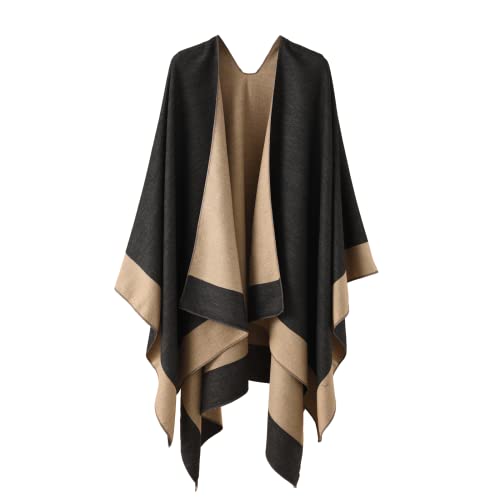
- Cosy Warm Poncho For Women: The poncho cape is made of high quality skin-friendly 50% Acrylic, 50% Polyester…
- Fashionable Classic Design: The stylish and classic printings, color and appearance and the moderate thickness…
- One Size For The Most Ladies: The oversized poncho wrap fit almost all kinds of figure, wearing this winter poncho…
Can you swap them?
Often. A large blanket scarf or wrap can stand in for a shawl, and a light shawl can be folded into a triangle and knotted at the neck as a scarf. A narrow scarf will not cover the shoulders, though, so for a dress code that asks for covered shoulders, a shawl, wrap or jacket is the practical choice.
Care and thrift tips
- Check the fibre and care label first. For wool, Woolmark’s hand-wash method is to turn the item inside out, wash in lukewarm water (about 30°C) with a mild detergent, soak for 10 minutes, then rinse in lukewarm and then cold water. Woolmark says to machine wash wool only if the care label allows it, on a wool or delicates cycle, and to dry flat. Our How to Wash Cashmere by Hand (and When to Dry Clean) guide covers the finer fibre.
- Hold it up to the light. Moth holes and thin spots are easiest to see against a window.
- Check fringe and edges. Loose fringe can usually be re-knotted; torn lace edging is harder to repair.
- Do not pay cashmere prices for a name. A thrifted “pashmina” without a fibre label could be almost anything.
Shop the look on Amazon
Everything you need to build a secondhand-style wardrobe, delivered. We may earn a commission on purchases.
FAQ
Is a shawl bigger than a scarf?
Usually, yes. In common usage a shawl is larger, often square or triangular, and covers the shoulders, while a scarf is narrower and worn around the neck.
What is the difference between a shawl and a wrap?
The terms overlap. “Wrap” is commonly used for a large rectangle that works as either a scarf or a shawl, while “shawl” more often means a piece designed to be draped over the shoulders.
Is pashmina the same as cashmere?
Not reliably. The word historically referred to fine cashmere shawls, per the Online Etymology Dictionary, but modern “pashmina” products vary. Check the fibre label.
Can I wear a shawl to a wedding?
Debrett’s lists a pashmina among acceptable shoulder cover-ups at smart weddings, while noting a tailored jacket is better. Follow the couple’s guidance first.
For another cold-weather comparison, see Beanie vs Toque.