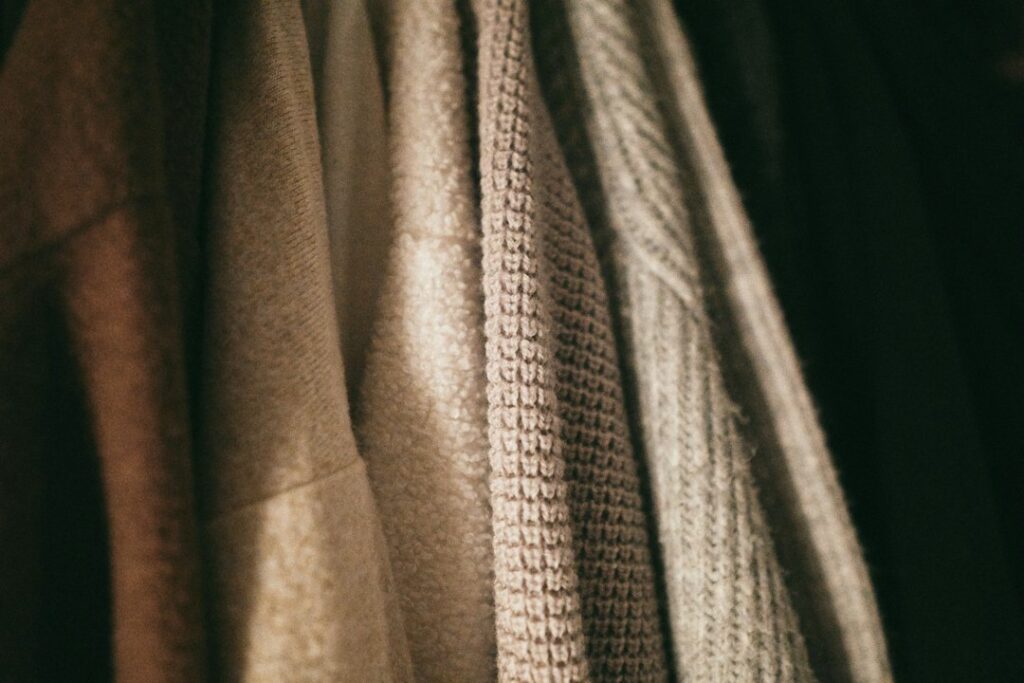
Cashmere is one of the most recognisable words on a clothing label and one of the most misused, so it pays to know exactly what the fibre is, where it comes from and how to tell a good piece from a tired one.
What is cashmere, in plain terms? It is the soft, downy undercoat of the cashmere goat, combed or sorted away from the coarse outer hair and spun into yarn. It is warm, light and famously soft, and it is also one of the fibres most often found on thrift racks at a fraction of its original price. This guide covers what cashmere is made from, how US labelling rules define it, how it compares with sheep’s wool, how it feels and wears, and how to care for it. For full washing steps on knitwear, our How to Wash a Wool Sweater Without Shrinking It guide walks through the process one stage at a time.
Quick answer: Cashmere is an animal-hair fibre from the fine undercoat of the cashmere (Kashmir) goat. Under the US Federal Trade Commission’s wool labelling rules, fibre sold as cashmere must have an average diameter of no more than 19 microns, with no more than 3% of fibres (by weight) averaging over 30 microns. That fineness is what makes it feel so soft.
What is cashmere made from?
According to Britannica, cashmere is an animal-hair fibre taken from the downy undercoat of the Kashmir goat, and it is classed as a specialty hair fibre rather than ordinary wool. Britannica adds that only the product of this goat is true cashmere, even though the word is sometimes wrongly applied to very soft wools.
The goat grows two coats. Britannica describes a coarse outer coat between 4 and 20 cm long and a fine undercoat between 2.5 and 9 cm long. It is that short, fine undercoat that becomes cashmere yarn. The outer guard hair is separated out in a process called dehairing, which is why the FTC definition specifically mentions “dehaired” fibre.
Because each goat yields only a small amount of usable undercoat, the numbers add up quickly. Britannica estimates that a sweater takes the fleece of four to six goats and an overcoat takes thirty to forty. That ratio goes a long way to explaining why new cashmere is priced well above most wool.
So is cashmere wool?
People often search “what is cashmere wool”, and the answer depends on which rulebook you are reading. Britannica classes cashmere as a specialty hair fibre, separate from sheep’s wool. US labelling, however, handles cashmere under the FTC’s Wool Products Labeling rules, which is why you will see it discussed alongside wool on care labels and in shops. In everyday speech, “cashmere wool” simply means cashmere.
How the FTC defines cashmere
In the US, the word cashmere on a label is not a loose marketing term. The FTC’s guide to the Textile and Wool Acts says that to be labelled cashmere, the fibre must be:
- the fine (dehaired) undercoat fibres produced by a cashmere goat;
- of an average diameter of no more than 19 microns; and
- made up of no more than 3% (by weight) of fibres with an average diameter over 30 microns.
A micron is one thousandth of a millimetre, so these are very fine fibres. For comparison, Britannica reports that fibre from Kashmir goats in China and Mongolia measures 14.5 to 16.5 micrometres in diameter, comfortably inside the FTC limit.
The practical takeaway is simple: a garment labelled “soft as cashmere” or “cashmere feel” is making no claim about the fibre at all. Only the fibre content line tells you what is in it.
How cashmere is made
Exact methods vary by producer, but the broad journey from goat to sweater follows a common sequence:
- The undercoat is gathered from the goat, usually when it naturally loosens with the change of season.
- The raw fibre is cleaned to remove dirt and natural grease.
- Dehairing separates the fine undercoat from the coarser guard hair.
- The fine fibre is spun into yarn, either alone or blended with other fibres.
- The yarn is knitted or woven into fabric or finished garments.
Dehairing is the stage that matters most for the label, since the FTC definition depends on the fine undercoat being separated from coarse hair.
Cashmere vs wool: how they compare
Cashmere and sheep’s wool are both animal fibres and both are warm, but they behave differently in a few ways. The table below sets out the trade-offs, with sourced points attributed and the rest framed as common experience among knitwear wearers.
| Point | Cashmere | Typical sheep’s wool |
|---|---|---|
| Source | Undercoat of the cashmere goat (Britannica) | Fleece of sheep |
| Fibre diameter | 19 microns average or finer to qualify in the US (FTC) | Varies widely by breed; merino is generally under 22 microns, per Woolmark |
| Feel | Very soft and light for its warmth | Ranges from soft (fine merino) to coarse |
| Price | Higher, partly because of low yield per goat | Usually lower |
| Durability | Fine, short fibres can pill in high-friction areas | Depends on fibre fineness and knit |
| Care | Gentle hand wash or the label’s method | Same principles; some wool is treated to be machine washable |
Woolmark makes the point that prickle and itch come from coarse-micron fibres of any type rather than from wool itself. Seen that way, much of cashmere’s softness comes down to its fineness. If you are weighing the two, our guide to What Is Merino Wool? Why It’s Soft and How to Care for It covers the finest sheep’s wool in more detail.
How cashmere feels and wears
Pros
- Soft against the skin, because the fibres are so fine.
- Warm for its weight, so a thin knit can do the work of a bulkier sweater.
- Drapes softly rather than standing stiff.
Cons
- It pills. Care guides note that wool and cashmere both pill, especially at the underarms, sides and cuffs where fabric rubs.
- It needs gentle washing. Heat and agitation can felt animal fibres.
- It can be expensive new, and quality varies widely between brands.
Pilling is not automatically a sign of poor quality. Pills form when loose fibre ends tangle together through friction, so any soft, short-fibred knit will do it to some degree. A fabric shaver or sweater comb removes them, and our How to Remove Pilling From Clothes (and Stop It Coming Back) guide covers both tools. A Cashmere Sweater Comb on Amazon is a small, inexpensive way to keep knits looking fresh.
Top-selling match on Amazon
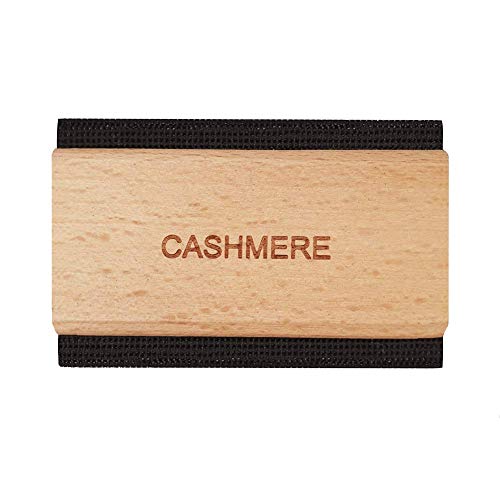
- Removes pills & bobbles from your garments instantly. Can be used on all types of materials
- Easy to use | Cashmere Comb size: 3 x 2"
How to judge cashmere quality
There is no single official quality grade printed on a sweater, so shoppers rely on a mix of label reading and hands-on checks. The checks below are common methods rather than formal standards:
- Read the fibre content. “100% cashmere” and a blend like “70% wool, 30% cashmere” are very different garments. The fibre line is the only part of the label that tells you what you are buying.
- Look at the knit density. Hold the piece up to the light. A tighter, more even knit usually holds its shape longer than a loose, see-through one.
- Stretch and release a cuff. Good knitwear tends to spring back. A cuff that stays stretched out suggests the garment may bag over time.
- Rub the surface gently. A small amount of fuzz is normal. A surface that pills heavily after a few rubs may wear faster.
- Check the seams and ribbing. Neat seams and firm ribbing at the hem and cuffs are signs of careful construction.
If you are shopping new, a Womens Cashmere Sweater on Amazon search lets you compare fibre content and weights side by side, and a Mens Cashmere Scarf on Amazon is an easy entry point if you want to see how the fibre feels before investing in a sweater. Gift shoppers will find more ideas in our Cashmere Gifts guide.
Top-selling match on Amazon

- Quiet Luxury Sweaters: Classic old money clothes, Capsule Wardrobe Essentials, This versatile simple basic…
- Occasion: This crew neck sweaters is perfect for lounge, leisure, going out, street, holiday…
- Size Chart: Consider sizing down if you prefer a more fitted look. (Our size chart) XS=US 2…
How to care for cashmere
Always start with the care label. Under the FTC Care Labeling Rule, the label must say whether a garment should be washed by hand or machine and give a water temperature if regular hot water would harm it. If the label says dry clean only, take it to a professional cleaner.
For hand washing, many people follow the Woolmark Company’s wool guidance, since cashmere is an animal fibre with similar needs. Woolmark suggests hand washing in clean, lukewarm water at about 30°C with a mild, gentle detergent, soaking for about 10 minutes, rinsing in lukewarm water and finishing with a cold rinse. Here is that sequence as a step-by-step method:
- Turn the garment inside out.
- Fill a clean basin with lukewarm water (about 30°C, per Woolmark).
- Add a small amount of mild wool detergent and swirl to dissolve.
- Submerge the garment and let it soak for about 10 minutes.
- Rinse in lukewarm water, then give it a final cold rinse.
- Gently press out water without wringing or twisting (standard knit-care advice).
- Roll it in a clean towel to absorb more water (a common method).
- Lay it flat in the shade and ease it into shape to dry.
Woolmark specifically recommends drying knitwear flat in the shade, noting that hanging can stretch knits under the weight of the water. A gentle Wool And Cashmere Wash on Amazon keeps the detergent step simple.
What to avoid
- Enzyme (“bio”) detergents and alkali. The Smithsonian Museum Conservation Institute warns that wool and silk, as protein fibres, can be damaged by protein enzymes or alkali. A common precaution is to treat cashmere the same way.
- Chlorine bleach. The Smithsonian MCI says chlorine bleach will dissolve silk or wool.
- Heat plus agitation. Woolmark explains that heat and moisture lift the scales on animal fibres, and agitation then locks them together. That felting shrinkage is described in a peer-reviewed review as irreversible.
- Rough handling while wet. The Smithsonian MCI notes that wool and silk stretch and tear more easily in water, so support the garment’s weight.
If a sweater has already tightened up in the wash, our How to Unshrink Clothes guide explains what can and cannot be recovered. Results are partial at best, and fully felted fibres cannot be restored.
Storage between seasons
A common method is to fold cashmere rather than hang it, so the shoulders do not stretch, and to store it clean in a breathable bag or box. Clean storage matters because food and body residue can attract pests over the off-season.
Thrifting cashmere: what to check on the label
Secondhand shops are one of the best places to find cashmere at a low price, partly because good knitwear lasts for years. Use these checks before you buy:
- Find the fibre content tag. It is often sewn into a side seam rather than the neck. Look for the word cashmere and its percentage.
- Be wary of feel-based wording. Phrases like “cashmere touch” describe the hand of the fabric, not the fibre content.
- Look for moth damage. Hold the piece to the light and scan for small holes, especially around the front and underarms.
- Check for felting. A stiff, dense patch or a sweater that looks a size smaller than its tag has probably been washed hot.
- Inspect pilling. Light pilling is easy to remove; heavy matting at the underarms is harder to fix.
- Clean it before wearing. Hand wash or follow the label as soon as you get home.
Vintage labels may be faded or missing. If the tag is gone, treat any “cashmere” claim on the shop ticket as unconfirmed and judge the piece on its own feel and condition. Our What Is a Thrift Store? How It Works and Why It Matters guide has more on how secondhand shops source and price their stock.
Cashmere blends
Many affordable sweaters mix cashmere with wool, nylon, viscose or acrylic. Blends can lower the price and change the feel and durability. A wool-cashmere blend keeps much of the warmth, while a blend with synthetic fibres may hold its shape differently. If you see acrylic on the label, our What Is Acrylic Fabric? Pros, Cons and Pilling guide explains how that fibre behaves. None of these are wrong choices; they are simply different garments, and the label is the only way to know which one you have.
Shop the look on Amazon
Everything you need to build a secondhand-style wardrobe, delivered. We may earn a commission on purchases.
Browse picks on Amazon →For a specific pick, see the State Cashmere Essential Crewneck Sweater.
FAQ
What is cashmere made from?
Cashmere is made from the fine, downy undercoat of the cashmere goat, according to Britannica. The coarse outer hair is removed during dehairing, and only the soft undercoat is spun into yarn.
Is cashmere warmer than wool?
Cashmere is widely described as very warm for its weight, but warmth also depends on the knit, thickness and fit of the garment. A heavy wool sweater can be warmer than a fine-gauge cashmere one.
Why is cashmere so expensive?
Yield is a large part of it. Britannica estimates a sweater takes the fleece of four to six goats, and only the fine undercoat is used, so each garment uses a lot of raw material.
Does real cashmere pill?
Yes. Care guides note that wool and cashmere both pill in high-friction areas. Pilling alone does not mean a piece is low quality, and pills can be removed with a fabric shaver or comb.
Can I machine wash cashmere?
Only if the care label allows it. Some garments are labelled for a machine wool cycle; others are hand wash or dry clean only. When in doubt, hand wash in lukewarm water and dry flat.
What does the FTC require for a cashmere label?
The FTC says cashmere must be the fine dehaired undercoat of a cashmere goat, with an average fibre diameter of no more than 19 microns and no more than 3% of fibres by weight averaging over 30 microns.
Can you hand wash cashmere at home?
Most cashmere knitwear can be hand washed at home, provided the care label does not say dry clean only. A common method follows Woolmark’s wool guidance: soak the garment inside out in lukewarm water at about 30°C with a mild, enzyme-free wool detergent for about 10 minutes, rinse, then finish with a cold rinse. Press the water out without wringing, roll it in a towel and dry it flat in the shade.
Other Luxury Fibres
Mohair, tweed and bouclé explained.