
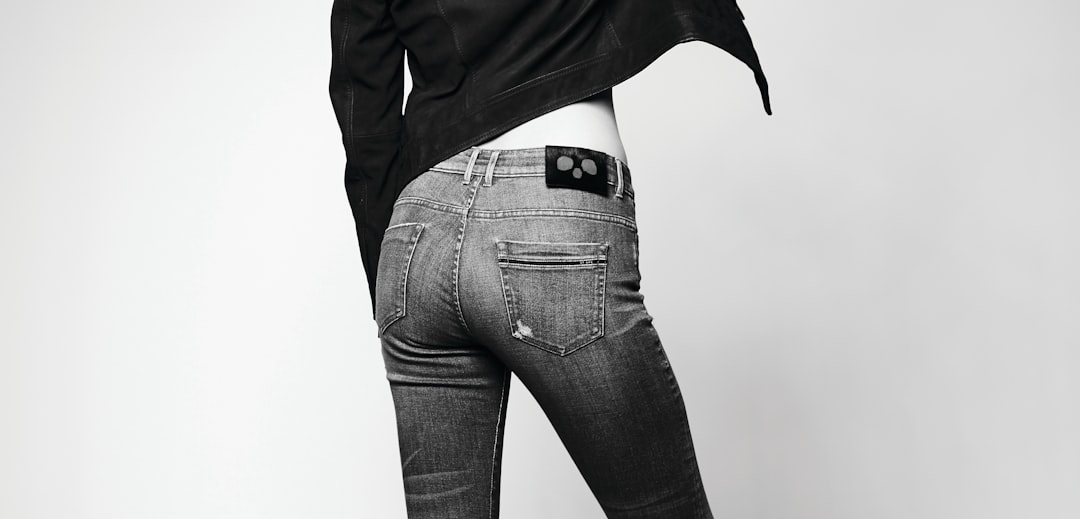
Spending $200 on a pair of jeans feels like a commitment, and for petites, the question is whether designer brands actually earn that money or just stick a “petite” label on a shortened standard pair.
I have spent the past year testing petite designer jeans from six brands that charge $180 or more per pair, and the differences between them are wider than you might expect. Some genuinely redesign for shorter proportions. Others hem and call it done. If you are building your denim wardrobe from our Petite Jeans (2026) guide, knowing which luxury brands actually deliver petite-specific construction saves you from expensive mistakes. Here is what I found after months of wearing, washing, and comparing these jeans side by side.
What you get at $180+ that you don’t at $80
The price jump from mid-range ($80) to designer ($180+) buys three things: fabric, hardware, and finishing. The fabric difference is the most obvious. Designer denim typically uses Italian or Turkish mills that produce tighter-woven cotton with controlled stretch recovery. After ten washes, my Mother Hustler jeans bounced back to their original shape every single time. My $70 jeans from the same period started bagging at the knees after wash five.
Hardware means zippers, buttons, and rivets. Designer brands use YKK zippers almost universally, branded buttons that do not corrode, and rivets placed at stress points rather than for decoration. These are small details, but they determine whether your jeans last two years or five.
Finishing covers stitching, hemming, and wash treatments. Designer washes are more nuanced, with intentional fading patterns that mimic natural wear rather than the uniform “dark rinse” or “medium wash” you see at lower price points. The stitching uses higher thread counts and more passes at stress seams. When you flip a pair of Mother jeans inside out and compare them to a pair of Gap jeans, the construction difference is visible immediately.
What you do not always get at $180+ is better petite proportioning. That is the critical distinction. Some brands at this price tier invest in actual petite pattern-making. Others take their standard patterns and shorten the inseam, which means the rise, pocket placement, and knee break are all wrong for a shorter frame.
Which designer brands actually do petite right
After testing extensively, here is my honest ranking of designer brands by their petite commitment.
Mother Petite Jeans is the top tier. Mother offers a dedicated petite line with redrawn patterns. The rise is shortened proportionally, pockets are scaled and repositioned, and the knee break hits where it should on a 5’2″ to 5’4″ frame. Their Hustler, Insider, and Looker cuts all come in petite, and the construction is identical to the standard line. The only downside is limited availability. Not every wash comes in petite, and they sell out quickly.
Paige Petite Jeans comes in close behind. Paige uses what they call their “Petite” designation for inseams of 27 to 28 inches, and they do adjust the rise and proportions on most cuts. The Hoxton, Verdugo, and Manhattan are all available in petite. Paige’s TRANSCEND fabric is genuinely excellent for stretch recovery. Where they fall short is pocket placement. On some cuts, the back pockets sit slightly too low even in petite, which shortens the visual line of the legs.
AG (Adriano Goldschmied) offers petite options in their core styles with adjusted proportions. The Legging Ankle in petite is a strong option. Their denim weight tends to be lighter than Mother or Paige, which some people prefer for all-season wear. AG’s petite proportioning is solid but not as refined as Mother’s pattern work.
Frame Petite Jeans takes a different approach. Rather than a full petite line, Frame offers the Le Pixie collection, which consists of cropped cuts designed for shorter legs. This works for some styles but means you are limited to crops rather than full-length options. The fabric quality is outstanding, using some of the best Italian denim on the market.
Citizens of Humanity offers a “Petite” option on select styles with a 28-inch inseam. The proportioning is adequate but not exceptional. At $210+, you are paying primarily for their fabric and wash quality rather than petite-specific design work.
AGOLDE is the most problematic for petites. They do not offer a petite line at all. Their popularity with shorter women comes from certain cuts that happen to run short, like the Riley crop. But that is not petite design. That is coincidence.
The proportioning test: who redesigns vs. who hems
There is a simple test to determine if a brand actually redesigned for petite or just shortened the inseam. Measure the front rise. In standard sizing, a “high rise” typically measures 10.5 to 12 inches. In properly proportioned petite, it should measure 9.5 to 10.5 inches. If the petite version has the same rise measurement as the standard, the brand just hemmed from the bottom and called it petite.
I measured the front rise on petite versions from each brand. Mother’s Hustler petite measured 9.75 inches versus 10.5 in standard. That is genuine proportioning. Paige’s Hoxton petite measured 10.25 versus 10.75. A smaller adjustment but still present. Frame’s Le Pixie Boot measured 9.5, which is properly scaled. Citizens of Humanity measured 10.5 in both standard and petite. That means they just hemmed it.
The other measurement that reveals true proportioning is the back rise. This determines where the waistband sits on your body and affects how the jeans look from behind. If the back rise is not shortened proportionally, the jeans will sit too high in the back relative to the front, creating an uneven waistband that tips forward. Mother and Paige both adjust the back rise. Citizens and AGOLDE do not.
Knee placement is the third tell. In properly proportioned petite jeans, the knee articulation (the slight curve sewn into the pattern at the knee) should hit at your actual knee. In shortened-but-not-redesigned jeans, it hits above the knee, which restricts movement and creates an awkward silhouette when you walk.
Best designer petite picks
If I had to build a designer petite denim wardrobe with three pairs, here is exactly what I would buy.
First, the Mother Hustler Ankle in petite. This is a high-rise straight leg with a slightly cropped length that hits perfectly at the ankle on a 5’3″ frame. The fabric is a cotton-polyester-elastane blend that holds its shape through dozens of washes. I have worn mine for about eight months now and they look nearly identical to the day I bought them. Current retail is around $228.
Second, the Paige Hoxton Ankle in petite. This is a high-rise skinny with Paige’s TRANSCEND fabric, which has the best stretch recovery I have tested in any brand. They feel like leggings but look like proper denim. After six months of regular wear, zero knee bagging. Around $189 retail.
Third, the Frame Le Pixie Boot for when you want a wider leg. The crop length means no hemming, and the Italian denim has a weight and drape that cheaper brands cannot replicate. Around $238 retail.
For a wider look at options, you can browse designer petite jeans through Petite Designer Jeans on Amazon where you will occasionally find past-season washes at a discount.
Is the splurge worth it? The honest math
Here is where I take a position. Designer petite jeans are worth the money if you wear jeans four or more days a week and you plan to keep each pair for two or more years. At that usage rate, a $220 pair of Mother jeans worn 200 times costs about $1.10 per wear. A $70 pair of mid-range jeans that bags out after six months and gets replaced costs more per wear over the same period.
Designer petite jeans are not worth the money if you rotate through trends quickly, if your body is in flux, or if you are building a petite wardrobe from scratch and need multiple pairs. In that case, start with mid-range brands from our Petite Jeans (2026) guide and upgrade to designer once you know exactly which cuts and rises work for your body.
The other honest reality: at $200+, you are paying partly for the brand. The construction difference between a $220 pair of Mother jeans and a $130 pair of Madewell jeans is real but not proportional to the price difference. You get maybe 30% more quality for 70% more cost. Whether that math works for you is personal.
The verdict
Petite designer jeans are not universally worth the splurge. They are worth it from brands that actually redesign for petite proportions, specifically Mother and Paige. Avoid paying designer prices from brands that just hem a standard pattern. If you can only buy one pair of designer petite jeans, make it the Mother Hustler. If budget is a concern, Paige on sale during the Nordstrom Anniversary Sale brings the per-pair cost down to a more justifiable range. And if designer pricing simply does not make sense for your wardrobe, there are excellent options at half the price that I cover in other reviews across this site.
Shop the look on Amazon
Everything you need to build a secondhand-style wardrobe, delivered. We may earn a commission on purchases.
FAQ
Which designer brand has the best petite jeans?
Mother has the most thoroughly proportioned petite line among designer brands. They adjust rise, pocket placement, and knee break rather than just shortening the inseam. Paige is a close second with excellent fabric technology.
Are designer petite jeans actually different from regular designer jeans hemmed shorter?
It depends on the brand. Mother and Paige genuinely redesign their petite patterns with proportional rise, pocket, and knee adjustments. Citizens of Humanity and AGOLDE mostly just shorten the inseam without other proportional changes.
How much should I expect to spend on designer petite jeans?
Retail prices range from $189 for Paige to $258 for some Mother and Frame styles. Sale prices during major events like the Nordstrom Anniversary Sale can bring these down 30-40%. Secondhand options on Poshmark and ThredUp run $60-$120 depending on condition and wash.
Can I find designer petite jeans at discount stores like TJ Maxx?
Occasionally, but petite sizes are rare at off-price retailers. The selection is inconsistent and you cannot count on finding a specific brand or cut. Nordstrom Rack online is a more reliable source for discounted designer petite denim than in-store shopping at TJ Maxx or Marshalls.


