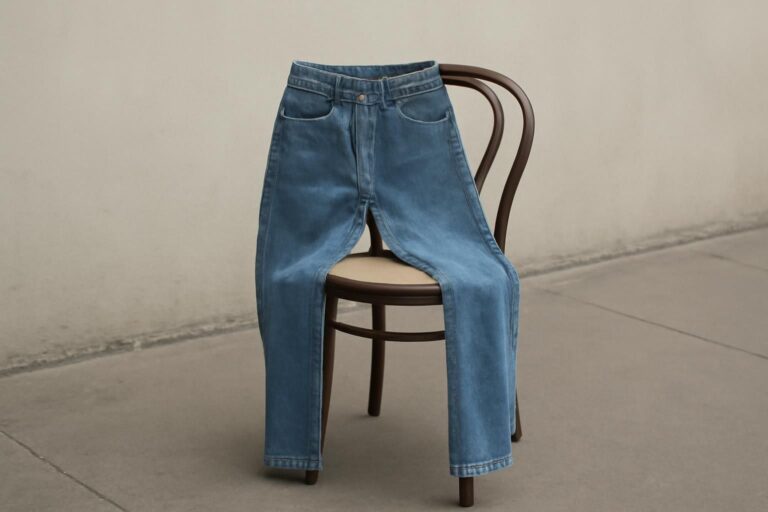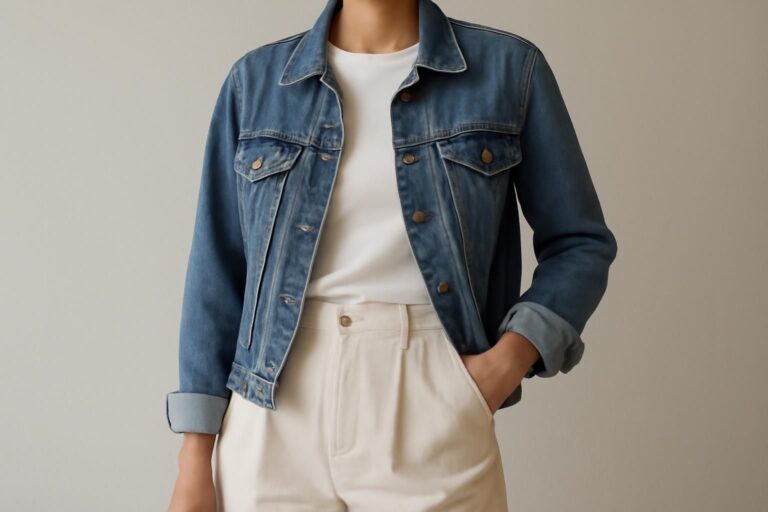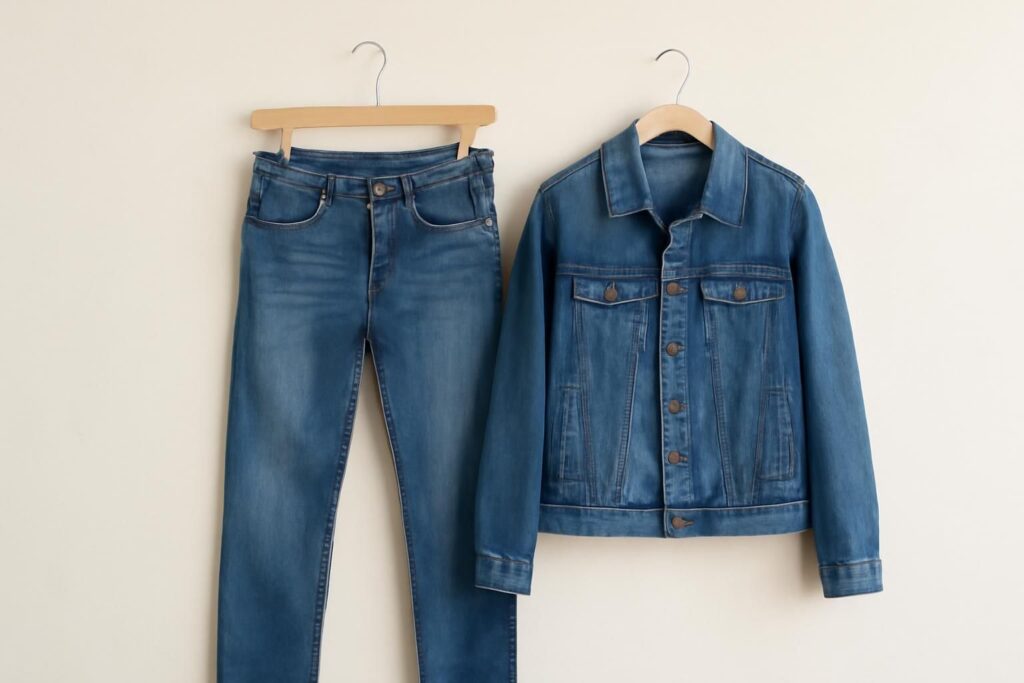
Lucky Brand has been through several company sales and a bankruptcy, and the brand is not what it was at its peak. Still, it remains one of the better mid-tier jeans a tall or athletic-build guy can buy off a department store rack.
The history matters, because the case for lucky brand jeans in 2026 is complicated: the brand was bought, reorganized, and repositioned after a 2020 bankruptcy, and the product on store racks today is not the same product Lucky sold a decade ago. This guide lives inside our larger Men’s Denim coverage because Lucky sits in a specific mid-tier slot that is hard to fill: more interesting than a basic Levi’s 501, cheaper than APC or Naked & Famous, and with a fit bias that works for guys with actual thighs. By the end you’ll know which numbered fits still earn their price, which washes age well, how the sizing runs, and where to buy at a fair price.
What Lucky Brand actually is in 2026
Top Lucky Brand Jeans picks on Amazon
As an Amazon Associate we earn from qualifying purchases. Prices and availability are accurate as of November 2026 and may change. Specs are as stated in each Amazon listing.

- Lucky Brand Men's Size Chart
- Designed for athletic shapes, these Lucky Brand® jeans give you enough room to move, and will…

- Lucky Brand Men's Size Chart
- The Lucky Brand® 181 Relaxed Straight Jean is cut loose for athletic builds, with a mid-rise…

- Designed for athletic shapes, these Lucky Brand jeans give you enough room to move, and will…
- The 410 Athletic Fit balances a relaxed fit with a modern slim leg.
Lucky Brand Jeans was founded in Los Angeles in 1990 by Gene Montesano and Barry Perlman. The brand was acquired by Liz Claiborne (later Fifth & Pacific and then Kate Spade’s parent) in 1999, sold to Leonard Green & Partners in a deal announced in late 2013 and closed in early 2014, and filed Chapter 11 in July 2020 during the pandemic retail collapse. Out of bankruptcy, Authentic Brands Group took the Lucky Brand intellectual property and SPARC Group, an operating company backed by Simon Property Group and Authentic Brands, took over the business under licence. In January 2025 SPARC merged with JCPenney to form Catalyst Brands, which now runs Lucky Brand alongside Aéropostale, Brooks Brothers, Eddie Bauer, Nautica and JCPenney, while Authentic Brands still owns the Lucky name. The practical effect: Lucky today is a licensed brand, not a vertically integrated denim maker, with contracted manufacturing and distribution through its own stores, department stores and e-commerce.
What this means for a jeans buyer: pre-2020 Lucky Brand and post-2020 Lucky Brand are meaningfully different products under the same name. Shoppers who compare old and new pairs often find the newer denim lighter and the details simpler, so judge each pair in hand. The core fit blocks (121, 410, 223, 363) are still in the line, though the 221 no longer appears in Lucky’s online catalog. Not ruined. Just lighter. The brand is still worth buying, but at a lower price point than it used to command, and with a clear idea of what you’re paying for.
The lucky brand jeans logo and how to spot a counterfeit
The lucky brand jeans logo tells you most of what you need to know about authenticity at a thrift or Poshmark resale. The back patch carries the Lucky Brand wordmark. Compare the patch material, lettering and spacing with photos on LuckyBrand.com or a pair you know is authentic, because sloppy lettering is a common counterfeit tell.
Lucky’s signature detail is the phrase “Lucky You” in the fly. A pair with no fly detail at all, or with crude, uneven work there, deserves a closer look. If you’re shopping secondhand (Lucky Brand Jeans Mens on Poshmark has a deep catalog), open the fly and check.
Back-pocket stitching on authentic pairs should look even and continuous. Broken, wandering or doubled-up lines are worth questioning, especially on resale listings.
The men’s fits and what each one does
Lucky’s numbered fit system is less interesting than Levi’s but more informative than most mid-tier brands. Here’s what each number is designed to do. Lucky renames and reworks fits over time, so check the current product page for rise, leg opening, and fabric before ordering.
121 Heritage Slim
The current slim-straight benchmark. Modest thigh taper, mid-rise. This is the Lucky equivalent of a Levi’s 511 Slim Fit — similar silhouette, with a bit more room through the upper thigh. Stretch versions feel comfortable within a couple of wears. This is the sensible default for anyone trying Lucky for the first time.
221 Original Straight
Mid-rise, straight through the leg. The 221 had a strong reputation as one of the best straight-leg mid-price jeans of the 2010s. It doesn’t appear in Lucky’s online catalog as of November 2026, so secondhand is the main place to find one. If you wore Levi’s 505 in 2010 and wish the current 505 fit like that old one, buy a 221. It covers that exact space.
410 Athletic Slim
Room through the thigh and seat, tapered from knee to ankle. Lucky now sells this fit as the 410 Athletic Straight (formerly 410 Athletic Slim). It is the cut for cyclists, lifters, and anyone whose quads have outgrown standard slim cuts. For a comparison, this is what Levi’s 541 Athletic Taper tries to be and Lucky does it a shade better through the seat. If your thigh-to-waist ratio is awkward in a standard slim, the 410 is the answer. See also the broader Best Jeans for Men with Big Thighs rundown for cross-brand picks.
223 Straight
Classic mid-rise straight. Slightly roomier in the thigh than the 221, with a cleaner drop from knee to ankle. This is the pair for bigger, taller builds who hate when jeans grab at the knee. The 223 doesn’t.
363 Vintage Straight
The closest Lucky gets to a 501-style cut. Higher rise than the rest of the line, straight through the leg, slightly more generous seat. In 100% cotton it is the Lucky cut most likely to fade with character, developing honeycombs and whiskers over years of wear. If you want one Lucky cut to keep long-term, this is the strongest candidate.
410 Coolmax and newer performance cuts
Post-bankruptcy Lucky has pushed Coolmax and stretch fabrics into most of the core numbered fits. Coolmax versions add moisture-wicking fibers; check the product page for the exact fabric content. Coolmax versions are comfortable and well-cut, but like most stretch denim they tend to bag at the knee sooner than 100% cotton. Good for hot days. Not the pair to buy if you want maximum lifespan.
Are any lucky brand jeans made in USA?
Short answer: not meaningfully, not in 2026. Older Lucky Brand pairs from the brand’s Los Angeles years can carry “Made in USA” labels, and those are the ones thrifters hunt for. Current production is made overseas, and the care label on each pair names the country.
There has been no meaningful revival of the USA-made line post-bankruptcy. If someone tells you a current pair of lucky brand jeans is US-made, they’re either misreading the tag or looking at a vintage pair. Vintage lucky brand.jeans from the early 2000s do turn up on eBay and Poshmark with authentic “Made in USA” labels, and many shoppers find the fabric on those heavier than the current product. If domestic production is your hard requirement, look at Men’s Raw Denim Jeans picks like Tellason, 3sixteen, or Raleigh Denim instead — that’s where the US-made mid-price segment actually lives now.
Fabric, weight, and durability
Lucky’s product pages don’t consistently state fabric weights, so compare fiber content and the feel in hand. Many secondhand shoppers find older pre-2020 pairs heavier than current ones, a difference you notice more at the first wash than during wear. The older fabric softens to a leathery hand after 50 wears. The current fabric softens to a plusher, cottony hand at the same wear count.
A 100% cotton Lucky pair worn regularly ages the way traditional denim does: honeycombs behind the knees, whiskers at the hip, and a clean wear line at the pocket. The weak points to watch are the back pocket bartacks and the knees, which is usually where a long-worn pair finally gives out.
Current stretch pairs (cotton with about 1% elastane) behave differently. They are comfortable sooner, the knee can start to bag after months of regular wear, and the hand is softer than an older all-cotton pair at the same wear count. This is the current-production difference in one sentence: it’s comfortable faster, it doesn’t develop the same faded character, and it won’t last as long.
For care, wash cold and inside out, and hang dry. If you want to relax the fibers, a short tumble on low is enough; full hot dryer cycles are what shorten the life of stretch denim fastest. Steam-ironing the waistband flat keeps a stretch pair looking tidy.
Sizing: how Lucky runs at the waist and inseam
Lucky waists generally run close to true, but vanity sizing varies across brands and across stretch and rigid fabrics, so the number on another brand’s tag is not a reliable guide. Measure the waist of a pair that fits you well, laid flat, and compare it with the measurements on Lucky’s size chart or the listing. Expect a rigid 100% cotton pair to feel firmer at first than a stretch version in the same size.
Lucky has historically been a tall-guy favorite because its longer inseams give a clean full break without cuffing on taller frames (Best Jeans for Tall Men has more on brands that run long). If you’re shorter and buying a 34 because that’s your usual tag, measure your inseam first so the hem doesn’t pool at the shoe, and pick a 32 or 30 if needed.
Rise is mid on most of the line, sitting around the hip bone; the 363 is the higher-rise option. If you’re cross-shopping Levi’s, the 363 is the closer match to a 501-style rise, while the slimmer cuts sit nearer a 511.
Thigh: the 410 is the strongest athletic cut in the mid-tier price range, with noticeably more room through the thigh than the 121 at the same waist. If your thighs are the reason slim jeans don’t fit, start with the 410.
The sizing negative
Lucky’s current stretch cuts can loosen at the waistband over months of wear. This is an inherent elastane fatigue issue and not unique to Lucky, but it’s worth planning for. If you’re between sizes on a stretch 121 or 410, take the smaller size. The 100% cotton 363 holds its waistband better.
What stores sell lucky brand jeans right now
This question turns out to be more complicated than it should be. Pre-2020, Lucky had standalone retail stores in most major markets and a robust e-commerce presence. The 2020 bankruptcy closed some stores, but Lucky still runs full-price and outlet stores, including locations in Simon malls and Premium Outlets centers, alongside LuckyBrand.com.
Today, the distribution looks like this: Lucky’s own stores and outlets, plus department stores such as Macy’s and Dillard’s, carry selected fits as of November 2026. Amazon carries a wide range of current-season Lucky, often at MSRP-adjacent prices. The official LuckyBrand.com site exists and is the best source for current washes and newer capsule drops. Off-price stores such as Ross, T.J. Maxx and Marshalls sometimes carry past-season pairs.
The tricky part: outlet and off-price channels can carry pairs made for that channel, which may differ from full-price versions in fabric or details. At discount channels, check the tag, the fabric content and the back patch before you buy.
For broader mid-price mens denim availability, see Men’s Jeans Sale for when seasonal sales hit. And if you want to shop the current catalog live, Lucky Brand Mens Jeans 410 on Amazon and Shop on Amazon are good places to check inventory.
Lucky vs. the rest of the mid-tier: Levi’s, Lee, Citizens of Humanity
Lucky’s natural competitors are Levi’s Red Tab at similar price points, Lee, Gap 1969, and at the slight premium end, 7 For All Mankind and Citizens of Humanity. Here’s how they compare for a mid-price men’s jean under $90.
Against Levi’s, Lucky wins on thigh room in the athletic cuts and loses on hardware quality and brand ecosystem. A Lucky 410 fits better than a Levi’s 541 for most muscular-leg builds. A Levi’s 501 or 511 is a more complete piece of workmanship than a Lucky 221 at the same price. See the full Levi’s Jeans and Levi’s Jeans for Men if you want to cross-shop.
Against Lee, Lucky wins on style and fit block variety. Lee has better heritage construction on its premium Lee Riders line but the standard Lee lineup has lost ground over the last decade and is mostly competing at the budget end now.
Against Citizens and 7FAM at the premium end, Lucky is clearly the budget option. The fabric, stitching, and hardware are all a grade lower. You’re paying half the price for a jean that delivers maybe 70% of the result. That’s not bad — that’s honest mid-tier math.
Against designer brands in the $200+ range, Lucky is nowhere near comparable. See Men’s Designer Jeans Under $200 and Designer Jeans for Men for that tier specifically.
The Lucky Brand washes worth knowing
Wash naming at Lucky has always been inconsistent and the current catalog hasn’t fixed it. Here are the wash families that actually show up across seasons and which are worth buying.
Rinse / Dark Indigo: The darkest washes. Close to raw denim aesthetic without the break-in period. Best for office and date-night wear. The 363 in a dark rinse is the most versatile lucky brand jean in the line.
Medium wash / Classic Blue: The default Lucky look. Subtle fading, honeycombs barely visible. Works with every shoe. The 121 and 221 are strongest in medium.
Light wash / Light Stone: More fading, more character. This is where the brand’s LA DNA comes through. Looks right with a white t-shirt and looks wrong under a blazer. Light washes are mostly a summer pair.
Destroyed / Distressed: Lucky has been doing distressed washes since 1990 and they’re still decent at it. The distress is usually shallower than what you’d get from Balmain or Amiri, which keeps it from looking costume. A destroyed 410 makes sense as a second or third Lucky pair, not a first.
Black: Lucky’s black washes are hit or miss. The coated blacks hold color well; the true dyed blacks fade to grey within a year. Read recent reviews before buying. For cross-brand options in black denim, Men’s Black Jeans is the deeper read.
Where Lucky Brand jeans actually fall short
The limitations are worth stating plainly, because the brand is still recommended here and you should know what the ceiling looks like.
Hardware is the weakest part. Check the rivets and the zipper on any pair before you buy; current-production hardware is a step down from the pre-bankruptcy era. If a zipper starts catching at the top stop, an alterations shop can usually swap in a replacement YKK zipper for a modest fee. Levi’s Red Tab hardware is better at the same price point.
Stitching consistency varies. Two pairs of the same model in the same size, bought months apart, can show visibly different chain-stitching density at the inseam. This is a common issue with offshore production runs and Lucky is not alone in it, but it’s real, so inspect pairs in person when you can.
Wash fading direction. Current-production Lucky denim tends to fade evenly across the whole leg rather than developing concentrated honeycombs behind the knee. That’s a cotton-fiber and wash-chemistry issue, and it means the jeans age into a more generic look than a pre-2018 pair did. If you specifically want honeycomb character, the older 363 heritage cuts and raw-denim specialists outside Lucky are your better bet.
Waistband roll on stretch cuts. The Coolmax and 1% elastane pairs can develop a slight waistband roll at the front with months of wear. It’s cosmetic, not structural, and an iron flattens it.
Brand reputation has softened. This is not a product issue but it’s real: Lucky’s cultural position is not what it was in 2005. You’re no longer buying a cool LA-scene jean. You’re buying a solid mid-tier department store jean with some leftover brand equity. Price accordingly when you’re deciding what to pay.
Pricing, sales, and when to actually buy
List prices for men’s jeans on LuckyBrand.com run from about $89.50 to $148 depending on fit and fabric, as of November 2026. Almost nobody needs to pay MSRP. Discounts show up across several channels:
Ross and T.J. Maxx sometimes carry past-season inventory. Amazon carries current catalog pricing with occasional drops on specific washes. LuckyBrand.com runs seasonal promotions with codes. As of November 2026, some 410 Athletic Straight colors were listed on LuckyBrand.com at about $69 to $90 against list prices of up to $129.
A practical approach: buy during LuckyBrand.com or department-store promotions, or at off-price stores when the specific fit and wash you want is there, and check Lucky Brand Jeans 363 Mens on Amazon and Lucky Brand 410 Mens on Poshmark regularly, because the secondary market is real and lightly used 363s on Poshmark often cost well under half of retail.
Who Lucky Brand is and isn’t for
Buy Lucky Brand jeans if: you have muscular or athletic-cut thighs and have struggled to find slim-fit jeans that don’t grab at the quad, you want a mid-price department store jean that runs true at the waist and long at the inseam, or you want something slightly more interesting than a standard Levi’s 501 without spending Citizens money. The 410 Athletic Straight and 363 Vintage Straight are the two fits to put money on.
Skip Lucky Brand jeans if: you want maximum durability at the price point (pick Wrangler 13MWZ or Dickies Carpenter — Wrangler Jeans and Dickies Jeans cover both), you want American manufacturing (look at the raw denim specialists), you want cutting-edge current fashion silhouettes (Lucky has not led on trend-forward cuts since 2012), or you want the kind of hardware execution that justifies a premium sticker.
Shop our picks: Lucky Brand Men’s 410 Athletic Slim Jean, Lucky Brand Men’s 223 Straight Fit Jean, Lucky Brand Women’s Tomboy Trucker Jacket.
The verdict
Lucky Brand jeans today are a solid mid-tier buy at the right price, not a lifestyle purchase. The 363 Vintage Straight and the 410 Athletic Straight are the two fits in the current catalog that still deliver on the brand’s historical strength: interesting proportions, honest denim weight, and fit blocks that work on bodies Levi’s and Wrangler don’t serve as well. Buy them on promotion at the main site, at Lucky outlets or during department-store sales. Don’t pay MSRP. Check fabric and details on outlet and off-price pairs. Expect a 100% cotton pair to outlast a stretch pair by a wide margin. The brand’s been through a hard decade, but the product is still useful, and for a tall guy with athletic thighs, it’s still a rack worth checking first.
If you want the fits covered in more detail, the Lucky Brand Men’s Jeans model-by-model piece goes deeper on each number. For a broader price-tier rundown, Affordable Jeans for Men Under $50 That Don’t Look Cheap is worth reading before you commit.
Shop the look on Amazon
Everything you need to build a secondhand-style wardrobe, delivered. We may earn a commission on purchases.
Browse picks on Amazon →FAQ
Are Lucky Brand jeans still made in the USA?
Not in any meaningful volume. Current Lucky Brand jeans are made overseas, and the care label names the country. Vintage Lucky Brand pairs with “Made in USA” tags do exist and show up on Poshmark and eBay, and the fabric on those runs heavier than current production.
What stores sell Lucky Brand jeans now?
Lucky’s own full-price and outlet stores, LuckyBrand.com, department stores such as Macy’s and Dillard’s, and Amazon all carry Lucky jeans as of November 2026. Off-price stores such as Ross, T.J. Maxx and Marshalls sometimes carry past-season pairs. LuckyBrand.com has the fullest catalog.
Do Lucky Brand jeans run true to size?
The waist runs close to true on the 100% cotton cuts, while stretch-denim cuts can loosen with months of wear, so take the smaller size if you’re between sizes on a stretch pair. Lucky has a reputation for longer inseams, which works well for tall men; shorter men should check the inseam measurement before ordering. The 410 athletic cut runs roomier through the thigh than a Levi’s 511 at the same waist.
How do Lucky Brand jeans compare to Levi’s?
Lucky wins on thigh room for athletic builds and on fit-block variety. Levi’s wins on hardware quality, stitching consistency, and brand ecosystem (sizing charts, tailoring availability, retail support). For a muscular-leg buyer, Lucky 410 beats Levi’s 541. For everything else, Levi’s is the safer bet at the same or lower price.
How can you spot counterfeit Lucky Brand jeans?
Check the details. Authentic pairs carry the Lucky You phrase in the fly, a cleanly made back patch with even lettering, and neat, continuous back-pocket stitching. Compare against photos on LuckyBrand.com, and treat listings with missing or sloppy details as suspect.
What is the best Lucky Brand jeans cut for everyday wear?
The 121 Heritage Slim for most men wanting a modern silhouette. The 363 Vintage Straight for men wanting a higher-rise, slightly heavier jean that wears in beautifully. The 410 Athletic Straight (formerly 410 Athletic Slim) for muscular-leg builds. Avoid the Coolmax stretch versions for long-term wear and stick to 100% cotton or 99/1 cotton-elastane cuts if you’re buying for durability.