
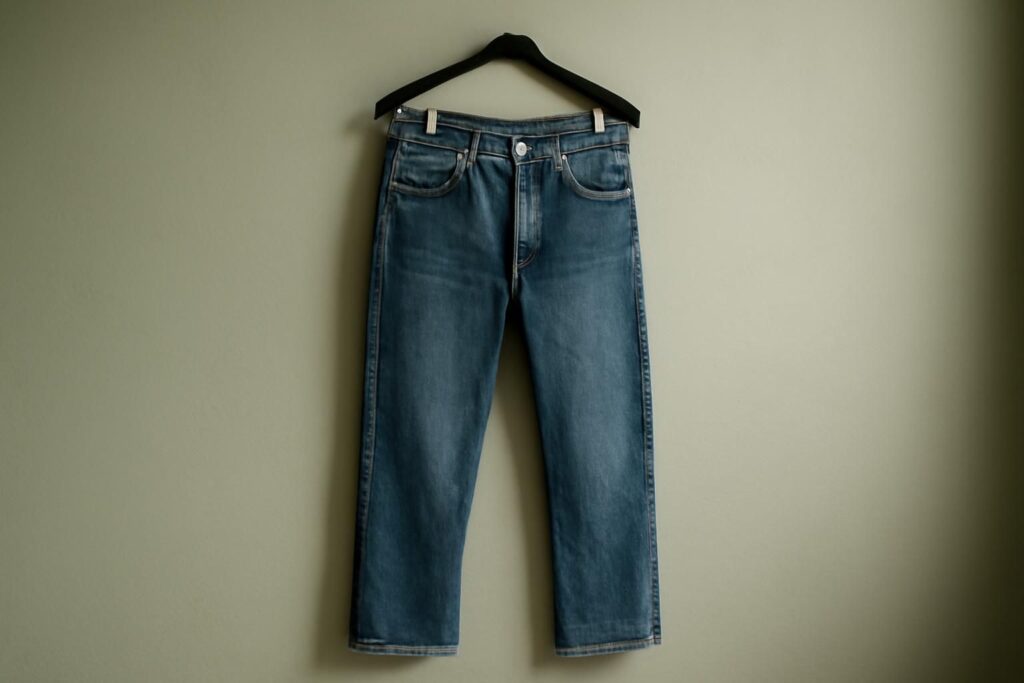
The Levi’s number system looks like arcane trivia and is actually a practical guide to which jean fits which body. Here’s what every number means in 2026, based on Levi’s own fit descriptions and published measurements.
Levi jeans for men come in roughly 14 active fit numbers, and most buyers pick between three of them without understanding why. The 501. The 511. The one they saw on someone once. This guide is the full breakdown of every current men’s Levi’s fit: rise, thigh, leg shape, fabric, and who each one actually suits. It sits alongside our broader Mens Denim coverage and our specific Levi’s Jeans brand deep-dive. The goal here is narrow: get you to the right jean men by body type and use case, and show which fits overlap, which ones are worth the attention, and which ones have become hard to find.
The number system, decoded
Top Levi Jeans For Men picks on Amazon
As an Amazon Associate we earn from qualifying purchases. Prices and availability are accurate as of November 2026 and may change. Specs are as stated in each Amazon listing.

- Low Rise: 10.25
- Thigh: 23.5", Knee: 17.5", Leg Opening: 16"


- Sits At Your Waist: Mid Rise; 11 1/4" , Front rise: 11 1/4",Knee: 18",Leg opening: 16", Measurements…
Levi’s fit numbers are three-digit codes, and Levi’s does not publish a digit-by-digit key, so treat any decoder you see online as folklore. What does hold up is the grouping. The 500 series is the core men’s line. Straight fits include the 501, 505, and 514. Tapered fits include the 502, 512, and 541. The 511 is the modern slim, the 510 is the skinny, the 517 is the bootcut, and the 550, 559, and 569 are the relaxed and loose fits. The 501 descends from the riveted work jean Levi’s patented in 1873, and the 505 was introduced in 1967 as a zip-fly alternative.
How to use this guide: Levi’s lists measurements on its product pages based on a size 32, so compare those numbers with a pair you already own. Where a fit suits specific body types, it’s noted under each entry.
501 Original
The founding jean. Levi’s describes the 501 Original as sitting at the waist, regular through the thigh (not slim, not loose), with a straight leg and a button fly. On a size 32, Levi’s lists an 11 1/4-inch front rise, a 17 1/2-inch knee, and a 16-inch leg opening. Many washes are 100% cotton non-stretch, and some are listed at 99% cotton with 1% elastane.
Fit character: classic and honest. Not fashion-forward, not dated. It sits outside trend cycles because the silhouette has changed little over decades. Works on most men’s bodies because the straight leg is forgiving and the rise is classic. It dresses up for weddings and down for travel and weekends, and 100% cotton washes develop character with wear.
Honest negative: the button fly takes getting used to. It is slower than a zip, and first-timers usually need a few weeks before it feels normal.
Who it’s for
Every man can wear a 501. Best for men with standard-to-muscular thighs and a standard seat. Looks slightly baggy on very slim builds.
501 Original Shrink-to-Fit
The rigid, raw-denim version of the 501. It is not preshrunk and is designed to shrink and mould to the wearer. Levi’s puts the average shrinkage at about 1 inch in the waist and 2 to 3 inches in length, and its own pages disagree on exactly how to size it, so read the sizing note on the product page before ordering.
Why bother: raw denim develops higher-contrast fades than pre-washed denim because the indigo has not been washed down before you wear it, and the fabric moulds to your body as it shrinks. If you want the classic contrast fades that heritage denim enthusiasts chase, this is the path.
Expect a long break-in. Raw denim fans typically wear a pair for months before the first wash to set creases at the knees and hips, and a pre-washed pair never develops quite the same contrast.
Who it’s for
Men willing to commit to a single pair of jean men for a year before they look good. Denim enthusiasts. Everyone else: buy the pre-washed.
502 Regular Taper
The middle ground between the 501 straight and the 511 slim. Levi’s describes the 502 as giving more room in the thigh, then tapering toward the ankle. Many washes use a stretch blend; check the fabric line on the listing.
Fit character: safe and modern. Not as trendy as the 511, not as heritage as the 501. A sensible pick for men who find the 501 too straight and the 511 too slim, and a good starting point for anyone who hasn’t worn Levi’s in a decade and wants something current without commitment.
Who it’s for
Standard-to-muscular thighs, men in their 30s and 40s, anyone who wants modern proportions without skinny. Probably the most broadly flattering mens levi jeans in the current lineup.
505 Regular
The 501’s zip-fly sibling. Levi’s describes the 505 as a classic straight leg with more space in the thigh and knee. Introduced in 1967 for men who didn’t want the button fly. On a size 32, Levi’s lists the same 11 1/4-inch front rise and 16-inch opening as the 501, with an 18-inch knee. Still one of the most widely sold fits.
In practice the 505 fits very close to the 501, with a little more room through the thigh and knee and a zip fly. If the button fly is a dealbreaker for you, buy the 505 instead. You’re not losing anything but the heritage button arrangement.
Who it’s for
Exactly who 501 is for, minus the button fly tolerance.
510 Skinny
Levi’s says the 510 hugs the legs tightly from thigh to ankle. Low rise, slim thigh, narrow leg opening, usually in stretch denim.
Fit character: skinny. Not slim, skinny. Reads 2010s. On a lean build it works. On a standard-to-athletic build it constricts the thigh and looks squeezed, which is the most common reason men return a 510: the leg looks right, the thigh feels wrong.
Who it’s for
Men with genuinely slim legs. Height under 6’0″ helps — the proportions read dated on tall frames. If you’re trying to look current in 2026, skip 510 entirely and pick 511 or 512.
511 Slim
The modern slim standard. Levi’s positions the 511 as its slim fit that stays tailored throughout, sitting below the waist, with a slim thigh and modest taper. Most washes include a little elastane.
This is one of the most widely recommended fits in the current Levi’s lineup, and for good reason. The thigh is slim without strangling, the taper is modest enough to work over a boot or a sneaker, and the rise hits where most men want a modern jean to hit. Dark indigo, faded mid-blue, and black versions cover almost every non-work context.
Honest negative: the stretch fiber in a 511 is the part that fatigues first under heavy wear, which shows up as knee bagging and, eventually, crotch wear. Rotate two pairs and don’t wear the same one three days running.
Who it’s for
Standard to slim builds and anyone wanting a modern silhouette that isn’t aggressive. The best first pair of Levi jeans for most men in 2026.
512 Slim Taper
Close to the 511 with a sharper taper. Levi’s describes the 512 as having a narrower leg opening and a more streamlined silhouette than the 511. The distinction is small enough that many men won’t notice unless they try both.
Side by side in the same wash, the 512 reads slightly more fashion-current and the 511 slightly more neutral. Compare the leg opening measurements on the two product pages if you’re choosing between them.
Who it’s for
Same audience as 511 with a preference for sharper taper or higher rise. Either fit works.
513 Slim Straight
Slim through the thigh, straight leg below the knee. Meets in the middle between 511 (tapered slim) and 505 (straight regular). Decent fit that doesn’t get much attention in marketing.
The silhouette doesn’t read as specific as either the 511 or the 505, which is both the strength and the weakness: safe, versatile, not memorable. If neither slim-taper nor straight-regular is quite what you want, the 513 splits the difference.
Who it’s for
Men who want slim-through-thigh with straight-below-knee. Narrow case but real.
514 Straight
Levi’s describes the 514 as a straight-leg cut with more room throughout the leg than the 511. Positioned between the 505 and the 513, usually in fabric with slight stretch.
In practice the 514 fits more like a slim-straight than a true regular. The thigh is closer than the 505 and the leg runs straight rather than tapered. It’s the fit to choose when you want a straight-leg look without the roominess of the 501 or 505.
Who it’s for
Men who want straight leg with a slimmer thigh. Good pick for lean-athletic builds.
541 Athletic Taper
Levi’s says the 541 is designed to fit more muscular thighs and legs, with extra room in the seat and thigh and a tapered leg. This is the fit for weightlifters, cyclists, and anyone with quad-dominant legs.
For men who tear out thigh seams in regular-cut jeans, the 541 is the usual fix. On a standard build, the 541 looks intentionally roomy through the upper leg, fine if you want that silhouette, dated if you don’t.
Who it’s for
Athletic/muscular builds, quad-dominant body types, anyone who tears out thigh seams on regular-cut jeans. Specific audience, real product.
550 Relaxed Fit
Levi’s describes the 550 as much looser in the seat and thigh, finishing in a tapered leg. Still a big seller at outlets and through Amazon.
Wears comfortably. Looks slightly dated in a pure-fashion context but honest and functional in a work or weekend context. It is the classic choice for men who have never been interested in slim and have no plans to start.
Who it’s for
Men prioritizing comfort over silhouette, larger builds through the seat and thigh, men over 50 who never stopped liking the 1990s cut. Not a fashion pick.
559 Relaxed Straight
The big-and-tall fit. Levi’s describes the 559 as loose through the thigh, sitting at the waist, with a straight leg that doesn’t taper. Designed for men with larger frames, and the Big & Tall size chart runs up to a 60-inch waist. Full review in Levi’s 559 Relaxed Straight.
For a tall, broad build carrying weight through the midsection, the 559 fits where no slim cut comes close. Check the fabric line on each wash, since composition varies.
Who it’s for
Big-and-tall builds. Men who carry weight through the midsection. A specifically engineered fit for a real audience.
560 Comfort Fit
Similar to 559 with slightly more taper. Mid-rise, generous seat, tapered leg. Sells mostly through mass retail and outlets.
Think of it as a slightly less roomy alternative to the 550 with a modern nod. Useful if you’ve tried the 550 and wanted less fabric below the knee.
Who it’s for
Between-sizes comfort buyers who find 550 too roomy and 541 too athletic.
569 Loose Straight
Availability is patchy, but levi.com still lists 569 Loose Straight product pages, and the fit turns up on Amazon and in vintage/resale markets. Wider thigh, wider leg opening, early 2000s silhouette.
The 569 is having a minor resurgence because loose straight is a current men’s trend. If you want that silhouette from a legitimate brand without paying Y2K-label markup, the 569 is the answer. Expect it to fit exactly as intended: roomy, straight, slightly dated, currently on trend.
Who it’s for
Men specifically pursuing the wide-straight trend. Men over 6’0″ who find modern slim proportions cramped. Fashion-adjacent buyers who don’t want the premium of a trendy designer label.
568 Loose Straight
Essentially a 569 with slightly less volume. Largely missing from current retail but findable on resale sites. Same audience as the 569.
Premium tier: Vintage Clothing and Made in Japan
Above the Red Tab line, Levi’s sells premium jeans such as Levi’s Vintage Clothing reissues (for example the 1967 505) and Made in Japan styles, and it has sold a Made & Crafted line in the past. These use premium denims, often selvedge, and cost well above a standard 501.
What you pay for is fabric and detail: selvedge denim, period-correct construction, and finishing closer to what denim enthusiasts look for. If you’re going to wear a single pair as your primary jean for years, the premium can make sense. If you rotate pairs, stick to Red Tab.
Who it’s for
Single-pair wearers, denim enthusiasts, and anyone willing to pay a premium for fabric and heritage detail.
Which fit to actually buy first
If you haven’t owned Levi’s in a decade and want one pair: 511 Slim in dark indigo. Works everywhere short of a suit context.
If you want heritage: 501 Original in rinse or medium wash. The classic for a reason.
If you have muscular thighs: 541 Athletic Taper.
If you’re big-and-tall: 559 Relaxed Straight.
If you want current-trend wide: 569 Loose Straight while you can still find them.
For sizing across these fits, our Levi’s Size Chart for Men piece covers the numbers in detail. For comparison against Wrangler’s parallel lineup, see Levi’s vs Wrangler.
Sizing notes across Levi’s fits
Sizing is reasonably consistent across Red Tab fits at the same tagged waist, but stretch washes feel more forgiving at the waist than 100% cotton washes, so try both if you’re between sizes. Shrink-to-Fit shrinks on the first soak, so size it according to the product page’s instructions.
Inseam lengths vary by fit and wash, and Levi’s offers more lengths on core fits like the 501 and 511 than on specialty fits. Check the size run on the exact product page.
Waistband roll-out (the phenomenon where a low-rise jean’s waistband splays open at the back) is most common in 510 and 511 on men with standard-to-pronounced lumbar curves. If you get waistband gap, try 502 or 514 at the same tag size — the higher rise usually fixes it.
Downside: vanity creep
Fit can drift between production runs and between washes of the same fit. Don’t assume your historical size will fit the same in current production without trying, and compare the listed measurements with a pair you already own.
Fabric across fits
Levi’s lists fabric composition on each product page, and it varies by wash. As a guide: the 501 and 505 are mostly 100% cotton, with some stretch washes. The 501 Shrink-to-Fit is raw 100% cotton. The 511, 512, 502, and 541 are mostly stretch blends with a small share of elastane. Relaxed fits like the 550 and 559 vary by wash. The premium Vintage Clothing and Made in Japan styles use premium cotton denims, often selvedge.
Rigid cotton generally lasts longer than stretch blends. If durability is your priority, choose a 501 in 100% cotton or a premium rigid pair. If comfort is your priority, choose a 511 or 502 in stretch.
Where to buy by fit
501 and 511 are available everywhere Levi’s is sold. Specialty fits (541 Athletic Taper, 559 big-and-tall) have better in-stock availability at Levi.com and Amazon than at department stores. Outlets carry deep discontinued stock if you’re hunting 568/569 or last-season washes.
For current-production pricing, Amazon is often among the cheapest channels and has an easy return process. Check Levi Jeans Men on Amazon alongside levi.com. Levi.com runs regular seasonal sales. Full-price levis store locations charge list price; try on there and compare prices before you buy.
The verdict
The Levi’s fit number system isn’t complicated once you have a map. 501 is heritage straight. 511 is modern slim. 505 is the zip-fly 501 with more thigh room. 550 is comfort relaxed. 559 is big-and-tall. 541 is athletic. 510 is the skinny, and its neighbors 512, 513, and 514 are small variations around the 511. The rest are either hard to find or edge cases.
Most men should buy a 511 first, a 501 second, and a 502 or 550 third depending on how much room they want. That three-pair rotation covers most men’s denim needs. The premium tier is worth the money for single-pair wearers. The rest of the numbered fits are specialization: good products in narrow lanes.
Don’t overthink it. Pick the fit that matches your build, buy it at a discount channel, and wear it for years. That’s the job.
Shop the look on Amazon
Everything you need to build a secondhand-style wardrobe, delivered. We may earn a commission on purchases.
FAQ
What’s the difference between Levi’s 501 and 511?
The 501 is the heritage straight-leg fit with a button fly, sitting at the waist and regular through the thigh. The 511 is the modern slim fit with a zipper fly, a lower rise, slimmer thigh, and modest leg taper. Fabric differs too: most 501 washes are 100% cotton, while most 511 washes include elastane. The 501 is timeless; the 511 is contemporary. Most men will find the 511 fits closer to current fashion expectations.
Are Levi’s 505 the same as 501?
Very close. Levi’s lists the same front rise and leg opening on a size 32. The main differences are the zipper fly (505) versus button fly (501) and more room in the thigh and knee on the 505. If you like the 501 silhouette but don’t want the button fly, the 505 is the answer.
Which Levi’s fit is best for thick thighs?
The 541 Athletic Taper is designed to fit more muscular thighs and legs, with extra room in the seat and thigh and a tapered leg. Second best: the 550 Relaxed, which Levi’s describes as much looser in the seat and thigh. The 505 also has more thigh room than the 501. Avoid the 510 Skinny and 511 Slim if you’ve torn out thigh seams on other jeans.
Do Levi’s 511 stretch out?
They can. The small share of elastane in most 511 washes loses some recovery with heavy wear, leading to waistband loosening and knee bagging. Washing cold and tumble drying low slows the process. Once a 511 stretches out, it tends to stay that way. Rotating two pairs spreads the wear.
What Levi’s fit is closest to a standard “regular” jean?
The 505 Regular is the closest to what most men would describe as a default regular jean: straight leg, sits at the waist, a little extra room in the thigh, zipper fly. The 501 is similar but with button fly. The 514 Straight is slightly slimmer but still straight. If you want nothing surprising about the silhouette and a broadly acceptable fit, the 505 is the pick.
What do Levi’s jeans numbers mean?
Levi’s jean numbers are three-digit fit codes, and Levi’s does not publish a digit-by-digit key, so the reliable way to read them is by grouping. The 501, 505 and 514 are straight fits, while the 502, 512 and 541 are tapered. The 511 is the modern slim, the 510 is the skinny, the 517 is the bootcut, and the 550, 559 and 569 are the relaxed and loose fits.


