
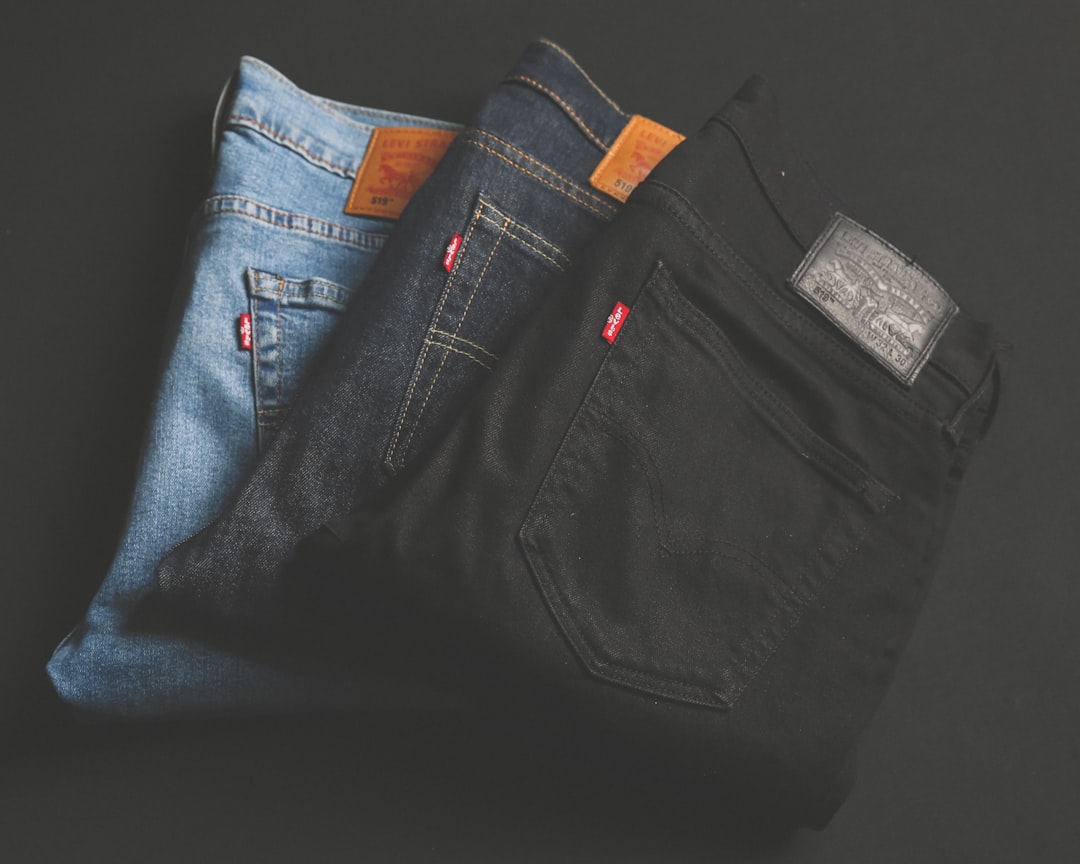
I own eleven pairs of Levi’s. I’ve bought them at the flagship store, at outlets, at Amazon, at estate sales, and once out of the trunk of a guy’s Camry at a flea market in Bakersfield. Here is what I’ve actually learned.
Most brand guides to Levi’s read like they were written by someone who has never pulled a pair over their thighs. This one is the opposite. I’ve worn Levis in factory work, at weddings, on hikes that ruined them, and through about four hundred laundry cycles. If you’re trying to figure out which fit fits, where to buy without getting fleeced, and whether the heritage story actually means anything on a Tuesday morning, this sits inside our larger Mens Denim coverage and is built to answer that. By the end you’ll know which three pairs cover 90% of men and which you can ignore.
What Levis actually is in 2026
Levi Strauss & Co. is the oldest denim brand still making jeans at scale, founded in 1853 in San Francisco as a dry goods supplier, and pivoted to riveted work pants in 1873. The company went public again in 2019 after decades of family control and currently sells in roughly 110 countries. None of that would matter except it explains why the brand still runs so many parallel product lines: the core “Red Tab” Levis (the 501, 505, 511, 550, etc.), the “Premium” line with selvedge and Japanese fabrics, the “Silver Tab” reissues aimed at younger shoppers, the Wellthread sustainability sub-line, and outlet-exclusive “Signature by Levi Strauss” jeans sold at Walmart and Costco.
If you only remember one thing from this section: Signature by Levi Strauss is not the same product as Red Tab Levis. Same parent company, different fabric suppliers, different construction, different price. I’ve owned both. Signature jeans feel like a jean-shaped object. Red Tab Levis feel like jeans.
The core fits, ranked by how often I reach for them
Levis uses a numbering system that has not meaningfully changed since the 1970s, which means you can walk into a levis store in 2026 and buy the same style number your grandfather wore. The numbers are not random. Lower numbers generally mean older heritage cuts. Higher numbers tend to be newer or looser. Here is how the main men’s fits actually wear on a 5’10”, 180-lb, 32″ waist, 32″ inseam body, which is to say mine.
501 Original
The 501 is the straight-leg, mid-rise, button-fly jean that the brand was built on. Rigid in the raw or shrink-to-fit versions, soft in the pre-washed versions most people actually buy. I’ve worn my 501s through two summers and a full Oregon winter. They stretched about 3/4 of an inch in the waist after 90 days of daily wear, which is the shrink-to-fit math the old-heads always mention. If you size down one in rigid, you will land roughly at your true size after a hot wash and a full day on your body.
Fit reality: not actually slim. The thigh is generous, the knee is straight, and the leg opening hits around 16 inches on a 32×32. It’s a classic silhouette that reads “grown man” rather than “fashion boy.”
511 Slim
The 511 is the modern slim. Not skinny. The thigh has enough room that you can squat without fabric screaming. I keep a dark-wash pair in rotation for dinners and a faded mid-blue for weekends. After six months of wear my dark pair had minimal fading at the knees, which tells me the dye in the modern 511 is more colorfast than the old 501 indigo. Expected trade-off.
505 Regular
The 505 is the zipper-fly cousin of the 501. Straight leg, slightly roomier thigh, no button fly hassle. If you hate the button fly debate, the 505 is the answer. My uncle has worn 505s exclusively since approximately 1984 and owns seven identical pairs.
550 Relaxed
The 550 is where you go when you’ve decided comfort is worth more to you than any specific silhouette trend. Tapered below the knee but roomy in seat and thigh. Good for men carrying more weight through the hips or anyone who lifts seriously. My friend Brian, 6’2″ and squats 500, wears these and nothing else.
569 Loose Straight
Discontinued from most levis store shelves but still findable on Amazon and in the resale market. A wider, straighter cut from the early 2000s. If baggier is the direction trend is pushing you, try a 568 or 569 before spending real money on Y2K hype pairs from fashion labels.
The premium and collab tiers (worth it?)
Levis sells a tier above the Red Tab basics called Levi’s Premium, with features like Japanese Cone Mills denim, selvedge edges, and “Made & Crafted” detailing. I bought a pair of Made & Crafted 501s in 2024 for about double the price of a standard 501. After a year they look visibly better than my Red Tab pair. The fabric has character. The selvedge edge doesn’t fray. Stitching is denser.
Is double the money worth it? If you are going to own the pair for five years and wash them infrequently, yes. If you buy jeans every season and rotate through, no. Stick to the Red Tab line, which runs $69.50 to $98 at full retail and often hits $40 to $60 on Levis Mens Jeans on Amazon or at the outlet.
The collabs — Stüssy, Beams, Junya Watanabe, Valentino — are mostly irrelevant to a buying decision unless you enjoy hunting. Prices on resale are 3x to 8x retail. The fit and fabric are not 3x better.
Sizing: the part nobody explains
Levis sizing uses true waist measurements in inches, which sounds simple and is not. The nuance: pre-washed Red Tab Levis run about a half-inch generous at the waist when new. Shrink-to-fit rigid Levis run one to two inches large and contract in hot water. Premium line runs true or slightly slim.
I’ve done this test repeatedly. I lay a new pair flat, measure waistband top to top, double it, and compare to the tag. On a tagged 32, a pre-washed 501 usually measures 32.75 to 33 inches. On a rigid 501 STF, same tag, it measures 33.5 to 34 inches untreated. After a hot wash and dryer cycle, the STF comes down to roughly 31.5. Plan your order accordingly. If you are between sizes and want a fitted waist, size down one in rigid. Size true in pre-washed.
Inseams run true. Levis still makes odd inseams (29, 31, 33), which most competitors dropped in favor of 30/32/34 only. If your legs are 31″, buy a 31″ and don’t settle for a cuffed 32.
The honest negative on sizing
Vanity sizing has crept into the women’s line more than the men’s, but even in the men’s cut, newer 511s and 512s run a half-inch looser than their 2015 equivalents. If you have a pair from a decade ago that fit perfectly, the same tag today will sit slightly looser. Not enough to size down, but enough to notice.
Fabric and construction: what you’re actually getting
The standard Red Tab 501 is 100% cotton, roughly 12.5 ounces, ring-spun. The 511 and most modern slim fits run 98% cotton, 2% elastane, at 11 to 12 ounces. The budget Signature line uses 60-to-80% cotton blends with polyester and elastane, sometimes at fabric weights as low as 9 ounces. You can feel the difference if you hold both pairs next to each other. Signature feels lighter and more synthetic on the hand.
Construction details that matter on Red Tab: copper rivets at stress points, chain-stitched hem (causes the classic rope fading at the leg opening), hidden rivets inside the back pockets on the 501, leather patch at the back waistband on premium pairs and a paper-feeling patch on regular pairs. The arcuate stitching on the back pockets is a trademark, and it varies slightly in shape between eras, which is why vintage collectors obsess over it.
Wash durability: I’ve put my 501s through roughly 50 cold washes with tumble dry low over three years. Minor fading at the thighs and knees. No seam failure. One loose back pocket corner that I reinforced with a running stitch in ten minutes. Signature jeans I bought in 2022 at Costco started losing color within 15 washes and the inseam frayed at the crotch by wash 30. Same wash conditions. That gap in durability is the argument for paying retail.
Where to buy: the price reality
Levis are sold through the brand’s own site, full-price levis store locations, outlet stores, department stores (Macy’s, Kohl’s, JCPenney), Amazon, the major online athletic retailers, and the Walmart/Costco channel for Signature only. Prices are not uniform. The same 501 in the same wash can cost $98 at a mall store, $75 on Levi.com, $55 on Amazon, and $40 at an outlet.
My ordering rule: check the outlet first if you live near one, then Amazon, then Levi.com during a sale (they run sales roughly twice a quarter), then department stores with a coupon. Full-price levis store is the worst value unless you need to try on for sizing. Do the try-on at the store, buy elsewhere — the staff knows this happens and doesn’t care. I’ve had associates tell me flat out that the outlet 10 miles away has the same product for 30% less.
If you are buying older or discontinued fits (569, 517, 527), eBay and Poshmark are your main channels. Watch the tag photos carefully — counterfeit Levis are real and cluster on listings priced too low with vague photos.
Vintage Levis: worth the rabbit hole?
A pre-1988 pair of Levis 501s with the “Made in USA” red tab and a single-stitch back pocket can sell for $200 to $2,000 depending on era. A 1947 model 501 in good condition has sold for five figures. The vintage market is a real ecosystem with its own jargon (big E, little e, redline selvedge, hidden rivets, S-curve arcuates) and its own fakes.
My position: unless you are specifically collecting, skip it. A well-fitting new 501 in raw denim, worn hard for two years, will develop better fades than 90% of vintage pairs you’d buy, and you’ll know the history. Levi’s own Made & Crafted line is the shortcut. For authentic vintage sourcing, I like estate sales in the Midwest and dedicated vintage shops in LA and Tokyo. Avoid eBay “vintage Levis” at $50 with no tag photos.
The jeans Levi Strauss built the company on
A tiny history interlude, because you will run into this in every levis strauss writeup and half of it is wrong. Levi Strauss himself did not invent the riveted jean. His tailor partner, Jacob Davis in Reno, Nevada, came up with the rivet idea in 1872 and needed a patent filing partner. Strauss financed the patent, which was granted in 1873, and the partnership produced the first “waist overalls” under the Levi Strauss & Co. name. Jacob Davis’s name is on every authentic heritage plaque. The brand history is a partnership history.
This matters to you as a buyer only in one way: when you see a “heritage” markup on a premium pair, that markup is for the story. The jean itself is a cotton fabric with rivets. Buy the fit, not the story.
How Levis compares to the other big denim names
If you are cross-shopping Wrangler, I have a full Levi’s vs Wrangler comparison. The short version: Wrangler fits flatter through the seat with a tighter thigh, costs 20-30% less, and makes better western-cut jeans. Levis fits rounder through the seat, costs more, and has more silhouette options for non-western wear.
Against Lee, Levis wins on fabric quality and loses on price parity for casual fits. Against designer names (Naked & Famous, A.P.C., Iron Heart), Levis loses on premium fabric detail but wins on fit consistency and availability. For our men’s picks see Wrangler Jeans for Men and the broader Levi’s Jeans for Men for the full Levi’s-specific fit comparisons.
If you want one pair of jeans for the next five years and you are not already a denim obsessive, buy a 501 or 511 in a dark wash. That is the whole answer. Every other pair in your closet is variation.
The pairs I’d actually recommend first
First pair: 511 in a dark, non-distressed wash. It reads dressy-casual, works under a blazer, survives daily wear. Second pair: 501 in rinse or mid-blue. Classic, heritage, less fashion-sensitive than the 511. Third pair: 550 in a medium wash for days you don’t want fitted fabric near your legs. After these three, you are deep into taste territory and I can’t help you.
For men over 6’1″ or under 5’7″, sizing is harder and return rates are higher. Buy from a retailer with free returns. Amazon and Levi.com both qualify. Mall department stores do not, after the receipt window closes.
Real-world problems I’ve run into
Crotch blowout on 511s after 18 months of daily wear, twice. This is a known issue with slim stretch denim on men who walk a lot. The stretch fiber fatigues. Fix: rotate two pairs and don’t wear one pair three days in a row. Problem disappears.
Back pocket fray on 501s after about 200 wears of a wallet in the same pocket. Unavoidable. Move your wallet to a front pocket or accept it as patina.
Fading inconsistency across washes on dark dye pairs. The first five cold washes pull the heaviest bleed. Wash inside out and separate from lighter colors until wash ten. I use a cup of white vinegar in wash one to set the dye, which anecdotally helps and scientifically is marginal.
Shrinkage on a pre-washed pair after a hot dryer cycle: 3/4 inch in the inseam on my 511, which went from a perfect break to a hair short. Cold wash, low dryer, always, on any Levi except the STF rigid.
The verdict
Levis are not the best jeans you can buy in 2026. They are the most consistent, widest-available, best-fit-documented jeans you can buy, and that is why a dark 511 sits in my closet next to a pair of A.P.C. that cost four times as much and doesn’t fit as well. The 501 is a milestone product that stays relevant because the silhouette happens to work on most men’s bodies. The 511 is the modern workhorse. The 550 is the comfort play. Everything else in the Red Tab line is variation on those three themes.
Buy the Red Tab line at a discount through Amazon or outlets. Skip Signature unless you actively want a disposable jean. Skip the collabs unless you are a collector. If you have never owned a pair of well-fitting Levis, start with a 511 in a dark wash. You’ll know in the first wear whether the brand is for you or not.
Shop the look on Amazon
Everything you need to build a secondhand-style wardrobe, delivered. We may earn a commission on purchases.
Browse picks on Amazon →FAQ
Are Levis still made in the USA?
Most Levis sold in the US are now produced overseas — primarily in Mexico, Pakistan, Vietnam, Bangladesh, and parts of China. The “Made in USA” line exists as a premium capsule, usually in limited 501 runs using Cone Mills denim replicas (Cone’s original White Oak plant closed in 2017). A pair tagged Made in USA in 2026 is a specific premium purchase, not a default.
What’s the difference between Levis and Signature by Levi Strauss?
Same parent company, different product. Red Tab Levis (501, 511, etc.) use heavier, mostly-cotton denim and are sold at Levi-branded channels and full retailers. Signature by Levi Strauss is a mass-market line sold at Walmart and Costco using lighter fabric, more polyester blend, and lower price points (typically $20-$30 vs. $70-$98). Construction and durability are noticeably different. If the question is “which one lasts,” Red Tab.
How do Levis sizing numbers work?
The waist number is your actual waist measurement in inches. The inseam number is leg length from crotch seam to hem in inches. A 32×32 is a 32-inch waist, 32-inch inseam. Pre-washed pairs run true to slightly generous at the waist. Shrink-to-fit rigid pairs run 1-2 inches generous and shrink after first hot wash. Levi’s own size chart on their site is accurate for current production.
Do Levis shrink in the wash?
Pre-washed Levis (which is most of what’s sold) shrink about 1-2% after the first hot wash and dryer cycle, mostly in the inseam. Cold wash and tumble dry low to minimize. Shrink-to-fit rigid Levis (501 STF) are designed to shrink 1-2 inches in both waist and inseam after a hot wash — this is the intended fit process. Premium Made & Crafted Levis are sanforized and barely shrink at all.
Which Levis fit is most flattering for average build?
For a 5’8″ to 6’0″ man of average build (30-34″ waist), the 511 Slim in a dark wash is the most universally flattering cut. Enough room through the thigh to not look squeezed, tapered enough to not read dated, and the dark wash elongates. Second pick: 502 Tapered, which splits the difference between 511 and 501. Avoid 510 Skinny unless you are genuinely slim through the leg.


