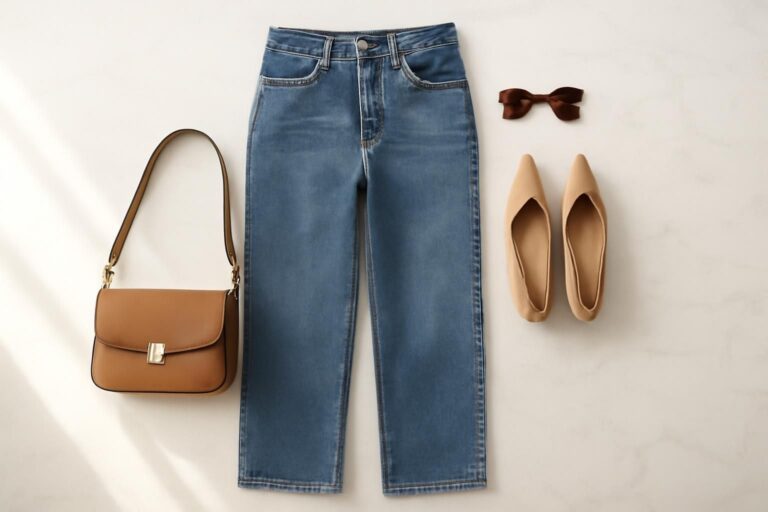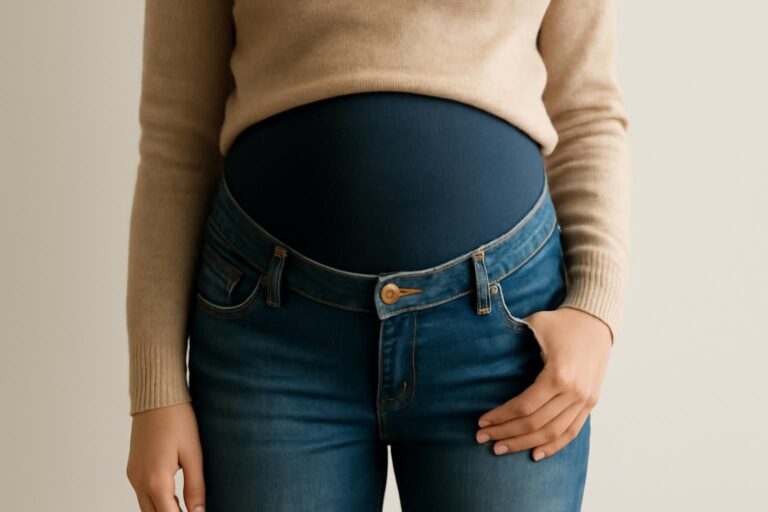
Low rise jeans are back, and if you have curves, you’re probably wondering whether this trend is even possible for your body. Short answer: yes, with conditions.
The low rise revival has been dominated by straight-size styling, and curvy bodies have been mostly left out of the conversation. The influencer content features size 2-4 bodies in low-rise denim, which tells you nothing about how the style translates to a body with a 10-inch waist-to-hip difference. The answer depends heavily on the cut: some curvy low rise jeans work better than you might expect, while others confirm every fear you have about low rise on hips. The difference usually comes down to a single inch of rise and the pattern block the jeans are cut on. This guide is part of our Plus Size Denim hub. If you’re curious about low rise in extended sizes specifically, check our Plus Size Low Rise Jeans.
What “Low Rise” Actually Means on a Curvy Cut
A standard low rise sits about 7-8 inches in front rise. On a curvy cut, “low rise” typically means 8.5-9.5 inches. That’s still lower than the 10-12 inch mid-rise most curvy jeans default to, but it’s not the hip-bone-skimming 7 inches of the early 2000s. Brands label this as low rise because it’s low relative to their other curvy offerings, not low in an absolute sense.
That extra inch of rise on a curvy low-rise compared to a standard low-rise makes a significant difference. It’s enough to clear the hip bone and avoid the “plumber” situation when sitting down. Check the listed front rise on the product page before you buy, because labels like “low rise” are not standardized: two pairs with the same label can differ by an inch or more. Fast-fashion low rise styles tend to sit at the lowest end of the range. On a curvy body with a waist-to-hip difference of 10 inches or more, even 8.5 inches of front rise provides enough coverage to be practical. Below 8 inches on a curvy frame, things get uncomfortable and visually chaotic fast.
Where Curvy Low Rise Jeans Work and Where They Don’t
They work best on bodies where the waist is relatively defined. The curvy low rise sits below the natural waist, so your waist becomes the visual anchor above the jeans. This looks great with cropped tops, fitted bodysuits, and tucked-in shirts because the jeans show off the curve of the waist rather than covering it. Many curvy wearers find this look more flattering than they expect. The visual effect is similar to what a high-waisted skirt does, but in reverse: instead of the fabric defining the waist, the lack of fabric exposes it.
Where they struggle: sitting. A 9-inch front rise on a curvy body with a full stomach means the waistband digs in or rolls down when seated. A long dinner or desk day in a low rise pair can mean constant tugging at the front. The fabric composition plays into this too. A stiffer, heavier cotton denim tends to stay in place better when seated than a light, very stretchy blend, because the rigid waistband resists rolling. For active days or jobs where you’re seated for hours, stick with mid-rise. For standing-heavy occasions, concerts, and going-out situations, curvy low rise can work well. A wider belt (1.5 inches) also helps anchor the waistband during movement. Curvy Low Rise Jeans Women on Amazon
Best Brands for Curvy Low Rise
Abercrombie Curve Love has the most options in curvy low rise, with genuine curvy proportions; check each style’s listed rise, since it varies by cut. American Eagle’s Curvy line has a few low-rise options but the selection is thin. Levi’s doesn’t make a curvy-specific low rise, which is a gap in their line. Good American’s low-rise options are limited but well-constructed when available. Abercrombie is the first place to look for the balance of rise, hip room, and fabric choice. Whichever brand you choose, a substantial denim with only a little stretch keeps the jeans from shifting around throughout the day, and washing dark indigo inside out on cold helps it keep its depth.
The Verdict
Curvy low rise jeans can work, but they’re an occasion piece rather than an everyday staple. The sweet spot is a front rise of 8.5-9.5 inches on a curvy pattern block, worn with tops that highlight the waist. Accept that sitting comfort is compromised and plan accordingly. If you want the low-rise look without the drawbacks, a mid-rise at 10 inches will still sit below your natural waist and photograph similarly while being far more comfortable for actual life. A sensible approach is one curvy low-rise pair for date nights and going out, with the rest of your denim mid-rise or higher.
Shop the look on Amazon
Everything you need to build a secondhand-style wardrobe, delivered. We may earn a commission on purchases.
Browse picks on Amazon →FAQ
Do low rise jeans work on curvy bodies?
Yes, if the rise is at least 8.5 inches and the jeans are cut on a curvy pattern block. Standard low-rise jeans sized up won’t work because the hip proportions are wrong.
How low is “low rise” in curvy jeans?
Most curvy low-rise jeans have a front rise of 8.5-9.5 inches, which is low relative to curvy mid-rise (10-12 inches) but higher than standard low-rise (7-8 inches). It sits below the navel but above the hip bones.
What tops work with curvy low rise jeans?
Cropped tops, fitted tees tucked in, and bodysuits all work because they define the waist that the low rise exposes. Avoid long, loose tops that will cover the waistline since they eliminate the visual payoff of the low rise.
Related reading: Wide Leg Jeans Low Rise: Fit Guide and Brand Picks That Actually Sit Right and Petite Raelynn Washed Low Rise Jeans: Fit and Sizing Guide.