Smooth leather shoes and boots can last for years with a simple routine: wipe, clean, condition, polish if you like, and dry them slowly.
This guide explains how to clean leather shoes and boots with a common method that suits most smooth leather, then covers conditioning, polishing, drying, storage and what to avoid. It applies to dress shoes, loafers, leather sneakers and boots alike. For secondhand pairs, start with our hub on How to Clean Shoes from the Thrift Store, which covers deodorising and the first deep clean, then come back here for leather care.
There is no single official routine for leather shoe care. The steps below are a common method used by shoe owners and cobblers. Leathers and finishes vary, so check the maker’s care instructions first and test any new cleaner or conditioner on a hidden spot, such as the inside of the heel.
What you need
- A soft brush or horsehair shoe brush.
- Soft, clean cloths.
- A leather cleaner or saddle soap.
- A leather conditioner or cream.
- Shoe polish (cream or wax) in a matching or neutral colour, if you want shine.
- Shoe trees.
A Leather Shoe Care Kit on Amazon often bundles a brush, cloth, cleaner and polish.
Top-selling match on Amazon
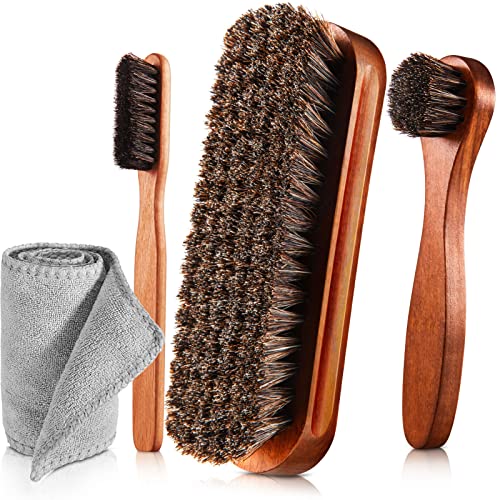
- Shoes Shine Brush Set: There are 1 x large size shine brush, 1 x long handle horsehair brush, 1 x detailing…
- Material: The brush is made of horsehair and wood, cleaning and shining your shoes the cloth…
- Mufti-Functional Shoes Brush Set: This set contains 1 pieces shoes brushes, 1 piece mini shoe cream brush and 1 piece…
How to clean leather shoes, step by step
- Remove the laces.
- Insert shoe trees so the leather is smooth and firm.
- Brush off loose dust and dried dirt, paying attention to the welt where upper meets sole.
- Wipe the uppers with a barely damp cloth.
- Apply a small amount of leather cleaner or saddle soap with a damp cloth, working in small circles.
- Wipe away the lather and residue with a clean damp cloth.
- Let the shoes dry at room temperature, away from radiators and direct heat.
- Apply conditioner once the leather is dry (see below).
Use as little water as possible throughout. Leather tolerates a damp cloth, but soaking can leave marks and stiffness as it dries.
How to condition leather shoes
Conditioning replaces some of the oils leather loses through wear, cleaning and weather. The common advice is to condition sparingly: a thin layer is enough, and too much can leave the surface greasy or darken it.
- Start with clean, dry shoes.
- Test the conditioner on a hidden spot.
- Apply a small amount to a soft cloth.
- Rub it into the leather in small circles, panel by panel.
- Leave it to absorb for the time the product suggests.
- Buff off any excess with a clean cloth.
Polishing for shine and protection
Polish is optional, but it adds colour, shine and some protection. A common split is to use cream to feed and colour the leather, and wax for shine and some water resistance. SATRA, the footwear research organisation, notes that “waxes and creams are often applied to leathers to improve or give a degree of water repellency,” and that how much a polish improves the finish is “usually best” judged subjectively. In other words, the right level of shine is a matter of taste.
- Choose a polish that matches the leather, or a neutral one.
- Apply a thin layer with a cloth or applicator brush.
- Let it haze for a few minutes.
- Buff briskly with a horsehair brush.
- Finish with a soft cloth for extra shine.
A tin of Leather Shoe Polish Cream on Amazon in black, brown or neutral covers most dress shoes. For formal events, Debrett’s lists “highly polished” black lace-up shoes for black tie, so a good buff is worth the effort before a wedding or gala. See our Men’s Dress Shoes guide for styles.
Top-selling match on Amazon

- Premium Cream Boot Polish: Crafted in France, this boot polish combines natural bees wax, oils, and pigments…
- Protective Shoe Cream: This shoe cream forms a protective barrier against environmental weather elements…
- Neutral Shoe Polish Option: For those seeking a universal option to any leather color, the shoe polish neutral…
How to clean leather boots
Boots follow the same steps, with a few extras. Brush mud off once it has dried rather than wiping it wet. Clean salt marks promptly with a barely damp cloth, then let the boots dry slowly and condition them. Tall shafts need boot shapers or rolled paper while drying so they keep their shape. Western boots with decorative stitching benefit from a soft brush along the stitch lines. For more on boots, see Leather Cowgirl Boots and Thrift Store Cowboy Boots.
What to avoid
- Direct heat. No hair dryers, radiators or heaters for drying; heat can crack leather.
- The washing machine. Consumer Reports lists leather among things that should not go in a washer, and says machine washing shoes could loosen adhesives or deform their structure.
- Chlorine bleach. Keep it away from leather.
- Too much conditioner. Thin layers work better than heavy ones.
- Smooth-leather products on suede. Suede needs its own routine; see How to Clean Suede Shoes (Without Ruining Them).
Check the label too. Under the FTC Leather Guides, bonded leather made from shredded or reconstituted fibres should not be sold as plain leather, and it may not respond to conditioning the way solid leather does.
Storage and everyday care
SATRA describes a shoe tree as “a device placed inside footwear to try to preserve its shape and prevent creases from developing.” It says wooden trees “are said to” wick away foot moisture, and cedar is “reportedly” chosen to absorb moisture and control odour. A common routine is to insert trees soon after taking shoes off, and to rotate pairs so leather can dry between wears. Cedar Shoe Trees on Amazon are a popular choice. Store leather shoes somewhere cool and dry, out of direct sun, in breathable bags rather than sealed plastic.
Leather shoes from the thrift store
Good leather shoes turn up often on thrift racks, and many respond well to a clean and condition. Check for cracks across the flex points, sole separation and worn heels before buying; a cobbler can often replace heels and soles. Dry, dusty leather usually improves a lot after the steps above. If a pair is slightly snug, see How to Stretch Shoes That Are Too Tight, and for white leather sneakers see How to Clean White Shoes and Sneakers.
Frequently asked questions
How often should you condition leather shoes?
There is no fixed schedule. A common approach is to condition after a deep clean or when the leather looks dry, using a thin layer each time.
Can you use soap and water on leather shoes?
A barely damp cloth with a little mild soap is a common method for light dirt. Wipe residue away and let the shoes dry at room temperature, then condition.
Is saddle soap good for leather shoes?
Saddle soap is a common leather cleaner. Use it sparingly with a damp cloth, wipe it off thoroughly, and follow with conditioner. Check the maker’s instructions first.
How do you remove scuff marks from leather shoes?
Most light scuffs on smooth leather disappear with cleaning and a coat of matching cream polish. Brush the area, wipe it with a barely damp cloth, and let it dry. Then work a small amount of cream polish in the shoe’s colour into the scuff in small circles, let it haze, and buff with a horsehair brush. Cream adds colour back into scraped areas, while wax builds shine over them. Deep gouges that cut through the surface may need a cobbler.
How do you get water stains out of leather shoes?
Water stains on smooth leather usually fade when the whole panel is dampened evenly and left to dry slowly, so it no longer dries with a hard tide line. Wipe the entire affected section, seam to seam, with a barely damp cloth, insert shoe trees or rolled paper, and dry at room temperature away from radiators and hair dryers. Once dry, apply a thin layer of conditioner and buff. Test first on light or unfinished leathers, which can darken.
Shop the look on Amazon
Everything you need to build a secondhand-style wardrobe, delivered. We may earn a commission on purchases.
Browse picks on Amazon →Know Your Leather
Genuine, full-grain, bonded, patent and vegan leather explained.