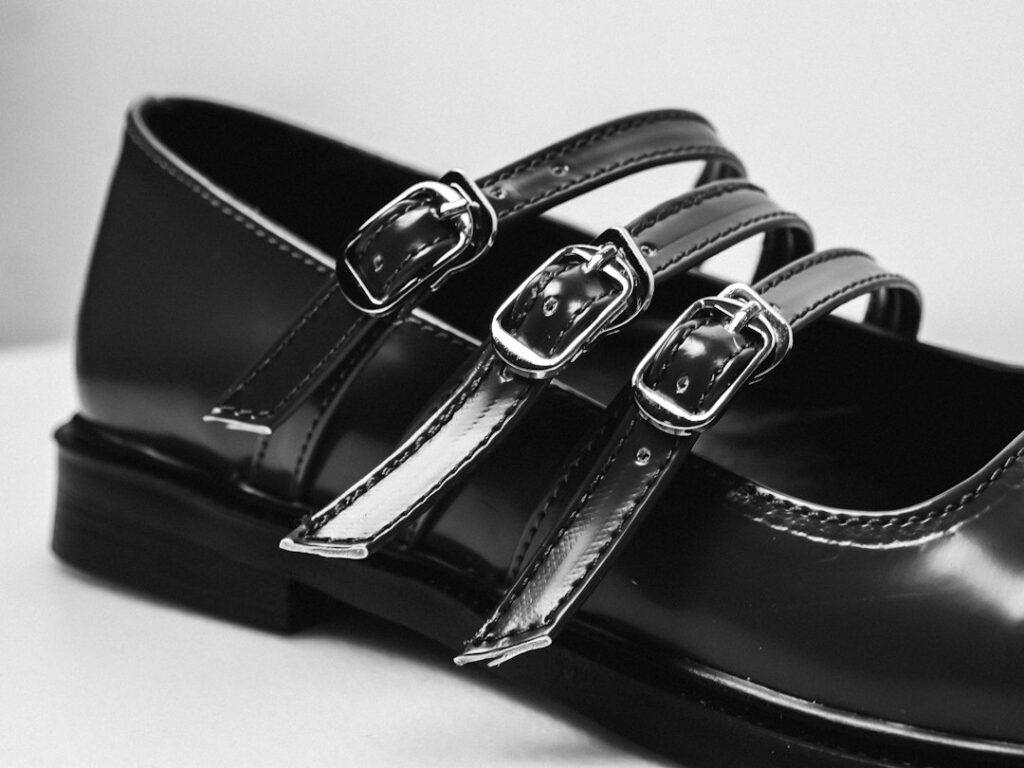
Patent leather is the mirror-shine finish on formal shoes, Mary Janes, handbags and belts. Here is where it came from, how it differs from regular leather, and how to keep the shine without damaging the coating.
What is patent leather? It is leather with a high-gloss coating on its surface. Historically that coating was built up from layers of varnish; today, according to SATRA, the UK technology centre for footwear and leather, patent finishes are plastic coatings. Underneath is still leather, so the basics in our guide to What Is Genuine Leather? Leather Grades Explained apply. The coating is what changes how it looks, wears and is cleaned.
Quick answer: Patent leather is leather finished with a glossy coating. SATRA says Seth Boyden brought it to the US in 1818 and that early makers applied “as many as 15 coats of varnish”; modern patent uses plastic coatings. Clean it with a soft damp cloth and buff it dry.
A short history of patent leather
According to a SATRA Bulletin article titled “From whale oil to plastic coating,” Seth Boyden of New Jersey brought patent leather to the US in 1818 after studying a German sample. Commercial production began in 1819, and Boyden never patented his process, despite the name. SATRA says early makers applied “as many as 15 coats of varnish” to reach the shine, and the article’s title points to the modern switch to plastic coatings.
Patent has a long fashion life too. The V&A holds a pair of Jimmy Choo red patent slingbacks with “‘kitten’ heels,” dated 1996, showing the finish moving well beyond formal menswear.
Patent leather shoes and dress codes
Patent shoes are closely tied to evening dress. Debrett’s lists black “highly polished or patent lace-up shoes” for white tie and black tie, but “highly polished (not patent)” shoes for morning dress. The Emily Post Institute lists “black patent shoes and black dress socks” for black tie. So patent suits evening formal codes, while the two sources show it is not the default for daytime formal dress. As always, the invitation or host has the final word. For shoe styles, see Men’s Dress Shoes and Oxford vs Derby Shoes.
Patent vs leather: how they compare
| Point | Patent leather | Uncoated or lightly finished leather |
|---|---|---|
| Surface | High-gloss coating | Natural grain, matte to polished |
| Stretch | Barely stretches (common observation) | May relax slightly with wear (common observation) |
| Cleaning | Damp cloth and buff (common method) | Clean, condition and protect (Leather Naturally) |
| Common wear | Scuffs, creases in the coating, colour transfer | Scuffs, drying, creasing |
| Formal use | Listed for black tie by Debrett’s and Emily Post | Highly polished shoes also listed by Debrett’s |
Because patent barely stretches, it helps to buy the fit you want now. Our How to Stretch Shoes That Are Too Tight guide covers options, but check the maker’s advice first, since the coating limits what works.
Patent-look PU
Not every glossy shoe is patent leather. Many high-shine shoes and bags are PU or PVC on a fabric backing. Under the FTC Leather Guides, which cover footwear, purses and similar products, items that look like leather but are not should disclose it, with wording such as “Not leather,” “Imitation leather” or “Vinyl.” Our What Is Vegan Leather? PU, PVC and Plant-Based Materials Explained guide explains the difference.
Patent leather care
A common method, after checking any care label:
- Wipe off dust with a soft dry cloth.
- Dampen a second soft cloth with water and wring it out.
- Wipe the surface gently.
- Buff dry with a clean soft cloth to bring back the shine.
- Stuff shoes with tissue or use shoe trees to hold the shape.
- Store each shoe or bag separately in a cloth bag.
Storing pairs apart matters: patent coatings can pick up colour from other items they press against, which is why a common tip is to keep them from touching. Keep patent away from heat and direct sun, which is consistent with Leather Naturally’s advice to store leather cool and dry. For general leather shoe care, see How to Clean Leather Shoes and Keep Them Conditioned.
Styling patent beyond black tie
Outside formal codes, patent works as a contrast finish. A common styling approach is to pair glossy shoes or a patent bag with matte fabrics such as wool, denim or knitwear, so the shine reads as a deliberate accent. Red, burgundy and nude patent pumps are long-running wardrobe staples, and patent loafers and Mary Janes appear in both workwear and casual outfits. These are styling suggestions rather than rules; wear what suits the occasion.
Dealing with scuffs
Light scuffs often sit on top of the coating. A common approach is to wipe the mark with a damp cloth and buff it; if it remains, a cleaner made for patent leather may help. Test any product on a hidden spot first, such as the inside heel. Avoid abrasive pads and solvents, which can dull or damage the coating. Deep scratches and cracks in the finish are worth showing to a cobbler.
Shopping and thrifting patent leather
Shopping new, searches such as Patent Leather Oxford Shoes Men on Amazon or Patent Leather Pumps Women on Amazon will bring up options. Check the materials line to see whether the upper is leather or a PU or PVC finish.
Top-selling match on Amazon

- [HEEL HEIGHT]: – The Dear Time comfortable kitten pumps heels measure approximately 2…
- [STYLISH DESIGN]: – Even with a plain design and with no excess decorations.You will…
Secondhand, look at these points:
- Check the creases. Look across the toe box and vamp for cracks in the coating.
- Look for colour transfer. Marks from other shoes or bags can be hard to shift.
- Inspect the edges. Peeling at the edges of the coating is hard to repair.
- Read the label. Look for leather versus PU, PVC or “Not leather.”
- Try them on. Patent barely stretches, so fit should be right on the day.
For cleaning secondhand pairs, see How to Clean Shoes from the Thrift Store. Other leathers to compare: What Is Full-Grain Leather? Grain Types Explained and What Is Bonded Leather? How It Differs From Genuine Leather.
Shop the look on Amazon
Everything you need to build a secondhand-style wardrobe, delivered. We may earn a commission on purchases.
FAQ
Is patent leather real leather?
Traditional patent leather is leather with a gloss coating. Many glossy shoes are PU or PVC instead, so read the label.
Why is it called patent leather?
SATRA notes that Seth Boyden, who brought it to the US in 1818, never patented his process. The sources checked do not explain the origin of the name.
Can patent leather get wet?
Wipe off water with a soft cloth and buff dry. Keep it away from direct heat while it dries.
Are patent shoes right for black tie?
Debrett’s and the Emily Post Institute both list black patent shoes for black tie. Debrett’s lists highly polished, not patent, shoes for morning dress.