
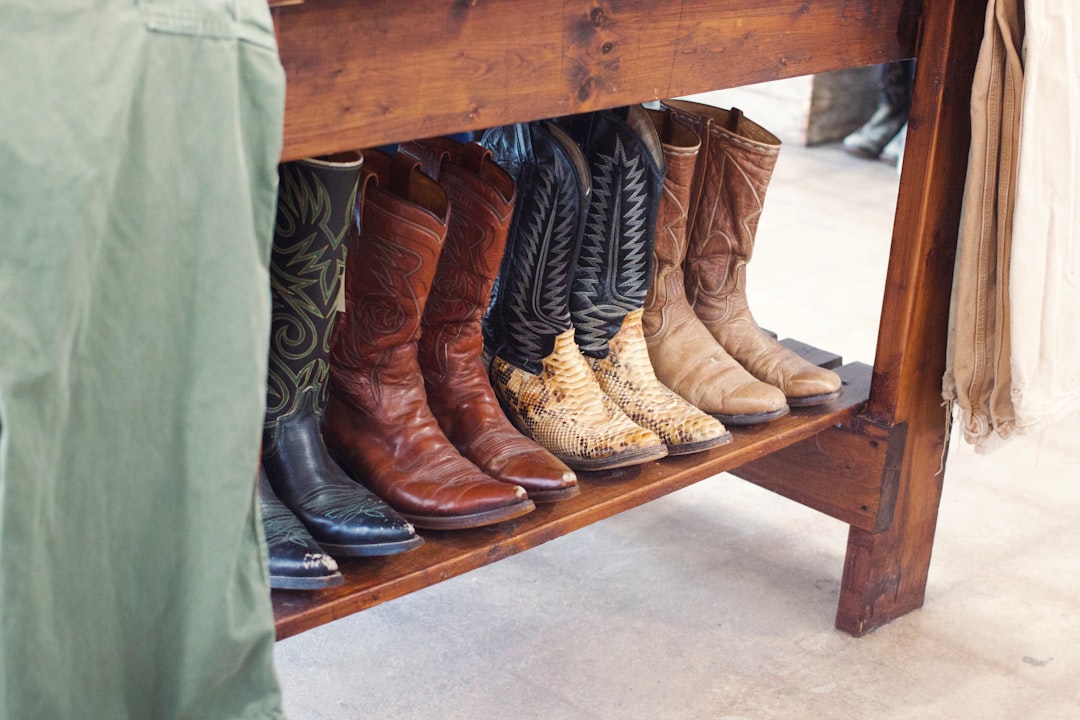
Cowboy boots are one of the best secondhand buys in fashion — a well-made pair lasts decades, and thrift stores are full of them.
I own six pairs of cowboy boots and paid retail for exactly one. The rest came from thrift stores, estate sales, and online resale platforms, and every pair cost less than $40. Thrift store cowboy boots are everywhere because they are built to last far longer than most people wear them, and when they get donated, the quality is often still excellent. The trick is knowing what to look for and what to walk past. Here is what I have learned from years of hunting. For more on secondhand shopping strategy, our Thrift and Resale Fashion hub has the big picture.
What to Check When Buying Vintage Cowboy Boots Thrift
The sole is the first thing I inspect. Cowboy boot soles come in leather or rubber, and both should be checked for separation from the upper. Run your thumb along the welt — the seam where the sole meets the leather upper — and press gently. If the sole lifts away or the stitching is pulling, the boot is approaching the end of its life or needs an expensive resole ($75 to $150). Minor sole wear on the ball and heel is normal and does not affect the boot’s lifespan.
The shaft leather tells you how the boots were stored. Cracks in the shaft mean the leather dried out and was not conditioned — sometimes recoverable, sometimes not. Surface dryness that has not cracked yet is easy to fix with Leather Conditioner Boots on Amazon. Deep creasing at the ankle is normal wear and adds character. Actual cracks that go through the leather are structural failures.
Pull tabs and stitching should be intact. Decorative stitching on the shaft is part of the boot’s identity and is expensive to repair if it unravels. Pull tabs — the loops or straps at the top of the shaft — should feel solid when you tug them. If they are loose or partially detached, the boot has been pulled on hard many times and the stress points are compromised.
Check the interior lining by reaching inside. The insole should be intact and not bunched or peeling. The heel counter — the stiff backing at the rear of the boot — should hold its shape when you squeeze it. A collapsed heel counter means the boot will not support your ankle properly.
Brands to Target at the Thrift Store
Lucchese, Tony Lama, Justin, Nocona, and Dan Post are the brands I look for first. These companies build boots with Goodyear welt or similar construction methods that allow resoling, which means the boots can last essentially forever with maintenance. A pair of vintage Lucchese boots from the 1980s that has been maintained is a better boot than most new pairs at the $200 price point.
Ariat is a newer brand but builds solid working boots that show up at thrift stores as ranchers and riders cycle through them. Their comfort technology insoles wear out before the boot itself does, so a new insole transforms a thrifted Ariat into a practically new boot.
Avoid boots from unknown brands with glued-on soles and thin, stiff leather. These were cheap new and they are not worth buying used. If the leather feels like cardboard rather than something that will break in, it is not quality construction.
Restoring Thrift Store Cowboy Boots
Most thrifted cowboy boots need three things: conditioning, new insoles, and a good polish. Start by wiping down the exterior with a damp cloth. Apply a generous coat of leather conditioner and let it absorb overnight. The next day, buff off the excess and apply a boot cream or polish in a matching color. The transformation from dusty thrift store reject to sharp-looking boot takes about thirty minutes of actual work.
For exotic leathers — ostrich, lizard, snake — use a conditioner specifically formulated for exotics. Standard leather conditioner can darken or damage these materials. Exotic Leather Boot Conditioner on Amazon is worth the few extra dollars.
The Verdict
Thrift store cowboy boots are one of the highest-value finds in secondhand fashion. Quality brands build boots that outlast multiple owners, and the styling has come back into mainstream fashion in a major way. Check the sole, the welt stitching, and the shaft leather. Target known brands. Budget $10 to $20 for conditioning and insoles on top of the purchase price. A pair of thrifted cowboy boots that would cost $250 to $500 new can be yours for under $50 total, ready to wear. For more, browse our Thrift Store Shoes guide and check Vintage Cowboy Boots on Poshmark for online finds.
Shop the look on Amazon
Everything you need to build a secondhand-style wardrobe, delivered. We may earn a commission on purchases.
FAQ
How much should I pay for thrift store cowboy boots?
At chain thrift stores, expect $8 to $25. Consignment shops and vintage stores price higher — $30 to $80 — but the curation is better. Online resale ranges from $20 to $150 depending on brand, condition, and era. For quality brands in good condition, anything under $40 is a strong deal.
Can you resole thrift store cowboy boots?
If the boots are Goodyear welted or have a similar construction, yes. A cobbler can replace the sole for $75 to $150, which is worth it on a quality boot. Glued soles on cheap boots are generally not worth resoling because the upper will fail before the new sole wears out.
How do thrift store cowboy boots fit compared to new ones?
Used cowboy boots have already broken in, which means the leather is softer and more flexible than new. They may have molded slightly to the previous owner’s foot, but a new insole and regular wearing will reshape them to yours within a week or two. Buy your normal size — do not size up or down.


