
A good fit is about what the jeans do, not about the person in them. This guide goes area by area, from waistband to hem, so you can tell whether a pair works or needs a different size, cut or a quick alteration.
There is no single answer to how jeans should fit, because a skinny, a straight, a bootcut and a wide leg are each designed to sit differently. What stays the same is a short list of checks that apply to every cut. The points below are common fitting advice rather than any brand’s rule, and they describe the garment only. If you are still deciding on a leg shape, our Types of Jeans hub explains the main cuts first.
Waist: no gaping, no belt required
Common advice is that the waistband should sit without gaping and should not need a belt to hold the jeans up. A belt can finish an outfit, but it should not be doing the work of keeping the jeans in place.
- Too loose: the waistband slides down when you walk, or gapes noticeably at the back when you sit.
- Too tight: the button strains, the waistband digs in when you sit, or the front pockets pull open.
A small gap at the back of the waistband is a common issue in otherwise good-fitting jeans and can sometimes be taken in by a tailor. Our How to Make Jeans Tighter guide covers simple options.
Rise: where the waistband sits
Rise is the distance from the crotch seam to the top of the waistband. It decides where the waistband lands and how the seat feels. Brands use “low”, “mid” and “high” rise differently, so compare the inch measurement on the product page with a pair you already like. Our Low-Rise vs High-Rise Jeans (and Where Mid-Rise Fits) comparison goes through the styles, and How to Measure Jeans (Waist, Rise, Inseam and Leg Opening) shows how to measure rise yourself.
A rise that suits the cut lets you sit down without the waistband pulling down at the back or pressing in at the front.
Seat and thigh: room to move
The seat and thigh should have the room the style intends: close in a skinny or slim cut, more in a straight, relaxed or wide leg. Some signs worth checking in a mirror:
- Horizontal pulling lines across the front or thighs usually mean the fabric is under strain.
- Deep folds of spare fabric under the seat usually mean the pair is cut larger than it needs to be in that area.
- Pockets should lie flat rather than flaring open.
If the waist fits but the seat or thigh does not, a different cut in the same size often solves it faster than a different size in the same cut.
Length: depends on the leg and the shoes
Length depends on the leg style and the shoes you wear with the jeans. A cropped style is meant to end above the ankle, a straight leg often lands near it, and a bootcut or flare is cut to sit over a boot or heel. Common advice is that hemming is the standard fix for length, so a pair that fits everywhere except length is still a good find. See How to Hem Jeans and Keep the Original Hem for the method, and How Long Should Men’s Jeans Be? Length Guide by Style for breaks and cuffs.
Rigid, stretch and raw denim fit differently over time
The same size can feel different depending on the fabric, so it helps to know what to expect after the first few wears.
- Rigid denim (100% cotton, no elastane) feels firm at first. Common advice is that it gives with wear.
- Stretch denim blends in elastane or spandex. Common advice is that it may loosen as you wear it, so a pair that is only just snug in the fitting room can relax.
- Raw, shrink-to-fit denim is not preshrunk. Levi’s describes its Shrink-to-Fit 501 as designed to shrink and mould to the wearer, and says the STF 501 shrinks on average about 1 inch in the waist and up to 2 to 3 inches in length. That figure is Levi’s for that one product, not a rule for all raw denim.
Levi’s also says that most of its other jeans are preshrunk and should see little to no shrinkage if cared for according to the label. For more on raw denim, see Raw Denim. If a pair ends up too snug after washing, our How to Stretch Jeans guide has options.
Are my jeans too tight? Five fitting-room checks
- Sit down on a chair for a minute. The waistband should not dig in and the button should not strain.
- Squat or bend as if picking something up. The seat should not pull down at the back.
- Climb a step or lift a knee. The thighs should move without the seams straining.
- Slide a flat hand into a front pocket. It should go in without the pocket bag pulling tight.
- Walk a few steps and check whether the waistband stays in place without a belt.
If a pair passes every check, it fits. If it fails one, try the next size or a different cut before deciding.
Fit and size when thrifting
Secondhand jeans may have shrunk, been hemmed or been altered, and the tag only tells you what they were sold as. Measure the flat waist, rise and inseam against a pair that already fits you, then try them on with the checks above. Our Women’s Jeans Size Chart and Men’s Jeans Size Chart guides explain how to compare measurements with brand charts. Once you know the cut you want, browsing by style, such as Straight Leg Jeans on Amazon or Relaxed Fit Jeans on Amazon, is quicker.
Top-selling match on Amazon

- Relaxed fit thru seat and thigh
- 5 pocket styling
Top-selling match on Amazon
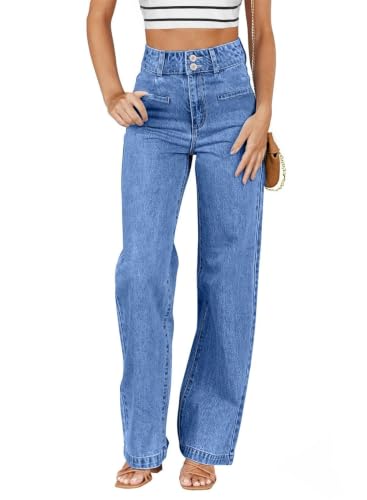
- Premium Material: These jeans for women trendy are crafted from a stretchy, durable, and breathable…
- Innovative Design: These womens jeans are designed with a convenient dual-button closure, trendy front…
- Flattering Features: With soft and comfortable fabric, these wide leg jeans are designed to flatter your…
Shop the look on Amazon
Everything you need to build a secondhand-style wardrobe, delivered. We may earn a commission on purchases.
FAQ
Should new jeans feel tight?
Rigid and raw denim often feel firm at first and give with wear, according to common advice. Stretch denim may loosen, so if a stretch pair is uncomfortable on day one, it may be worth trying the next size.
Do I need a belt if my jeans fit?
Common advice is that well-fitting jeans stay up without one. A belt is then a styling choice rather than a fix.
What if the waist fits but the legs are too long?
Keep them and hem them. Length is the simplest alteration on jeans.
Why do the same-size jeans fit differently at two brands?
Each brand cuts its own pattern and sets its own label sizes. Use each brand’s own chart and compare measurements with a pair you know fits.