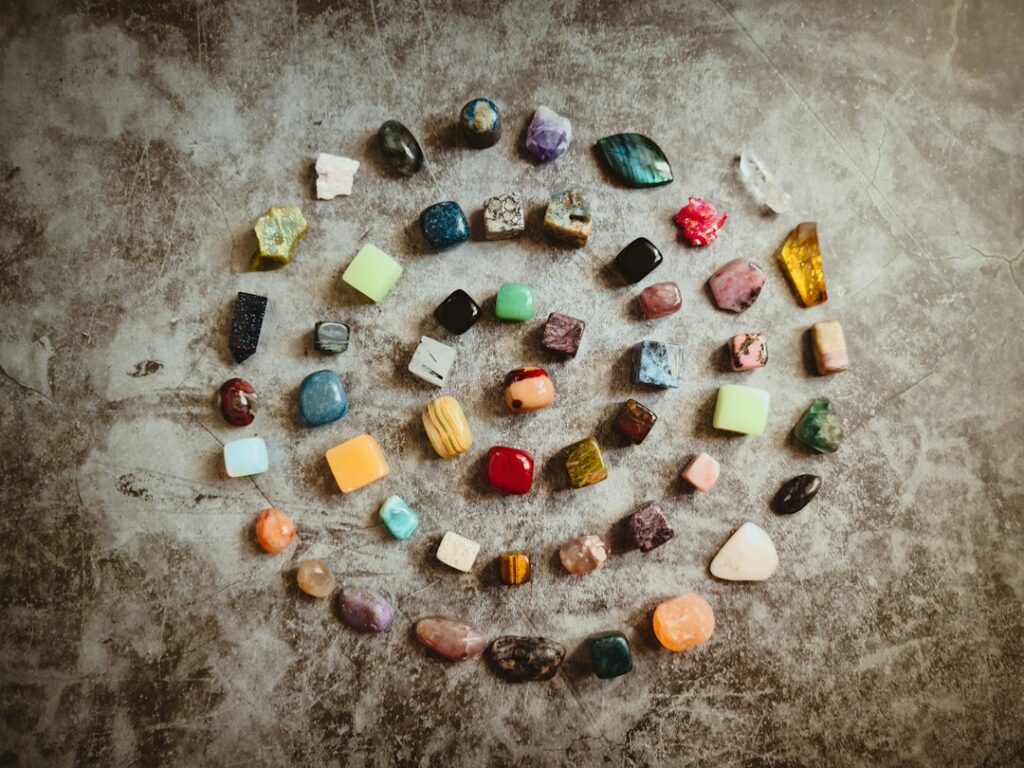
Twelve months, more than twelve stones: here is the modern birthstone list month by month, the colors each gem actually comes in, the stories people have told about them, and how to keep each one looking its best.
A birthstone chart answers a simple question, which gem belongs to which month, but the answer is less tidy than most people expect. Several months have more than one stone, gem organisations list alternates, and many birthstones come in far more colors than the single shade printed on a gift card. This guide gives you the full list of birthstones by month as the American Gem Society (AGS) publishes it, notes where the Gemological Institute of America (GIA) adds alternates, and then walks through each month: the colors the stone comes in, the folklore attached to it, and the care it needs. If you are shopping for a piece rather than researching, our Amazon Jewelry guide rounds up affordable jewellery picks, including birthstone styles.
A note before the chart: the “meanings” of birthstones are folklore and tradition. GIA, the gem-grading lab and research institute, says that “there are countless myths and legends around the many different powers and attributes that birthstones have.” Where this guide repeats a legend, it is labelled as lore, with its source. None of it is a claim that a gem has health, luck or protective powers.
The birthstone chart: all 12 months at a glance
The table below follows the modern birthstone chart published by the American Gem Society. The second column is the main stone AGS lists for the month, and the third column shows the alternates AGS names. The last column notes extra stones GIA also lists for that month.
| Month | Main birthstone (AGS) | Alternates (AGS) | Also listed by GIA |
|---|---|---|---|
| January | Garnet | None listed | None |
| February | Amethyst | None listed | None |
| March | Aquamarine | Bloodstone | None |
| April | Diamond | None listed | None |
| May | Emerald | None listed | None |
| June | Pearl | Alexandrite, moonstone | Pearl, moonstone, alexandrite |
| July | Ruby | None listed | None |
| August | Peridot | Sardonyx, spinel | Peridot, spinel |
| September | Sapphire | None listed | None |
| October | Opal | Tourmaline | Opal, tourmaline |
| November | Topaz | Citrine | None |
| December | Tanzanite | Turquoise, zircon | Turquoise, tanzanite, zircon |
Two things stand out. First, June, August, October, November, December and March all have more than one accepted stone, so a person born in those months has a genuine choice. Second, the “Also listed by GIA” column shows GIA giving the same month a group of stones rather than a single winner, which is a useful reminder that there is no one official, fixed answer. If someone tells you a different stone belongs to your month, they may be working from an older or regional list.
Modern and traditional birthstones: why lists differ
People often ask for “modern and traditional birthstones” as two separate lists. In practice, birthstone lists have been revised over time, and jewellers, gem societies and different countries do not all use the same version. The dates and details of those revisions vary between accounts, so this guide does not try to rebuild a historical “traditional” list. It sticks to what AGS and GIA currently publish. The alternates in the chart above often overlap with what people call traditional stones, which is one reason the alternates exist at all: they give buyers more options in color, price and durability.
If you are buying a gift and are not sure which list the recipient follows, the main AGS stone is the safest default. If you know they prefer a particular color, check whether the month has an alternate in that color.
Birthstone colors: a quick reference
Most charts show one swatch per month. Many birthstones come in a whole range. The table below lists the colors GIA describes for the stones it covers in detail, and common color associations for the rest. Treat the second group as the shades people usually picture, not as a complete list.
| Month | Stone | Colors |
|---|---|---|
| January | Garnet | Red, plus orange, yellow, purple and vibrant green, per GIA; some change color between blue and purple under different lighting |
| February | Amethyst | Commonly pictured as purple |
| March | Aquamarine | Commonly pictured as pale blue to blue-green |
| April | Diamond | Colorless to light yellow, brown or grey on GIA’s D-to-Z scale, plus fancy colors such as pink and blue |
| May | Emerald | Commonly pictured as green |
| June | Pearl | White, black, brown, pink and peach tones, per GIA |
| June | Moonstone | Finest stones show a blue sheen on a colorless background, per GIA |
| June | Alexandrite | Green to bluish green in daylight, red to purplish red under incandescent light, per GIA |
| July | Ruby | Commonly pictured as red |
| August | Peridot | Yellowish green to greenish yellow, per GIA |
| August | Spinel | Red, pink, orange, purple, violet, blue and bluish green, per GIA |
| August | Sardonyx | Bands of brownish-red to orange sard alternating with white or black onyx, per GIA |
| September | Sapphire | Commonly pictured as blue |
| October | Opal | Rainbow “play-of-color”; types include black, white, boulder and fire opal, per GIA |
| October | Tourmaline | Many colors, including pink to red rubellite and neon green-to-blue Paraíba, per GIA |
| November | Topaz | Commonly pictured in golden or blue tones |
| November | Citrine | Commonly pictured as yellow to orange |
| December | Tanzanite | Rich blue to violet, per GIA |
| December | Turquoise | Blue to green, often with matrix veining, per GIA |
| December | Zircon | Red, orange, yellow, brown, green, blue and colorless, per GIA |
The practical takeaway: if someone born in January dislikes red, garnet can still work, because GIA notes garnets in green, orange, yellow and purple too. If a December birthday person wants something blue but not turquoise, tanzanite and blue zircon are both on the list. Color choice is one of the main reasons the alternates matter.
Birthstones by month: color, lore and care
Below, each month gets a short profile. “Lore” means the stories and traditions people have attached to a stone over time. “Care” draws on GIA’s cleaning advice where GIA gives it for that stone. Wherever a care note is missing, the general rule applies: check the jeweller’s or maker’s care instructions, and when in doubt, use the gentlest method.
January: garnet
Garnet is the January birthstone on the AGS chart. Many people think of garnet as a deep red, but GIA describes a wider family: orange, yellow, purple and vibrant green garnets exist too. GIA names examples such as green tsavorite, orange-yellow spessartine and green demantoid, and notes that some garnets change color from blue to purple under different lighting.
Care: per GIA, garnet can generally go in an ultrasonic cleaner but should not be steam cleaned, and fracture-filled garnets need extra care. GIA also advises keeping softer stones such as garnet apart from harder gems like diamond, sapphire and ruby so they do not get scratched. Warm soapy water and a soft brush is the gentlest route for everyday cleaning.
February: amethyst
Amethyst is February’s stone on the AGS chart, and it has no alternate on that list. It is most often pictured as purple, from pale lilac to deep violet, and its single-stone status makes February one of the simpler months to shop for.
Care: the sheets behind this guide do not include stone-specific GIA cleaning advice for amethyst, so follow the jeweller’s instructions. Warm soapy water and a soft brush is a common gentle method for many gems.
March: aquamarine (alternate: bloodstone)
March has aquamarine as its main stone on the AGS chart, with bloodstone as the alternate. Aquamarine is commonly pictured as a pale blue to blue-green, which makes it a popular spring gift. Bloodstone gives March birthdays a very different, darker option.
Care: no stone-specific GIA care notes for either stone were included in this guide’s sources, so check the maker’s care instructions and start with the gentlest method.
April: diamond
Diamond is April’s birthstone. It is the one stone on this chart with its own detailed grading systems for color and clarity. GIA’s color scale runs from D (colorless) to Z (light yellow, light brown or light grey), and fancy-color diamonds such as pink and blue fall outside that range. Clarity is judged on GIA’s 11-grade scale under 10x magnification. Our Diamond Clarity Chart explains each clarity grade, and the Diamond Color Chart covers D to Z and fluorescence in detail.
Care: diamonds are hard, which is exactly why GIA advises keeping softer stones (opal, garnet) away from them in a jewellery box. Diamond jewellery often includes other stones or treatments, so check the whole piece’s care instructions, not just the centre stone. Our How to Clean Jewelry at Home (by Metal and Stone) guide covers cleaning by metal and stone.
May: emerald
Emerald is May’s stone, commonly pictured in shades of green. It is one of the stones where cleaning method matters most.
Care: GIA lists warm soapy water and a soft brush as the safe option for emerald, and warns never to use ultrasonic or steam cleaners because “vibrations and heat can cause the filler to sweat out.” Many emeralds are filled to improve their look, so treat every emerald gently unless a jeweller tells you otherwise.
June: pearl (alternates: alexandrite, moonstone)
June has the most varied set of stones on the chart. AGS lists pearl first, with alexandrite and moonstone as alternates, and GIA lists all three for June.
Pearls come in white, black, brown, pink and peach tones, according to GIA. The finest moonstone, GIA says, shows a blue sheen on a colorless background. Alexandrite is the shape-shifter of the group: GIA describes it as green to bluish green in daylight and red to purplish red under incandescent light.
Lore: GIA notes that pearls have been associated with purity and innocence, and that moonstone is, in lore, “believed to bring great luck.” These are traditions, not properties.
Care: GIA advises wiping pearls with a soft, damp cloth after each wear, avoiding ultrasonic and steam cleaners, and not storing pearls in plastic. Moonstone should also stay out of ultrasonic and steam cleaners per GIA, with warm soapy water as the safe option. Alexandrite, by contrast, is one of the stones GIA says is generally safe in ultrasonic cleaners.
July: ruby
Ruby is July’s birthstone on the AGS chart, with no alternate listed. It is commonly pictured as red, and it sits alongside sapphire and diamond among the harder gems GIA mentions when it advises keeping softer stones apart from them.
Care: this guide’s sources do not include GIA’s ruby-specific cleaning notes, so check the jeweller’s guidance. If a ruby has been treated, the jeweller should be able to tell you what to avoid.
August: peridot (alternates: sardonyx, spinel)
August has three stones on the AGS chart: peridot, with sardonyx and spinel as alternates. GIA lists peridot and spinel for August.
Peridot ranges from yellowish green to greenish yellow, per GIA. Spinel comes in a broad spread of colors: red, pink, orange, purple, violet, blue and bluish green. Sardonyx is a banded stone, with layers of brownish-red to orange sard alternating with white or black onyx.
Care: GIA says not to put peridot or sardonyx in ultrasonic or steam cleaners. Warm soapy water and a soft brush is GIA’s safe default for peridot. Spinel is one of the stones GIA describes as generally safe in an ultrasonic cleaner.
September: sapphire
Sapphire is September’s stone, most often pictured as blue. Like ruby and diamond, it is one of the harder gems GIA names when it recommends storing softer stones separately.
Care: the sources behind this guide do not include stone-specific cleaning advice for sapphire, so follow the jeweller’s instructions and start gently.
October: opal (alternate: tourmaline)
October gets opal as its main stone and tourmaline as the alternate, and GIA lists both. Opal is known for “play-of-color”, flashes of rainbow hues, and GIA lists types including black, white, boulder and fire opal. Tourmaline comes in many colors; GIA highlights pink to red rubellite and the neon green-to-blue variety called Paraíba.
Lore: GIA recounts that Bedouins believed opal held lightning. It is a striking image, presented here as legend.
Care: opal is one of the softer stones GIA says to keep away from harder gems. GIA advises against ultrasonic and steam cleaners for opal and lists warm soapy water and a soft brush as the safe method for both opal and tourmaline.
November: topaz (alternate: citrine)
November has topaz as the main stone on the AGS chart and citrine as the alternate. Topaz is commonly pictured in golden or blue tones, and citrine as yellow to orange, which gives November a warm palette that suits autumn birthdays.
Care: no stone-specific GIA notes for topaz or citrine were included in this guide’s sources. Check the maker’s care instructions and start with mild soap and water.
December: tanzanite (alternates: turquoise, zircon)
December’s main stone on the AGS chart is tanzanite, with turquoise and zircon as alternates. GIA lists all three. Tanzanite ranges from rich blue to violet. GIA notes that it was identified in Tanzania in 1962, that its main source in the Merelani Hills was found in 1967, and that Tiffany & Co. launched a major advertising campaign for it in 1968. Turquoise ranges from blue to green, often with veins of matrix. Zircon comes in red, orange, yellow, brown, green, blue and colorless.
Lore: GIA describes turquoise being seen as protective in Egyptian, Native American and Tibetan traditions. That is cultural history, not a claim about the stone.
Care: GIA advises against ultrasonic and steam cleaners for tanzanite, turquoise and zircon. Warm soapy water and a soft brush is GIA’s safe option for tanzanite. GIA also notes that turquoise is sensitive to heat, acids and chemicals, so keep it away from perfume, lotion and cleaning products.
Birthstone meanings: what the lore actually says
Search for birthstone meanings and you will find long lists of claimed powers. GIA takes a careful line: it acknowledges “countless myths and legends” about birthstones and presents them as lore. This guide follows that approach and only repeats traditions GIA describes:
- Pearl (June): associated with purity and innocence, per GIA.
- Moonstone (June): in lore, “believed to bring great luck,” per GIA.
- Opal (October): Bedouins believed opal held lightning, per GIA.
- Turquoise (December): seen as protective in Egyptian, Native American and Tibetan traditions, per GIA.
Many people like birthstone jewellery for personal reasons: a link to a birthday, a family member, or a color they love. Those reasons do not need a legend to back them up. If you see a listing that says a stone will improve health, mood or fortune, read it as marketing or folklore, not as fact.
How to choose birthstone jewellery
Once you know the stone, a few practical questions help narrow things down. These are common buying considerations, not rules.
Think about daily wear
Rings and bracelets take more knocks than earrings and pendants. GIA’s care notes show that some stones need more caution than others: opal and garnet are softer than diamond, sapphire and ruby, and pearls and turquoise are sensitive to chemicals and cleaning methods. For a ring worn every day, many buyers lean towards a harder stone or a protective setting. For a pendant or earrings, softer stones are often less of a concern.
Use alternates for color or budget
If the main stone for a month does not suit the person’s taste, check the alternates. June offers pearl, moonstone and alexandrite. August offers peridot, spinel and sardonyx. December offers tanzanite, turquoise and zircon. Alternates can also help with budget, since prices vary widely between stones, quality and settings.
Check the metal
Birthstone pieces are sold in many metals. In the US, the FTC’s Jewelry Guides say “sterling” or “solid silver” may only be used for items at least 92.5% silver, and “gold” should be preceded by the karat (for example, 14K gold). Gold plate, gold-filled and vermeil must use gold alloy of at least 10 karat under those guides. Knowing these terms helps you compare listings fairly. Our guides to How to Clean Sterling Silver Jewelry and Remove Tarnish and How to Clean Gold Jewelry Safely explain how each metal is cared for.
Lab-made and simulated stones
Many affordable birthstone pieces use lab-created stones or glass and crystal simulants in the month’s color. These can be a sensible choice for a gift or for children’s jewellery. Look for clear labelling in the product description so you know what you are buying, and ask the seller if the listing is vague.
Shopping online, searches such as Birthstone Necklace Sterling Silver on Amazon or Birthstone Ring Adjustable on Amazon bring up a wide range. Read the metal and stone details in each listing before buying. For ring purchases, get the size right first with our Ring Size Chart.
Top-selling match on Amazon

- Birthstone Flower Ring: Different birthstones symbolize the 12 birth months, featuring cubic zirconia and…
- Material: Made from brass and plated in rose gold, gold, or silver. Adorned with mother of…
- Adjustable Size: fits most fingers comfortably (size 7-11)
Top-selling match on Amazon

- [Classic Design] This sapphire heart necklace features a classic heart-shaped design with…
- [Birthstone Earrings] Royal blue is the birthstone color for September, symbolizing loyalty…
Personalised and family pieces
Birthstone jewellery is often used to represent several people at once, such as a necklace with one stone for each child. Our Personalized Mother’s Day Jewelry guide covers that style. If you wear several stones together, remember that they may need different care: a pendant that combines pearl and garnet, for example, should be cleaned to suit the more delicate pearl.
Caring for birthstones: a cleaning cheat sheet
Cleaning advice differs from stone to stone. The list below summarises what GIA says for the stones it covers. For anything not listed, check the jeweller’s or maker’s care instructions.
| Stone | Warm soapy water + soft brush | Ultrasonic cleaner | Steam cleaner |
|---|---|---|---|
| Garnet | Gentle option | Generally OK, per GIA (extra care if fracture-filled) | No, per GIA |
| Emerald | Safe, per GIA | Never, per GIA | Never, per GIA |
| Pearl | Wipe with soft damp cloth after wear, per GIA | Avoid, per GIA | Avoid, per GIA |
| Moonstone | Safe, per GIA | Never, per GIA | Never, per GIA |
| Alexandrite | Gentle option | Generally safe, per GIA | Check with jeweller |
| Peridot | Safe, per GIA | Never, per GIA | Never, per GIA |
| Sardonyx | Gentle option | Never, per GIA | Never, per GIA |
| Spinel | Gentle option | Generally safe, per GIA | Check with jeweller |
| Opal | Safe, per GIA | Never, per GIA | Never, per GIA |
| Tourmaline | Safe, per GIA | Check with jeweller | Check with jeweller |
| Tanzanite | Safe, per GIA | Never, per GIA | Never, per GIA |
| Turquoise | Gentle option; avoid chemicals | Never, per GIA | Never, per GIA |
| Zircon | Gentle option | Never, per GIA | Never, per GIA |
A simple at-home cleaning method
For most stones where GIA lists warm soapy water as safe, a common method looks like this:
- Check the maker’s care instructions and confirm the stone is not porous, treated or filled in a way that rules out water.
- Fill a small bowl with warm (not hot) water and a few drops of mild dish soap.
- Dip the piece briefly.
- Brush gently around the stone and setting with a soft toothbrush.
- Rinse in clean warm water, with the sink plugged.
- Pat dry with a soft, lint-free cloth.
Skip this for pearls, which GIA says to wipe with a soft damp cloth instead, and take extra care with turquoise, which is sensitive to chemicals. A small kit such as Jewelry Cleaning Brush And Polishing Cloth on Amazon covers the basics.
Storage
Per GIA, keep softer stones such as opal and garnet away from harder gems like diamond, sapphire and ruby to prevent scratches, and do not store pearls in plastic. A jewellery box with separate compartments, or individual soft pouches, does the job. For silver settings, the Canadian Conservation Institute suggests sealed polyethylene bags with acid-free tissue, activated charcoal and silica gel to slow tarnish.
Thrift and vintage birthstone finds
Secondhand jewellery is a good place to look for birthstone pieces, especially older rings and pendants with garnet, amethyst, peridot or opal. A few common checks help:
- Look for metal stamps such as “925”, “sterling”, “14K” or “10K”. Under the FTC Jewelry Guides those terms have legal meanings in the US, though a stamp alone does not prove anything about an old or foreign piece.
- Check settings. Prongs on older rings can wear down. A jeweller can tighten or re-tip them before you wear the piece daily.
- Clean gently first. Until you know what a stone is, treat it as delicate: warm soapy water and a soft brush, never an ultrasonic or steam cleaner.
- Ask about identification. Color alone does not identify a stone. A red stone could be garnet, ruby, spinel or glass. A jeweller or gem lab can tell you what you have.
Our Thrift Store Jewelry Finds guide covers what else to look for when hunting jewellery secondhand.
Birthstone chart FAQ
What are the birthstones by month?
Per the American Gem Society’s modern chart: January garnet, February amethyst, March aquamarine, April diamond, May emerald, June pearl, July ruby, August peridot, September sapphire, October opal, November topaz and December tanzanite. Several months have alternates, listed in the chart above.
Which months have more than one birthstone?
On the AGS chart, March (bloodstone), June (alexandrite, moonstone), August (sardonyx, spinel), October (tourmaline), November (citrine) and December (turquoise, zircon) all have alternates.
What is the difference between modern and traditional birthstones?
Birthstone lists have been revised over time and different organisations publish different versions. This guide uses the modern AGS list and GIA’s listings. Stones called “traditional” elsewhere often show up as alternates on the modern chart.
Do birthstones have special powers?
There is no basis in this guide’s sources for treating birthstones as having health or metaphysical effects. GIA describes the many stories about birthstone powers as myths and legends. Enjoy the lore as history and tradition.
What color is each birthstone?
Many birthstones come in several colors. Garnet, for example, comes in red, orange, yellow, purple and green, per GIA, and spinel and zircon both come in a wide range. See the birthstone colors table above for the full list.
Can I clean all birthstones the same way?
No. GIA says to keep emerald, opal, pearl, moonstone, peridot, sardonyx, turquoise, tanzanite and zircon out of ultrasonic and steam cleaners, while alexandrite and spinel are generally safe in ultrasonic cleaners. Always check the maker’s care instructions first.
Shop the look on Amazon
Everything you need to build a secondhand-style wardrobe, delivered. We may earn a commission on purchases.