
The best ski outfit is not the warmest one. It is the one that keeps you comfortable on a freezing chairlift and a sweaty mogul run in the same morning.
Every ski outfit women actually stay comfortable in is a system, not a single jacket. You need a base layer that moves sweat away from your skin, a mid layer that traps heat, and a shell that blocks wind and snow, plus the accessories that protect the parts of you that get cold first. Get that system right and you can add or remove a layer as the day changes. This guide walks through every layer, explains waterproof ratings and fabrics in plain terms, and shows how to make womens ski wear look as good as it works. For coats and jackets beyond the slopes, see our Women’s Jackets and Outerwear.
How ski layering works
Women's ski jackets: current Amazon prices
As an Amazon Associate we earn from qualifying purchases. Prices and availability are accurate as of November 2026 and may change. Specs are as stated in each Amazon listing.

- Omni-Tech: For prolonged exposure to moderate rain and snow. Multilayered, waterproof…
- Omni-Heat: For versatile lightweight warmth in mild to severe cold. Our patented Heat…
- Mountain Ready: This jacket is a feature-loaded, alpine-ready layer that's built to perform and…

- Omni-Tech: For prolonged exposure to moderate rain and snow. Multilayered waterproof protection…
- Omni-Heat: For versatile lightweight warmth in mild to severe cold. Our patented Heat…
- All-Weather Technology: This 3-in-1 jacket system includes a protective snow-proof shell that makes for an…
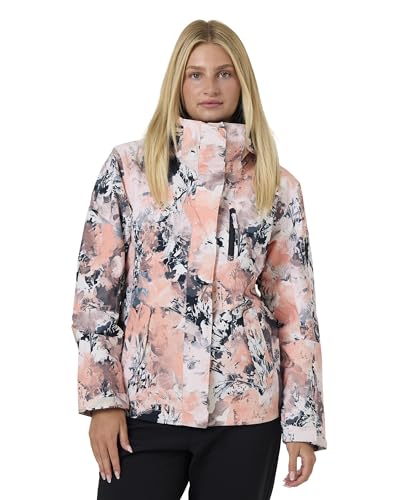
- Insulated For Warmth: Body 120g and sleeve 100g polyfill insulation helps provide cold-weather comfort for…
- Pfas-Free Recycled Fabric: Made with 100% recycled polyester and PFAS-free materials for a snow jacket designed…
- Mountain-Ready Features: Critically taped seams, fixed powder skirt, jacket-to-pant attachment system, sleeve…
Skiing alternates between high effort and sitting still in the wind. A single thick coat cannot handle both: you overheat on the way down, sweat, and then freeze on the lift as that sweat cools. Layering solves this by splitting the job into three parts.
- Base layer: sits against your skin and wicks sweat away. Synthetic or wool, never cotton.
- Mid layer: traps warm air. Fleece or a light puffy, chosen by the day’s temperature.
- Shell: blocks wind, snow and rain. Your ski jacket and pants.
On very cold days, you can wear both a fleece and a puffy under the shell. On mild spring days, you might ski in a base layer and shell alone. That flexibility is the whole point. Our first-timer’s checklist, What to Wear Skiing, covers this in its simplest form if you are packing for your first trip.
Base layers: the part that decides whether you stay warm
The base layer matters more than people expect. If it holds sweat against your skin, no jacket will keep you warm on the lift.
Merino vs synthetic
Merino wool is a fine wool, generally under 22 microns according to Woolmark, so it feels soft rather than scratchy. It resists odour, holds some moisture in the fibre without feeling clammy and stays warm when damp, which makes it excellent for multi-day trips where you will wear the same layer twice. Its weakness is durability: thin merino on its own is less abrasion-resistant than synthetics, and it is usually more expensive. Synthetic base layers dry faster and are tougher, but they hold odour. Our Merino Base Layers guide goes deeper on fit and blends.
Choosing a weight
Merino base layers are commonly sold by fabric weight in grams per square metre. Roughly 150 gsm is lightweight, for spring skiing or people who run hot; 200 gsm is midweight, the versatile default for most winter days; and 250 gsm is heavyweight, for very cold days or people who feel the cold. These bands are an industry convention rather than a formal standard, but they are a reliable guide. For most skiers, a midweight top and a light or midweight bottom is the right combination.
Fit
Base layers should be close-fitting without compressing. Loose base layers cannot wick well. Make sure the top is long enough to tuck in and the leggings do not bunch inside your ski boots; three-quarter length bottoms avoid fabric under the boot cuff entirely. Womens Merino Wool Base Layer Set Midweight on Amazon
Top-selling match on Amazon

Mid layers: fleece, puffies and knitwear
Your mid layer is where you adjust for the day’s temperature.
- Fleece is breathable, warm when damp and forgiving. A grid fleece or quarter-zip is the classic choice.
- A light puffy or insulated vest gives more warmth for the weight. Synthetic fill copes better with sweat than down.
- Knitwear looks great, especially a Fair Isle or cable knit, but wool sweaters are heavier and less breathable than fleece. Save chunky knits for cold, gentle days or après.
A zip-neck mid layer is easier to vent than a crew neck. If you only pack one, make it a fleece; if you feel the cold, pack a light synthetic puffy as well.
Ski jacket and pants for women: what the specs mean
Your shell is the most expensive part of the outfit and the most confusing to buy, because it comes covered in numbers.
Waterproof ratings
Waterproof ratings in millimetres come from a hydrostatic-head test. A 10,000mm rating means the fabric withstands the pressure of a ten-metre column of water before it leaks. Snow+Rock’s guide groups ratings roughly like this: up to 5,000mm is basic; 6,000 to 10,000mm handles light to average rain; 11,000 to 15,000mm is good; 16,000 to 20,000mm handles heavy rain; and above 20,000mm is for severe weather. For skiing in dry, cold resorts, the 10,000mm range is usually adequate. For wet, maritime mountains where it can rain at the base, aim higher.
Breathability
Breathability is a separate figure, measured in grams of water vapour per square metre over 24 hours. Higher is better, and it matters more if you ski hard or hike to runs. A very waterproof but poorly breathable jacket will leave you damp from the inside.
Insulated vs shell jackets
An insulated ski jacket has warmth built in and suits skiers who feel the cold or ski in reliably freezing places. A shell jacket has no insulation and relies on your layers, which makes it more versatile across seasons and better for active skiers. Many people find a lightly insulated jacket the easiest compromise.
How a ski jacket and pants should fit
Try shells on over the layers you will actually ski in. Reach both arms forward as if holding poles and lift them overhead: the sleeves should still cover your wrists and the hem should not ride above your waistband. The jacket should cover your bottom when you crouch, which keeps snow out on chairlift seats. For pants, sit down and bend your knees deeply; they should not pull tight across the seat or thighs, and the hem should sit over the boot with the gaiter sealed, just touching the ground at the heel. Women’s cuts are shaped for the hips and waist, but many women find unisex or men’s shells fit better for length or room, so try both.
Features worth paying for
- Powder skirt: an elasticated inner band that stops snow riding up your back in a fall.
- Pit zips: underarm vents for dumping heat without taking the jacket off.
- Helmet-compatible hood and a high, soft-lined collar.
- Pass pocket on the sleeve or chest.
- Pants with boot gaiters that seal over your ski boots, plus reinforced inner cuffs where ski edges scuff.
Ski pants come as regular trousers or bibs with a chest panel and braces. Bibs keep snow out of your waistband and add warmth to your core; regular pants are easier for bathroom breaks. Womens Insulated Ski Jacket Waterproof Powder Skirt on Amazon
One-piece ski suits: the retro revival
The one-piece ski suit is back. Ski Magazine ran a feature titled “One-Piece Ski Suits Are Staging a Comeback”, and the ski site "I Love Ski" named Poivre Blanc’s Emy suit an icon of the 2025 to 2026 season. They look striking, seal out snow completely at the waist and are warm because there is no gap between jacket and pants.
The honest downsides: you cannot take the top half off at lunch, bathroom breaks are a production, and getting the torso length right is harder than with separates. If you love the look and ski in cold places, they are a great choice. If you ski spring conditions, separates are more practical. Our One-Piece Ski Suits guide covers fit and whether they are worth it.
Accessories: gloves, socks, helmet and the rest
Hands, feet and face get cold first, so accessories make or break the day.
Gloves and mittens
Mittens are warmer than gloves because your fingers share heat. Gloves give more dexterity for zips and buckles. A thin liner glove inside either adds warmth and lets you use your phone without exposing bare skin. Look for a waterproof outer and a long gauntlet that goes over your jacket cuff. Our Women’s Winter Gloves guide covers everyday winter gloves too.
Ski socks
Wear one thin-to-medium ski sock that reaches above the boot cuff, ideally merino or a merino blend. Thick or doubled socks make ski boots tighter, which cuts circulation and makes feet colder. Never wear cotton. Our Merino Wool Socks guide explains cushion levels. Womens Merino Ski Socks Over The Calf on Amazon
Helmet and goggles
Wear a helmet. Buy goggles that fit your helmet without a gap at the forehead, since that gap is where wind and cold get in. Interchangeable or tinted lenses help in flat light.
Neck gaiter, balaclava and beanie
A merino or fleece neck gaiter is the single most useful small item for cold lifts. A thin balaclava works under a helmet. Keep a warm beanie in your pocket for lunch and après; our Women’s Beanies guide covers fits that do not flatten your hair too badly.
The ski outfit women need, layer by layer
A quick reference for building the full outfit, from skin to shell.
| Layer | What it does | Good materials | Avoid | Best for / note |
|---|---|---|---|---|
| Base top and leggings | Wicks sweat off skin | Merino (150–250 gsm), synthetic | Cotton | Everyone; midweight is the default |
| Ski socks | Warmth and boot comfort | Merino or merino blend, above the boot cuff | Cotton, doubled socks | One sock only, thin to medium |
| Mid layer | Traps heat | Fleece, synthetic puffy, wool knit | Heavy cotton hoodies | Swap by temperature; add both on cold days |
| Jacket (shell or insulated) | Blocks wind and snow | Waterproof-breathable fabric, around 10,000mm and up | Fashion puffers without waterproofing | Insulated for cold skiers, shell for versatility |
| Pants or bibs | Keeps legs dry | Waterproof shell with boot gaiters | Jeans, leggings alone | Bibs for powder and warmth |
| Gloves or mittens | Protects hands | Waterproof outer, insulated, long gauntlet | Knit gloves | Mittens for cold hands |
| Helmet, goggles, gaiter | Protects head and face | Helmet-compatible goggles, merino or fleece gaiter | Sunglasses alone in flat light | Every skier |
The table looks long, but most of the cost sits in two rows: the jacket and the pants. Everything else is relatively inexpensive, and it is where comfort is often won or lost. A skier in a mid-range jacket with good merino layers, the right socks and a neck gaiter will usually be warmer than one in a premium jacket over a cotton T-shirt.
If you are on a budget, spend on the base layer and gloves first, then the pants, then the jacket. Waterproof pants matter more than a fancy jacket for beginners, because beginners sit in the snow a lot.
The “avoid” column is where most first-time mistakes happen. Jeans soak through within the first fall, cotton holds sweat, and two pairs of socks make boots painful.
Adjusting your ski attire for the conditions
The same outfit will not suit every day of a trip. Check the forecast each morning, including wind speed at the summit, and adjust the middle of the system rather than the shell.
Very cold, clear days
Switch to a heavyweight base layer or add a thin second base under your midweight. Wear both a fleece and a light puffy under your shell, and swap gloves for mittens with liners. A balaclava or a gaiter pulled up over your nose makes a dramatic difference on exposed lifts. Hand warmers in your mitten cuffs are cheap insurance. Our Thermal Underwear guide covers extra-warm options if you feel the cold badly.
Mild spring days
Spring skiing can swing from frozen in the morning to slushy and warm by lunch. Wear a lightweight base, a thin fleece you can stuff in a pocket, and a shell rather than an insulated jacket. Open your pit zips early, before you start sweating. Sunscreen and lighter goggle lenses matter more than extra layers.
Wet, snowy or stormy days
This is when your shell’s waterproof rating and seam sealing earn their price. Synthetic insulation is a better mid layer than down because it keeps working when damp. Pack a spare pair of gloves for the afternoon, since even good gloves get damp from the inside.
Buying womens ski wear on a budget
Skiing is expensive enough without buying a full new outfit for a single trip. A few approaches keep costs down without leaving you cold.
- Rent the shell for a first trip. Many resorts and outdoor shops rent jackets and pants. Buy your own base layers, socks and gloves, which are personal and inexpensive.
- Use what you own for mid layers. A fleece, a light puffy or a wool sweater from your everyday wardrobe works perfectly well.
- Buy secondhand shells. Ski jackets and pants are often barely worn. Check zips, seam tape inside and the cuffs for wear, and re-treat the outer fabric with a water-repellent wash.
- Shop end of season. Selection is thinner, but previous-season colours are often cheaper. Past Black Friday sales have also covered outerwear, though nobody knows this year’s discounts yet; our Black Friday Clothing Deals guide covers how to shop them without overspending.
The one place not to economise is the base layer and socks. They are cheap relative to the rest of the outfit and make the biggest difference to how warm you feel. Womens Waterproof Ski Bib Pants on Amazon
Cute ski outfits: how to make ski attire look good
Ski attire has swung back towards style in recent seasons, with retro one-pieces, bold colour and fitted silhouettes all prominent in ski and lifestyle press. A few principles help your womens ski wear look intentional rather than thrown together.
- Pick one statement piece. A bright jacket with neutral pants, or a bold one-piece with simple accessories. Two loud pieces compete.
- Match your helmet and goggles to your jacket or keep them in white or black. It instantly looks pulled together.
- Fitted over boxy. A jacket with a defined waist or a slim-cut pant reads more polished, as long as you can still layer underneath.
- Use the mid layer for personality. A Fair Isle or cable knit looks great when the jacket is unzipped at lunch and carries straight into après.
- Coordinate accessories. A matching beanie, neck gaiter and gloves make even a basic outfit look styled.
Snowboarders typically prefer a looser, longer cut; our Women’s Snowboarding Outfits guide covers that style. If you are shopping for extended sizes, our Plus Size Ski Wear guide lists where to find jackets and pants that fit properly. Packing for a partner too? See Men’s Ski Clothes.
Off the slopes: après-ski and resort footwear
There is no formal après-ski dress code. Some people stay in their ski gear; others change into something warmer and cosier. Common pieces include statement outerwear, faux fur, Fair Isle knits, turtlenecks and snow boots. Our Après-Ski Outfits guide has full looks.
For footwear around the resort, you need a warm, grippy boot you can slip on after taking off your ski boots. A proper snow boot is the practical choice; our Women’s Snow Boots guide compares warm, waterproof options. The Moon Boot is the fashion pick, with the caveat that retailers describe it as water-repellent rather than waterproof. Our Moon Boots guide covers when they make sense.
The verdict
The best ski outfit is built from the skin out, and the base layer deserves more of your budget than most people give it. Choose a midweight merino or synthetic base, a fleece mid layer you can supplement with a light puffy, and a waterproof jacket and pants with a rating that suits your mountains; around 10,000mm handles most dry, cold resorts, while wetter ranges call for more. Add mittens, one good pair of ski socks, a helmet, goggles and a neck gaiter.
Once that system is in place, style is easy: one statement piece, coordinated accessories, and a great knit for lunch and après. A one-piece is a fun, warm choice if you ski cold places and do not mind the bathroom logistics. What you should not do is spend everything on a designer jacket and wear it over cotton. Warm and dry first, then cute, and you will enjoy every run.
Shop the look on Amazon
Everything you need to build a secondhand-style wardrobe, delivered. We may earn a commission on purchases.
FAQ
What should a woman wear skiing?
A base layer of merino or synthetic fabric, a fleece or light puffy mid layer, a waterproof ski jacket and pants, one pair of ski socks, waterproof gloves or mittens, a helmet, goggles and a neck gaiter.
Can I wear leggings under ski pants?
Yes, if they are a wicking synthetic or merino base layer. Avoid cotton leggings, which hold sweat. Make sure they do not bunch inside your ski boots.
What waterproof rating do I need for a ski jacket?
Around 10,000mm suits most dry, cold resorts. For wet conditions or rain at the base, look for higher ratings in the 15,000 to 20,000mm range or above.
Is a one-piece ski suit practical?
It is warm and seals out snow well, but you cannot remove the top half at lunch and bathroom breaks are harder. It suits cold resorts and people who love the retro look.
Should I wear two pairs of socks skiing?
No. Doubled socks make boots tighter, reduce circulation and make feet colder. Wear one thin-to-medium merino ski sock that comes above the boot cuff.
Are jeans OK for skiing?
No. Denim soaks through quickly and stays cold and heavy. Waterproof ski pants or bibs are essential, even for a single day.
How do I make my ski outfit look cute?
Choose one statement piece, keep the rest neutral, coordinate helmet, goggles and accessories, and wear an interesting knit as your mid layer so it shows when you unzip.