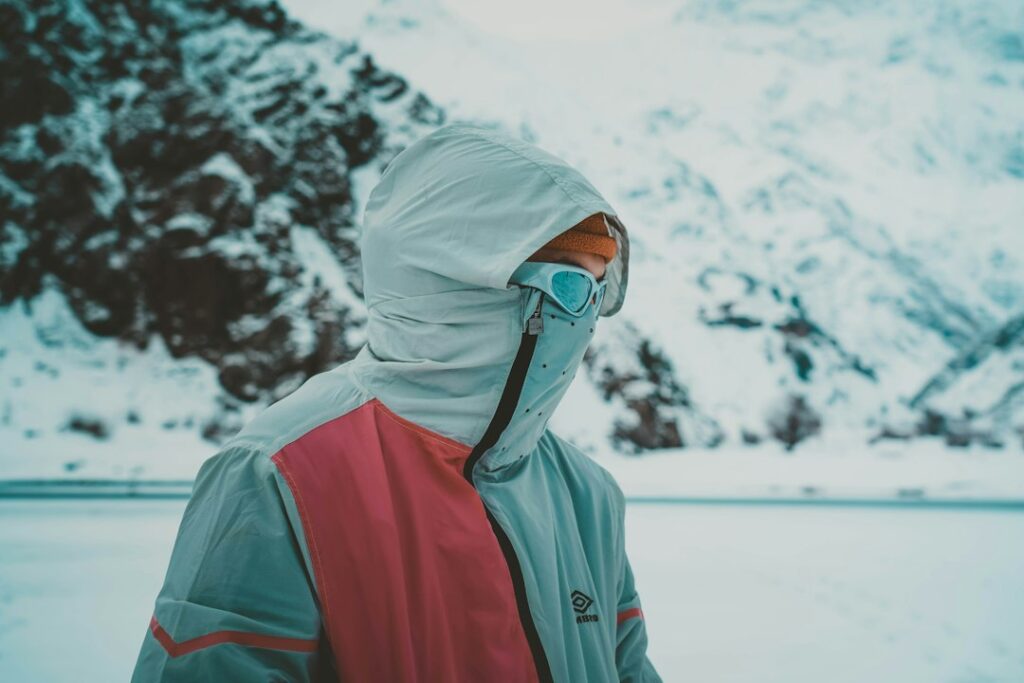
Most ski discomfort comes from one mistake: dressing for the car park instead of for a full day of hard work followed by sitting on a cold chairlift.
Buying ski clothes men’s style is mostly a layering problem. You need to stay dry from the inside, warm when you stop, and protected from wind and snow on the outside. This guide covers the three-layer system, how to choose a men’s ski jacket and pants, what waterproof ratings actually mean, and which accessories make the biggest difference. It sits alongside our Shackets & Casual Coats hub, which covers everyday jackets and coats; ski clothing is a more technical category, but the same rules about fit and layering under a shell apply.
The three-layer system for ski clothes men’s
Men's ski jackets: current Amazon prices
As an Amazon Associate we earn from qualifying purchases. Prices and availability are accurate as of November 2026 and may change. Specs are as stated in each Amazon listing.

- Omni-Tech: For prolonged exposure to moderate rain and snow. Multilayered waterproof protection…
- Omni-Heat: For versatile lightweight warmth in mild to severe cold. Our patented Heat…
- Three-Season Jacket: This insulated hiking jacket is a fantastic blend of cold-weather performance and…

- Omni-Tech: For prolonged exposure to moderate rain and snow. Multilayered waterproof protection…
- Omni-Heat: For versatile lightweight warmth in mild to severe cold. Our patented Heat…
- Three-Season Jacket: This insulated hiking jacket is a fantastic blend of cold-weather performance and…
Outdoor retailers like REI and evo describe ski dressing in three layers, and it really is the foundation of everything.
Base layer. This sits next to your skin and moves sweat away. Choose merino wool or synthetic fabric, never cotton, which stays wet and cold. A long-sleeve top and long johns are the standard. Merino resists odour, which matters on multi-day trips. Our Merino Base Layers guide covers weights; midweight, around 200 gsm, is a good default for skiing.
Mid layer. This traps heat. A fleece is the most common choice; a light puffy jacket is warmer. On very cold days, evo and REI suggest using both a fleece and a puffy under your shell.
Shell. Your ski jacket and pants block wind, snow and water. The shell can be insulated or uninsulated. An uninsulated shell gives you more flexibility, because you change the warmth by changing the mid layer.
Choosing a mens ski jacket
Insulated vs shell. An insulated jacket is simpler: one piece, warm out of the box. A shell is more versatile across different temperatures and seasons, and better if you also hike or tour. Most resort skiers do well with a lightly insulated jacket or a shell plus a good mid layer.
Waterproofing. Waterproof ratings come from a hydrostatic-head test. A 10,000mm rating means the fabric withstands the pressure of a 10-metre column of water. Snow+Rock’s guide describes up to 5,000mm as basic, 6,000 to 10,000mm as light to average rain, 11,000 to 15,000mm as good, 16,000 to 20,000mm as heavy rain and above 20,000mm as severe weather. Breathability is a separate figure measured in grams per square metre per 24 hours.
Features that matter. A helmet-compatible hood, a powder skirt to stop snow getting up your back, pit zips for venting, a pass pocket on the sleeve and enough inside pockets for a phone and snacks.
Fit. Try the jacket on over your mid layer. You should be able to raise your arms and twist without the hem riding up. Sleeves should cover your wrists when your arms are extended forward, as if holding poles.
Mens ski pants
Ski pants follow the same insulated vs shell logic as jackets. Bib pants, which come up over the chest with braces, keep snow out when you fall and are warmer around the core; regular pants are simpler for bathroom breaks. Look for reinforced inner cuffs where your boots and edges rub, boot gaiters to seal over your ski boots, and thigh vents for warm days.
Fit should allow you to crouch and bend your knees fully. Too tight and you will feel restricted; too loose and snow gets in. The leg should cover the top of your ski boot without bunching.
Accessories that make the biggest difference
Socks. One pair of thin-to-midweight ski socks, made from merino or synthetic. Thick socks often make ski boots tighter and colder. See our Merino Wool Socks guide.
Gloves or mittens. Waterproof, insulated gloves for most days; mittens if your hands run cold.
Helmet and goggles. Non-negotiable for safety and comfort. Make sure they fit together without a gap at the forehead.
Neck gaiter or balaclava. A thin merino or fleece gaiter makes windy chairlifts much more bearable.
Renting, borrowing and where to spend
If it is your first trip, you do not need to buy everything. Skis, boots and helmets can be rented at almost every resort, and plenty of rental shops also hire out jackets and pants. What you should own are the pieces that sit against your skin: base layers, socks and a neck gaiter. They are inexpensive, personal, and they make the biggest difference to comfort.
Once you know you will ski regularly, the next purchase should be the shell, jacket first, then pants. A good waterproof jacket also works for winter hiking, rainy commutes and cold-weather travel, so it earns its keep off the mountain. Insulated mid layers can come from your existing wardrobe: a fleece you already own is fine. Leave fashion-led ski pieces until last; a plain, well-made shell in a colour you like will outlast most trend-driven jackets.
Putting together a men’s ski outfit
A sensible first men’s ski outfit looks like this: a merino base layer top and bottoms, a fleece mid layer, a lightly insulated waterproof jacket, insulated or shell pants, ski socks, waterproof gloves, a helmet and goggles. Add a light puffy for very cold days. Neutral colours are easy to mix, but a bright jacket makes you easier to spot on the slope, which is useful in a group. For a full checklist, our What to Wear Skiing guide goes item by item.
The verdict
For most men, the best approach to ski clothes is a good merino base layer, a fleece, and a waterproof jacket and pants with a rating somewhere in the “good” band. Spend most of your budget on the shell and base layer, because they decide whether you stay dry. Rent or borrow the rest at first if you are not sure you will ski often. Avoid cotton anywhere on your body, and avoid buying a jacket without trying it over a mid layer. If you need one thing first, start with a midweight merino base layer: Mens Merino Wool Base Layer Set on Amazon.
Shop the look on Amazon
Everything you need to build a secondhand-style wardrobe, delivered. We may earn a commission on purchases.
FAQ
What should men wear under ski pants?
A merino or synthetic base layer bottom. Avoid jeans, sweatpants and cotton long johns, which stay wet and cold.
What waterproof rating do I need for skiing?
Snow+Rock describes 11,000 to 15,000mm as good and 16,000 to 20,000mm as suited to heavy rain. Most resort skiers do well in that range.
Are bib pants better than ski pants?
Bibs keep snow out better and add core warmth. Regular pants are simpler and easier to take off.