The layer nobody sees does most of the work. Get the base layer right and an ordinary coat suddenly feels like a good one.
A merino wool base layer is the thin top and leggings you wear against your skin under everything else. Its job is not to be the warmest thing you own; it is to move sweat away from your body and keep you from getting chilled when you stop moving. Merino does that better than cotton and, for most people, more comfortably than synthetic fabrics. This guide explains what the weight numbers mean, how a base layer should fit, how merino compares with polyester, and how to build a layering system around it for city winters, hiking and skiing. It is part of our Activewear and Athleisure, which covers the mid layers and outer layers that go on top.
What a merino wool base layer actually does
Every cold-weather layering guide, from REI to evo’s ski advice, says the same thing: base layer, mid layer, shell. The base layer wicks sweat. The mid layer, such as fleece or a puffy, traps heat. The shell blocks wind, snow and rain. On very cold days you can add both a fleece and a puffy under the shell.
The base layer matters because sweat is the enemy of warmth. Even in freezing weather you sweat when you walk uphill, carry shopping or stand in a heated train. If that moisture sits against your skin in a cotton T-shirt, it chills you the moment you step back outside or stop moving. A moisture wicking base layer moves the sweat outward and dries faster, so you do not get that cold, damp shiver at the bus stop.
Merino adds a few extra advantages. According to REI’s guidance, it resists odour, holds some moisture in the fibre core without feeling clammy, and is soft rather than scratchy. The odour point is the one people notice most: a merino top can be worn for several days of light activity without smelling, which is why travellers and multi-day hikers love it.
Weights explained: 150, 200 and 250 gsm
Merino base layers are sold by fabric weight in grams per square metre (gsm). The bands are an industry convention rather than a formal standard, but almost every brand uses roughly the same tiers:
- Around 150 gsm (lightweight). Thin and breathable. Best for high-output activity such as running, ski touring and fast hiking, or for milder winters. Also the best choice for layering under a fitted work outfit.
- Around 200 gsm (midweight). The versatile winter default. Warm enough for most cold days, breathable enough for walking and resort skiing. If you only buy one, buy this.
- Around 250 gsm (heavyweight). For cold, low-activity days: standing at outdoor events, ice fishing, winter camping or anyone who always feels cold. It can be too warm for sustained exercise.
The common mistake is buying the heaviest weight because it sounds warmest. If you are moving, heavyweight merino can make you sweat more, and then you are back to the problem the base layer is meant to solve. Most people are better served by a midweight base layer and a warmer mid layer they can take off.
How a base layer should fit
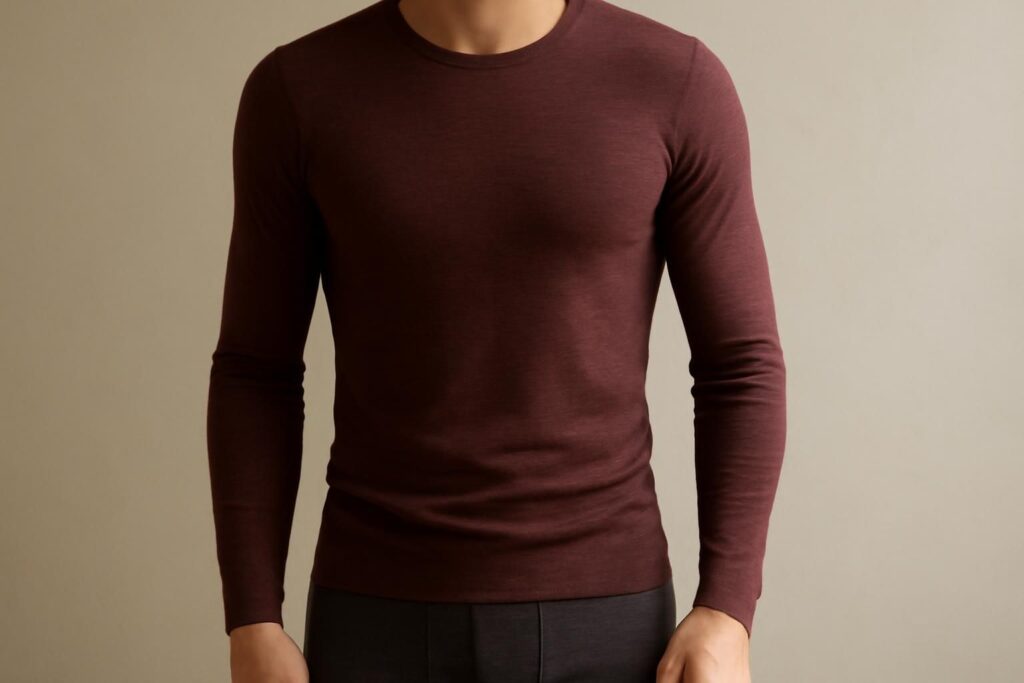
A base layer only wicks if it touches your skin. That means close-fitting, not loose. It should feel like a second skin without pulling tight across the chest or shoulders, and the sleeves and leggings should reach your wrists and ankles without bunching.
For a merino base layer women’s cut, check the body length: a top that rides up when you raise your arms leaves a cold gap at the waist, which is exactly where a ski jacket or puffer lets in air. Many brands now offer longer-length tops for this reason. For a base layer mens cut, the common complaint is the opposite: tops sized for broad shoulders can be loose at the waist. Look at the brand’s size chart and owner reviews for notes on length and taper.
Seams matter too. Flatlock seams lie flat and do not chafe under a backpack strap or ski jacket. Raglan sleeves move the shoulder seam away from where straps press. These details are worth more than a brand name.
Merino vs synthetic base layers
Polyester and polypropylene base layers are cheaper and dry faster, which makes them excellent for high-sweat activities like running or cross-country skiing. They are also more abrasion-resistant on their own, which REI acknowledges as one of merino’s weaknesses. The downside is odour: synthetics hold smell, and after a day of activity most people notice.
Merino is warmer when slightly damp, does not smell as quickly and feels softer next to the skin. It costs more and is less durable, which is why many brands now blend merino with nylon or wrap a merino face around a nylon core to strengthen it.
A simple rule: choose synthetic for intense activity where you will sweat heavily and wash after every use. Choose merino for travel, resort skiing, hiking, everyday winter wear and anything where you will wear a layer more than once between washes. Blends are a sensible middle ground for people who are hard on their clothes.
Smartwool base layer and other brands
Smartwool is one of the best-known merino brands. It was founded in 1994 in Steamboat Springs, Colorado, by ski instructors Peter and Patty Duke, and has been part of VF Corp since VF acquired Timberland in 2011. A Smartwool base layer is a solid benchmark: the brand sells lightweight, midweight and heavyweight options for men and women, and its sizing is widely discussed in owner reviews.
It is not the only option. Outdoor specialists, ski brands and several direct-to-consumer labels all sell merino base layers, and budget versions are available from mass retailers. When comparing, check three things on the label: merino percentage, gsm and whether there is a nylon core or blend for durability. A cheap “merino” top that is mostly polyester is not the same product.
Our Smartwool Socks Review covers the brand’s socks in detail, and many of the same durability points apply to its layers. For the full head-to-toe kit, Merino Wool Socks covers the base layer for your feet.
How to layer a merino base layer for real cold
City winter commute. A lightweight or midweight merino top under a sweater or shirt, with a wool or down coat on top. Merino leggings under trousers make a huge difference on windy days and are invisible under wider-leg trousers. Our Thermal Underwear guide covers more options for under work clothes.
Winter hike. Midweight merino top and bottoms, a fleece mid layer, a packable puffy in the bag, and a waterproof shell. Strip the fleece when you climb, add the puffy when you stop.
Resort skiing. Midweight merino top and leggings, a light fleece or insulated mid layer, and an insulated or shell ski jacket. Thin ski socks, not thick ones. Our guides to What to Wear Skiing and Women’s Ski Outfits show the full setup.
Very cold, low activity. Heavyweight merino top and bottoms, a fleece and a puffy under a shell, and insulated boots. This is the setup for standing still in serious cold.
For most readers, the most useful first purchase is a midweight crew-neck top and matching leggings: Merino Wool Base Layer Midweight Set on Amazon. Add a lightweight top later if you run warm or travel a lot.
Top-selling match on Amazon

- Midweight: Mens Merino Base Layer Available in: Lightweight, Midweight, Heavyweight. Merino…
- Super Soft & Comfortable: 100% Superfine 17.5 Micron merino wool base layer set mens provides all day comfort…
- Temperature Regulating: Mens wool long johns sets naturally regulate body temperature to keep you…
Do you need base layer bottoms too?
Most people buy the top and skip the leggings. That is backwards for many winter situations. Your legs have large muscles that generate heat when you walk, but when you stand still (waiting for a train, watching a match, riding a chairlift) they cool quickly, especially in jeans. Denim offers almost no insulation once the wind gets through it, and a damp hem wicks cold up the leg.
A pair of merino leggings under trousers fixes that without adding visible bulk. Lightweight bottoms fit under slim trousers and jeans; midweight bottoms suit ski pants and wider-leg trousers. Look for a flat, wide waistband that will not roll or dig in under a belt, and a length that reaches the ankle so the bottoms tuck into socks rather than riding up into a cold gap above the boot.
If you are only buying one bottom, midweight is again the safest choice. And if you dislike the feel of leggings under trousers, fleece-lined trousers or jeans are the alternative, though they trap more sweat when you are active.
Caring for merino layers
Wash merino less often than you think; airing it out overnight is often enough. When you do wash, use a cool or warm gentle cycle, a mild detergent and no fabric softener. Many owners report that hot drying shrinks merino and weakens the fibres, so dry flat or hang to dry. Store clean and dry: moths prefer wool that has been worn and put away dirty.
One honest negative: thin merino can develop small holes over time, especially at the elbows or where a backpack rubs. It is a known trade-off of a fine natural fibre. Blends with a nylon core last noticeably longer according to owner reviews.
The verdict
Buy a midweight merino wool base layer, around 200 gsm, in a close but comfortable fit. It is the most versatile single piece of cold-weather clothing you can own: warm enough for most winter days, breathable enough for skiing and hiking, and comfortable enough for a full day at work. Go lightweight if you run hot or exercise hard, heavyweight only if you are standing still in real cold. Pick merino over synthetic for comfort and odour resistance, and choose a blend if durability worries you. Then build the rest of your layers on top, not the other way round.
Shop the look on Amazon
Everything you need to build a secondhand-style wardrobe, delivered. We may earn a commission on purchases.
FAQ
What weight merino base layer is best for skiing?
Midweight, around 200 gsm, suits most resort skiing. Choose lightweight for ski touring or high-output days and heavyweight only for very cold, low-activity days.
Should a merino base layer be tight?
Close-fitting, yes. It needs skin contact to wick sweat. It should not restrict movement or pull across the shoulders, and the top should be long enough to stay tucked.
Is merino better than synthetic for base layers?
For comfort and odour resistance, yes. Synthetic dries faster, costs less and is more durable, so it suits intense activity where you wash after every use.
Can I wear a merino base layer every day?
Yes. Merino resists odour well, so many people wear a top several times between washes. Airing it overnight between wears helps.