Suede is the soft, velvety side of leather that shows up on boots, jackets, bags and gloves. It looks and feels nothing like a polished leather shoe, yet it comes from the same material, which is why it needs its own kind of care.
What is suede, exactly? In short, it is leather with a brushed, napped surface instead of a smooth, sealed one. This guide explains what the dictionaries and the footwear trade say suede is, how it is made, how suede leather compares with smooth leather and with nubuck, and how to look after it so the nap stays soft. If you already own a pair of scuffed suede boots and want the cleaning steps, start with our How to Clean Suede Shoes (Without Ruining Them) guide, then come back here for the background on the material itself.
Quick answer: Suede is leather with a napped, velvet-like surface. Merriam-Webster defines it as leather with a napped surface, and SATRA, the footwear research organisation, describes it as leather finished by abrasive action on the flesh side of the skin. A second meaning covers fabric finished with a nap to look like suede, often sold as microsuede or suede-finish fabric.
What is suede? The definitions
Merriam-Webster defines suede as leather with a napped surface. “Napped” means the surface has a raised layer of short fibres, the soft texture you feel when you run a hand across a suede jacket. The dictionary also lists a second sense: fabric finished with a nap so that it simulates suede. That second sense is why a sofa or a pair of trainers can be called “suede” without containing any leather at all. In this guide, “suede” means the leather unless we say otherwise, and the fabric version is called microsuede or suede-finish fabric.
The Britannica Dictionary describes suede in more physical terms: soft leather that has been rubbed on one side to make a surface that looks and feels like velvet. That “rubbed on one side” detail is the key to the whole material. Suede is not a different animal or a different tanning process in the dictionary’s account. It is leather that has been finished in a particular way.
SATRA, the UK-based footwear and leather research organisation, gives the trade’s description. In its guidance on choosing leathers for clothing, SATRA describes suede as leather “finished by abrasive action on the flesh side of the full skin to create a velvet-like suede appearance.” Put simply, the side of the skin that faced the inside of the animal is abraded until it develops that soft, fuzzy surface.
Where the word comes from
According to Merriam-Webster, “suede” comes from the French gants de Suède, meaning “Swedish gloves”, and its first known use in English dates to 1883. Gloves are still one of the classic uses for the material, along with boots, jackets and bags.
How suede is made
To understand suede you need a quick picture of leather in general. Britannica explains that leather is made from the corium, also called the dermis, which is the thick central layer of the hide. Before tanning, the outer layer (the epidermis) and the fatty layer underneath are removed, leaving the corium to be turned into leather. Britannica lists suede products among the many goods made from leather.
From there, the difference between smooth leather and suede comes down to which surface faces the world and how it is finished:
- Smooth leather is typically finished on the outer, grain side, the side that once carried the hair. That surface can be polished, dyed and sealed, which is what gives a dress shoe its shine.
- Suede, in SATRA’s description, is finished by abrasive action on the flesh side, the inner side of the skin. The abrasion raises the fibres into a nap, producing the velvet-like look.
The fibres on that raised surface are what give suede its soft hand and its tendency to change colour slightly when you brush it one way and then the other. They are also why suede reacts to water and grease differently from smooth leather: there is no polished, sealed surface sitting on top.
Microsuede and suede-finish fabric
Merriam-Webster’s second sense, fabric finished with a nap to simulate suede, covers the leather-free versions sold as microsuede, suede-look or suede-finish fabric. These are textiles rather than leather, so the fibre content on the label (polyester, for example) tells you how to care for them. If you are curious about the synthetic side, our guide to What Is Polyester? Pros, Cons and How to Care for It covers how that fibre behaves.
Suede vs leather
“Suede vs leather” is a slightly misleading comparison, because suede is leather. The real comparison is between napped leather and smooth, grain-finished leather. The table below sums up the general trade-offs that shoppers and cobblers commonly describe. Treat it as general guidance rather than a lab result, since the tannage, dye and any protective finish all change how a particular piece behaves.
| Feature | Suede (napped leather) | Smooth leather |
|---|---|---|
| Surface | Soft, velvety nap (per Britannica Dictionary and SATRA) | Smooth, can be polished |
| Look | Matte, casual, shows brush marks | Ranges from matte to high shine |
| Water and stains | Commonly described as marking more easily; blot rather than rub | Waxes and creams are often applied to improve water repellency, per SATRA |
| Everyday care | Dry brushing and a suede eraser (common method) | Wiping, conditioning and polishing (common method) |
| Scuffs | Often brushed or erased out of the nap | Often covered with polish |
| Machine washing | Not recommended; Consumer Reports lists suede among items not to machine-wash | Not recommended; Consumer Reports lists leather too |
Neither one is the “better” leather. Smooth leather suits shoes and bags you want to polish and wear in all weather. Suede suits pieces where texture matters more than shine, such as Chelsea boots, loafers, jackets and gloves, and it rewards a bit of regular brushing. For the smooth side of the family, see our guides on How to Clean Leather Shoes and Keep Them Conditioned and How to Clean a Leather Jacket at Home.
Suede vs nubuck
Nubuck is the material most often confused with suede, because both have a soft, brushed surface. Merriam-Webster defines nubuck as “a soft sueded leather”, first recorded in 1912. The difference usually given is which side of the leather is worked:
- Suede: SATRA describes it as finished by abrasion on the flesh side of the skin.
- Nubuck: commonly described as leather buffed on the grain side, the outer surface. We could not open a primary source confirming that detail for this guide, so treat it as the usual description rather than a formal standard.
In practice, nubuck is often described as having a shorter, finer nap that feels closer to a peach skin, while suede has a looser, fuzzier nap. Care is broadly similar: dry brushing, a nubuck or suede eraser, and keeping both away from soaking water. Our full guide to What Is Nubuck? Nubuck vs Suede and How to Care for It covers the comparison in more detail.
How to care for suede
No single authority publishes “the” suede care method, so the steps below are a common method used by cobblers and shoe-care brands. Always check the maker’s care instructions first, especially for jackets and bags with linings or trims.
Everyday brushing
- Let the item dry fully if it is damp. Brushing wet suede can flatten the nap.
- Use a suede brush and brush lightly in one direction to lift dust from the surface.
- Brush again in the opposite direction to raise the nap.
- Finish with light strokes in a single direction so the colour looks even.
Scuffs and marks
- Rub a suede eraser gently over the scuff, using small strokes.
- Brush away the crumbs with the suede brush.
- Re-raise the nap with a few light brush strokes.
Water and oil spots
A common approach is to blot water and oil spots rather than rub them, because rubbing can push the liquid further into the nap. Blot with a clean, dry cloth, let the item air-dry away from direct heat, then brush. Oil and grease stains on suede are hard to shift at home, and nothing guarantees a stain will come out. For valuable pieces, a specialist leather cleaner or cobbler is the safer option.
Protector sprays
Many people apply a suede protector spray before first wear. If you use one, try it on a small, hidden area first and follow the product’s directions, including any ventilation guidance on the can. A protector reduces how quickly liquids soak in; it does not make suede waterproof. Suede protector spray and a combined brush and eraser kit are easy to find, for example a Suede Brush And Eraser Kit on Amazon or a Suede Protector Spray on Amazon.
Top-selling match on Amazon
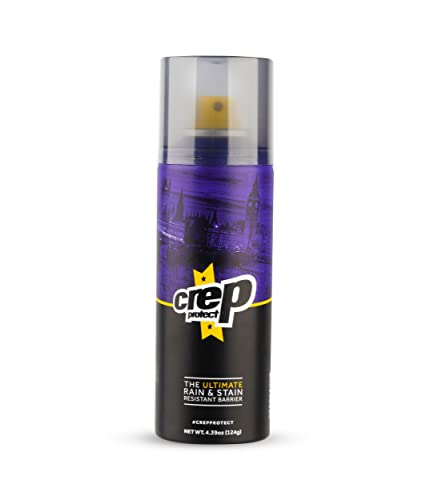
- Invisible Shoe Protection: Protect your Sneakers from grime and moisture with your water repellent spray for…
- Suitable For Most Sneakers: Quick Dry Waterproof Formula Effective on Jordan, UGGs, boots, White Sneaker…
- Country Of Origin: Germany; Product Size: 4.39oz; Dimensions: 5 X 5 X 17(H) Cm; Weight: 0.2 Kg; Color…
Top-selling match on Amazon

- Effective Stain Removal: Effortlessly eliminates most soil and spots from suede and nubuck materials…
- Comprehensive Cleaning Tools: Includes a specialized suede eraser and a nylon brush to clean various stains and…
- Preserves Material Integrity: Cleans suede and nubuck without altering the color or texture of your items…
What to avoid
- The washing machine. Consumer Reports lists leather and suede among items that should not be machine-washed and warns that machine washing can loosen the adhesives in shoes or deform their structure.
- Chlorine bleach. A common caution is to keep chlorine bleach away from leather and suede altogether.
- Direct heat. Drying suede on a radiator or with a hair dryer is a common way to stiffen it. Let it air-dry.
- Heavy rain without protection. Suede is better suited to dry days, or to days when it has a fresh coat of protector.
Storage and stretching
Store suede somewhere cool and dry, with shoes stuffed or on shoe trees so they keep their shape. SATRA describes a shoe tree as a device placed inside footwear to try to preserve its shape and prevent creases, and notes that wooden trees “are said to” wick away foot moisture. If a pair of suede shoes is a little tight, leather and suede commonly stretch a modest amount with wear or with a two-way shoe stretcher used over several days; a cobbler can help with anything more. Our guide to How to Stretch Shoes That Are Too Tight goes through the options.
Buying suede secondhand: what to check
Thrift stores, consignment shops and resale apps are full of suede jackets, skirts and boots, and many of them are in good shape. A few checks help you tell a great find from a lost cause:
- Read the label. A tag that says “leather” or “genuine suede” points to the real thing. A tag listing polyester or another synthetic means microsuede or suede-finish fabric. Neither is wrong; they just need different care.
- Look at the care instructions. Many leather garments say “professional leather clean only”. Budget for that if the piece needs a refresh.
- Check the nap. Bald, shiny patches at elbows, cuffs, toes and heels are hard to restore. Light flattening often brushes back up.
- Look for water marks and dark stains. Tide lines and grease spots may be permanent.
- Feel for stiffness. Suede that has been soaked and dried badly can feel hard or crackly.
- Smell it. Musty smells can point to damp storage. Airing out often helps, but mould is a reason to walk away.
For a full routine on cleaning thrifted footwear, see How to Clean Shoes from the Thrift Store. If you are hunting for a jacket rather than shoes, it helps to bring a small suede brush along so you can see whether the nap lifts. If you would rather shop new, a search for Womens Suede Ankle Boots on Amazon shows the range of styles and prices.
Frequently asked questions
Is suede real leather?
Suede in its main sense is real leather: Merriam-Webster defines it as leather with a napped surface. The same word can also describe a fabric finished to look like suede, so check the label for “leather” or a fibre content such as polyester.
What is the difference between suede and leather?
Suede is a kind of leather. The difference is the surface finish. SATRA describes suede as abraded on the flesh side to create a velvet-like look, while smooth leather is finished on the grain side and can be polished.
Is suede the same as nubuck?
No, though they look similar. Merriam-Webster calls nubuck “a soft sueded leather”. Nubuck is commonly described as buffed on the grain side, while suede, per SATRA, is abraded on the flesh side.
Can suede get wet?
It can survive getting wet, but water often leaves marks. A common approach is to blot it, let it air-dry away from heat and brush the nap back up once dry. A protector spray reduces how fast liquid soaks in.
Can you put suede in the washing machine?
Consumer Reports lists suede and leather among the things not to put in a washing machine. Spot-clean instead, and use a professional leather cleaner for garments.
Why is it called suede?
Merriam-Webster traces the word to the French gants de Suède, “Swedish gloves”, with its first known English use in 1883.
Is suede durable enough for everyday wear?
Suede can last for years with regular care, but it is less forgiving than smooth leather because its napped surface has no polished, sealed layer on top. Water and grease mark it more easily, and heavy wear can leave bald, shiny patches at elbows, cuffs, toes and heels. It suits dry days best; brushing it often, using a protector spray and letting it air-dry away from heat help it hold up.
Shop the look on Amazon
Everything you need to build a secondhand-style wardrobe, delivered. We may earn a commission on purchases.