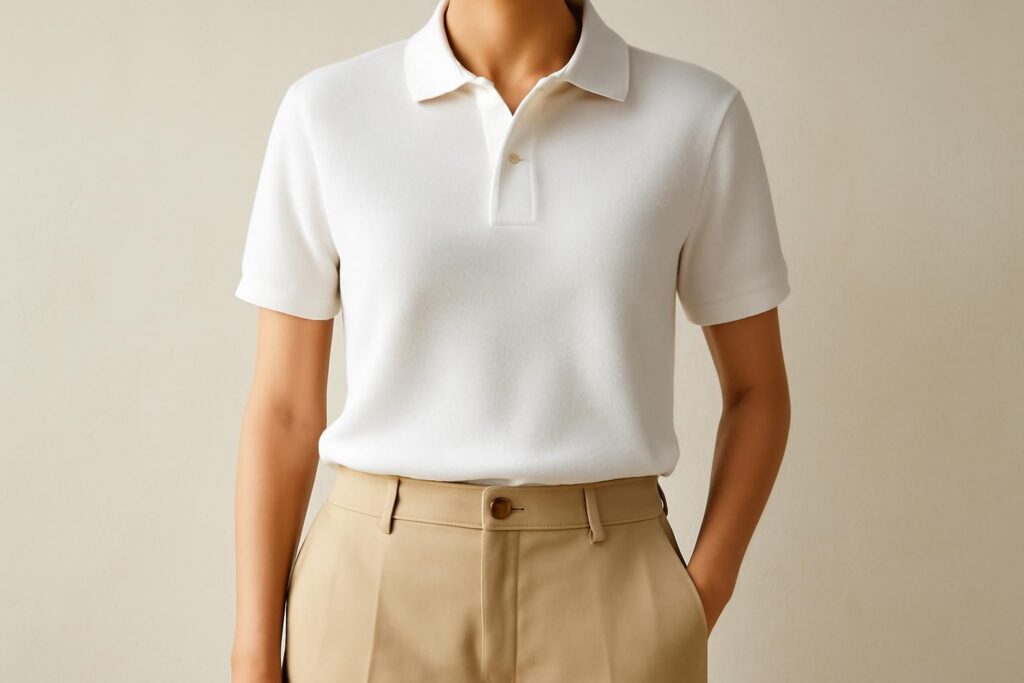
Piqué is the textured cotton you know from polo shirts, with a fine raised pattern you can feel under your fingertips. It also has a much more formal past, in the stiff white waistcoats and bow ties of evening dress.
What is pique fabric? Piqué (often written without the accent) is a cotton fabric with a raised surface texture, such as small cords, a waffle or a honeycomb pattern. The name is used for two related things: a woven piqué cloth with raised cords or patterns, and the piqué knit used for most polo shirts. This guide explains both, compares piqué with smooth What Is Jersey Fabric? The Knit Behind T-Shirts, covers how to care for a piqué polo, and lists what to check when thrifting one.
Quick answer: Piqué is a cotton fabric with a raised, textured surface. In knitwear it is the classic polo-shirt knit, with a small honeycomb or waffle texture. As a woven cloth, it was used for formal evening wear: the V&A holds a 1934 waistcoat of cotton piqué made by Hawes & Curtis. Piqué is more textured and holds its shape a little better than jersey.
Where the name comes from
The French word piqué is commonly translated as “quilted” or “stitched,” which suits a fabric whose surface looks raised and patterned. The Online Etymology Dictionary’s entry for “pique” covers only the sense of offence or irritation and has no entry for the fabric, so no dictionary source is cited for the textile name here.
Woven piqué: the formal side
Before piqué was a polo-shirt staple, it was an evening-wear fabric. The V&A holds a “Waistcoat of cotton piqué, made by Hawes & Curtis, England, 1934,” catalogued under the technique “piqué work.” It also holds 1930s piqué bow ties. White piqué waistcoats and bow ties of this kind are associated with white tie, the most formal evening dress code; that connection is drawn from the objects themselves rather than a quoted museum statement. Our Dress Codes Explained guide covers white tie and black tie in more detail.
Woven piqué also appears in summer dresses, shirts and children’s clothing, where its texture gives a crisp, slightly structured look.
Piqué knit: the polo shirt
The piqué most people own today is a knit. It is commonly described as a cotton knit with a small, raised honeycomb or waffle texture on the face, and it is the classic polo-shirt fabric. No authoritative textile page was available for this guide, so treat the construction details as the common description. The texture gives a piqué polo a slightly matte look and a little more body than a T-shirt, so the collar and placket keep a neater shape.
To shop, a search for Pique Polo Shirt Men on Amazon or Women’S Pique Polo on Amazon shows the range of cuts and colours. Our Cotton Polo Shirts vs Performance guide looks at polo shirts in more depth.
Top-selling match on Amazon

- Regular Fit: Straight fit through the shoulders, chest, and waist
- Cotton Pique: 100% Cotton pique offers texture and breathability
- Classic Polo Shirt: Versatile design suitable for casual and business casual settings
Piqué vs jersey
| Feature | Piqué knit | Jersey |
|---|---|---|
| Surface | Textured, honeycomb or waffle | Smooth, flat face |
| Feel | Slightly crisp, airy, matte | Soft, drapey, stretchier |
| Typical use | Polo shirts, sporty tops | T-shirts, dresses, base layers |
| Trade-offs | Holds shape better; texture can look sporty rather than dressy | Softer and drapier; can cling and show creases |
Neither is better. Piqué gives a polo its classic, structured look; jersey gives a smoother, softer drape and is common in polo shirts sold as “jersey polos.” For another textured shirting, see What Is Oxford Cloth? The Fabric Behind the Button-Down; for a crinkled summer weave, What Is Seersucker? The Puckered Summer Fabric.
How to spot piqué on the rack
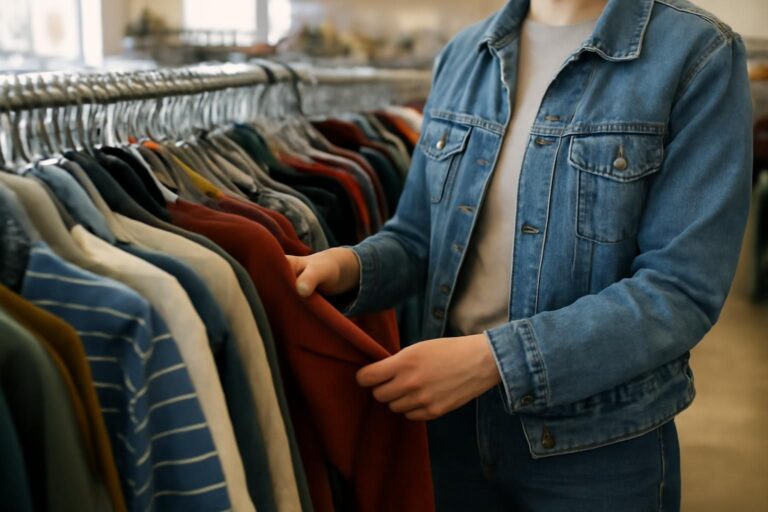
Labels don’t always name the knit, so a quick hands-on check helps when you are shopping secondhand or comparing polos in a store:
- Look closely at the face. Piqué shows a tiny, regular grid of raised cells, like a fine honeycomb. Jersey shows smooth, flat rows of little V-shaped stitches.
- Feel the hand. Piqué feels slightly dry and crisp; jersey feels slicker and softer.
- Check the reverse. On many piqué knits the inside is smoother than the outside, so the texture sits on the face.
- Stretch gently. Jersey usually gives more widthways than piqué of a similar weight.
These are general observations rather than a formal textile test, but they make the difference easy to feel once you have handled both.
How to care for piqué
Most piqué polos are cotton or cotton blends, and the collar is the part most likely to lose shape. A common method:
- Check the care label and follow it first.
- Button the placket and turn the shirt inside out to protect the texture.
- Machine wash cool or warm with similar colours.
- Reshape the collar and placket while the shirt is still damp, smoothing the collar points flat.
- Dry flat or hang on a wide hanger, or tumble on low if the label allows.
- If needed, iron on the reverse side so you don’t flatten the raised texture.
Cotton piqué can shrink with heat, so lower temperatures help; see Does Cotton Shrink? Why It Happens and How Much. A piqué waistcoat or bow tie for formal wear may be heavily starched or labelled dry clean only, in which case take it to a professional cleaner.
What to check when thrifting piqué
- The collar. Curled or wavy collar edges are the most common flaw on secondhand polos and are hard to fix fully.
- Underarms and collar band. Look for yellowing or deodorant build-up, especially on white piqué.
- Fibre content. All-cotton piqué feels crisp and breathable; blends with polyester dry faster and may pill.
- Texture wear. Rub the front gently. Fuzzy or flattened texture means a well-worn shirt.
- Formal pieces. Vintage white piqué waistcoats and bow ties do turn up. Check for yellowing, buttons and adjusters.
Shop the look on Amazon
Everything you need to build a secondhand-style wardrobe, delivered. We may earn a commission on purchases.
FAQ
Is piqué cotton?
Usually, yes, or a cotton blend. Check the fibre content label to be sure.
Is a piqué polo better than a jersey polo?
It is a trade-off. Piqué is more textured and keeps its shape; jersey is smoother and drapier.
Is piqué knit or woven?
Both exist. The polo-shirt fabric is a knit, while the formal piqué of 1930s waistcoats and bow ties, such as the V&A’s 1934 Hawes & Curtis waistcoat, is a woven cloth.
Does piqué shrink?
Cotton piqué can shrink in hot water and high dryer heat. Washing cool and drying low reduces the risk. For loop-pile summer fabrics, see What Is Terry Cloth? Loops, Uses and Care.