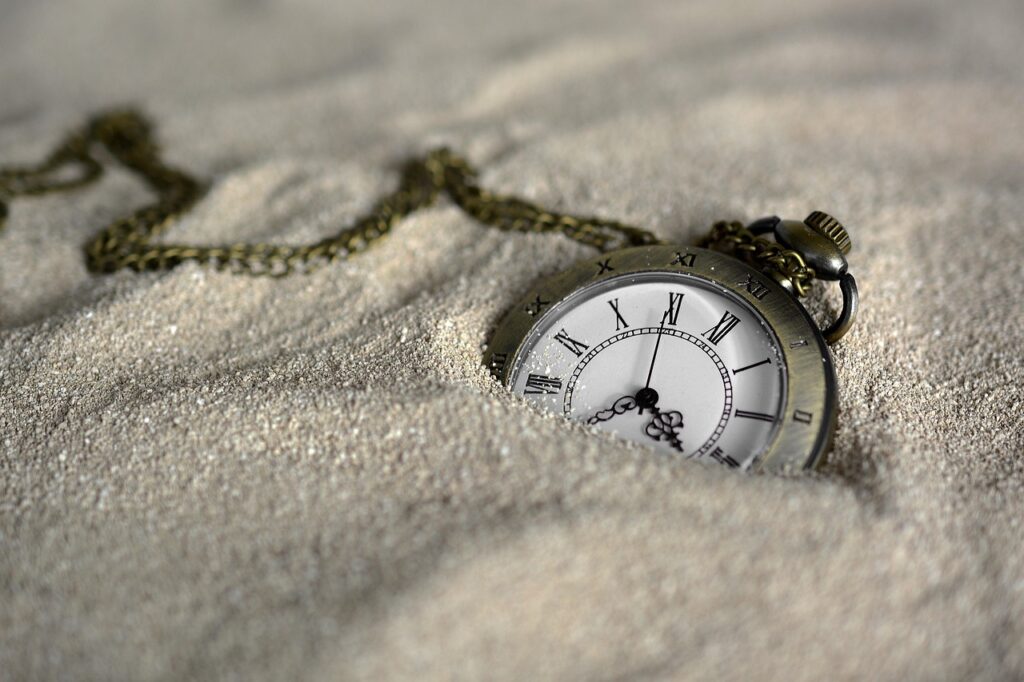
A watch is sorted three ways at once: by what makes it tick, by the job its design was drawn for, and by what holds it on the wrist. Learn those three layers and every listing, shop tray and thrift-store case starts to make sense.
This guide to the types of watches works through the three layers in order. First come movements (mechanical, automatic and quartz, plus digital and smart), then the style families you will see named in shops (dress, field, diver, pilot, chronograph and more), then straps and bracelets. Each style gets a short definition, how to spot it and how to wear it. A watch sits in the same family as the rest of your jewellery, so if you are building a set of everyday pieces, our Types of Rings guide is the companion to this one, and Types of Bracelets covers what you might stack beside a watch.
A note on sources. Dates and definitions below come from the Online Etymology Dictionary, the US National Institute of Standards and Technology (NIST), the Victoria and Albert Museum, and, for a few model details, Wikipedia’s articles, which are summarised rather than quoted. Style names such as “field watch” or “dress watch” are trade and collector terms commonly used to describe a look; no single authority defines them.
Watch types at a glance
| Style | Key feature | Typically worn with |
|---|---|---|
| Mechanical (hand-wound) | Spring-driven movement wound by the crown | Tailoring, knitwear, anything you like to fuss over |
| Automatic | Mechanical movement wound by a rotor as you move | Daily wear, office and weekend |
| Quartz | Battery and quartz crystal oscillator | Everything; the low-maintenance default |
| Digital | Numbers on a screen instead of hands | Casual, sporty and retro looks |
| Smartwatch | Touchscreen, apps and notifications | Gym kit, commuting, casual outfits |
| Dress watch | Thin case, simple dial, leather strap | Suits, formal wear, cocktail dresses |
| Field watch | Clear numerals, plain dial, canvas or leather strap | Chinos, denim, work jackets |
| Diver-style watch | Rotating bezel, bold markers | Casual and smart-casual outfits, summer wear |
| Pilot watch | Large, high-contrast dial | Bomber jackets, denim, knitwear |
| Chronograph | Stopwatch sub-dials and pushers | Smart casual, blazers with jeans |
| GMT / world-time | Extra hand or ring for a second time zone | Travel outfits, everyday wear |
| Bracelet watch / cuff watch | Case set into a jewellery-style band | Dresses, blouses, evening wear |
| Pocket watch | Watch carried on a chain, not the wrist | Waistcoats, three-piece suits |
A short history of the word and the machine
The Online Etymology Dictionary dates “watch” in the sense of a “small timepiece” to the 1580s, and traces it back to an earlier mid-15th-century sense of “a clock to wake up sleepers.” So the word arrived with portable timekeepers, well before anyone wore one on the wrist.
NIST’s history of timekeeping notes that around 1675 Christiaan Huygens “developed the balance wheel and spring assembly, still found in some of today’s wristwatches.” The same NIST history says 17th-century portable watches kept time “to 10 minutes a day,” which puts modern accuracy in perspective. The balance wheel is the small oscillating wheel you can see swinging back and forth through the glass back of many mechanical watches.
On the fashion side, the V&A holds a platinum Cartier wristwatch made in Paris in 1928, with a leather strap and a gold deployant buckle. Its catalogue entry says “The wristwatch proved an enduring object of fashion for both sexes. It became a pre-eminent item of male jewellery.” That is a useful way to think about the whole category: a watch is a tool, but it is also jewellery, and it gets chosen for both reasons.
Types of watch movements
The movement is the engine inside the case. It decides how the watch is powered, how much care it needs and, for many buyers, how it feels to own.
Mechanical (hand-wound)
What it is: a movement powered by a coiled mainspring that you wind by turning the crown. The balance wheel and spring assembly NIST describes regulate how fast that energy is released.
How to spot it: the seconds hand sweeps rather than ticking once per second, and there is no battery hatch. A glass case back, if present, shows gears and the swinging balance wheel. The watch stops if you forget to wind it.
How to wear it: hand-wound watches are often slim, because there is no rotor stacked on the movement, which makes them a natural fit under a shirt cuff with tailoring. Winding it each morning becomes part of getting dressed.
Automatic (self-winding)
What it is: Wikipedia’s article on the automatic watch describes it as a mechanical watch in which the wearer’s natural movement winds the mainspring, using an oscillating weight, or rotor, on a pivot. The same article traces the idea to Abraham-Louis Perrelet’s self-winding pocket watches around 1776 to 1777, mentions John Harwood’s 1923 patent, and credits Rolex with a 360-degree rotor in about 1930 to 1931. Treat those dates as Wikipedia’s account rather than settled fact.
How to spot it: a sweeping seconds hand, no battery, and often a semicircular rotor visible through a display case back. Dials sometimes say “Automatic.” Shake it gently and you may feel the rotor spin.
How to wear it: automatics keep running as long as they are worn regularly, so they suit a watch you reach for most days. Left in a drawer, many will stop and need setting again, which is why some owners use a watch winder box.
Quartz
What it is: a battery-powered watch regulated by a quartz crystal. NIST explains the principle plainly: “If you apply an electric field to the crystal, it changes its shape, and if you squeeze it or bend it, it generates an electric field.” Placed in a circuit, the crystal vibrates and produces a signal “of relatively constant frequency.” NIST adds that quartz clocks “had no gears or escapements to disturb their regular frequency,” and that they were developed “in the 1920s and onward.”
Wikipedia’s quartz clock article adds detail: nearly all quartz timepieces run at 32,768 Hz (two to the 15th power), the first quartz clock was built in October 1927 by Horton and Marrison at Bell Telephone Laboratories, and the first commercial quartz wristwatch was the Seiko Quartz-Astron 35SQ in December 1969, according to that article.
How to spot it: the seconds hand usually jumps once per second, and the case back has a small hatch or is screwed down with no window onto moving parts. Dials may read “Quartz.”
How to wear it: anywhere. Quartz is the grab-and-go option: no winding, accurate, and usually the least expensive way into any of the styles below. Expect a battery change every so often.
Digital
What it is: a watch that shows the time as numbers on a display rather than with hands. Digital watches are commonly quartz-regulated underneath.
How to spot it: a screen, buttons on the case sides, and often extra functions such as alarms, a stopwatch and a backlight.
How to wear it: plastic and resin digitals read sporty or retro; a metal-bracelet digital nods to late-20th-century style. They pair easily with T-shirts, sweatshirts and denim.
Smartwatch
What it is: commonly used to describe a wrist computer with a touchscreen that connects to a phone for notifications, apps and activity data.
How to spot it: a full touchscreen face, a charging connector on the back, and quick-swap straps.
How to wear it: swapping a silicone sport band for leather or a metal mesh strap moves a smartwatch from gym kit to office wear. Many people keep a mechanical or quartz watch for dressier occasions and the smartwatch for everything else.
Watch styles by design
These style names describe the look of the case and dial, not the movement. A field watch can be quartz or automatic; a diver-style watch can be either too. Brands use the terms loosely, so read them as a description of a look.
Dress watch
What it is: a watch commonly described as thin, plain and quiet, made to sit under a shirt cuff.
How to spot it: a slim case, a simple dial with stick markers or Roman numerals, few or no complications, and usually a leather strap.
How to wear it: with suits, blazers and the outfits in our Men’s Formal Wear guide, or with a cocktail dress. A black or dark brown strap matched to your shoes or belt is a common pairing. For the dress-code ladder itself, see Dress Codes Explained.
Field watch
What it is: a style commonly linked to military-issue designs: plain, legible and practical.
How to spot it: large Arabic numerals, often a 24-hour inner track, a matte dial and a canvas, nylon or leather strap.
How to wear it: chinos, jeans, flannel shirts and work jackets. Dress watch vs field watch is mostly a question of formality: the dress watch slips under a cuff, while the field watch is built to be read at a glance outdoors.
Diver-style watch
What it is: a sporty design built around a rotating bezel used to time an interval, with bold luminous markers.
How to spot it: a thick bezel with minute marks, a screw-down crown, chunky hands and often a rubber strap or steel bracelet. Water-resistance ratings vary widely between models, so check the maker’s stated rating and service history before swimming in any watch.
How to wear it: a steel-bracelet diver-style watch is a common all-rounder, worn with polo shirts, linen and smart-casual outfits.
Pilot watch
What it is: a style commonly described as taking cues from aviation instruments: big, high-contrast and easy to read.
How to spot it: a large case, a black dial with white numerals, an oversized crown and often a triangle at 12 o’clock.
How to wear it: bomber and leather jackets, denim and heavy knits. Its size reads casual.
Chronograph
What it is: a watch with a built-in stopwatch.
How to spot it: two or three small sub-dials on the main dial and pushers on either side of the crown. A tachymeter scale may run around the bezel.
How to wear it: smart casual. A chronograph sits well with a blazer and jeans or an overshirt, though its thickness can catch on a fitted shirt cuff.
GMT and world-time watches
What it is: a watch that shows a second (or every) time zone.
How to spot it: a fourth hand that circles once a day, pointing at a 24-hour bezel or chapter ring; world-time watches add a ring of city names.
How to wear it: made for travel, but worn daily by plenty of people who simply like the look of a two-tone bezel.
Bracelet watch and cuff watch
What it is: commonly used to describe a small watch set into a jewellery-style band such as a bangle, chain or cuff.
How to spot it: a small face, a decorative band that is part of the design, and often a hidden clasp.
How to wear it: stacked with bangles or worn alone with dresses, blouses and evening wear. Our Types of Bracelets glossary covers bangles, cuffs and chains to stack beside it.
Pocket watch
What it is: a watch carried in a pocket on a chain. The early portable watches in NIST’s history were of this kind.
How to spot it: no lugs for a strap, a bow at 12 o’clock for the chain, and often a hinged cover.
How to wear it: clipped to a waistcoat with the chain across the front, a look that suits three-piece suits and vintage-inspired wedding outfits.
Watch straps and bracelets
The strap changes a watch’s formality more than almost anything else, and most can be swapped with a spring-bar tool. Measure the gap between the lugs (the lug width) before buying a replacement.
- Leather: the dress-watch default; smooth leather reads formal, suede and distressed leather read casual.
- Metal bracelet: link bracelets in steel or gold tone; a polished bracelet dresses a sporty watch up.
- Mesh: a fine woven metal band, commonly seen on minimalist and vintage-style watches.
- Nylon or fabric (often called NATO-style): a single strap that threads under the case; casual and quick to change.
- Rubber or silicone: sporty and easy to rinse, common on diver-style watches and smartwatches.
One health note: the American Academy of Dermatology says “it is estimated that more than 18 percent of people in North America are allergic to nickel,” and names watches among “some of the biggest culprits.” If metal backs or buckles have bothered your skin before, look at strap and case materials closely and speak to a dermatologist about reactions.
For new straps and simple everyday watches, browse Leather Watch Strap Quick Release on Amazon or start with a basic Quartz Analog Watch Stainless Steel on Amazon.
Top-selling match on Amazon

- ⌚Movement: Japanese imported quartz analog movement and battery, provide precise time and…
- ⌚Material: The strap is made of stainless steel, comfortable and soft and breathable. Mineral…
Top-selling match on Amazon

- Italian Tuscany Leather: The leather is made of vegetable tanned cowhide leather from the famous Italian…
- Natural Full-Grain Leather: Each strap retains the original pores and natural grain, giving it a unique…
- Structure & Size Selection: Please measure your watch lug width before purchasing. The strap comes in a length…
How to thrift a watch
Thrift stores, estate sales and jewellery cases are full of watches, many of them quartz pieces that only need a battery. A few habits make secondhand shopping easier:
- Check whether it runs. A stopped quartz watch may only need a new battery; a stopped mechanical watch may need winding, or it may need a service.
- Read the dial and case back for the brand, the word “Automatic” or “Quartz,” and any material marks.
- Look at the crystal for cracks and the case for deep scratches, and check that the crown turns and pulls out.
- Check the strap or bracelet. Worn leather is cheap to replace; a stretched metal bracelet may be harder to fix.
- Budget for a battery change or service from a watch repair shop before you rely on it.
Our Thrift Store Jewelry Finds guide has more on scanning the jewellery case, and How to Clean Jewelry at Home (by Metal and Stone) covers gentle cleaning for metal bands. If you are buying a watch as a present, Fashion Gifts for Men has more ideas, and the Types of Sunglasses glossary covers the other accessory people tend to reach for every day. To compare styles new, try Field Watch Canvas Strap on Amazon.
Shop the look on Amazon
Everything you need to build a secondhand-style wardrobe, delivered. We may earn a commission on purchases.
FAQ
What is the difference between quartz vs automatic watches?
A quartz watch runs on a battery and is regulated by a vibrating quartz crystal, which NIST describes as producing a signal “of relatively constant frequency.” An automatic watch is mechanical: a rotor turned by your wrist movement winds the mainspring. Quartz usually ticks once per second and needs battery changes; an automatic sweeps and needs regular wear or winding plus periodic servicing.
What are the main watch styles?
The most common names are dress, field, diver-style, pilot, chronograph, GMT, digital and smartwatch, plus bracelet and pocket watches. These are commonly used trade terms rather than formal categories, so one watch can fit two labels.
What is the difference between a dress watch vs field watch?
A dress watch is commonly described as slim and minimal with a leather strap, made for formal wear. A field watch is commonly described as rugged and legible, with big numerals and a canvas or leather strap, made for casual outfits.
When did people start wearing watches on the wrist?
Our sources do not give a verified date for the first wristwatch, so we have not stated one. What is documented is that the word “watch” for a small timepiece dates to the 1580s, and that the V&A holds a 1928 Cartier wristwatch it describes as part of a long fashion history for both sexes.
Does a mechanical watch need a battery?
No. Hand-wound and automatic watches are powered by a mainspring. Only quartz, digital and smart watches use a battery or rechargeable cell.
Which wrist should you wear a watch on?
Most people wear a watch on their non-dominant wrist, which for right-handed people is the left. That keeps the watch out of the way of writing and other tasks and lowers the risk of knocks. It is also why most crowns sit on the right side of the case, where the opposite hand can reach them. There is no rule, though, and either wrist is fine.
What type of watch is best for a first watch?
A quartz watch is usually the easiest first watch, because it needs no winding, keeps accurate time and is generally the least expensive way into any style. A steel-bracelet diver-style watch is a common all-rounder that suits polo shirts, linen and smart-casual outfits. Anyone who wants the feel of a mechanical movement can choose an automatic, which keeps running as long as it is worn most days.