Pajamas range from crisp button-front sets to soft knit lounge pants, and the fabric matters as much as the cut when you are choosing a pair for the season.
This guide to the types of pajamas covers the main pajama styles and sleepwear types, then compares the fabrics they come in, including the common flannel vs cotton question. Each style gets a short definition, how to spot it and how it is commonly worn. Because so much of choosing sleepwear comes down to the cloth, our Types of Fabric guide is a useful companion read.
Where the word comes from
According to the Online Etymology Dictionary, “pajamas” dates from 1800 and first meant “loose trousers tied at the waist,” worn by Muslims in India and “adopted by Europeans there, especially for nightwear.” The word comes from Hindi pajama, probably from Persian paejamah, “leg clothing” (pae, “leg,” plus jamah, “garment”). The same source says the US spelling was settled by 1845, while British English uses “pyjamas.”
Pajamas have also moved beyond the bedroom. The V&A holds palazzo pyjamas by Simonetta (Italy, 1965–69) and black jersey evening pyjamas with a satin collar and cuffs by Geoffrey Beene (USA, c. 1970), and notes Beene’s “loose, fluid, body-freeing clothing in the 70s.”
Pajama styles at a glance
| Style | Key feature | Typically worn with |
|---|---|---|
| Classic button-front set | Notched collar, matching trousers | A robe and slippers |
| Shorts set | Short sleeves and shorts | Warm nights |
| Knit tee and pants set | T-shirt top, jersey trousers | Everyday lounging |
| Pajama pants | Sold alone, drawstring waist | Any tee or sweatshirt |
| Nightshirt | Long, loose shirt | Worn alone |
| Nightgown | Dress-length sleepwear | Worn alone or with a robe |
| Camisole set | Strappy top with shorts or pants | Silky fabrics, warm weather |
| Lounge or daywear pajamas | Fluid, wide-leg trousers | Sandals, a cardigan |
| Robe | Wrap front, tie belt | Over any pajama set |
Pajama sets
Classic button-front set
What it is: the traditional pajama: a long-sleeve top that buttons down the front, often with a notched collar and piping, and matching trousers.
How to spot it: contrast piping along the collar, cuffs and pocket, and an elastic or drawstring waist on the trousers.
How to wear it: as a full set in cooler months. Matching sets feature in the “coastal grandmother” aesthetic, according to BuzzFeed News. For festive versions, see Amazon Christmas Pajamas.
Shop button-front sets: Button Front Pajama Set Long Sleeve on Amazon
Top-selling match on Amazon
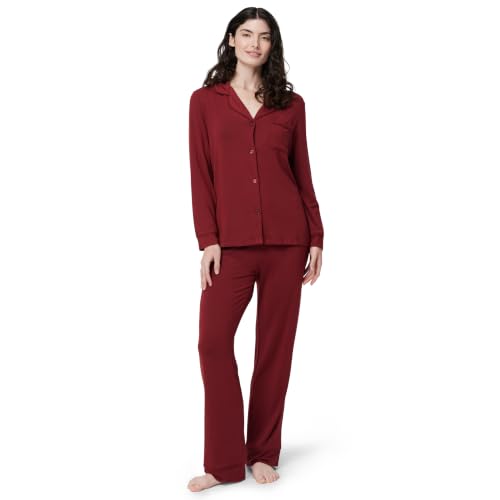
- Sofia Grainge Collaboration: Inspired styles for you and your little ones, created in collaboration with Sofia…
- Relaxed Fit: Pants: Relaxed fit through the hips, thigh and leg. Sits below the natural waist…
- Modal Blend Jersey: Modal-elastane blend provides a silky-smooth feel with stretch for comfort
Shorts set
What it is: a short-sleeve top with matching shorts, commonly sold as a summer set.
How to spot it: a short inseam and short sleeves, often in lightweight cotton or modal.
How to wear it: on its own in warm weather, with a light robe for mornings.
Knit tee and pants set
What it is: a casual set made from T-shirt jersey, with a crew or V-neck top and soft trousers or joggers.
How to spot it: stretchy knit fabric, ribbed cuffs and no buttons.
How to wear it: as everyday lounge wear. Our Types of T-Shirts guide covers the neckline options.
Camisole set
What it is: a sleeveless top with thin straps, paired with shorts or long pants, commonly made in satin, silk or modal.
How to spot it: adjustable straps and a smooth, light fabric.
How to wear it: in warm weather, with a matching robe if you want more coverage.
Separates and single pieces
Pajama pants
What it is: sleep trousers sold on their own, usually with a drawstring or elastic waist.
How to spot it: a relaxed straight leg, often in plaid flannel or printed cotton.
How to wear it: with any old tee or sweatshirt, including the pieces in our Types of Hoodies guide. See Mens Flannel Pajamas for warmer pairs.
Nightshirt
What it is: a long, loose shirt worn for sleeping, usually reaching the knee.
How to spot it: a button placket or henley-style opening and a longer, curved hem.
How to wear it: on its own, which makes it an easy choice for travel.
Nightgown
What it is: dress-length sleepwear, from short sleeveless styles to long-sleeved, ankle-length cotton gowns.
How to spot it: one piece, cut like a loose dress, often with lace or smocking at the neckline.
How to wear it: alone, with a robe or cardigan over it on cool mornings.
Lounge and daywear pajamas
What it is: pajama-style sets designed to be seen in, such as wide-leg palazzo trousers with a matching shirt, in the line of the Simonetta and Beene pieces the V&A holds.
How to spot it: fluid fabric, a wide leg and smarter finishing such as a real collar or covered buttons.
How to wear it: as a matching set with sandals, or split the pieces and wear the shirt with jeans.
Robe
What it is: a wrap-front layer with a tie belt, worn over sleepwear.
How to spot it: shawl collar, deep pockets and belt loops. Our Men’s Flannel Robe guide covers a warm version.
Sleepwear fabrics: flannel vs cotton and more
- Flannel: a brushed fabric with a soft, fuzzy surface, commonly chosen for winter pajamas. The Online Etymology Dictionary records “flannel” from about 1300 as a “warm, loosely woven woolen stuff.” Most flannel pajamas today are cotton. See What Is Flannel Fabric? Brushed Cotton and Wool Explained.
- Cotton poplin or woven cotton: smooth, crisp and lighter than flannel. The flannel vs cotton pajamas choice is mainly about season: flannel for cold nights, plain woven cotton for warmer ones.
- Cotton jersey and modal: soft knits used for T-shirt-style sets. See What Is Modal Fabric? Feel, Uses and Care.
- Silk and satin: smooth and fluid. Satin is a weave and silk is a fibre, as our Satin vs Silk guide explains.
- Fleece: a synthetic pile used for the warmest lounge pants and onesie-style sets.
For silk pajamas, the Smithsonian Museum Conservation Institute notes that silk and wool are protein fibres that “can be damaged by protein enzymes or alkali,” and that chlorine bleach “will dissolve silk or wool.” Always follow the care label, and see How to Wash Silk Without Ruining It for more.
Shop flannel pairs: Flannel Pajama Pants Plaid on Amazon
Top-selling match on Amazon

- Relaxed Fit: Our most generous pants fit, relaxed through the hip, thigh, and leg for comfort…
- Softly Brushed Flannel: Soft, breathable, and tightly woven, this flannel is comfy and durable. Made with…
- Essential Sleep Pant: The perfect sleep pant for snuggling up and relaxing whether sleeping or lounging…
How to thrift pajamas
- Look for sets that still have their original tags if you prefer unworn pieces.
- Check the elastic waist by stretching it gently and letting go.
- Look for pilling on flannel and fleece.
- Read the fibre and care labels.
- Wash secondhand sleepwear before wearing, following the care label.
Also browse Satin Pajama Set Women on Amazon.
Shop the look on Amazon
Everything you need to build a secondhand-style wardrobe, delivered. We may earn a commission on purchases.
FAQ
Where does the word “pajamas” come from?
The Online Etymology Dictionary traces it to Hindi pajama, probably from Persian paejamah, “leg clothing,” and dates it in English to 1800.
Is it pajamas or pyjamas?
Both. “Pajamas” is the US spelling, settled by 1845 according to the Online Etymology Dictionary, and “pyjamas” is British English.
Are flannel pajamas warmer than cotton?
Flannel’s brushed surface is commonly chosen for colder weather, while smooth woven cotton is the lighter option. Many flannel pajamas are cotton too, so check the fabric weight and label.
Can you wear pajamas outside?
Lounge and palazzo-style pajama sets are designed to be worn out, as the V&A’s 1960s and 1970s examples show.
What pajama fabric is best for hot sleepers?
Light, breathable fabrics such as cotton poplin, cotton jersey and modal are usually the best pajamas for hot sleepers. Plain woven cotton is crisper and lighter than brushed flannel, while modal and jersey knits feel soft and smooth. Shorts sets and camisole sets cut down on coverage for warm nights. Flannel and fleece are better saved for cold weather, since their brushed or pile surfaces hold in heat.