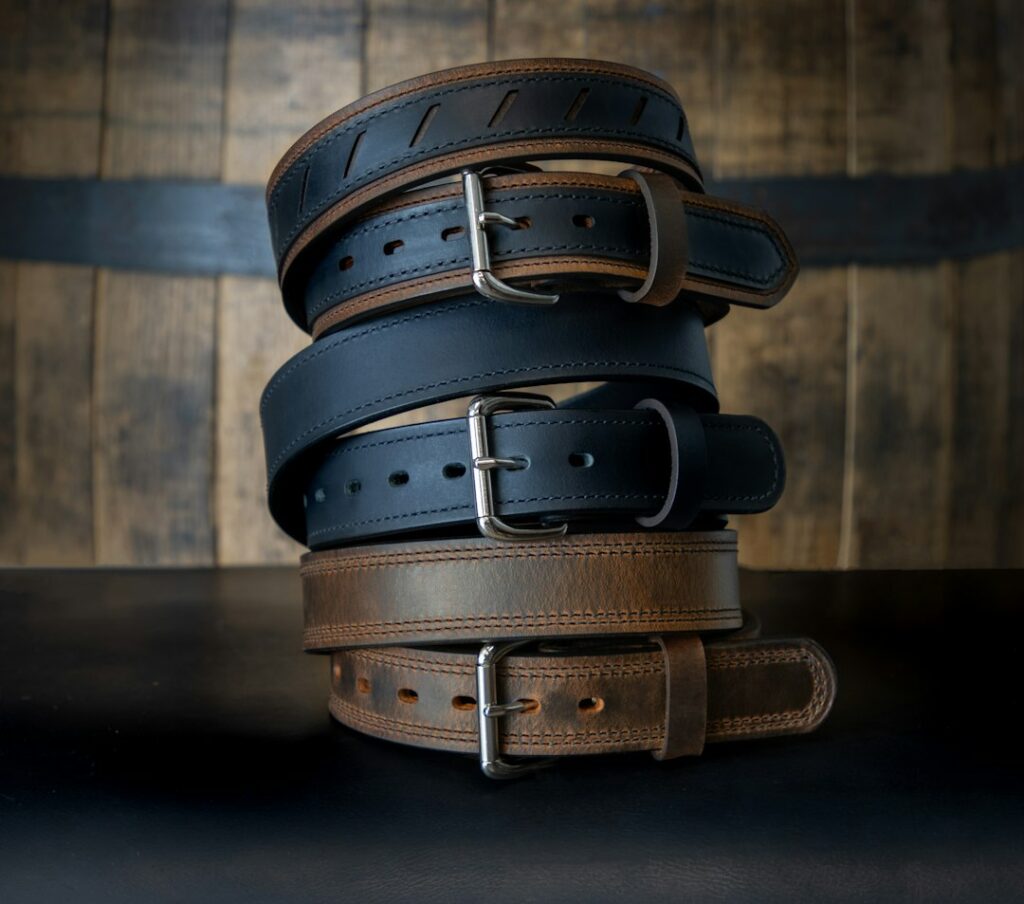
A belt is a small purchase that does a lot of work. This glossary covers the main belt styles, the buckles that close them and the label words that tell you what a strap is made of.
The types of belts in most wardrobes fall into three loose groups: dress belts for tailoring, casual belts for jeans and chinos, and statement belts worn as an accessory in their own right. Within those groups, the buckle and the strap material change the look. If jeans are your main reason for buying a belt, our Best Men’s Belts for Jeans hub goes deeper on that pairing. Belt style names are common usage rather than terms defined by a standards body, so the descriptions below reflect how the words are generally used in shops and listings.
Belt styles at a glance
| Style | Key feature | Typically worn with |
|---|---|---|
| Dress belt | Slim, smooth strap, small buckle | Suits, dress trousers |
| Casual belt | Wider strap, sturdier buckle | Jeans, chinos |
| Western belt | Tooled or embossed strap, ornate buckle | Jeans, boots, western shirts |
| Braided / woven | Interlaced leather or fabric, no fixed holes | Chinos, shorts, summer outfits |
| Reversible | Two colours, swivel buckle | Work and travel outfits |
| D-ring / O-ring | Fabric strap through two rings | Casual and outdoor wear |
| Chain belt | Metal links instead of a strap | Dresses, high-waisted trousers |
| Waist / obi belt | Wide band worn at the natural waist | Dresses, coats, tunics |
Dress and everyday belts
Dress belt
What it is: a slim belt with a smooth strap and a small, plain buckle. How to spot it: polished leather or leather-look finish, a neat frame buckle and no heavy stitching. How to wear it: with suits and dress trousers. A common convention is to keep the belt colour close to your shoes. Our Types of Suits guide covers the tailoring it usually accompanies, and Men’s Dress Shoes covers the shoes.
Casual belt
What it is: a wider, sturdier belt for jeans and chinos. How to spot it: thicker strap, visible stitching, chunkier buckle. How to wear it: with denim, flannel shirts and boots.
Reversible belt
What it is: a strap with a different colour on each side, often black and brown, and a buckle that swivels or unclips so you can flip it. How to wear it: handy for travel or a small wardrobe, since one belt covers two colour families.
Casual and statement belts
Western belt
What it is: a belt with a tooled, embossed or decorated strap and a larger, often ornamental buckle. How to wear it: with jeans and boots; it is a natural partner for the shirts in Men’s Western Shirts.
Braided or woven belt
What it is: strips of leather, elastic or cord woven together. How to spot it: the prong goes through any gap in the weave, so there are no punched holes. How to wear it: a relaxed choice for chinos, shorts and summer outfits.
D-ring and O-ring belts
What they are: a fabric or webbing strap threaded through two metal rings, D-shaped or round. How to wear them: casual and outdoor outfits; the strap adjusts to any length.
Chain belt
What it is: metal links in place of a strap, usually fastened with a hook. How to wear it: slung at the hip over a dress or worn with high-waisted trousers.
Waist and obi belts
What they are: wide bands, sometimes wrapped and tied, worn at the natural waist over dresses, coats or tunics. Wide belts have their own history: the FIT Fashion History Timeline lists “wide belts with big buckles” as an early-1970s look.
Belt buckle types
- Frame buckle: a metal frame with a prong that goes through a punched hole. The most common type.
- Plate buckle: a solid plate fixed to one end, hooking into a hole at the other. Common on western belts.
- Box or slide buckle: the strap slides through and is gripped by a clamp, so there are no holes and the fit is adjustable.
- Ring buckle: the D-ring and O-ring systems above.
- Snap-off buckle: attached with snaps or screws, so the buckle can be swapped onto another strap.
What leather labels mean
Belt straps come in leather, leather-look materials and fabric, and the words matter. British Standard BS 2780, as summarised by SATRA, defines leather as “hide or skin with its original fibrous structure more or less intact, tanned to be imputrescible,” with any surface coating no more than 0.15 mm thick.
In the US, the FTC Leather Guides (16 CFR Part 24) say material that looks like leather but isn’t should be disclosed with wording such as “Not leather,” “Imitation leather” or “Vinyl,” and that ground or bonded leather should not simply be called leather, with its leather and non-leather percentages disclosed. Split leather should be disclosed too. Note that the Guides’ stated scope is purses, luggage, wallets, footwear and similar products, so belt labelling may not follow them exactly. Most “vegan leather,” according to an industry explainer, is PU (polyurethane) or PVC coated onto a fabric backing.
Finding your size and thrifting belts
A common sizing convention is belt size = trouser waist size plus about 2 inches, so a 34 waist would take a size 36 belt, but brand charts vary. To measure a belt you already own, measure from where the leather folds at the buckle to the hole you use most; our Men’s Belt Size Chart walks through it.
Thrift stores usually have a full rack of belts. Before buying:
- Measure the belt from the buckle fold to the hole you would use, and compare it with a belt that fits you.
- Bend the strap gently and look for cracking, which is hard to repair.
- Check the label or stamp on the back of the strap for “genuine leather,” “bonded leather” or similar wording.
- Look at the stitching and the holes; stretched, oval holes show heavy wear.
- Check whether the buckle is fixed with screws or snaps, which makes swapping it easy.
A common method for smooth leather care is to wipe off dirt, clean with a leather cleaner or saddle soap, condition sparingly and let it dry at room temperature away from direct heat. Shopping new, searches like Mens Leather Dress Belt on Amazon, Womens Wide Waist Belt on Amazon or Reversible Leather Belt on Amazon cover the main styles.
Top-selling match on Amazon

- Elevate Your Style –: The womens wide elastic belt can be paired with dresses, tops, coats, trench coats…
- Ladies Belt Size –: This women stretchy dress belt crafted with premium elastic band and high-quality…
- Wonderful Holiday Gift –: If you’re searching for a decent gift for family or friends’ birthdays, Mother’s…
Top-selling match on Amazon

- Built To Last: Crafted from quality leather with reinforced double-stitched edges, this men's dress…
- From Jeans To Suits: Designed to complement both business and casual wardrobes, this men's black leather…
- Comfortable All-Day Fit: Designed with a classic 1 3/8" width and 7 oval holes, this black belt offers an…
Shop the look on Amazon
Everything you need to build a secondhand-style wardrobe, delivered. We may earn a commission on purchases.
Browse picks on Amazon →FAQ
What are the main types of belts?
Dress, casual, western, braided or woven, reversible, D-ring and O-ring, chain, and waist or obi belts.
How does a reversible belt work?
The strap has a different colour on each side, and the buckle swivels or unclips so you can turn the strap over.
What is the difference between a dress belt and a casual belt?
Dress belts are slimmer and smoother with a small buckle; casual belts are wider and sturdier with a chunkier buckle.
Is bonded leather real leather?
Under the FTC Leather Guides, ground or bonded leather should not simply be called leather, and its leather and non-leather content should be disclosed.
What size belt should I buy?
A common convention is your trouser waist size plus about 2 inches, but check the brand’s own chart, because sizing varies.
For more accessory vocabulary, see our glossaries of Types of Bags and Types of Glasses Frames.
How do you shorten a belt or add an extra hole?
A belt with a snap-off or screw-fixed buckle can usually be shortened by unfastening the buckle, trimming the strap at the buckle end and reattaching it. Belts with stitched or riveted buckles are better shortened by a cobbler or leather repair shop. To add a hole instead, mark the spot in line with the existing holes and use a leather hole punch, spacing it evenly. Braided belts and box or slide buckles need no extra holes, since the fit adjusts anywhere along the strap.
What is the difference between full-grain and genuine leather belts?
Full-grain leather keeps the hide’s whole outer surface, while “genuine leather” is a broad term that often refers to lower layers of the hide. Full-grain straps tend to show natural marks and develop a patina with wear. Genuine leather is real leather but usually less durable and more likely to crack or peel at the fold. On a thrifted belt, check the stamp on the back of the strap and bend it gently to look for cracking before buying.
Belts & Suspenders
How to wear a belt and how to wear suspenders.
How-Tos
Western Belts
Western belts for women and concho belts.