

Small, irregular holes in a favourite wool sweater usually mean one thing: clothes moth larvae have been feeding quietly in a dark corner of the closet.
If you are working out how to get rid of moths in closet spaces, the plan has three parts: find every infested item, treat it, and store clean pieces so larvae cannot reach them again. This guide follows the University of California Statewide Integrated Pest Management Program (UC IPM) Pest Notes on clothes moths for the facts, and pairs well with our How to Wash a Wool Sweater Without Shrinking It hub, since wool is what the larvae target most.
Know what you are dealing with
According to UC IPM, two species cause most fabric damage: the webbing clothes moth (Tineola bisselliella) and the casemaking clothes moth (Tinea pellionella).
The key point is that only the larvae damage fabric. UC IPM lists their food as wool clothing, carpets and rugs, upholstered furniture, furs, stored woollen items, animal bristles in brushes, wool felt pads in pianos and even fish meal. The adults you see fluttering are not the ones eating your clothes.
According to Wikipedia’s entry on the webbing clothes moth, the larvae digest keratin, the protein found in wool, silk, fur and feathers. It also notes they will eat synthetic and cotton fibres when those are blended with wool, but pure synthetics are not their food. UC IPM adds that fabrics with food, perspiration or urine stains are more likely to be damaged, which is why clean storage matters so much.
Signs of clothes moths
- Silken tubes or mats in tucked-away parts of clothes, such as under collars, per UC IPM.
- Small cases: casemaker larvae build cigar-shaped, open-ended silken cases about 3/8 inch long.
- Adults near the infested items: UC IPM describes them as weak flyers that are not attracted to lights, so they tend to stay close to the problem rather than flying to lamps.
- Irregular holes in wool, cashmere or felt, often in folds or seams.
Step-by-step: clearing moths from a closet
- Empty the closet completely, including boxes, bags and shoes on the floor.
- Sort out every item made of or blended with wool, silk, fur, feathers or felt.
- Inspect each one for tubes, cases, larvae and holes, especially under collars and along seams.
- Bag infested or suspect items in sealed plastic bags straight away so larvae do not spread.
- Treat each bagged item with one of the methods below (washing, dry cleaning, freezing or heating), choosing what its care label allows.
- Vacuum the closet thoroughly: floor, corners, shelf edges, baseboards and the cracks where shelves meet walls.
- Empty or throw out the vacuum bag promptly. UC IPM warns that its contents can include eggs, larvae or adult moths.
- Wipe shelves and rails down, then let the space dry.
- Return only clean, treated items, storing out-of-season wool in airtight containers.
- Keep watching for new signs over the following weeks.
Ways to treat infested clothes
Washing
UC IPM recommends laundering at at least 120°F for 20 to 30 minutes for infested washable items. Only do this where the care label allows hot water. Many wool and cashmere pieces cannot take that heat without felting, so check first; our How to Wash Cashmere by Hand (and When to Dry Clean) and How to Wash Merino Wool guides explain the limits.
Dry cleaning
For items that cannot be washed hot, UC IPM names dry cleaning as the alternative. It is often the right choice for tailored wool coats and suits; our How to Clean a Suit guide explains when a suit needs professional cleaning.
Freezing
UC IPM recommends freezing items for several days at temperatures lower than 18°F. Seal the garment in a plastic bag first, press out the air, and leave it in a freezer cold enough to reach that temperature. Let it come back to room temperature inside the bag before opening, so condensation forms on the bag rather than the fabric. Freezing is not right for every item, so check the label and skip fragile trims. For a specific pick, see the MISSLO Gusseted Garment Bags for Storage 43-Inch 5-Pack.
Heating
UC IPM also describes heating items in an oven for at least 30 minutes above 120°F. This is only suitable for things that tolerate heat. Keep it well away from delicates, synthetics, glued trims and anything flammable, and never leave it unattended. For most clothing, washing, dry cleaning or freezing is the more practical route.
Storing clothes so moths cannot return
- Clean before storing. Wash or dry clean wool and silk before putting them away for the season, since stained fabric attracts larvae.
- Use airtight containers. UC IPM recommends keeping clean items in an airtight container. Wikipedia adds that airtight construction matters more than the type of wood a chest is made from. Clear lidded Airtight Sweater Storage Bins on Amazon or zip-sealed Sweater Storage Bags on Amazon both work.
- Air and brush wool you wear often. Larvae prefer undisturbed spots, so pieces in regular rotation are less at risk than ones forgotten at the back.
- Fold knits rather than hanging them long-term. Folded sweaters fit neatly into sealed bins; How to Fold a Sweater So It Keeps Its Shape shows how.
- Keep the closet organised. It is far easier to spot trouble in a tidy space; see How to Organize a Closet.
Top-selling match on Amazon

- Material & Build: Crafted from woven PP with reinforced stitching, these semi-transparent bags resist…
- Clear Label Pocket: A side PVC label slot lets you insert custom handwritten notes. No need to open the…
- Versatile Use: Perfect for sweaters, lightweight blankets, and bed sheets. Use in closets…
Top-selling match on Amazon
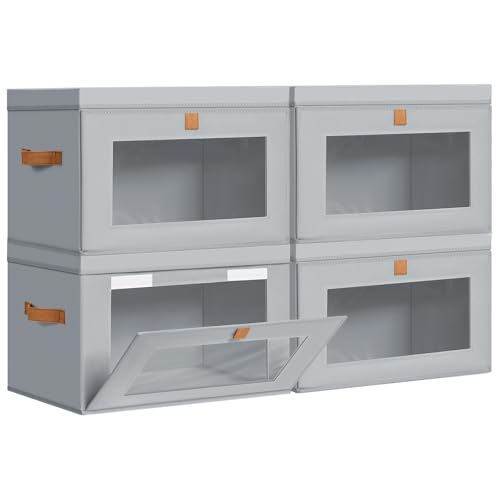
- Pvc Visible Window: The transparent PVC window of the decorative storage boxes with lids allows you to…
- Sturdy & Stackable: The storage bins for shelves are made of fabric with high-quality cardboard at the…
- Double Handles: The fabric storage bins with lids uses 2 handles with widened stitching, which are…
What about cedar, traps and mothballs?
Cedar
Cedar has a strong reputation, but UC IPM is measured about it: the oil in aromatic eastern red cedar can kill small larvae but does not affect large ones, and cedar loses that quality after several years. Wikipedia notes it is hard to keep enough cedar oil around stored items to be effective, and that distilled cedar oil is sold to refresh dried-out wood. Treat cedar blocks as a supporting extra, not a cure. For a specific pick, see the Homode Cedar Blocks for Clothes Storage 40-Pack.
Pheromone traps
UC IPM explains that the sex pheromone in these traps attracts male moths. That makes Clothes Moth Pheromone Traps on Amazon useful for monitoring whether moths are present, but because they catch only males, they will not clear an infestation on their own.
Mothballs
UC IPM notes that mothballs contain paradichlorobenzene (1,4-dichlorobenzene), that these materials are toxic and should be kept away from children and pets, that they leave an unpleasant odour on clothes, and that they can soften and melt plastic onto fabric. If you choose to use any mothball product, use it only exactly as its label directs. Do not scatter them in open closets or living areas, make sachets from them, or mix product types.
A thrift-store note
Secondhand wool, fur and vintage knits can bring larvae home. Before a thrifted sweater or coat joins your closet, inspect the seams and collar, then wash, dry clean or freeze it as its label allows. Our guide on How to Clean a Fur Coat from the Thrift Store covers fur specifically.
Shop the look on Amazon
Everything you need to build a secondhand-style wardrobe, delivered. We may earn a commission on purchases.
FAQ
Do moths eat clothes?
Adult moths do not. The larvae do the damage, according to UC IPM.
Will moths eat polyester or cotton?
According to Wikipedia, larvae eat synthetic and cotton fibres only when they are blended with wool. Pure synthetics are not their food.
How long should I freeze clothes to kill moths?
UC IPM says several days at temperatures lower than 18°F.
Can I repair moth holes in sweaters?
Small holes can often be darned or patched by hand or by a tailor. Treat the sweater first so no larvae remain.
What attracts clothes moths to a closet?
Clothes moth larvae are drawn to fabrics containing keratin, the protein in wool, silk, fur and feathers, which is why wool sweaters and coats are hit most. Stained items are at greater risk, since UC IPM notes that fabrics with food, perspiration or urine stains are more likely to be damaged. Larvae also prefer undisturbed spots, so forgotten pieces at the back of a dark closet suffer more than clothes in regular rotation. Secondhand wool can also bring larvae home.


