Steam relaxes creases without pressing fabric flat against a hot plate, which makes it a gentle, quick option for dresses, blouses, knits and anything with texture.
This guide explains how to steam clothes two ways: with a handheld or upright garment steamer, and with nothing more than a hot shower and a closed bathroom door. It also covers when steaming beats ironing, and when a crisp collar still needs the iron. For pressed shirts, our How to Iron a Shirt in 7 Steps hub has the full ironing routine.
Check the care label first
Before any steam touches a garment, read its label. Under the FTC Care Labeling Rule, if steam would damage a garment, the label should say “Dryclean. No steam.” US labels may also use care symbols (under ASTM D5489) instead of words, so look for both. If a label warns against steam, take the piece to a dry cleaner instead.
Your steamer’s own manual also comes before any general advice, including what water to use and how long to let it heat. For a specific pick, see the Hilife Steamer for Clothes Portable Handheld.
What you need
- A handheld or upright garment steamer, such as a Handheld Garment Steamer on Amazon
- A sturdy hanger, ideally one with shaped shoulders
- Somewhere to hang the garment with space around it: a door hook, rail or shower rod
- Distilled water, if your steamer’s manual advises it
Top-selling match on Amazon

- 【Powerful 1000W & Fast Heat-Up】1000W high-power heating system, 30s heats up to generate…
- 【3 Professional Modes for All Fabrics】Dry, Low & High Steam with 90° rotatable head, safely…
Method 1: How to steam clothes with a garment steamer
- Fill the tank with water, following the manual’s advice on tap or distilled water.
- Switch it on and wait until it produces steady steam.
- Hang the garment on a hanger and fasten the top button or zip so it sits straight.
- Hold the hem with your free hand and pull the fabric gently taut.
- Start at the top and work down in slow vertical strokes.
- Keep the steamer head moving at all times; do not hold it still in one spot.
- On delicate fabrics, hold the head just off the surface rather than pressing it on.
- Steam the inside of collars, cuffs and plackets where creases set.
- Let the garment hang and dry for a few minutes before wearing so the shape sets.
- Empty the tank once you finish.
Steam can scald, so keep hands below and away from the nozzle, and point it away from your body. This top-to-bottom routine is a common method; there is no single official technique.
Method 2: How to steam wrinkles out in the shower
No steamer? According to Maytag, hanging a garment in a closed bathroom with a hot shower running for about 15 minutes can relax light wrinkles.
- Hang the garment on a hanger from the shower rod or a hook, well away from the spray.
- Close the bathroom door and any window.
- Run the shower hot for about 15 minutes.
- Smooth creases with your hand while the fabric is warm and damp.
- Let it hang outside the bathroom until fully dry.
This works best for light creases in flowing fabrics. For more ideas without an iron, see How to Get Wrinkles Out of Clothes Without an Iron.
Steam vs iron: which to use
Steam relaxes fibres while the fabric hangs; an iron presses fabric flat against a hot plate. That difference shapes the choice:
- Steam suits dresses, blouses, knits, pleats you do not want flattened, textured fabrics, and quick touch-ups before going out.
- An iron suits crisp shirt collars and cuffs, sharp trouser creases and linen that needs a flat finish.
For beaded and sequinned pieces, Whistles’ care guide says never to iron adorned fabrics. Its advice is to use a steamer held about 30 cm (12 in) away, or to hang the dress in a steamy bathroom. That same distance is a sensible habit for any embellished piece.
Fabric notes
- Velvet: never press it flat. A common approach is to steam from the back, or hold the steamer just off the surface, then hang. Our How to Wash Velvet Clothes guide has more.
- Silk and satin: keep the head off the fabric and check for water-spotting on an inside seam. See How to Wash Silk Without Ruining It.
- Wool and knits: steam lightly from a distance, then let the piece dry on the hanger or flat so it does not stretch.
- Synthetics: keep the head moving and at a slight distance.
Handheld vs upright steamers
Handheld steamers are small, light and easy to pack, which suits touch-ups and travel. Upright steamers sit on the floor with a larger tank and a hanging pole, which many people prefer for steaming several pieces in one session, long dresses or curtains. Either way, follow the manual for fill levels and heat-up time.
Common mistakes
- Skipping the care label and steaming a “Dryclean. No steam.” item.
- Holding the head in one place, which can leave wet patches.
- Pressing the head onto delicate fabric.
- Steaming fabric that is bunched instead of pulled taut.
- Wearing the garment straight away while it is still damp.
- Leaving water sitting in the tank between uses.
Caring for your steamer
Empty the tank after every session and let the unit cool before storing. If your manual recommends distilled water or a descaling routine, follow it, especially in hard-water areas. A Travel Garment Steamer on Amazon is handy for trips; our How to Pack a Suitcase (Including a Suit) guide pairs well with it.
Top-selling match on Amazon
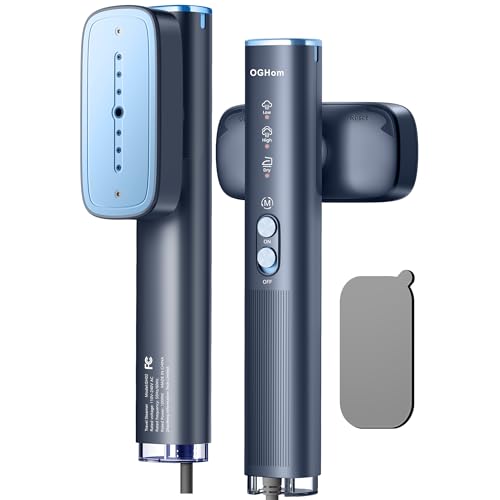
- 【Powerful 1000W & Fast Heat-Up】1000W high-power heating system, 30s heats up to generate…
- 【3 Professional Modes for All Fabrics】Dry, Low & High Steam with 90° rotatable head, safely…
A thrift-store note
Thrifted clothes often arrive creased from racks and bags. Wash them first, and once clean, a quick steam is the gentlest way to bring vintage dresses and blouses back into shape. If a piece also clings, our guide on How to Get Static Out of Clothes (and Prevent It) can help.
Shop the look on Amazon
Everything you need to build a secondhand-style wardrobe, delivered. We may earn a commission on purchases.
FAQ
Is steaming clothes better than ironing?
Neither is better overall. Steaming is quicker and gentler for many fabrics; ironing gives a crisper, smoother finish for shirts and trousers.
Can you steam clothes without a steamer?
Yes. Maytag suggests about 15 minutes in a closed bathroom with a hot shower running for light wrinkles.
Can every fabric be steamed?
No. Under the FTC Care Labeling Rule, a garment that steam would damage should be labelled “Dryclean. No steam.”
Does steaming clean clothes?
Steaming relaxes wrinkles; it is not a substitute for washing.