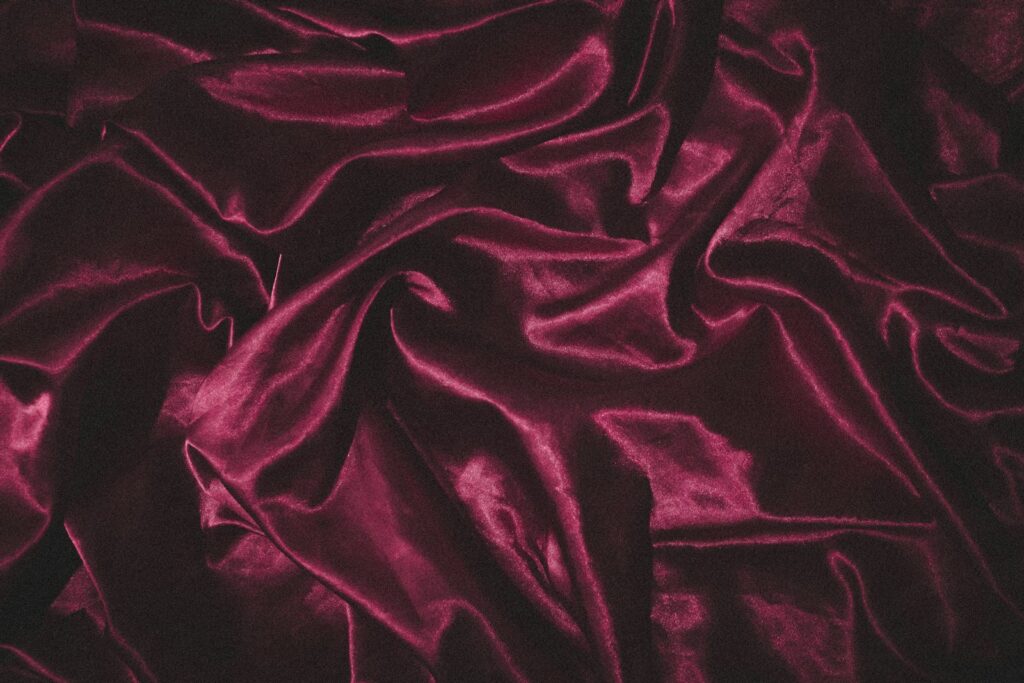
Velvet care comes down to two things: the fibre it is made from and the pile on its surface. Get both right and a velvet dress or blazer keeps its depth and sheen for years.
Before you work out how to wash velvet, it helps to know what velvet is. Britannica describes it as a fabric with “a short, dense pile”, made in the pile weave from silk, cotton or synthetic fibres, with a soft surface formed by clipped yarns. That means “velvet” tells you the structure, not the fibre (our Types of Fabric guide explains the difference between weaves and fibres). A silk velvet, a cotton velvet and a polyester velvet can need quite different care. Our What Is Velvet? Pile Fabric, Types and Care guide explains how it is made and how it differs from velveteen. This page covers cleaning it: quick answer, what you need, steps by fibre, drying, steaming and what to avoid.
Quick answer
- Find the fibre content and care instructions on the label. They decide everything.
- Dry clean silk, rayon and “dry clean only” velvet.
- Hand wash polyester or crushed velvet in cool water if the label allows.
- Never iron the pile flat. Steam from the back, then hang to dry.
Read the label first
Under the FTC Care Labeling Rule, a care label must say whether a product should be washed by hand or machine, and give a water temperature if regular hot water would harm it. The FTC also requires makers to have a “reasonable basis” for every instruction. One detail matters for velvet: the FTC notes that a label only has to list one method when an item could be washed or dry cleaned. So “Dry clean” doesn’t always mean water is off-limits. With silk or rayon velvet, though, treat it as a firm instruction, because water can mark the pile and the fibre.
What you need
- A clean basin or sink and cool water
- A mild liquid detergent. Pick an enzyme-free one for silk velvet. Searching for Delicate Wash Liquid Detergent on Amazon gives options.
- Clean white towels
- A padded or wide hanger
- A handheld steamer. Search for a Handheld Clothes Steamer on Amazon if you need one.
- A soft brush with fine bristles, for lifting the pile
Top-selling match on Amazon

- TURBO STEAM POWER FOR FAST, DRY WRINKLE REMOVAL: No spitting, leaking, or wet spots with…
- READY IN 35 SECONDS WITH UP TO 20 MINUTES OF STEAM: Heat up fast and steam longer with a…
Top-selling match on Amazon

- Use Them Anywhere: SinkSuds were designed to be taken anywhere and used anywhere; they are a travel…
- Perfect Size: This portable laundry soap is premeasured for your convenience. We created these…
- Wash Anything: Our liquid laundry detergent can be used on all types of clothes and won’t stretch…
How to wash velvet by fibre
Polyester and crushed velvet
Polyester velvet and crushed velvet, which are commonly made from synthetics, are usually the easiest to care for. Polyester tends to resist shrinking because it doesn’t absorb much moisture, according to a P&G scientist quoted by Martha Stewart Living. If the label allows hand washing, a common method for crushed velvet washing is:
- Turn the garment inside out to protect the pile.
- Fill a basin with cool water and a small amount of mild detergent.
- Submerge the garment and press it gently through the water. Don’t scrub.
- Drain, then rinse in clean cool water until the water runs clear.
- Press out water by rolling the garment in a towel. Don’t wring or twist.
If the label permits machine washing, a common approach is a cold, gentle cycle, inside out, inside a mesh laundry bag. For stretch velvet, keep the heat low. The P&G scientist warns that heat makes spandex brittle and causes it to lose elasticity. For more on the fibre, see How to Wash Polyester Clothes.
Cotton velvet
Cotton can shrink, mainly from water, agitation and dryer heat, according to the same Martha Stewart Living source. Cotton velvet is often labelled dry clean. If the label allows washing, hand wash it cool using the steps above and never tumble dry it.
Silk and rayon velvet
Silk velvet is the most delicate. The Smithsonian Museum Conservation Institute (MCI) warns that silk “can be damaged by protein enzymes or alkali”, that chlorine bleach “will dissolve silk or wool”, and that water makes silk “stretch more easily, tear more readily”. Rayon is also among the fibres most likely to shrink, according to Rinse. For both, follow the label, which usually means a professional cleaner. Tell the cleaner it is velvet, so they can take care with the pile when pressing. Our How to Wash Silk Without Ruining It guide covers silk more generally.
Drying velvet
- Roll the garment in a dry towel to remove extra water.
- Turn it right side out.
- Hang it on a padded hanger, or lay heavier pieces flat on a towel.
- Gently smooth the pile in its natural direction with your hand while it is damp.
- Let it air dry fully away from radiators and direct sun.
Skip the tumble dryer. Heat and tumbling raise the risk of shrinkage and can leave permanent crease marks in the pile.
How to steam velvet and fix crushed pile
Pile crushing is the main velvet problem. Sitting, folding or pressing can flatten the fibres into shiny patches. The common method, which has no single authoritative source, is to avoid pressing velvet flat with an iron. Instead, steam it from the back, or hold the steamer just off the surface, and hang it rather than fold it. Step by step:
- Check the label doesn’t say “No steam”. The FTC says a garment that steam would damage should be labelled “Dryclean. No steam.”
- Hang the garment and turn it inside out if you can.
- Pass the steamer over the back of the fabric, keeping the head moving.
- For marks on the face, hold the steamer just off the surface without touching it.
- While the pile is warm, brush it lightly in its natural direction with a soft brush.
- Leave it hanging until cool and dry.
Crushed velvet is deliberately pressed for that look, so you don’t need to restore an even pile there. Just steam out wrinkles. Satin, another weave whose care follows its fibre, works in a similar way, as our guide on How to Wash Satin Clothes explains.
What to avoid
- Ironing the face of the velvet, or pressing it flat
- Wringing, twisting or scrubbing
- Hot water and the tumble dryer
- Chlorine bleach on silk velvet, and enzyme detergents on silk
- Folding velvet for storage. Hang it with space around it.
Velvet stains
Blot spills right away with a dry white cloth, pressing rather than rubbing so the pile isn’t flattened. Smithsonian MCI advises testing any treatment on a hidden area first. On washable polyester velvet, a common method is dabbing with cool water and a drop of mild detergent, then blotting with plain water. On silk or dry-clean-only velvet, take it to a professional and name the stain. There is no guarantee a mark will lift, and heat can set stains, so don’t steam a stained area.
Thrift note: velvet finds
Vintage velvet blazers and dresses turn up in thrift stores, especially around the holidays. Check the fibre label, look at the seat, elbows and cuffs for bald or shiny patches, and hold the fabric up to the light for wear. A light steam often revives crushed areas, but worn-through pile can’t be restored. For ideas on wearing it, see Velvet Dresses, and for general hand-washing technique, How to Hand Wash Clothes (Delicates, Wool and Dresses).
Shop the look on Amazon
Everything you need to build a secondhand-style wardrobe, delivered. We may earn a commission on purchases.
FAQ
Can you put velvet in the washing machine?
Only when the care label allows it, which is most common with polyester and crushed velvet. Use cold water, a gentle cycle, a mesh bag and turn the garment inside out.
Does velvet shrink?
It depends on the fibre. Cotton and rayon velvet can shrink with heat and agitation. Polyester velvet is less likely to, though high heat is still best avoided.
How do you get crease marks out of velvet?
Steam from the back, or hold the steamer just off the face, then brush the pile lightly and hang it to dry. Avoid pressing it with an iron.
Is velvet dry clean only?
Many velvets are, especially silk, rayon and some cotton. Polyester velvet often isn’t. The label is the authority.
How do you remove lint and pet hair from velvet?
Lift lint and pet hair from velvet with a soft brush or a lint roller, working gently in the direction of the pile. Pressing hard or rolling against the nap can flatten the fibres and leave shiny patches. For stubborn hair, a slightly damp rubber glove patted over the surface also works well. Brushing after each wear, then hanging the piece with space around it, keeps the pile upright and reduces how much lint it collects.