Fleece is the soft, napped fabric behind zip-up jackets, quarter-zips, blankets and the linings of hoodies. It is light, warm and cheap to buy secondhand, but it pills and attracts lint if it is washed the wrong way.
What is fleece? In clothing, “fleece” usually means a synthetic knit fabric, most often polyester, that has been brushed to raise a soft, fluffy surface. It is different from a sheep’s fleece (the wool coat of the animal), though the name borrows the idea of something soft and insulating. If you are deciding between fleece and sherpa for a jacket lining, our Fleece vs Sherpa Lining guide compares the two directly. This page covers what fleece fabric is made of, where polar fleece came from, how it compares with sherpa, why fleece pills, how to wash it and what to look for when you thrift it.
Quick answer: what is fleece?
Fleece fabric is a soft, brushed knit, usually made from polyester. Polartec says its predecessor, Malden Mills, pioneered synthetic fleece in 1981, and that Patagonia’s Synchilla Snap-T Pullover, made with Malden Mills fleece, launched in 1985. Fleece pills when loose fibre ends tangle under friction, so washing inside out on a gentle, cold cycle helps.
What fleece fabric is made of
Most fleece jackets and blankets on the market list polyester on the label, sometimes with a little spandex for stretch. Because the fibre is polyester, most of what applies to polyester applies to fleece too: it is synthetic, it attracts lint, and it pills at friction points. Our What Is Polyester? Pros, Cons and How to Care for It guide covers the fibre itself, including the FTC definition and how polyester is produced.
What makes fleece “fleece” is how the fabric is finished. A general outline of the process:
- Polyester yarn is knitted into a fabric.
- The surface is brushed (napped) to pull up loose fibres.
- The raised fibres are often sheared to an even height.
- One or both sides may be finished, giving single-sided or double-sided fleece.
This is a common description of how brushed knits are made, rather than a specific manufacturer’s procedure. The brushed surface traps air, which is why fleece feels warm for its weight.
Polar fleece, microfleece and other names
- Polar fleece. A widely used general name for the classic thick, napped polyester fleece used in outdoor jackets.
- Microfleece. A thinner, lighter fleece, often used for base layers and lightweight pullovers.
- Fleece-lined. A garment with a fleece inner face, such as leggings, tights or flannel shirts. See our Fleece-Lined Leggings and Fleece-Lined Flannel Shirts guides.
- Cotton fleece. The brushed inside of many sweatshirts. Check the label, since it may be cotton, polyester or a blend.
These terms are used loosely by brands, so the fibre line on the label is always the most reliable guide.
A short history of fleece
The modern synthetic fleece story comes mainly from Polartec, so the points below are company statements:
- 1981. Polartec says it traces its roots to Malden Mills, which pioneered synthetic fleece in 1981.
- 1985. Polartec says Patagonia’s Synchilla Snap-T Pullover, made with Malden Mills fleece, launched in 1985 and changed how people dressed outdoors.
- 1991. Polartec says the Polartec brand was formally established.
- 1993. Polartec says it made its first fleece with recycled content, called “Soda-Bottle Green”.
- 1999. Polartec says Time magazine named Polartec fleece one of the most important inventions of the 20th century. That is Polartec’s account; we have not checked it against Time.
A common mix-up is to say Patagonia and Malden Mills launched fleece together in 1981. Polartec’s own page puts Malden Mills’ fleece in 1981 and the Patagonia Snap-T in 1985.
How fleece feels and performs
| Feature | What to expect | Source or basis |
|---|---|---|
| Warmth for weight | Brushed surface traps air; light for how warm it feels | Common observation |
| Pilling | Polyester anchors pills so they stay on the surface | Pilling references in our care sheet |
| Lint | Synthetics are lint-attractors; wash away from towels | American Cleaning Institute (commonly summarised) |
| Drying | Often dries quickly on a rack | Common observation (no single source) |
| Wind | Plain fleece lets wind through; many people layer a shell over it | Common observation |
| Heat | Synthetic; keep irons and dryers low | Common method |
| Shedding | Polartec says its 2022 fabrics shed “up to 85% less fiber fragments” on average in home laundering | Polartec (company claim, its own fabrics only) |
That last row applies only to Polartec’s own fabrics as the company describes them. It does not tell you how any other fleece behaves.
Fleece vs sherpa
“Sherpa” in clothing usually refers to a thick, curly pile fabric made to look like sheepskin, often polyester, used as a jacket or hoodie lining. Fleece has a lower, more even surface. Here is a quick comparison of how the two are commonly described:
| Fleece | Sherpa | |
|---|---|---|
| Surface | Smooth, even, brushed nap | Curly, nubby, sheepskin-look pile |
| Typical use | Whole jackets, pullovers, blankets | Linings, collars, cosy jackets |
| Bulk | Lighter and thinner | Thicker and puffier |
| Care concern | Pilling and lint | Matting of the pile |
Our Fleece vs Sherpa Lining guide goes deeper on choosing between them, and How to Wash a Sherpa-Lined Jacket Without Ruining It covers sherpa care.
Does fleece pill?
Yes, it can. Pills are small balls of fibre that form when loose fibre ends on the surface tangle together, driven by friction from wear and washing. Our care sources explain that synthetics like polyester are strong and flex-resistant, so pills stay anchored instead of breaking off. That is why fleece jackets often pill under the arms, at the cuffs and where a backpack strap rubs.
To remove pills:
- Lay the fleece flat on a firm surface.
- Run an electric fabric shaver lightly over the pilled area.
- Or use a sweater comb with light strokes in one direction.
- Lint-roll away the loose fibres.
A Electric Fabric Shaver on Amazon makes quick work of a pilled fleece. For more, see How to Remove Pilling From Clothes (and Stop It Coming Back).
Top-selling match on Amazon

- 【Portable Fabric Shaver】– Special designed for removing fuzz, pills, and lint from sweaters…
- 【Innovative Blades】 — Upgraded 6 Leaf Blades, razor-sharp, double cleaning efficiency…
How to wash fleece
Always check the care label first. The FTC Care Labeling Rule requires labels to say whether to wash by hand or machine and give a water temperature if regular hot water would harm the item. The steps below are a common method for machine-washable polyester fleece.
- Read the care label.
- Close all zippers and fasten any Velcro.
- Turn the fleece inside out.
- Wash with other synthetics, away from towels, flannel and sweaters.
- Choose a gentle cycle with cold water.
- Use a small amount of gentle liquid detergent.
- Skip fabric softener, a common tip for technical and synthetic fabrics.
- Remove promptly when the cycle ends.
Washing inside out on a gentle, cold cycle, closing zippers and avoiding high-heat drying is the pilling-prevention advice in our care sources. Keeping fleece away from towels follows the American Cleaning Institute’s lint guidance as commonly summarised: lint-givers (towels, flannels, sweaters) and lint-attractors (synthetics) are best washed separately.
Drying fleece
Fleece often dries quickly on a rack or hanger, which is the gentlest choice. If the label allows tumble drying, use low heat, since high heat encourages pilling and can damage synthetics. Clean the dryer lint screen after each load; the U.S. Fire Administration reports that failure to clean was the leading factor in residential clothes dryer fires in its 2008 to 2010 data, and fleece loads can leave a lot of fluff.
Ironing fleece
Fleece rarely needs ironing, and direct heat can flatten or damage the nap. If a label shows an iron symbol, follow it exactly, and otherwise leave the iron out.
Thrifting fleece: what to check
Fleece jackets and pullovers are common thrift finds, and vintage outdoor fleece from the 1980s and 1990s has its own following. Before you buy:
- Read the fibre line. Look for polyester, and note any spandex or recycled content.
- Check the brand label. Polartec and Synchilla tags are common on older outdoor fleece. Treat brand performance claims as the brand’s own.
- Look at friction points. Underarms, cuffs, hem and shoulder areas show pilling first.
- Feel the nap. Matted, flat patches suggest high-heat drying.
- Test zips and pulls. Run the zipper fully and check the elastic at the hem and cuffs.
- Smell it. Synthetics can hold odour; our How to Get Odors Out of Clothes (Sweat, Body Odor and More) guide can help.
- Wash before wearing. Clean secondhand fleece according to its label.
Light pilling is easy to shave off, so a slightly bobbly fleece in a colour you love can still be a good buy.
Shopping for fleece new
If you are buying new, compare weight (microfleece vs thicker fleece), whether it is single- or double-sided, and the fibre content. You can browse Womens Fleece Jacket Full Zip on Amazon styles, and our Amazon Fleece Jackets and Men’s Fleece Hoodies round-ups narrow down options.
Top-selling match on Amazon
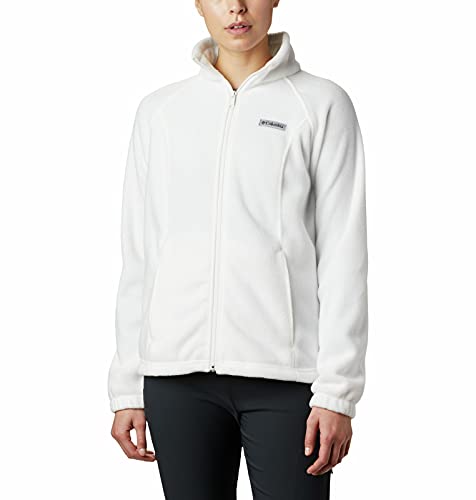
- Soft Fabric: This Columbia Women's Benton Springs Full Zip fleece is crafted of soft 100%…
- Handy Features: This Columbia women's fleece jacket features two side zippered security pockets to…
- Ultimate Comfort: With a collared neck and zippered closure, this Columbia women's fleece jacket is…
Shop the look on Amazon
Everything you need to build a secondhand-style wardrobe, delivered. We may earn a commission on purchases.
FAQ
What is fleece made of?
Most fleece is polyester, knitted and then brushed to raise a soft surface. Some sweatshirt fleece is cotton or a cotton-polyester blend, so check the label.
Who invented fleece?
Polartec says its predecessor, Malden Mills, pioneered synthetic fleece in 1981. Patagonia’s Synchilla Snap-T, made with Malden Mills fleece, followed in 1985, per Polartec.
Is polar fleece the same as fleece?
“Polar fleece” is a common general name for the classic thick, napped polyester fleece. Brands use these names loosely, so read the label.
What is the difference between fleece and sherpa?
Fleece has a smooth, even nap; sherpa has a thicker, curly pile made to look like sheepskin. Sherpa is mostly used for linings and collars.
Does fleece pill?
It can. Polyester fibres are strong, so pills stay anchored to the surface. Washing inside out on gentle and cold, and skipping high-heat drying, helps slow it.
Can you put fleece in the dryer?
Only if the label allows it, and then on low heat. Many people air dry fleece because it dries quickly and high heat can damage it.
Is a fleece jacket warm enough for winter?
A fleece jacket is warm for its weight, but on its own it usually suits cool, dry days rather than cold, windy or wet winter weather. Its brushed surface traps air, yet plain fleece lets wind through and is not waterproof, so many people wear it as a mid-layer under a shell. Thicker polar fleece is warmer than thin microfleece, which works better as a light base or travel layer.
Does polyester fleece shed microfibres in the wash?
Polyester fleece can shed small synthetic fibre fragments when it is washed, because its brushed, napped surface is made of loose raised fibres. Polartec says its 2022 fabrics shed up to 85% less fiber fragments on average in home laundering, a company claim about its own fabrics only. Washing fleece less often, on a gentle cold cycle and inside out, is a common way to reduce wear on the nap.
The short version
Fleece is a brushed knit fabric, usually polyester. Polartec says Malden Mills pioneered synthetic fleece in 1981, with Patagonia’s Synchilla Snap-T following in 1985. It is warm for its weight, but it pills and attracts lint, so wash it inside out on a gentle, cold cycle away from towels, dry it low or on a rack and shave off pills as they appear. When thrifting, check friction points, the nap and the zip. For lining choices, see our Fleece vs Sherpa Lining guide, and for the fibre itself, What Is Polyester? Pros, Cons and How to Care for It.