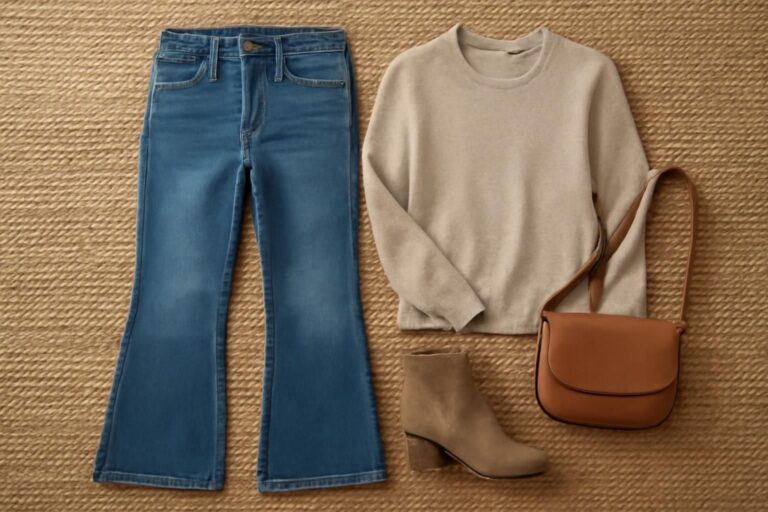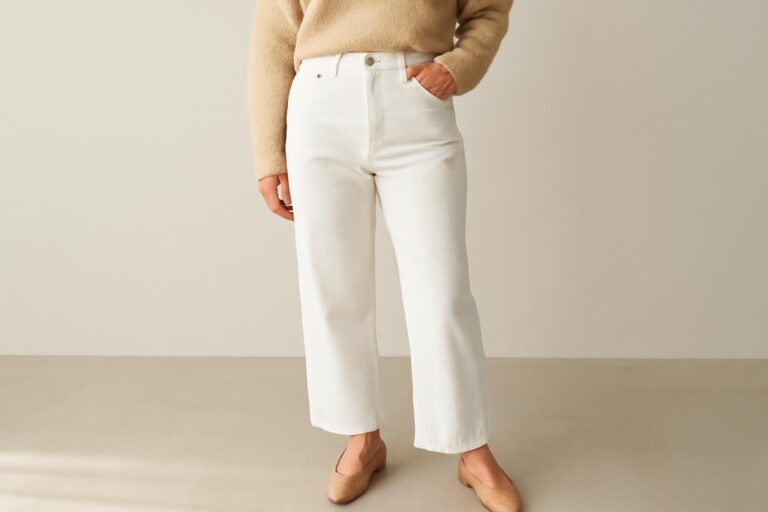
Early 2000s 7 for All Mankind jeans, the original low-rise bootcut era, are having a second life. Resale sites are full of Dojo flares, A Pocket bootcuts and early skinnies, and the best of them offer a heavier, more character-rich denim than most new jeans at the same price.
Vintage 7 for All Mankind means different things to different buyers. For some it is the early-2000s era of the brand before VF Corporation bought it in 2007. For others it is the 2010-2015 output, still pre-modern but more familiar in cut. This piece covers both, with a practical look at which cuts are worth buying secondhand today. For broader brand context, Brand Guides is the hub.
What era “vintage” means here
The brand was founded in 2000. A sensible vintage line is roughly 2015: anything older than a decade qualifies. Within that window, there are two distinct eras.
Early era (2003-2010): low-rise dominant, bootcut and flare silhouettes, signature contrast back pocket stitching, often with the “7FAM” logo visibly stitched. These are the pieces that defined the brand’s early reputation.
Middle era (2010-2015): rise creep upward begins, skinny silhouettes take over the catalog, fabric becomes stretchier. The brand’s original aesthetic starts shifting toward what it is today.
What to expect from vintage fabric
The fabric in early-era 7 for All Mankind jeans is genuinely different from current production. It tends to feel heavier, with less stretch and a higher cotton share; check the care label for the exact fiber content of any pair you consider. The fabric has an indigo depth that current production often does not match, and it ages with real character — honeycombs, whiskers, honest fade patterns.
That difference is easy to judge in person: older pairs usually feel more substantial in the hand. Online, look at the fiber content in the listing photos and ask the seller how the fabric feels compared with a modern pair.
Middle-era fabric (2010-2015) is closer to contemporary production but still typically heavier and less stretchy than 2022+ pieces.
Sizing quirks to know about
Vintage 7 for All Mankind jeans often ran true to size at purchase, but many pairs now on resale have been washed enough to settle into permanent dimensions that differ from the tag. A size 29 from the mid-2000s can fit like a modern 28 or 30 depending on wash history.
Always, always request flat measurements from the seller: waist across the waistband (double for total waist), inseam, hip at 8 inches down from waistband. The tag is not reliable.
Rise is the other sizing consideration. Early-era pairs are mostly low rise, noticeably lower than most current styles, so ask the seller for the front rise measurement. If you are used to modern high-rise jeans, vintage low-rise can feel shockingly exposed at the back when you sit.
The cuts worth hunting
From the early era, the Dojo (a wide flare) and the Bootcut A Pocket (with signature A-shaped pocket stitching) are the iconic cuts, along with the plain bootcut. All of them show up regularly on resale.
From the middle era, the Skinny in Ultimate Black and the Slimmy (a slim straight) are the most durable and often the best-aged pairs on resale today.
Higher-rise cropped styles such as the Slim Kick are a sleeper pick if you want the older fabric without the very low rise.
What to avoid
Skip vintage pairs with visible inner thigh wear — the fabric has already done the aging work it can do and is approaching retirement.
Skip pairs where the indigo has faded unevenly or has a yellowish cast — this indicates improper washing or bleach contact.
Skip pairs with loose or unraveling back pocket stitching. That is the bar tack failing, which is a structural issue that spreads.
Be careful with any pair that has been “altered” or “tailored” in the listing description. Sometimes this is fine (a hem taken up); sometimes it hides a bigger problem.
Where to buy vintage 7 for All Mankind jeans
Poshmark is a strong starting point. Inventory is large, prices for standard vintage pairs are usually well below new retail, and many sellers list measurements on request. Start with a search for Vintage 7 For All Mankind Jeans on Poshmark and filter by size and style.
The RealReal and Vestiaire occasionally have vintage 7 for All Mankind at higher prices with authentication — worth it for rare cuts or limited runs but overpriced for standard vintage.
eBay is a middle ground — more selection than luxury resale platforms, less consistent than Poshmark for denim specifically.
Vintage 7 For All Mankind Jeans on Amazon is not a reliable source for vintage — most Amazon “vintage” listings are actually new or recent pairs with vintage-inspired styling. For genuinely current pieces in case you want comparison, Shop at 7 For All Mankind has current-season stock through authorized retailers.
How they wear today
Good early-era pairs tend to age slowly. Well-made heavier denim keeps fading gradually rather than going thin, and the things to check on a used pair are the knees (still taut, not bagged out), the back pockets (stitching intact) and the inner thighs (no thinning). If those three are sound, the jeans usually have plenty of life left.
The low rise is the one ongoing compromise. Wearing them with longer tops that come past the hip keeps back exposure from becoming an issue when sitting. That is a styling adjustment, not a flaw in the jean.
For comparison with current production, the modern 7 for All Mankind Jeans review covers where the brand is today.
The verdict
Vintage 7 for All Mankind jeans, especially early-era pairs, are often undervalued on the resale market. For well under new retail, you can get a pair of heavier-weight, higher-cotton fabric jeans with more indigo depth than anything the brand produces today. The compromises are low rise (which requires styling adjustments) and sizing variability across washed pairs (which requires careful measurement verification with the seller). For buyers willing to do the homework, vintage 7 for All Mankind delivers better cost-per-wear than buying new. The Dojo flare, the classic bootcut and the A Pocket bootcut are the recommended starting points. Skip middle-era pieces unless the cut specifically appeals — those are closer to modern production with less distinct character.
Shop the look on Amazon
Everything you need to build a secondhand-style wardrobe, delivered. We may earn a commission on purchases.
Browse picks on Amazon →FAQ
Are vintage 7 for All Mankind jeans better than current production?
On fabric weight and cotton content, often yes. On fit consistency and sizing predictability, no — vintage requires more homework.
How do I spot authentic vintage 7 for All Mankind?
Check the back pocket stitching (signature contrast stitching in specific patterns), the interior waistband label (brand name evolved over the years), and the rivets (older pieces have copper-colored rivets; newer pieces vary).
What size should I buy in vintage?
Measure a pair of current jeans that fit you well (waist, inseam, hip) and match those measurements in the vintage listing. Tag size alone is unreliable.
Where is the best place to buy vintage 7 for All Mankind jeans?
Poshmark has the best combination of selection, price, and seller denim knowledge for this brand specifically. The RealReal for authentication on rare cuts.
Can a tailor raise the rise on low-rise vintage 7 for All Mankind jeans?
A tailor can’t practically raise the rise on low-rise vintage 7 for All Mankind jeans, because there is no spare fabric above the waistband to let out. Tailors can take in the waist or hem the legs, but the rise stays where it was cut. If the early-era low rise is a dealbreaker, look at middle-era pairs from 2010-2015, when rises crept upward, or higher-rise cropped styles such as the Slim Kick.
Related reading: Wide Leg Jeans 7 for All Mankind and Seven Jeans vs 7 for All Mankind.