Bootcut Jeans: The Comeback Is Real and Here Is How to Wear Them
Top Bootcut Jeans picks on Amazon
As an Amazon Associate we earn from qualifying purchases. Prices and availability are accurate as of November 2026 and may change. Specs are as stated in each Amazon listing.

- TRADITIONAL STYLE. This classic jean is sure to be comfortable and functional for your…
- FIVE POCKET JEAN. Keeping it classic with this traditional 5-pocket boot cut jean. Made with…

- SLIM FIT. This slim boot cut jean is designed with fashion-forward style. Built with a slim…
- RETRO STYLING. Designed with Retro style in mind, this boot cut jean provides a vintage look…

Bootcut jeans spent a decade as the silhouette nobody wanted to admit they missed. That decade is over.
Plenty of people skipped bootcut for years, moving from skinnies to wide-leg and cycling through straight-leg and flare along the way. The case for bringing it back is simple: it works for work, weekends, and dinners, and it deserves a place in a rotation alongside those other cuts. Bootcut is the denim cut that flatters without trying too hard, that elongates without drama, and that works with more shoe types than almost any other silhouette. If you are exploring the Denim Styles hub, consider this your entry point into the cut that sits right between straight-leg restraint and flare-leg theatrics.
What bootcut actually means — and what it does not
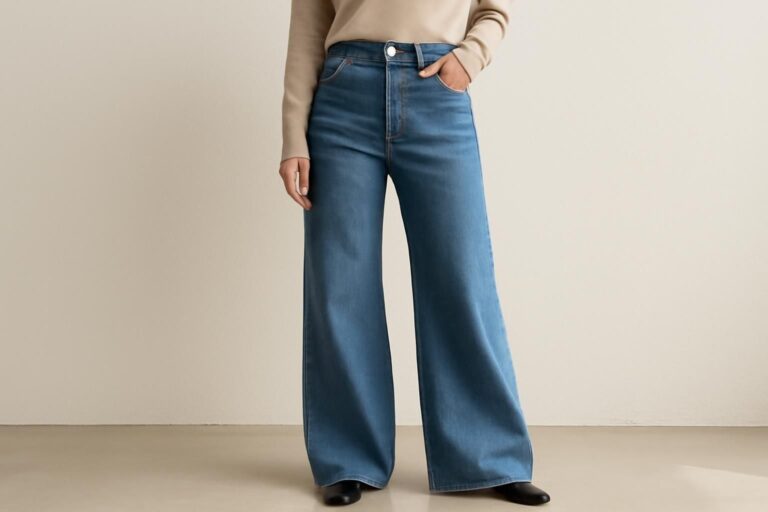
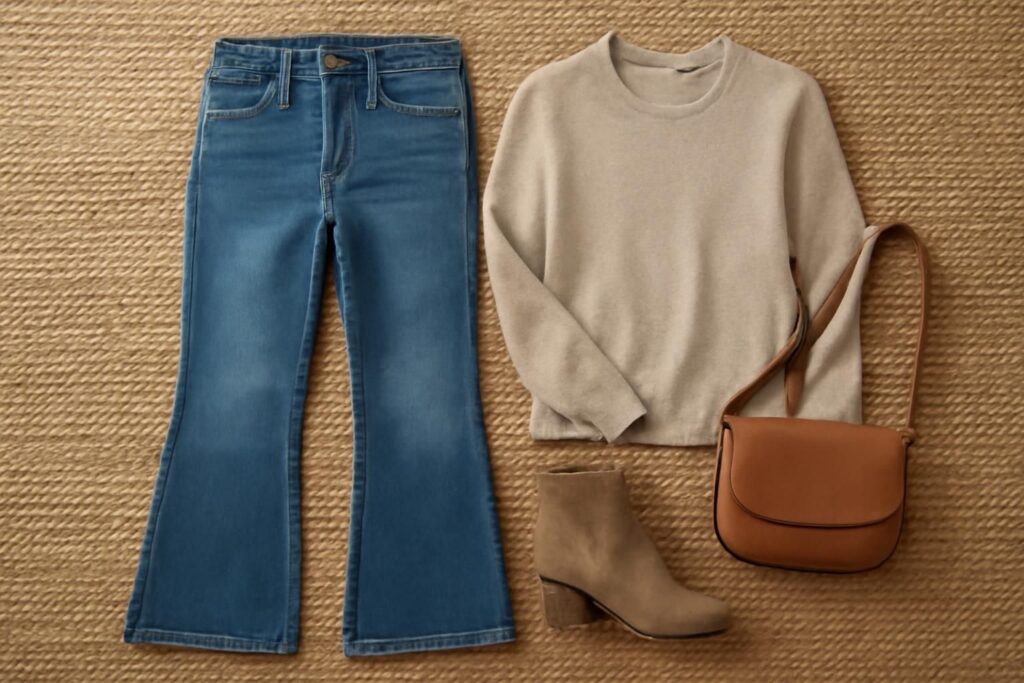
Bootcut jeans are fitted through the hip and thigh, then widen gradually from the knee to the hem. The flare is subtle: a typical leg opening runs 17-19 inches, compared to 14-15 inches on a straight-leg and 21-24 inches on a true flare. The name is literal. The cut was designed so the hem could fit over a cowboy boot without bunching.
That is the defining feature and it is also what separates bootcut from every silhouette it gets confused with. Flare Jeans covers a cut with a much more dramatic kick below the knee — flare jeans are a statement, bootcut jeans are a whisper. Straight Leg Jeans covers a silhouette that runs the same width from knee to hem with no outward angle at all. Bootcut splits the difference. It has movement and shape without the volume commitment of a flare or the rigidity of a straight leg.
The easiest test: lay the jeans flat and look at the leg from knee to hem. If the fabric angles outward at roughly 1-1.5 inches on each side, that is bootcut. If the angle is 2 inches or more, you are in flare territory. No angle at all means straight-leg, regardless of the label.
Why bootcut jeans are coming back now
Fashion moves in cycles, and bootcut’s return was inevitable after a decade dominated by two extremes: the skin-tight skinny jean and the volume-heavy wide-leg. People got tired. Skinny jeans require constant pulling and adjusting. Wide Leg Jeans covers a silhouette that can overwhelm shorter frames or feel too casual for certain settings. Bootcut sits in the middle — structured but not restrictive, shaped but not tight.
The resurgence started on runways in 2024 and filtered into mainstream brands by early 2025. What is driving it is not nostalgia — it is practicality. Bootcut jeans work with ankle boots, knee-high boots, sneakers, and heels. They look polished enough for an office and casual enough for Saturday errands. Bootcut is not replacing any other silhouette. It is reclaiming its own lane — the jean you reach for when you do not want to think about what shoes you are wearing.
How bootcut jeans should fit
Get the fit wrong and bootcut jeans look dated rather than intentional. The proportions are doing the work, so precision matters.
The waist and hip. Bootcut jeans should fit snugly through the waist and hip — closer to the body than a relaxed fit, but not so tight that you see panty lines. Most bootcuts are cut to fit true to size, so start with your usual size and the brand’s size chart rather than sizing up. Unlike baggy or wide-leg styles, you are not looking for any ease through the upper block.
The thigh. Fitted but not painted on. You should be able to pinch about half an inch of fabric at the mid-thigh. If the thigh is too tight, the subtle flare below the knee looks disproportionate — like a trumpet. If the thigh is too loose, the bootcut shape gets lost entirely and the jeans read as straight-leg.
The knee and below. This is where the silhouette lives. The jean should skim the knee and then begin its outward angle. On a well-fitting pair, you will notice the flare starting about two inches above your kneecap. The hem should graze the top of your shoe with a slight break — no stacking, no ankle gap. Length matters more in bootcut than in any other silhouette because the flare needs to hit the shoe correctly to create that clean line.
Rise: what works best with bootcut
Mid-rise (9-10.5 inches) is the sweet spot for bootcut jeans. It keeps the silhouette balanced — the fitted upper portion transitions naturally into the gradual flare. This is what most brands default to for bootcut cuts, and for good reason.
High-rise bootcut (11 inches and above) works if you want a more retro look or you carry your weight in the midsection. The higher waist elongates the torso-to-leg ratio. High-rise bootcut pairs especially well with tucked-in blouses, though the proportions can look slightly costumey with a cropped tee. Low-rise bootcut is the most polarizing option, and for many people it reads as backward-looking rather than forward. Mid-rise is the starting point for most people.
Fabric and weight
Bootcut jeans need enough body to hold the flare’s shape. A limp, lightweight denim collapses below the knee instead of holding that clean outward line, and the whole silhouette falls apart.
Bootcut denim is commonly sold anywhere from about 9 oz to 13 oz. A good target is 11-12 oz with 1-2% elastane: heavy enough to maintain the flare, with just enough stretch to keep the fitted upper section comfortable through a full day. Be wary of anything above 3% elastane. High-stretch blends tend to bag at the knee as the day goes on, and once that happens the flare softens and loses its crisp line. The small kick below the knee is the entire point of bootcut — if it goes limp, you are wearing shapeless straight-leg jeans.
Pairs to consider
Four options at different price points, from Western-boutique brands to a budget Amazon pick. Specs change by style and season, so confirm rise, leg opening, and fabric on the product page before you buy.
Judy Blue Bootcut
Judy Blue is a reliable starting point for stretch bootcut. If you have read the Judy Blue Jeans, you know the brand leans on comfortable stretch blends and sells direct as well as through Western boutiques, typically around $66 to $86. One sizing quirk: Judy Blue uses dual labels (for example 7/28), and the label number is not your waist in inches, so measure against the official chart. Bootcut styles tend to have a gentle flare rather than a statement kick, and the darker washes look polished enough for an office. Check pocket placement in product photos if rear-view shape matters to you.
KanCan Bootcut
KanCan is another Western-boutique favorite with a wide bootcut range. Kancan Jeans Review covers their denim quality in detail. The brand sells direct through kancanusa.com, offers petite styles (style codes ending in -PT) and plus sizes, and its size chart runs from 0/23 to 15/31 plus 16W to 22W. Rise varies a lot by style, from mid to high, so if you prefer your bootcut to sit at the natural waist, filter for high-rise and check the listed rise before ordering. KanCan’s direct site also has a long return window, which makes trying a couple of sizes less risky.
Flying Monkey Bootcut
The most fashion-forward option of the four. Flying Monkey Jeans Review details their approach to trending silhouettes, and their bootcuts often lean toward the wider end of the range, close to the border of bootcut and flare. Flying Monkey publishes rise ranges by category: mid rise is about 9 to 9.5 inches and high rise about 10 to 10.5 inches, which makes it easier to pick a rise on purpose. Fabric weight varies by style, so if you want the flare to hold its structure through a full day, look for a heavier, lower-stretch denim rather than the softest option.
Amazon Bootcut
Serviceable, not exceptional. Budget bootcuts on Amazon are often made from cotton-poly-spandex blends that behave more like jeggings than denim. The flare can hold well enough, but the fabric usually lacks the crisp hand feel that makes bootcut look sharp. Read the fabric content in each listing and favor higher cotton percentages. If you want to try the silhouette before committing real money, a budget pair works as a trial run. Bootcut Jeans Women on Amazon for current options.
Styling bootcut jeans
Shoes — this is where bootcut wins
Bootcut jeans work with more shoe types than almost any other denim silhouette. Ankle boots slide under the hem perfectly — the cut was literally designed for this. Knee-high boots work with the hem tucked in. Pointed-toe heels create a long, lean line that is often more flattering than the same heels with skinny jeans. Chunky sneakers, loafers, and mules all looked right. The only miss: platform sandals, where the wide sole competed with the flare and created an awkward mushroom effect at the hem.
Tops and tucking
Because bootcut jeans are fitted through the hip and thigh, you have more flexibility with tops than with baggy or wide-leg cuts. A tucked-in button-down is the most polished pairing. An untucked tee that hits at the hip bone looks effortless. Oversized tops work as long as they do not extend past mid-hip. A front tuck with a belt is the most reliable formula for mid-rise bootcut — it defines the transition from fitted top to fitted jean to flared hem.
Common mistakes
Hem length. Too short and the flare looks like a mistake — a pant leg that got caught on something. Too long and the fabric pools at the shoe, creating the dreaded early-2000s puddle hem. Get them hemmed so the back of the hem sits at the middle of your shoe heel. This is the one alteration we consider mandatory for bootcut.
Confusing bootcut with flare. If the leg opening is over 20 inches, those are flare jeans. Brands mislabel constantly. Check the product measurements before buying.
Too-tight thighs. This happens when brands build bootcut on a skinny-jean pattern and just widen the hem. The result is a trumpet shape — tight from waist to knee, then suddenly wide. A real bootcut has gradual widening that starts at or just above the knee. Check secondhand options at Bootcut Jeans Women on Poshmark where you can filter by specific measurements.
The verdict
Bootcut jeans earned their comeback. It is easy to see why this silhouette dominated and why it disappeared — skinny jeans were the pendulum swing, wide-leg was the correction, and bootcut is the balance point. The subtle flare from knee to hem is flattering without being loud, versatile without being boring, and comfortable without sacrificing structure.
If you are trying bootcut for the first time (or the first time in a long time), start with a mid-rise pair in dark indigo, 11-12 oz denim with 1-2% stretch. Get the hem altered. Wear them with ankle boots or pointed-toe shoes. You will wonder why you waited this long.
Shop the look on Amazon
Everything you need to build a secondhand-style wardrobe, delivered. We may earn a commission on purchases.
FAQ
Are bootcut jeans the same as flare jeans?
No. Bootcut jeans have a subtle widening from the knee to a leg opening of roughly 17-19 inches. Flare jeans have a more dramatic kick, typically 21-24 inches or wider at the hem. The difference is visible at a glance: bootcut whispers, flare announces. Both widen below the knee, but the degree of flare is what separates them into different silhouettes entirely.
What body type do bootcut jeans suit best?
Every body type, genuinely. The fitted hip and thigh provide structure, while the subtle flare below the knee balances wider hips and creates longer-looking legs on shorter frames. On curvier hips in particular, a bootcut tends to create a straighter line from hip to hem than a skinny or straight-leg jean. The key is getting the hem length right and ensuring the thigh is fitted, not tight.
Can you wear bootcut jeans without boots?
Absolutely. The name is a relic. Bootcut works with pointed-toe heels, chunky sneakers, loafers, and mules, and for many people actual boots end up being the least frequent pairing. The slight flare works with any shoe that has a defined shape. The one pairing to avoid is thick platform sandals, where the wide sole competes with the flare for visual space.
How should bootcut jeans be hemmed?
The back of the hem should hit the middle of your shoe heel. This creates a slight break in the front — the fabric bends gently where it meets the top of your shoe — while the back drapes cleanly. Avoid going shorter than the top of your ankle bone, because exposed ankle with bootcut jeans looks like the jeans shrank. Avoid going longer than your shoe sole, because pooling fabric at the hem erases the clean flare line that defines the silhouette.
Are bootcut jeans in style in 2026?
Yes. Bootcut has moved from runway reintroduction in 2024 to mainstream availability across every major denim brand. This is not a micro-trend — it is a silhouette reclaiming permanent shelf space. The market is responding to fatigue with extreme fits on both ends, and bootcut is the middle ground.