Shop listings throw around words like sheath, shift, A-line and fit-and-flare as if everyone already knows them. This glossary explains each one in plain terms, with the history where museums have documented it.
Knowing the main types of dresses makes shopping faster, online and in thrift stores, because the name of a silhouette tells you how a dress is cut before you ever try it on. This guide groups dress styles into silhouettes (the overall outline), waistlines, necklines and straps, and lengths, then covers common occasion styles. Each entry explains what the style is, how to spot it on a rail, and how it is typically worn. If you are building a small, flexible closet, a couple of well-chosen dress silhouettes go a long way in a Capsule Wardrobe.
One note before we start: this is a description of garments, not of the people wearing them. Any dress style can be worn by anyone. We describe how a dress is cut and how it hangs, and leave the choosing to you.
Dress terms worth knowing
- Silhouette — the overall outline a dress makes, from shoulder to hem.
- Bodice — the top part of the dress, from shoulders to waist.
- Waistline — where the bodice joins the skirt. It can sit at the natural waist, under the bust (empire), at the hip (drop waist) or nowhere at all (shift).
- Darts and seams — the stitched folds and joins that shape fabric. A dress with lots of them is usually more fitted.
- Bias cut — fabric cut diagonally across the weave. The FIT Fashion History Timeline describes it as cutting at 45 degrees to the weave, which makes a fluid, body-skimming garment, and says Madeleine Vionnet used the technique from the 1920s.
- Hemline — where the dress ends. Lengths are covered in their own section below.
Dress styles at a glance
| Style | Key feature | Typically worn with |
|---|---|---|
| A-line | Fitted at the top, flares gradually to the hem | Flats, sneakers, cardigans |
| Sheath | Close-fitting, straight, usually with darts | Blazers, pumps, work bags |
| Shift | Straight and loose, no defined waist | Tights, loafers, ankle boots |
| Wrap | Front crosses over and ties at the side | Heels, boots, belts |
| Slip | Thin straps, bias-cut, slinky fabric | T-shirts, knitwear, boots |
| Fit-and-flare | Fitted bodice, defined waist, full skirt | Heels, ballet flats, cropped jackets |
| Empire waist | Seam just under the bust, flowing skirt | Sandals, light layers |
| Drop waist | Waist seam at the hip | Mary Janes, cloche-style hats, flats |
| Shirtdress | Collar and button front like a long shirt | Belts, sneakers, sandals |
| Bodycon | Stretch fabric, closely follows the body | Heels, leather jackets |
| Sack / chemise | Loose, unfitted, sometimes high-waisted | Statement shoes, bold jewellery |
| Babydoll | Short, high waist, full skirt | Tights, chunky boots |
| Smock dress | Gathered or smocked panel, loose skirt | Sandals, espadrilles |
| Tiered dress | Skirt in stacked layers of fabric | Sandals, denim jackets |
| T-shirt dress | Jersey dress shaped like a long tee | Sneakers, denim jackets |
| Sweater dress | Knitted, usually long-sleeved | Knee-high boots, tights |
| Pinafore | Sleeveless, worn over a top | Turtlenecks, blouses, tights |
| Halter dress | Strap or bodice fastening round the neck | Sandals, summer events |
| Sundress | Light, sleeveless summer dress | Sandals, straw hats |
| Tea dress | Below-knee, often floral, soft skirt | Low heels, cardigans |
| Mermaid / trumpet | Fitted to the knee or thigh, then flares | Formal heels, evening events |
| Ball gown | Fitted bodice, very full floor-length skirt | Black tie, formal events |
| Column | Long, narrow and straight | Evening shoes, minimal jewellery |
Classic silhouettes
A-line dress
What it is: A dress that is narrower at the top and widens gradually towards the hem, like the letter A. The name has a well-documented source. According to the V&A, Christian Dior named his Spring/Summer 1955 collection the “A” line because the letter “perfectly illustrated” the new silhouette, with narrow shoulders, a loosely defined waist and flared skirts. The V&A also notes that Dior often named collections after letters: his 1955 “Y line” used a deep V-neck to echo the shape of a Y.
How to spot it: Hang it up and look at the outline. The skirt flares steadily from the bust or waist without heavy gathers or pleats, and it does not cling at the hip.
How to wear it: The A-line dress is one of the easiest dress styles to wear casually or dress up. Try it with sneakers and a denim jacket for weekends or with a blazer and loafers for work. For more ideas, see our A-Line Plus Size Dresses.
Sheath dress
What it is: A form-fitting, straight dress, usually shaped with darts and seams and often sleeveless. The FIT Fashion History Timeline contrasts the sheath with the loose sack dress and says sheaths became popular in the late 1950s.
How to spot it: Seams and darts running down the bodice and skirt, a fitted waist without a separate flared skirt, and a straight line to a hem that typically sits around the knee. Most have a back zip and a back vent or slit so you can walk.
How to wear it: The sheath dress is a workwear staple. Add a blazer, pumps and a structured bag for the office, or swap in statement earrings for evening. Our Work Dresses guide has more office combinations.
Shift dress
What it is: A straight, loose dress with little or no waist shaping that hangs from the shoulders. The V&A describes a 1966 Mary Quant Ginger Group shift as “like a sweater grown to dress length”, with a hem well above the knee, and holds a 1962 Quant shift that is one of her earliest works in its collection.
How to spot it: No waist seam, few darts, and a boxy outline. It falls straight rather than curving in at the waist.
How to wear it: A shift is an easy layering dress: tights and loafers in autumn, a cropped jacket in spring, bare legs and sandals in summer.
Sack dress and chemise
What it is: Loose, unfitted dresses that move away from the defined waist. According to the FIT Fashion History Timeline, Balenciaga showed the sack dress as an early move toward looser fits, which led to the shift dresses and cocoon coats of the late 1950s and 1960s, and he introduced high-waisted chemise dresses in 1957.
How to spot it: A roomy body with no fitted waist; some chemise styles have a raised waist seam, others none at all.
How to wear it: Let the volume do the work and keep accessories simple, or belt it loosely if you want some shape.
Wrap dress
What it is: A dress whose front panels cross over each other and fasten with a tie, creating a V-neck. The FIT Fashion History Timeline records that Diane von Fürstenberg’s 1974 wrap dress sold over five million in two years.
How to spot it: A crossover front, a tie at the side or back, and often a jersey or other soft fabric. “Mock-wrap” listings have the same look but are sewn closed; read the description to check.
How to wear it: A wrap dress moves easily from work (with a blazer and pumps) to dinner (with boots and earrings). Because the neckline depends on the tie, a small safety pin or snap inside can keep it where you want it.
Slip dress
What it is: A simple dress with thin straps, usually cut on the bias from satin, silk or a slinky synthetic. The FIT Fashion History Timeline calls it a 1990s staple: worn with chunky boots in grunge, an emblem of 1990s minimalism, and worn over a white T-shirt by day.
How to spot it: Spaghetti straps, a smooth bias-cut drape and lightweight, often shiny fabric. Many have no fastenings at all.
How to wear it: Follow the 1990s lead with a T-shirt underneath, or layer a chunky cardigan or leather jacket on top. Our Satin vs Silk guide explains the fabrics slip dresses are usually made from.
Fit-and-flare dress
What it is: A common-usage term for a dress with a fitted bodice, a clearly defined waist and a skirt that flares out from the waist.
How to spot it: The key difference from an A-line is the waist. A fit-and-flare dress nips in at the waist seam and then flares more quickly, often with pleats or gathers; an A-line widens gradually with no sharp change.
How to wear it: It has a vintage feel that works with ballet flats, a cropped cardigan or a belt at the waist. It is a popular choice for weddings and parties.
Column dress
What it is: Commonly used to describe a long, narrow dress that falls straight from shoulder to hem without flaring.
How to spot it: Straight sides all the way down, usually floor or ankle length.
How to wear it: Simple, clean accessories keep the line uninterrupted. It is a favourite for evening events.
Dresses defined by the waistline
Empire waist dress
What it is: Common usage for a dress with its waist seam placed high, just under the bust, and a skirt that falls loosely from there.
How to spot it: A seam or band directly below the bust, often with gathers below it.
How to wear it: Light and flowing, it is a natural summer option with sandals. In a long version it sits well at a beach wedding; see our Beach Wedding Guest Dresses guide.
Drop waist dress
What it is: Commonly used to describe a dress with its waist seam placed low, at or near the hip, often with a pleated or flared skirt below.
How to spot it: A long, straight bodice and a seam far below the natural waist.
How to wear it: It pairs with low shoes and simple jewellery and has a relaxed, vintage-inspired look.
Babydoll dress
What it is: Common usage for a short dress with a high waist and a full, flared skirt, often with puff sleeves or a sweet neckline.
How to spot it: Short length, high seam, lots of volume in the skirt.
How to wear it: Tights and chunky boots give it an edge; sandals keep it summery.
Shirtdress
What it is: Common usage for a dress cut like a long shirt, with a collar, a button front and often cuffs.
How to spot it: Buttons down at least part of the front and a shirt collar. Some have a waist seam, others are straight and come with a belt.
How to wear it: Belted with sneakers for errands, with sandals for holidays, or under a blazer for work. Our Linen Outfits for Women guide shows linen versions.
Relaxed and knit dresses
T-shirt dress
What it is: Commonly used to describe a jersey dress shaped like an elongated T-shirt.
How to spot it: Crew or V neckline, short sleeves and soft knit fabric.
How to wear it: Sneakers and a denim jacket are the classic pairing.
Sweater dress
What it is: A knitted dress, usually with long sleeves and often a roll or turtle neck.
How to spot it: It is made of knit yarn rather than woven fabric, and it stretches.
How to wear it: Tights and knee-high boots are the winter go-to. Our Sweater Dress Outfits guide covers more combinations, and Dresses to Wear With Knee High Boots covers boots specifically.
Bodycon dress
What it is: Short for “body-conscious”, a common-usage term for a dress in stretchy fabric that closely follows the body.
How to spot it: Lots of stretch, usually from spandex blended with other fibres, and no loose fabric anywhere.
How to wear it: It is a popular going-out dress with heels or boots and a jacket layered on top.
Smock dress
What it is: Commonly used to describe a loose dress with a panel of smocking (rows of elastic or decorative gathers), usually across the bodice or yoke.
How to spot it: Stretchy, puckered rows of stitching at the chest or shoulders.
How to wear it: A relaxed summer dress for sandals and espadrilles.
Tiered dress
What it is: Common usage for a dress whose skirt is made of several horizontal layers, each one gathered onto the last.
How to spot it: Visible horizontal seams across the skirt, often widening towards the hem.
How to wear it: A denim jacket and sandals make it an easy weekend dress.
Pinafore
What it is: Commonly used to describe a sleeveless dress designed to be worn over a top or blouse. American shops often call it a jumper.
How to spot it: Wide straps or a low-cut, sleeveless bodice; often denim or corduroy.
How to wear it: Layer it over a turtleneck or a striped tee with tights. Our What Is Corduroy? Wales, Weight and Care guide explains one of the most common pinafore fabrics.
Summer and occasion dresses
Sundress
What it is: Common usage for a light, usually sleeveless dress made for warm weather, often in cotton or linen.
How to spot it: Thin or wide straps, breathable fabric and a relaxed fit.
How to wear it: Sandals and a straw hat. See our Sundresses guide for more.
Halter dress
What it is: A dress held up by a strap or bodice that fastens around the neck. According to the Online Etymology Dictionary, the halter in womenswear was originally a strap attached to the top of a backless bodice and looped around the neck (1935); the word later came to mean the tops themselves.
How to spot it: Bare shoulders and a fastening or loop at the back of the neck.
How to wear it: Summer parties and holidays; keep necklaces minimal so they do not tangle with the strap. Our Types of Necklines guide covers halters and other neckline styles in more detail.
Tea dress
What it is: Commonly used to describe a below-the-knee dress with a soft, flowing skirt, often in a floral print, with short or flutter sleeves.
How to spot it: Midi length, light fabric, often a V or sweetheart neckline and a softly gathered waist.
How to wear it: Garden parties and daytime weddings, with low heels or sandals.
Mermaid and trumpet dresses
What they are: Common-usage names for long dresses that fit closely to the knee (mermaid) or mid-thigh (trumpet) and then flare out towards the hem.
How to spot them: Look at where the flare starts. The lower it starts, the more “mermaid” the dress.
How to wear them: Mostly formal and evening wear, including prom and weddings.
Ball gown
What it is: Common usage for a floor-length dress with a fitted bodice and a very full skirt, often supported by layers of tulle or a petticoat.
How to spot it: Volume. The skirt stands out from the body on its own.
How to wear it: Black tie and other formal events. For what different dress codes ask for, see our Dress Codes Explained guide.
Shop the classics: Womens A Line Midi Dress on Amazon
Top-selling match on Amazon

- 【Material】This women’s 2026 summer midi dress is made of lightweight, soft and breathable…
- 【Feature】Women's casual 3/4 sleeve flowy dress, featuring practical pockets, A-line flare…
Dress lengths explained
Dress length is its own vocabulary. These terms are common usage, and different brands draw the lines in slightly different places, so check the listed length in inches or centimetres against your own measurements.
- Mini — ends well above the knee. The FIT Fashion History Timeline says the miniskirt peaked in the mid-1960s.
- Above the knee — a few inches above the knee.
- Knee length — ends at or just below the knee; a common length for sheath dresses.
- Midi — ends between the knee and the ankle, often around mid-calf. FIT notes that skirts dropped back to mid-calf in the late 1960s.
- Tea length — commonly used for a hem a little below mid-calf.
- Maxi — reaches the ankle or floor. FIT says the full-length maxi skirt had arrived by 1969.
- Floor length — skims the floor; the usual length for gowns. See our Floor Length Dresses for Wedding Guests guide for formal options.
- High-low — shorter at the front than the back.
To find your own reference points, measure from the top of your shoulder (where a strap sits) down to your knee, mid-calf and ankle. Compare those numbers with the length a brand lists for each dress, and you will know where it will land before it arrives.
A short history of dress silhouettes
Dress styles move in cycles, and many shapes that seem new today have documented roots:
- 1920s: Madeleine Vionnet used the bias cut from the 1920s, according to FIT, creating fluid dresses that later shaped the slip dress.
- 1947: Dior’s first collection, shown on 12 February 1947, was dubbed the “New Look” by the press, per the V&A.
- 1955: Dior named his Spring/Summer collection the “A” line, per the V&A.
- 1957: Balenciaga introduced high-waisted chemise dresses, per FIT, after showing the loose sack dress.
- Late 1950s: Sheath dresses became popular, per FIT.
- 1960s: Mary Quant’s short shifts, including a 1962 design held by the V&A, and the miniskirt’s mid-decade peak.
- 1974: Diane von Fürstenberg’s wrap dress, which FIT says sold over five million in two years.
- 1990s: The slip dress becomes a staple, per FIT, worn with chunky boots or over a T-shirt.
How to choose a dress style
Rather than following rules about who should wear what, start from how you want to live in the dress:
- Name the occasion. Office, weekend, wedding and evening each point to different fabrics and lengths.
- Decide how much ease you want. Shift, sack, smock and tiered dresses have the most room; sheath and bodycon have the least.
- Check the fabric. Knits stretch and travel well; crisp cottons hold their shape; bias-cut satins drape.
- Check the length against your own measurements, not the model photo.
- Think about layers. A dress you can wear with a cardigan, a denim jacket and a coat will earn its space in your closet.
Shop workwear dresses: Womens Sheath Dress Work on Amazon
Top-selling match on Amazon
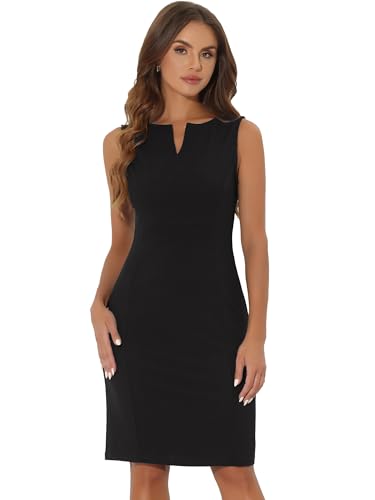
- Slit V Neck, Hidden Side Zipper, Lightweight fabric, Sleeveless Bodycon Dress, Sheath Dress…
- Elegant business dress adds extra style points to its V Neck design, create a charming and…
How to thrift dresses
Thrift stores are full of good dresses, especially classic shapes like shirtdresses, shifts and A-lines that never fully go out of style. A few checks save money and disappointment:
- Ignore the size tag at first. Vintage and secondhand sizing varies widely between eras and brands, so measure the garment flat across the bust, waist and hip and compare it to a dress you own.
- Read the fibre label. Our Types of Fabric guide explains what the fibre names mean and how each one behaves.
- Check the zip. Run it up and down fully; a broken zip is fixable but adds cost.
- Look at the underarms and neckline for stains and discolouration, especially on light colours.
- Hold the dress up to the light to spot thin patches, small holes and moth damage on wool.
- Check seams and hems for pulled stitching, and look inside for seam allowance if you might want it let out.
- Check the care label. Dry-clean-only items should go to a professional cleaner.
For more on shopping secondhand, see our Thrifted Outfits. If you are after formalwear specifically, our Thrift Store Prom Dresses guide covers what to look for.
Shop easy everyday styles: Womens Wrap Dress on Amazon
Frequently asked questions
What are the main types of dresses?
The core silhouettes are A-line, sheath, shift, wrap, slip, fit-and-flare, empire waist and bodycon. Most other dress styles are variations on these, defined by details like the waistline, neckline, sleeves or fabric.
What is the difference between an A-line and a fit-and-flare dress?
An A-line widens gradually from the top to the hem without a sharp waist. A fit-and-flare fits closely through the bodice, defines the waist with a seam, and then flares more suddenly into a fuller skirt.
Who invented the A-line dress?
The term comes from Christian Dior. According to the V&A, he named his Spring/Summer 1955 collection the “A” line because the letter illustrated its silhouette of narrow shoulders and flared skirts.
What is the difference between a sheath and a shift dress?
A sheath is fitted, shaped with darts and seams to follow the body. A shift is straight and loose, hanging from the shoulders with little or no waist shaping.
When was the wrap dress invented?
The best-known wrap dress is Diane von Fürstenberg’s 1974 design, which the FIT Fashion History Timeline says sold over five million in two years.
What are the different dress lengths?
From shortest to longest: mini, above the knee, knee length, midi, tea length, maxi and floor length. Brands define them slightly differently, so check the listed measurement.
What is a bias-cut dress?
It is a dress cut with the fabric turned diagonally to the weave. FIT describes bias cutting at 45 degrees as producing a fluid, body-skimming garment, a technique Madeleine Vionnet used from the 1920s.
Which dress styles are easiest to find secondhand?
Shirtdresses, shifts, A-lines and wrap dresses turn up often because so many have been made over the decades. Measure carefully, because older sizing differs from modern labels.
Shop the look on Amazon
Everything you need to build a secondhand-style wardrobe, delivered. We may earn a commission on purchases.
Browse picks on Amazon →Rompers & Shoes for Dresses
Romper outfits and what shoes to wear with dresses.