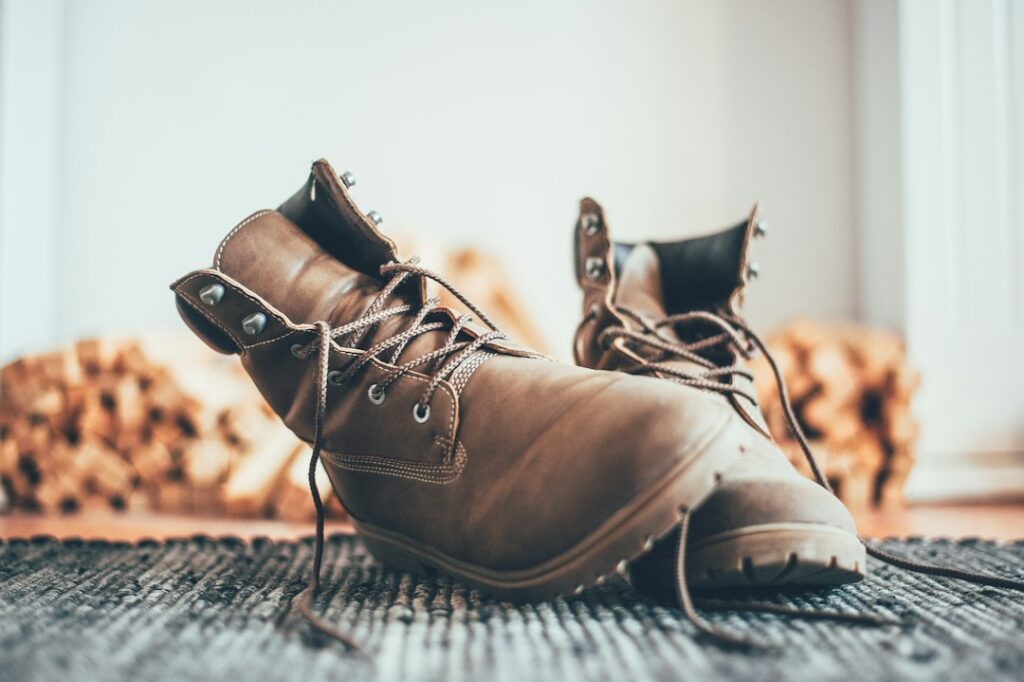
Skechers built its name on comfortable everyday shoes, and its work range takes the same approach to safety footwear. For long shifts on hard floors, that approach has real appeal. For heavy outdoor work, it is worth a second look.
Skechers work boots and shoes occupy a different spot from traditional leather work boots. Where brands like Timberland PRO lead with rugged 6″ boots, Skechers Work leans into lighter, athletic-style designs with a broad range of safety-toe options. This review explains who owns Skechers now, what the Skechers Work range covers according to the brand, how to read the safety labels, how to approach sizing, and how Skechers compares with Timberland PRO and Cat Footwear. It is part of our Men’s Work Boots guide. On method: we have not wear-tested Skechers Work footwear for this review, and we are not naming individual models because the range changes often and features vary by style. Brand facts come from Skechers and from coverage of its 2025 acquisition; safety facts come from ASTM, OSHA and industry sources.
Who owns Skechers
Skechers Work: current Amazon prices
As an Amazon Associate we earn from qualifying purchases. Prices and availability are accurate as of November 2026 and may change. Specs are as stated in each Amazon listing.

- Premium Comfort And Fit: Relaxed Fit design provides a roomy comfort fit at toe and forefoot, perfect for…
- Advanced Cushioning System: Air-Cooled Memory Foam insole and Goga Mat Arch cushioning deliver superior support…
- Superior Traction And Durability: Goodyear Performance Outsole provides enhanced grip and stability, ideal for shoes…

- Superior Protection: Waterproof membrane and electrical hazard safe design provide essential safety…
- All-Day Comfort: Memory Foam cushioned insole and relaxed fit design deliver exceptional comfort in…
- Reliable Traction: These non slip work shoes for men feature a slip-resistant rubber outsole tested for…

- Premium Upper
- Non-metallic Composite Safety Toe
Skechers was founded in 1992 by Robert Greenberg and is headquartered in Manhattan Beach, California. In 2025, it changed from a public company to a private one: 3G Capital completed its acquisition of Skechers on September 12, 2025, and the company was delisted from the New York Stock Exchange. Robert Greenberg remains CEO.
For shoppers, the ownership change mostly means checking current listings rather than older reviews. Product lines and names can shift, and skechers.com is the most reliable place to confirm what is available and what each style is certified for.
What the Skechers Work range covers
According to Skechers, its Work collection includes:
- Safety-toe styles in composite, alloy and steel
- Slip-resistant styles
- Electrical hazard (EH) styles
That breadth is the range’s main strength. Whatever cap material you prefer, Skechers Work has options, and it includes both boots and lower-cut skechers work shoes. The design language is closer to athletic footwear than to classic leather work boots, which is exactly what draws many buyers.
The important caveat is that not every Skechers Work style has every feature. A shoe can be slip-resistant without a safety toe, or have a safety toe without an EH rating. Always read the specific product’s description and label for the protections it actually carries.
Skechers safety toe options: composite, alloy and steel
Because Skechers sells all three cap materials, it helps to know what separates them. Steel, alloy and composite toes all have to pass the same ASTM F2413 impact and compression tests, so the choice is about practical trade-offs rather than toe-cap rating:
Steel is the cheapest cap material. It conducts cold and sets off metal detectors.
Alloy (usually aluminium-based) is lighter than steel but costs more, and conducts cold like steel.
Composite conducts cold less, won’t corrode, won’t set off metal detectors and doesn’t conduct electricity.
For the comfort-first buyer Skechers targets, alloy and composite are often the more natural fit, since both save weight over steel. If you pass through metal detectors at work, composite avoids the hassle. Our Composite Toe Work Boots and Steel Toe Work Boots guides go deeper on the trade-offs.
Reading the label on Skechers work boots
Any skechers safety toe shoe sold as protective footwear should be marked to ASTM F2413-24, the current US standard, which replaced F2413-18 in 2024. To carry the ASTM marking, footwear must be certified by independent third-party labs. The codes on the label tell you what the shoe is certified for: "I/75" and "C/75" for toe impact and compression, EH for electrical hazard, SD for static dissipative, PR for puncture resistance and Mt for metatarsal protection. A protection not marked on the label cannot be claimed.
Two notes are particularly relevant to Skechers. First, slip resistance is a separate feature from the F2413 safety-toe codes, so check the product description for slip-resistance claims. Second, an EH rating means the shoe acts as a secondary barrier that helps reduce shock risk under dry conditions. It is not primary protection.
Which protections you need is decided by your employer. Under OSHA 29 CFR 1910.136, the employer must make sure affected employees wear protective footwear where there is a danger of foot injury or where footwear protects against an electrical hazard. Start with your employer’s requirements, then filter the Skechers Work range by the protections you need.
Skechers work sizing
We do not have verified model-by-model sizing data, so we will not claim Skechers Work runs large or small. Here is the approach we would use for any safety-toe shoe, including Skechers.
Start with Skechers’ size guide and check which widths each style is offered in. Try shoes on late in the day, wearing the socks you work in. Stand, then crouch: your toes should not touch the safety cap in either position. A cap that brushes your toes will rub over a long shift, and unlike the rest of the shoe, it will not stretch or break in.
If the forefoot feels tight, look for a wider fit rather than sizing up. A shoe that is too long lets your foot slide forward, pushing your toes into the cap anyway. And buy from a seller with easy exchanges, because try-on is the only reliable sizing test for safety footwear.
A quick checklist for any Skechers Work listing
Because the range is wide, a simple routine saves mistakes. Before you add a pair to your basket, check five things on the listing and, once it arrives, on the label.
The toe cap. Is it composite, alloy or steel, and is the shoe marked to ASTM F2413 with "I/75" and "C/75"? Some styles in a work range have no safety toe at all.
The hazard codes. If your employer requires EH, SD or PR, confirm each one is listed. Do not assume a code carries over from a similar-looking style.
Slip resistance. Check whether the style is described as slip-resistant, if your workplace needs it.
The cut. A low-cut shoe gives no ankle coverage. If you work on uneven ground or around debris, a boot height may suit better.
Width. Check which widths are offered, since width matters more than length for comfort around a safety cap.
It takes a couple of minutes, and it avoids an easy mistake: buying a comfortable shoe that turns out to lack a protection the job needs.
Who Skechers Work suits, and who it doesn’t
Skechers Work makes the most sense for people who spend long shifts on their feet on hard, indoor surfaces: warehouses, retail, hospitality, healthcare and light manufacturing. In those settings, a lighter, athletic-style shoe with a safety toe and slip resistance can be far more comfortable than a heavy leather boot, and the range of cap materials means you can choose one that suits your workplace.
It is a less obvious fit for heavy outdoor work in mud, deep cold or rough terrain, where a taller, more rugged boot with waterproofing and ankle support may suit better. For that kind of work, compare traditional work boots such as Timberland PRO; our Timberland PRO Work Boots Review covers the Boondock, Pit Boss and Direct Attach. If you need waterproofing, our Waterproof Work Boots guide explains what to look for.
An honest negative: the range is broad and changes often, and similar-looking styles can carry different protections. That makes Skechers Work harder to shop than a small, stable lineup. Read every listing in full.
How Skechers work boots compare
| Brand | Who makes it | Safety-toe options (per brand) | Style | Best for |
|---|---|---|---|---|
| Skechers Work | Skechers (private, 3G Capital, since Sept 2025) | Composite, alloy and steel; slip-resistant and EH styles | Athletic-inspired shoes and boots | Long shifts on hard indoor floors |
| Timberland PRO | VF Corporation | Composite and steel | Traditional 6″ leather work boots (Boondock, Pit Boss, Direct Attach) | Outdoor and site work in wet or cold conditions |
| Cat Footwear | Wolverine World Wide, under license from Caterpillar Inc. since 1994 | Varies by model; check the label | Rugged work boots | Buyers who want a rugged boot with a different fit |
The comparison is really about the kind of work you do. Skechers Work is the comfort-and-weight option, with the broadest choice of cap materials. Timberland PRO is the traditional boot option, with a clear lineup whose official names spell out height, waterproofing and toe material; the Boondock 6″ Waterproof Comp-Toe and the Direct Attach 6″ Waterproof Insulated Steel-Toe are built for outdoor conditions in a way most athletic-style work shoes are not.
Cat Footwear sits closer to Timberland PRO in style. Remember that Caterpillar Inc. does not make the boots; Wolverine World Wide does, under license. Our Caterpillar Work Boots Review covers the brand.
Many workers end up owning two pairs: a lighter Skechers-style shoe for indoor shifts and a rugged boot for outdoor or wet days. If your work mixes both, that is a sensible approach rather than an indulgence.
The verdict
Skechers Work is the best place to start if you need safety footwear for long days on hard indoor floors and comfort is your top priority. The range’s broad choice of composite, alloy and steel safety toes, along with slip-resistant and EH styles, means you can usually find a style that matches your employer’s requirements without resorting to a heavy leather boot. It is not our first choice for muddy, wet or very cold outdoor work, where a traditional waterproof boot like the Timberland PRO Boondock makes more sense. Confirm the protections you need, read each listing’s label carefully, and fit with your work socks: Skechers Work Composite Toe Slip Resistant Shoes on Amazon.
Shop the look on Amazon
Everything you need to build a secondhand-style wardrobe, delivered. We may earn a commission on purchases.
FAQ
Is Skechers still a public company?
No. 3G Capital completed its acquisition of Skechers on September 12, 2025, and Skechers is now private. Robert Greenberg remains CEO.
Does Skechers make steel toe work shoes?
Yes. Skechers says its Work collection includes composite, alloy and steel safety-toe styles, as well as slip-resistant and electrical hazard styles.
Are Skechers work shoes slip resistant?
The Skechers Work range includes slip-resistant styles, but not every style is. Check the specific product’s description to confirm.
Do Skechers work boots run true to size?
We do not have verified sizing data. Use Skechers’ size guide, try them with your work socks and make sure your toes don’t touch the safety cap when you stand or crouch.
Are Skechers work shoes OSHA approved?
OSHA does not approve specific brands, so no Skechers work shoe is “OSHA approved” as such. Under OSHA 29 CFR 1910.136, employers must make sure workers wear protective footwear where hazards exist, and the shoe’s ASTM F2413-24 label shows which protections it is certified for, such as toe impact and compression, EH or PR. A Skechers Work style meets a job’s needs only when its label lists the protections the employer’s hazard assessment requires.