Popularity and quality overlap less than you’d think. Some of the most-shopped women’s clothing stores sell garments that fall apart in a month.
The most popular clothing stores for women right now span a wide spectrum — from Shein’s $6 impulse buys to Nordstrom’s curated departments. But “popular” doesn’t mean “good,” and the stores dominating social media algorithms aren’t always the ones delivering real value. This is a straight assessment of popular women’s clothing stores, sorted by the thing that actually matters: whether the clothes are worth what they charge, judged on published fabric content, sizing transparency and return terms. For a broader look at affordable fashion sources, start with our Thrift Resale hub.
The Popular Clothing Stores That Deliver Real Value
Uniqlo. Consistently the best basics in the game. Their Supima cotton tees are a fraction of the price of premium-mall equivalents and use a long-staple cotton named on the tag. The Heattech line is genuinely innovative thermal wear, not just marketing. Ultra Stretch jeans are built around a high-recovery stretch denim meant to hold its shape between washes. The brand doesn’t chase trends aggressively, which means fewer impulse buys and more wardrobe staples that actually last. Outerwear is cut on the slimmer side, so if you plan to layer a sweater underneath, consider sizing up in jackets. The EZY ankle pants deserve a specific mention: the fabric is a technical blend designed to look like tailored trousers while stretching like leggings, which makes them an easy-care workweek option.
Abercrombie & Fitch. The turnaround from logo-emblazoned mall brand to legitimate quality retailer is one of the more notable brand evolutions in recent retail. The YPB activewear line is aimed squarely at the premium-athleisure shopper at a lower price point than Lululemon. Their denim, especially the Curve Love fit (cut with extra room through the hip and thigh), is a strong option for shoppers who find standard jeans gap at the waist. Stretch jeans can relax with wear, so if you are between sizes in denim, the smaller size is often the better choice; check the brand’s size chart for tops. Sale prices (they run frequent 25-40% off promotions) make the value proposition even better.
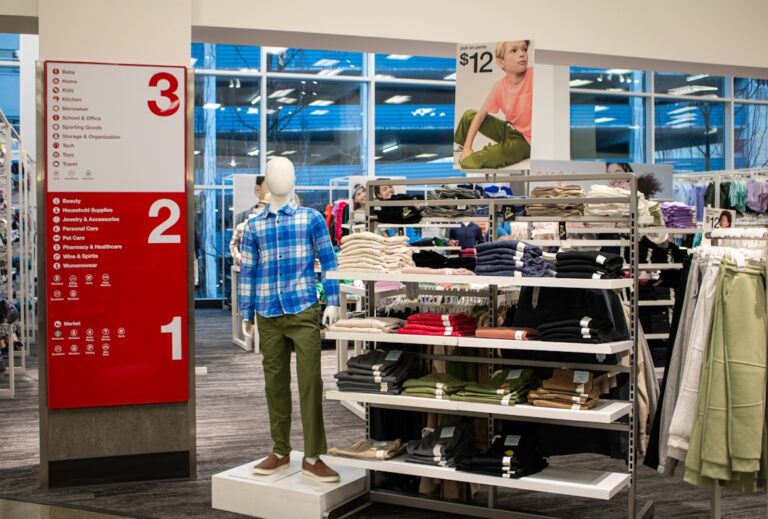
Target (private labels). A New Day for workwear, Universal Thread for casual, All in Motion for activewear — Target’s private label portfolio is surprisingly strong. A New Day blazers and ponte knit trousers are the budget workwear picks to look at first, and ponte in particular is a dense double knit that resists bagging at the knees better than thin jersey. Universal Thread covers casual basics, and flannel there is worth checking by hand-feel since weights vary by season. The trade-off is inconsistent sizing across labels: the same shopper can be a different size in A New Day, Wild Fable, and All in Motion, because each line is cut for a different customer. Check the size chart for each line separately rather than assuming one Target size carries over.
Popular Stores That Are Overrated
Zara. Still popular, still stylish, but the quality erosion is undeniable. Before buying, read the composition and lining details on the product page: a fully lined, structured blazer and an unlined one can sit at similar prices, and the listing tells you which you are getting. Zara is worth browsing for silhouette inspiration, but be selective, and check fabric content item by item rather than trusting the label’s reputation.
H&M (mainline). The base H&M line is fast fashion at its most disposable. Look closely at seams and fabric before you buy: minimal seam allowances, light fabric weights, and inconsistent sizing are common at this price point. Its higher-priced premium pieces are a different proposition, often using natural fibers such as wool, silk, and leather at mid-range prices. If you shop H&M, filter for the premium pieces and check the composition on each item.
Shein. One of the most downloaded shopping apps in the country. Most items are polyester, sizing can vary noticeably between items labeled the same size because products come from many different factories, and quality control is inconsistent. Read each item’s measurement chart rather than relying on the size letter, and wash new pieces before wearing. Low per-item prices feel cheap, but the cost-per-wear is poor if pieces are discarded after a few wears. The environmental impact is also staggering.
Popular Stores in the Middle Ground
Old Navy. Genuinely good for basics at the $10-25 range — their Pixie pants are a cult favorite for a reason, and the PowerSoft activewear line is comfortable if not especially durable. Sizing tends to run generous, so compare the size chart before ordering and consider sizing down if you are between sizes. Quality is inconsistent: some items last years, others pill after a few washes. Shop in-store to feel the fabric before committing. Their plus-size range goes to 4X and is priced identically to standard sizes, which is how it should be.
Gap. Quietly improved in recent years after a rough stretch. Their organic cotton basics are well-made and competitively priced at $15-25. The jeans are solid if you find the right fit; the high-rise straight styles are a good starting point. Gap Factory is a separate, lower-quality line — don’t confuse the two. Mainline Gap is worth checking; Gap Factory is where quality goes to die. Look for the heavier organic cotton tees if you want a dense, opaque tee rather than a thin one, and check the linen-blend shirts for summer months.
Madewell. Excellent denim, inconsistent everything else. The Perfect Vintage Jean is the brand’s best-known fit and the place to start. But their knit tops pill quickly, their prices creep higher each season, and the “sustainability” messaging doesn’t fully match their supply chain practices. Buy their jeans, think twice about the rest. The Insider loyalty program (free hemming, birthday discount) adds some value. Madewell Jeans Women on Amazon
What Actually Makes a Clothing Store Worth Shopping
Across all these stores, the pattern is clear. The popular clothing brands worth your money share three traits: transparent sizing with detailed measurements (not just S/M/L), fabric compositions listed for every item, and return policies that don’t penalize you for the brand’s inconsistency.
Stores that hide fabric content or make returns expensive are telling you something — they know a percentage of customers will be disappointed and they’re pricing that friction in. Nordstrom’s legendary return policy isn’t charity; it’s confidence in their curation. Shein’s restrictive return process isn’t an accident. Before you buy anywhere, read the return page: who pays for the return label, how long the window is, and whether in-store returns are accepted all affect what a mismatched size really costs you.
The smartest approach is maintaining a short list of stores where you know your size and trust the quality, then trying new brands with a single-item order before committing. See Best Quality Clothing Brands That Are Actually Affordable for the specific brands that consistently offer good quality for the price.
The Verdict
The most popular women’s clothing stores are not the best women’s clothing stores. Uniqlo, Abercrombie, and Target’s private labels deliver the best quality-to-price ratio right now. Zara and H&M are coasting on brand recognition while their fabrics get thinner. Shein is popular because it’s cheap, but cheap and affordable are different things — affordable means the clothes last long enough to justify the price. Shop the stores where your money buys actual quality, not just a fast dopamine hit from a low price tag. Your closet — and your wallet — will reflect the difference within six months.
Shop the look on Amazon
Everything you need to build a secondhand-style wardrobe, delivered. We may earn a commission on purchases.
Browse picks on Amazon →FAQ
What is the best overall clothing store for women right now?
For combined quality, price, and reliability, Uniqlo leads for basics and Abercrombie leads for fashion-forward pieces. If you want one store for everything, Nordstrom has the broadest range but at higher prices. The real answer is that no single store does everything well — building a rotation of 3-4 trusted stores beats relying on one.
Why has clothing quality gone down at popular stores?
The race to compete with ultra-fast fashion brands like Shein has pushed traditional retailers to cut production costs. That means thinner fabrics, smaller seam allowances, and cheaper hardware (zippers, buttons, rivets). Brands that resisted this trend — Uniqlo, Quince, and Abercrombie’s relaunch — have been rewarded with growing customer loyalty.
Are mall brands still worth shopping at?
Some of them. Abercrombie has genuinely reinvented itself. Gap has improved its basics line. J.Crew’s quality has stabilized after years of decline. But Express, Forever 21, and most fast-fashion mall stores are offering progressively worse products at similar prices. The test is simple: check the fabric tag. If it’s 100% polyester at $40, walk away. Ann Taylor and Banana Republic have also stabilized — their suiting and work blouses still use quality fabrics, though you need to shop selectively and stick to natural fiber blends. Both run frequent 40% off promotions that bring their prices into affordable range.
Where should I shop for affordable professional clothing?
Target’s A New Day line for budget workwear, Abercrombie’s Sloane pants for a mid-range investment, and Quince for elevated basics. ThredUp is also worth searching for professional brands such as Theory, Vince, and Ann Taylor at secondhand prices well below retail. See our Affordable Clothing Stores for a deeper breakdown.
For the fast-fashion DTC brand context — Princess Polly, ASOS, Boohoo, Nasty Gal, and Oh Polly — see our Fast-Fashion DTC hub.