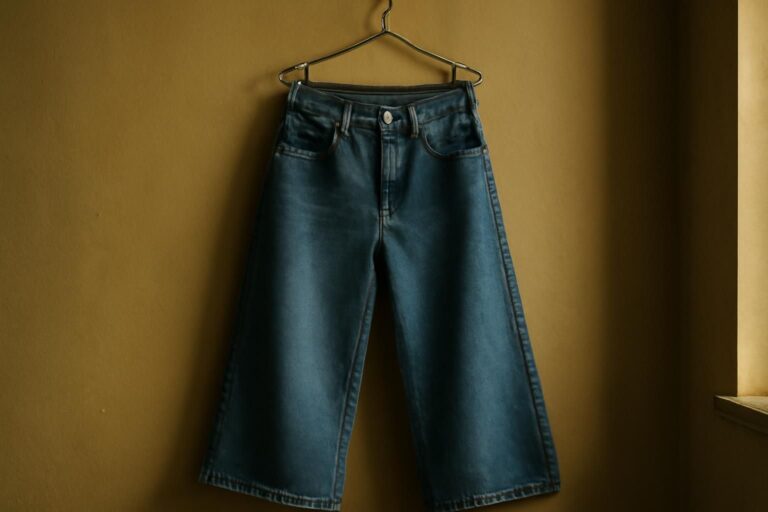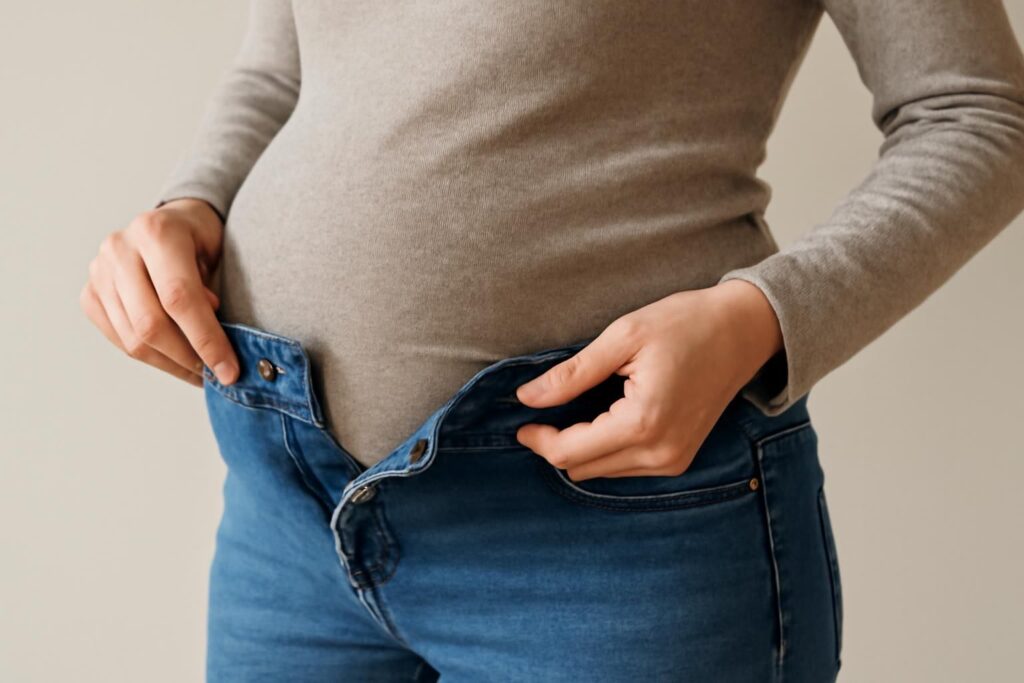
Adjustable waistband maternity jeans are the compromise pair — the ones you buy at 14 weeks, wear until 32, and curse the day someone told you a full belly panel was the only option. Done well, the button-tab or elastic-ladder system keeps a pair wearable across a 20-pound range. Done badly, the buttons pop and the denim sits under the bump like a sad flag.
Maternity jeans with an adjustable waistband come in three main builds: button tabs, elastic ladders, and side drawstrings. The spread in quality is wider than in any other category in this pillar, so this guide focuses on how each mechanism works, what to check before you buy, and where each one fits in a pregnancy. The pillar hub at Brand Guides has the broader maternity context. If you’re also weighing panel styles, Maternity Jeans with Side Panel and Maternity Jeans Without Belly Band are the closest relatives.
How maternity jeans adjustable waistband systems actually work
There are three dominant builds. Interior button tabs with a two or three-button ladder sewn into the side seam, where you loosen a button as the bump grows. Elastic side panels with a grosgrain drawstring that runs through casings. And a hybrid where a low-rise band is paired with a button-tab adjustment on each hip.
Button ladders are the most common. Gap, Old Navy, and A Pea in the Pod all use variants. The issue is button placement — the spacing between buttons usually runs 1 to 1.5 inches, which means every three weeks of belly growth you move to the next notch. When the spacing is wider, you end up wearing a pair that’s either cutting in or falling off, with no in-between.
The elastic ladder system is more forgiving. H&M Mama and some of the Ingrid and Isabel styles use this. A flat elastic strip with several rows of buttonholes lets you fine-tune by half-inch increments. Finer steps track gradual belly growth more closely than a two- or three-button ladder, which is why elastic ladders tend to stay comfortable for longer.
The early and mid-pregnancy sweet spot
Adjustable waistband denim is at its best between weeks 12 and 26. Before 12, a regular pair with the hair-tie trick still works. After 26 or so, most of the button-tab systems run out of adjustment room, and a full panel takes over as the only honest option. That 14-week window is where these pairs earn their keep.
A typical pattern: a demi-panel jean with side button tabs, such as Gap’s maternity demi-panel styles, bought early in the second trimester and loosened a notch at a time as the waist widens. Once the last button is maxed out, usually somewhere in the late second or early third trimester, it’s time to move to Maternity Jeans Under Belly styles for the third trimester.
Brands and builds worth looking at
Gap Maternity demi-panel with side button tabs. Around $80. Side button tabs on a demi-panel, in cotton-rich stretch denim. Gap advises buying your pre-pregnancy size. A solid mid-price standard for the second trimester; check that the button eyelets are reinforced.
H&M Mama adjustable waist. Around $40. Look for an elastic buttonhole ladder on the specific style. The fabric is thinner than Gap’s, and lighter budget denim tends to fade faster. A wide adjustment range can add a few extra weeks of wear before switching to full panel.
A Pea in the Pod secret fit belly with side adjusters. Around $120. A hybrid build with a low-rise panel plus exterior button tabs. Expensive, but cotton-rich, heavier denim is what you want for longevity if you expect to wear a pair across more than one pregnancy.
Ingrid and Isabel adjustable maternity skinny. Check current pricing. Elastic side panels with drawstring. Drawstrings can fray if pulled hard, so it’s best to set the drawstring once at a comfortable width and adjust it rarely.
Builds that tend not to hold
Any pair where the buttons are sewn through one layer of denim. The button rips through the fabric by the second or third loosening. Real button-tab maternity needs a reinforced layer or a rivet-backed button. Check the interior of the waistband before buying.
Drawstring-only pairs without secondary button support. The drawstring stretches, loosens during wear, and by the end of the day you’re hitching the pair up every ten minutes. Adjustable should mean adjustable once, not adjustable every hour.
Pairs marketed as “adjustable” that are actually just regular low-rise maternity with no true adjustment mechanism. Read the product photos. If there’s no visible button ladder or elastic strip, the “adjustable” claim is marketing.
Fit and sizing notes
Buy adjustable pairs in your pre-pregnancy size, or the letter size that matches it on the brand’s chart. The rise on adjustable waistband pairs runs lower than full-panel — they sit in the “demi-panel” or “under-belly” category rather than over-belly — so check the listed rise if the brand publishes it.
Look at the depth of the waistband at the side seam in the product photos. Deeper bands hold better because they distribute the pressure of a growing belly across more surface area. A very narrow band is more likely to slide down during the day.
Styling notes across the trimesters
Through the second trimester, tuck a fitted tank or knit. The adjustable waistband is visually cleaner when the shirt hits above it. Once the bump rounds out, the tucked-in look starts to pull and an untucked drape works better. A longer top hides the button tabs if the buttons are the kind that bulge under a thin shirt.
For shoes, anything works. These aren’t the pair you overthink. Sneakers for weekdays, ankle boots for the office, a pointed flat if you need to dress it up. The adjustable waistband doesn’t drive the outfit; the rest of the look does.
Where to buy without overpaying
Gap Maternity and H&M Mama both run frequent sales, so if you can wait for a discount cycle, either brand drops well below full price. A Pea in the Pod rarely discounts, so pay full price or wait for seasonal end-of-line clearance. Amazon listings for adjustable waistband maternity denim are hit or miss — good for name brands, skip the no-name listings.
For resale, Poshmark has genuine deals on Ingrid and Isabel and A Pea in the Pod because most people only wear them for six to nine months. Try Maternity Jeans Adjustable Waistband on Poshmark or A Pea In The Pod Maternity on Poshmark. For new pairs: Maternity Jeans Adjustable Waistband on Amazon and Shop at Gap.
The verdict
Maternity jeans adjustable waistband pairs are worth buying if you’re planning to rotate through the full pregnancy — they cover the second trimester better than any other panel style. Gap’s demi-panel with three-button ladder is the default recommendation at the $80 price point. H&M Mama is the budget alternative if you can accept a thinner fabric and quicker fade. A Pea in the Pod is the long-term keeper if you plan to wear across multiple pregnancies. Skip the drawstring-only builds. Skip any pair where the buttons sit on one layer of unreinforced denim. And accept that after week 28, most adjustable pairs get replaced by a full-panel style whether you like it or not. The Gap Maternity category is the starting point for anyone who wants a reliable mid-pregnancy pair.
Shop the look on Amazon
Everything you need to build a secondhand-style wardrobe, delivered. We may earn a commission on purchases.
FAQ
How long do maternity jeans adjustable waistband pairs last through pregnancy?
The useful window is weeks 12 to 28 for most frames. A well-built pair can stretch to week 30, but after that the button range runs out and a full-panel style becomes necessary.
Do adjustable waistband pairs work postpartum?
Yes, for roughly the first six weeks. You can tighten the buttons back down as the waist settles, which is a feature regular maternity full-panel pairs don’t offer. After six weeks, you’ll want regular non-maternity denim again.
Are button tabs or elastic ladders better?
Elastic ladders offer finer adjustment, which matches week-to-week belly growth better. Button tabs are sturdier but the notch spacing creates jumps where the pair doesn’t quite fit. Elastic ladders generally suit the second trimester; button tabs work well in the late first trimester.
Can tall frames find adjustable waistband maternity?
Gap sells many maternity styles in tall lengths, but tall inseams vary by cut (its tall True Skinny is 29 inches), so check the listed inseam. Old Navy also has a tall maternity range. For 5’9″ and above, check the inseam on each listing before buying.
What are the main maternity jean waistband styles and how do they differ?
Maternity jeans use four main waistband styles: a full over-the-belly panel, a low under-belly band, a demi or side panel, and an adjustable waistband with button tabs, an elastic buttonhole ladder or a drawstring. Full panels cover the bump and take over late in pregnancy. Under-belly and demi-panel styles sit lower and suit the second trimester, while adjustable waistbands are at their best from about weeks 12 to 26 before the adjustment range runs out.