
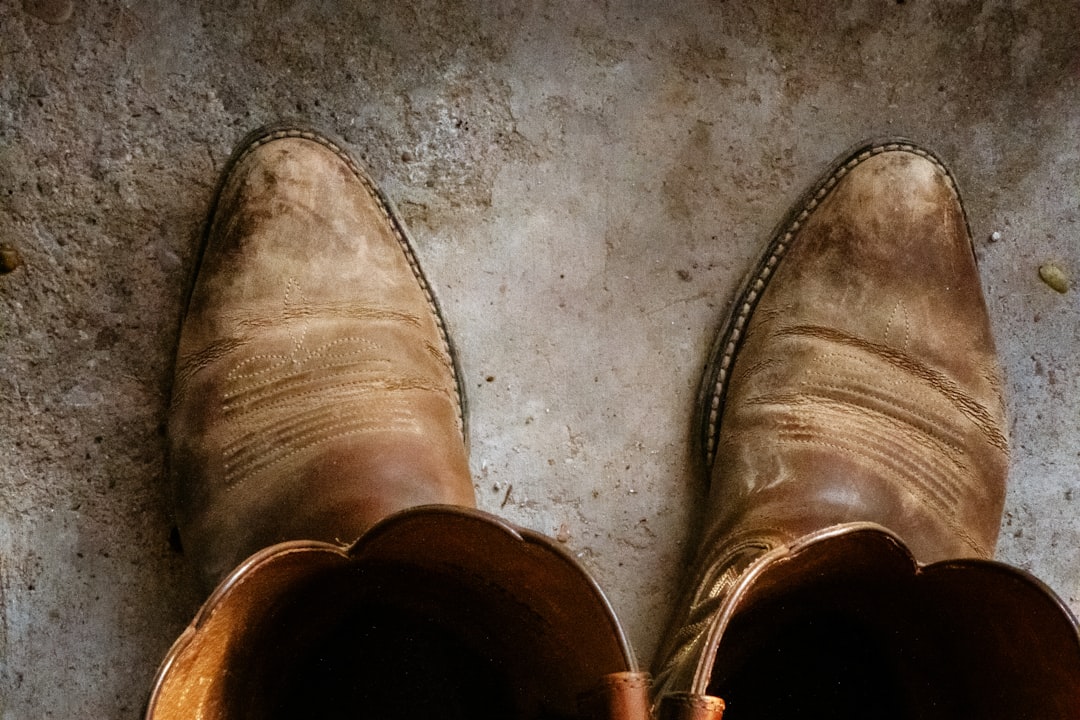
Leather grade is the single biggest variable in cowgirl-boot price and lifespan, and most shoppers cannot tell full-grain from corrected-grain by looking, which is exactly how the cheap end of the category survives.
We tracked the leather-cowgirl-boot category for Tumbleweed Thrift readers, mapped the leather grades against the brands that actually use them, and pulled out where the price-to-quality math actually works. The Cowgirl and Western Boots hub frames the broader category; this guide drills specifically into what leather you are buying and why it matters. Five grade tiers, several exotic-leather subcategories, and a handful of brand-by-brand patterns separate the boots that earn their price from the ones that do not.
Leather grades explained
Full-grain leather sits at the premium end. The hide retains its natural surface, including the small imperfections that signal authenticity, and develops patina with wear that genuinely improves the boot’s appearance over time. Full-grain costs the most, breaks in slowest, and lasts longest. Heritage brands (Lucchese, Tony Lama, Old Gringo, premium Ariat and Justin lines) use full-grain on their main lineups.
Top-grain leather sits below full-grain. The hide’s natural surface has been sanded smooth, giving a more uniform appearance at the cost of patina development. Top-grain is a legitimate leather, just a notch below full-grain in long-term character; mid-tier cowboy boots and most fashion-cowgirl premium pieces use top-grain. Corrected-grain leather has been heavily processed to hide imperfections, embossed with a fake grain pattern, and finished with a thicker coating; the result feels closer to plastic than to leather and ages poorly. Bonded leather is the bottom: leather scraps mixed with adhesive, sold as “genuine leather” technically but performing as a synthetic. Avoid bonded leather for serious cowboy-boot purposes.
Suede is leather with the underside napped and reversed; it is genuine leather but with a different aesthetic and care profile. Nubuck is similar but smoother. Both occupy specialty subcategories; the Suede Cowgirl Boots piece covers the suede subcategory in detail.
Best leather grades for cowboy boots, what to look for
For daily-wear cowboy boots intended to last a decade-plus, full-grain leather is the right answer. The premium reflects a real difference in longevity, patina development, and structural integrity over multi-year ownership. Top-grain is acceptable for fashion-cowgirl pieces and occasion wear; the boots will not develop the same patina but will hold up reasonably for two-to-five-year ownership windows.
Corrected-grain leather is the trade-off tier. The boots look credible at point-of-purchase and survive light wear, but the heavy finish coating cracks and peels at flex points within one to three years. Bonded leather should be avoided entirely for cowboy boots; the material does not have the structural integrity to hold up to the boot’s actual use case. The brands that lead the heritage tier consistently use full-grain, and the brands that lead the fast-fashion tier consistently use corrected-grain or synthetics; the Real Cowgirl Boots piece runs through that line in detail.
Exotic leather cowgirl boots
Exotic leathers occupy the premium-to-luxury end of the category. Ostrich is the most-recognized exotic, with distinctive quill marks where the feathers attached to the hide; Lucchese and Tony Lama lead the ostrich category, with full-quill ostrich cowboy boots running $600 to $2,000-plus. The leather is durable, ages spectacularly, and reads explicitly luxury heritage.
Lizard skin uses tighter, more uniform grain patterns and runs $400 to $1,000 typical. The leather is firm, takes a high polish, and breaks in slower than ostrich. Snakeskin (rattlesnake, python, and cobra are the common species) ranges $400 to $1,500 with dramatic surface patterns and significant species variation; reviewers report rattlesnake as the most durable and python as the most fashion-coded. Alligator and crocodile sit at the top of the exotic tier, $1,000 to $3,000-plus, with distinctive scale patterns and the kind of luxury status that justifies the price for shoppers committed to investment pieces.
Exotic leathers require species verification and ethical sourcing checks; reputable brands publish CITES certification (Convention on International Trade in Endangered Species) where applicable. Buy exotic from heritage brand DTC sites or verified retailers; the counterfeit problem on resale platforms is real for exotic skins specifically. The Designer Cowgirl Boots piece covers the broader luxury landscape.
Suede cowgirl boots, different vs traditional leather
Suede is leather flipped to expose the underside (the flesh side of the hide), with a napped surface and a softer, more casual aesthetic. The material is genuine leather but reads differently in styling: less polished, more bohemian, more festival-coded. The Suede Cowgirl Boots piece covers the subcategory in depth.
Care differs significantly from traditional leather. Suede does not respond to standard boot oil or leather conditioner; it requires specialized suede brushes and protectant sprays. Water staining is more visible on suede and harder to remove; outdoor wear in wet conditions is a poor use case. The aesthetic is genuinely different and worth the trade-offs for shoppers who want the bohemian-Western look, but suede is not a substitute for traditional leather in daily-wear or all-weather contexts.
Cowhide cowgirl boots, what they are
“Cowhide” in cowboy-boot terminology can mean two different things. Most often it refers to whole-cowhide leather (the standard hide source for most cowboy boots, full or top grain), distinguishing the boot from synthetic or bonded alternatives. The Cowhide Cowgirl Boots piece covers the full subcategory.
Less commonly, “cowhide” refers to hair-on-hide statement boots, where the cow’s hair is preserved on the leather surface for aesthetic effect. These hair-on cowhide boots read explicitly Western-statement, often with brindle or spotted patterns; they require slightly different care (hair-specific cleaning rather than standard leather conditioner) and read more festival than daily-wear. Both meanings of “cowhide” are valid; check the product description for which version you are buying.
Leather care basics for cowgirl boots
Condition every 5 to 10 wears. Boot oil works for most natural full-grain and top-grain leathers; color-matched conditioners are better for color-treated leather (red, white, lighter shades). Apply sparingly with a soft cloth, work into the leather, wipe off excess. Conditioning prevents the leather from drying out, supports break-in, and extends overall lifespan meaningfully.
Waterproof spray applied before first wear and reapplied every six to twelve months extends the boot’s tolerance for outdoor conditions. Storage matters: use boot trees or roll-up boot inserts to maintain shaft shape, keep boots in a cool dry place rather than direct sunlight (which fades and dries leather), and avoid stacking boots which crushes shafts permanently. Salt and water stains should be wiped off as soon as possible; the longer they sit, the harder they are to remove. The Cowhide Cowgirl Boots piece touches on care for hair-on hides specifically, and Designer Cowgirl Boots covers the higher-end conditioning routines.
Leather vs synthetic cowgirl boots
The trade-off is real and goes both ways. Leather cowboy boots age well, develop patina, last 10 to 20 years with care, require break-in and ongoing conditioning, and cost $150 and up. Synthetic cowboy boots feel plastic, do not age, last one to three seasons of regular wear, require no break-in or care, and cost $40 to $150.
For daily-wear and investment-piece use cases, leather is the only credible answer; the cost-per-wear math heavily favors $250 leather boots over $100 synthetic alternatives replaced annually. For festival, costume, and trend-trial use cases, synthetic is a fine choice for the explicit reason that no break-in and no care simplifies the use case. Match the material to the job. The Cheap Womens Cowboy Boots piece covers the budget tier where synthetic dominates, and Cute Cowgirl Boots covers the fashion-cowgirl world where the line is most blurred.
Where to buy real leather cowgirl boots
Heritage brand DTC sites are the safest first stop for premium leather cuts. Lucchese.com, Ariat.com, TonyLama.com, JustinBoots.com, and OldGringo.com all carry their full lineups with authentic construction guaranteed. The Lucchese Women’s Cowboy Boots piece covers Lucchese specifically; Ariat Women’s Cowboy Boots covers Ariat; Justin Cowgirl Boots covers Justin.
Boot Barn and Cavender’s are the strongest in-person options across most US regions, with Cavender’s particularly strong in Texas and the Southwest. Nordstrom and Zappos carry the broader fashion-cowgirl premium tier (Frye, Lucchese seasonal cuts, Old Gringo) with credible return policies. Amazon carries the broadest selection but requires careful storefront verification for premium pieces; counterfeit Lucchese and Ariat listings exist on third-party storefronts. Searching Full Grain Leather Cowgirl Boots on Amazon surfaces the heritage tier broadly; Lucchese Women Cowboy Boots on Amazon surfaces the premium tier on the storefront. For sale-priced leather picks, Cowgirl Boots on Sale is the rotating feed.
The verdict
Full-grain leather is the standard for genuine cowboy boots, and the brands that build heritage construction use it consistently. For daily-wear and investment pieces, full-grain is the right answer; the cost-per-wear math works heavily in favor of premium leather over multi-year ownership. Top-grain leather is acceptable for occasion-wear and fashion-cowgirl pieces. Exotic leathers (ostrich, lizard, snakeskin, alligator) earn their luxury price tags for shoppers committed to investment pieces.
Skip bonded leather entirely; it does not earn the cowboy-boot name. Skip corrected-grain leather for serious wear use cases; it cracks at flex points within one to three years. Synthetic cowgirl boots are fine for festival, costume, and trend-trial contexts but should not be confused with leather alternatives for daily-wear math. The Women’s Cowboy Boots guide covers the broader category landscape, and Cowgirl Boot Brands frames the brand context. For the head-to-head heritage versus fast-fashion discussion, Real Cowgirl Boots runs through it explicitly.
Shop the look on Amazon
Everything you need to build a secondhand-style wardrobe, delivered. We may earn a commission on purchases.
FAQ
What’s the best leather for cowgirl boots?
Full-grain leather, which retains the hide’s natural surface, develops patina with wear, and lasts 10 to 20 years with care. Top-grain leather is acceptable for fashion-cowgirl pieces and occasion wear. Avoid corrected-grain (cracks at flex points) and bonded leather (does not perform as leather despite the name).
How can you tell if cowgirl boots are real leather?
Look for natural surface texture and slight imperfections (full-grain leather is not perfectly uniform), check the price (genuine full-grain cowboy boots start around $150), verify the brand provenance, and check the construction (Goodyear welt is a heritage-construction marker that almost always pairs with genuine leather). Plastic-feel uniformity, very low price, and unbranded listings on third-party storefronts are flags.
Are exotic leather cowgirl boots worth it?
For investment-piece use cases, yes. Ostrich, lizard, snakeskin, and alligator/crocodile are the main exotic options, ranging $400 to $3,000-plus. The leather lasts decades and develops distinctive patina. Buy from heritage brand DTC sites or verified retailers; counterfeit exotic listings exist on resale platforms.
How do you care for leather cowgirl boots?
Condition every 5 to 10 wears with boot oil or color-matched conditioner, apply waterproof spray before first wear and every 6 to 12 months after, store with boot trees in a cool dry place, wipe off salt and water stains as soon as possible. Suede requires specialized suede brushes and protectant sprays rather than standard leather conditioner.
What’s the difference between full-grain and top-grain leather?
Full-grain retains the hide’s natural surface, develops patina with wear, and is more durable. Top-grain has been sanded smooth for a uniform appearance, costs less, and ages with less character. Both are legitimate leathers; full-grain is preferred for heritage cowboy boots, top-grain is acceptable for fashion-cowgirl pieces.


