Both have an elastic waist, both are soft, and both live in the same drawer, yet “joggers” and “sweatpants” usually describe two slightly different pairs of trousers.
The quick answer to joggers vs sweatpants: joggers usually have a tapered leg with cuffed, ribbed ankles and are often made of lighter or blended fabric, while sweatpants are traditionally looser, in fleece-backed jersey, with a straight or cuffed hem. The terms overlap heavily, and plenty of brands sell a cuffed sweatpant as a jogger or the other way round. This guide covers the difference between joggers and sweatpants, how to tell them apart and where each fits in your week. For outfit ideas once you have chosen, see our Joggers Outfit Ideas guide.
Where the words come from
“Sweatpants” has a documented history. The Online Etymology Dictionary records “sweat-pants” from 1924, defined as “thick, cotton pants worn by athletes before or after exercise to avoid chills.” The name describes the job: warm trousers for before and after a workout, not necessarily for the workout itself.
“Joggers” is harder to pin down. Etymonline says the running sense of “jog” “mostly dates from 1948” and “became a popular fad c. 1967,” and that “jogger,” meaning a runner, is from 1968. It gives no garment sense for “joggers,” so there is no reliable date for when the trouser got its name. It is commonly used to describe a tapered, cuffed track or lounge pant.
Both belong to the wider story of sportswear becoming everyday clothing. FIT’s fashion history timeline, for example, names Juicy Couture velour tracksuits as a mid-2000s “it” item.
Comparison table
| Feature | Joggers | Sweatpants |
|---|---|---|
| Leg shape (common usage) | Tapered, narrowing to the ankle | Looser, straight or relaxed |
| Hem | Ribbed cuff at the ankle | Open straight hem or elastic cuff |
| Typical fabric | Lighter jersey, French terry or blends, often with stretch | Thicker fleece-backed cotton jersey |
| Word history (etymonline) | No garment date recorded | “Sweat-pants” from 1924 |
| Typical use | Gym, errands, travel, casual outfits | Warm-ups, lounging, cold mornings |
How to tell them apart
- Look at the ankle. A snug ribbed cuff points to joggers; an open hem points to sweatpants.
- Follow the leg line. If the leg narrows noticeably from knee to ankle, most shops would call it a jogger.
- Feel the fabric. Thick, brushed fleece on the inside is classic sweatpant cloth. A thinner, smoother knit, see our What Is French Terry? The Sweatshirt Knit Explained guide, is common on joggers.
- Check the fibre label. Joggers more often include polyester or spandex for stretch; traditional sweats lean towards cotton or cotton-rich blends.
- Check the details. Zip pockets, a slimmer rise and a cleaner finish are common on joggers sold as streetwear.
Joggers or sweatpants: when to wear each
Gym and training
Joggers are a common pick for the gym because the cuffed ankle stays out of the way on a treadmill or bike. Thick sweatpants still do their original job well: a warm layer before and after exercise. Our Men’s Gym Clothes guide covers the rest of the kit.
Errands and travel
The tapered shape of joggers looks neater with sneakers and a jacket, so many people reach for them for travel days and quick errands. A clean pair of joggers with a plain hoodie is a common casual formula; our Hoodie vs Sweatshirt guide explains which top is which.
Lounging and cold weather
Fleece-backed sweatpants are the warmer, softer option for staying in. For more ways to wear them out of the house, see our Sweatpants Outfit Ideas That Look Put Together guide.
Places with a dress code
Neither is standard for business casual or smart casual settings, and some venues say so outright. The LPGA’s 2017 player dress code, for example, listed “no joggers.” Check the dress code wherever one applies.
Can you swap them?
For most casual plans, yes. A cuffed sweatpant and a jogger are close cousins, and many brands use the names loosely. The main trade-offs are warmth and polish: thick sweats are warmer but bulkier, while lighter joggers are easier to wear out and about. If you want one pair that does both, a mid-weight cuffed style is a common middle ground.
Shopping new? Compare Mens Tapered Joggers on Amazon, Fleece Sweatpants on Amazon and Womens Joggers With Pockets on Amazon.
Top-selling match on Amazon

- A relaxed straight leg and elastic, drawstring waistband bring lounge-ready style to this…
- On-seam side pockets with a 32" inseam
Top-selling match on Amazon
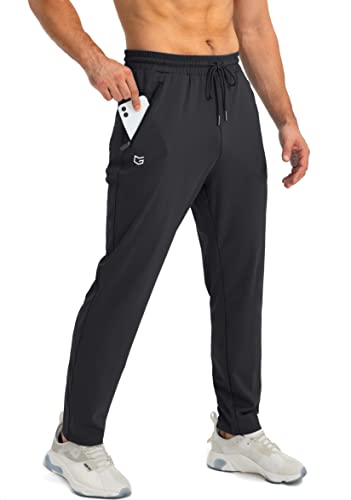
- Stretchy Fabric: Comfortable, soft and 4-way stretch fabric, enhances the stretchability of…
- Adjustable Elastic Waistband: Elastic waistband and adjustable inner drawstring offer different people's custom…
- Stylish Design: The tapered leg design with enough length makes you look slim and athletic, open…
Fit notes
Because both have elastic waists, fit comes down to length and rise. Joggers with a cuff are designed to sit at the ankle, so a pair that is too long will bunch above the cuff; check the inseam on the brand’s own size chart. Straight-hem sweatpants allow more leeway in length but can drag on the ground if they are long. A drawstring helps fine-tune the waist on either.
Thrift tips
- Check the waistband. Stretch the elastic gently; if it stays wavy or does not spring back, it has worn out.
- Look at the cuffs. Ribbed ankle cuffs lose their grip over time, the same way the waistband does.
- Inspect the inner fleece. Matted or thin fleece means less warmth. Pilling on the outside is common and can be cleared with a fabric shaver.
- Measure the garment. Sizes vary by brand, so measure the inseam and the relaxed waist and compare with our Men’s Pants Size Chart.
- Wash before wearing. Follow the care label; fleece is commonly washed inside out to reduce pilling.
For more on athletic and lounge bottoms, our Types of Pants hub and the Leggings vs Tights comparison are good next reads.
Shop the look on Amazon
Everything you need to build a secondhand-style wardrobe, delivered. We may earn a commission on purchases.
FAQ
What is the difference between joggers and sweatpants?
In common usage, joggers have a tapered leg, ribbed ankle cuffs and lighter fabric, while sweatpants are looser and made of thicker fleece-backed jersey. Brands use the names loosely, so the shape and fabric tell you more than the label.
Are joggers just sweatpants with cuffs?
Many people see them that way, and some cuffed sweatpants are sold as joggers. Joggers are also often slimmer and lighter, which is the other half of the distinction.
Which is warmer?
Usually sweatpants, because traditional sweats use thick, brushed fleece. Fleece-lined joggers exist and close the gap.
When was the word sweatpants first used?
The Online Etymology Dictionary records “sweat-pants” from 1924. It has no date for “joggers” as a garment.
Can you wear joggers to work?
Only where the dress code allows it. Most business casual codes expect trousers, chinos or similar; check with your employer.