Is It Best Price for Vintage Levi’s Jeans? A Real Gut Check
“Is this a good deal” is the wrong question. “Is this price fair for what I’m seeing” is the right one, and the answer comes from the listing details, not the sticker.
“Is it best price for vintage Levi’s jeans” usually arrives with a screenshot of a listing and a hopeful emoji. The honest answer requires looking at five things the asking price doesn’t tell you. This piece walks through a check to run every time you’re about to buy, and three common mistakes that are worth slowing down for. For the broader sourcing map, see our Brand Guides pillar on vintage denim. If you want specifically where to shop, Where to Find Authentic Vintage Levi’s Jeans covers the store-by-store breakdown.
What “best price” actually means for vintage Levi’s
There is no MSRP on a 1987 pair of 501s. The “price” is whatever the market will pay, and the market varies by platform, by season, and by how motivated the seller is. The same pair can cost noticeably more on Poshmark than at an estate sale. It helps to stop thinking about “best price” in absolute terms and think about it as a ratio: price divided by wearability.
A $60 pair you’ll wear weekly is a better deal than a $35 pair that needs repairs you won’t make. The dollar figure is half the math.
The five-point price check to run before buying
First: actual flat measurements. If the listing says “32 waist” but doesn’t include a measurement across the waistband, assume the tag is wrong until proven otherwise. Vintage tag sizing is unreliable: decades of washing and wear can leave a pair measuring an inch or more off its tag.
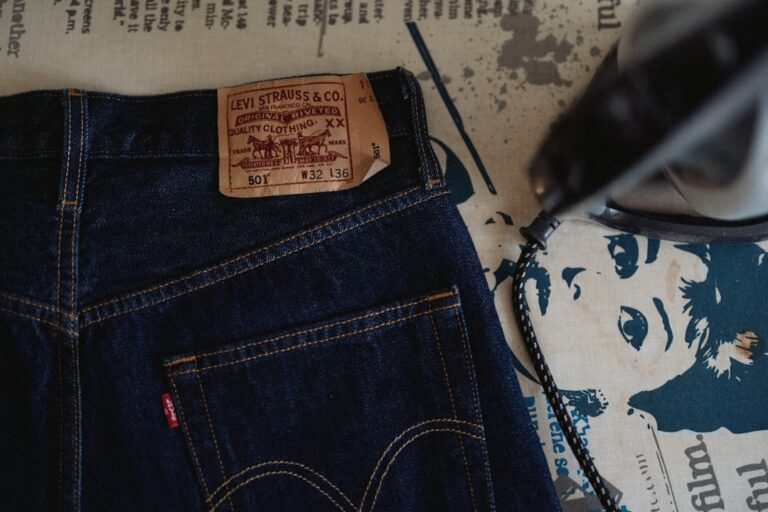
Second: the decade. A 1990s pair and a 1970s pair are priced differently because they’re different products. A $75 pair of 1990s made-in-USA 501s is reasonable; a $75 pair of 1970s big E 501s is either a miracle or a counterfeit.
Third: condition photos at the crotch, knees, and rivets. Those are the three wear points that determine whether a pair has years left in it. A listing with no crotch photo is a listing hiding something.
Fourth: the seller’s other listings. If they’re selling twelve “vintage” items and eight of them are clearly not vintage, trust your skepticism.
Fifth: recent sold comps. On Vintage Levis 501 on Poshmark, look at 5–10 recently sold pairs in similar condition and decade, then average. If the asking price is close to that average, it’s fair. If it’s well above, offer the average and walk if the seller doesn’t move.
Three ways buyers get the price wrong
Mistake one: trusting the stated inseam. Say you pay $95 for a pair of 1980s 517s because the photos are beautiful and the seller has good reviews, and the inseam turns out to be two inches longer than listed. Hemming adds to the cost, and the real total can end up well above what a pair in the right length would have cost. Ask for a flat inseam measurement before you pay.
Mistake two: holding out for a lower price that never comes. Passing on a fairly priced 1990s 501 because you expect to find cheaper can mean paying more later, especially in common sizes where good pairs sell quickly. If a pair matches sold comps and fits, buy it.
Mistake three: paying vintage prices for recent production. Levi’s 501s made after roughly 2003, when Levi’s ended US production, have a different fit and fabric than older pairs, and listings don’t always state a year. Check the care tag and construction details before paying, and know that returns on many resale platforms are limited.
Platform-by-platform price reality
Estate sales and thrift: usually the cheapest source for common sizes and decades, assuming you have the time to dig. Best value if your weekends are free.
Poshmark: a deep supply of 1980s–1990s pairs. Shop with offers, since sellers expect them.
eBay: often a similar range to Poshmark, with more 1970s and earlier pairs and more risk. Auction format can work in your favor if you bid late and don’t get emotional.
Etsy: often priced above Poshmark for comparable pairs, since many sellers treat it as a premium platform. Compare before buying unless you’ve found something specific you can’t get elsewhere.
Specialized vintage stores: the highest prices, for curated pairs in rare sizes or decades. Worth it if you want hand-selected condition and don’t want to authenticate yourself.
Amazon: Mostly reissue and vintage-style, not true vintage. Vintage Levis 501 Jeans on Amazon pulls a mix of authentic used pairs from third-party sellers and new reproductions. Check the seller page before buying.
The one situation where overpaying is fine
If you’ve been hunting a specific cut, decade, and size for months and a pair comes up in your exact measurements, paying somewhat above market is rational. Time is worth something. Say you’ve been looking for a 1970s 505 in a 30×30 for most of a year and one appears a little above fair market: that premium is often worth paying. The pairs that fit perfectly are the ones you remember.
The verdict
Stop asking “is it the best price for vintage Levi’s jeans.” Start asking “does this price match what the listing is actually showing me.” Check measurements against the tag, cross-reference sold comps on the same platform, and give condition photos the weight they deserve. If the price is a little over market but the pair is in your exact size and decade, buy. If it’s far under market with no crotch photos, walk. See Best Price for Vintage Levi’s Jeans for the full sourcing comparison across platforms.
Shop the look on Amazon
Everything you need to build a secondhand-style wardrobe, delivered. We may earn a commission on purchases.
FAQ
What’s a fair price for 1990s Levi’s 501 jeans?
Check recent sold listings for the same model, decade and condition, since prices move with demand. Made-in-USA pairs in wearable condition command more than later imports, and anything priced at the top of the range should be justified by a rare size, deadstock condition, or an earlier, more collectible label.
Are vintage Levi’s jeans overpriced right now?
Prices have risen as vintage denim has gone mainstream, especially for popular cuts and sizes. Even so, a common vintage pair is often still cheaper than most premium new denim, so compare sold comps rather than assuming.
Should I negotiate on Poshmark for vintage Levi’s?
Yes. Many sellers price with some room to negotiate. A polite offer somewhat below asking often gets accepted or countered reasonably, while a lowball offer at half the price usually gets ignored.
Is it worth driving to a thrift store for vintage Levi’s?
Only if you’re going anyway. The hit rate for good vintage Levi’s at most chain thrift stores is low, because resellers and staff pull desirable pairs. Estate sales in older neighborhoods often have better odds.
How do you look up sold prices for vintage Levi’s jeans?
Use sold listings, not active ones: on eBay, filter the search to sold items, and on Poshmark, switch the search to sold listings for the same cut, decade and size. Compare 5–10 recently sold pairs in similar condition and average them. If the asking price sits near that average, it’s fair; if it’s well above, offer the average and be ready to walk away. Active asking prices only show what sellers hope to get.