A pen left in a pocket, a leaky cartridge or a stray marker line can turn a favourite shirt into a problem. Ink is one of the trickier stains, but a careful, step-by-step approach gives you the best chance.
Knowing how to get ink out of clothes starts with one fact: ink is not one substance. MCI, the Smithsonian Museum Conservation Institute, describes inks as complex mixes of pigments and dyes, which is why a method that lifts one pen’s mark may barely touch another’s. This guide covers the methods K-State Research and Extension and MCI describe, how ballpoint, gel and permanent marker differ, the safety steps that come with alcohol and solvents, and when a dry cleaner is the better call. For the everyday marks that build up on collars and underarms, see our companion guide on How to Get Sweat Stains Out of Shirts (Yellow and Underarm Stains).
Before the steps, a realistic note. K-State Research and Extension says some ballpoint, felt-tip and liquid inks may be impossible to remove, and that laundering can set some inks. So the order of operations matters: treat first, wash second, and never put an ink-stained garment through a full wash and dry before trying to lift the mark.
Quick answer: removing a fresh ink stain
- Lay the stain face down on clean paper towels.
- Apply denatured alcohol or cleaning fluid to the back of the stain, as K-State Research and Extension describes, changing the towels often. Work in a well-ventilated room.
- Rinse well.
- Wash as the care label directs, then check the spot before drying.
Why ink is hard to remove
Most stains fall into a clear category. Oil responds to solvents and enzymes, protein to enzymes, tannin to bleaching agents. Ink straddles several. MCI explains that because inks are mixtures of pigments and dyes, the right approach is to treat them with solvents first, such as acetone, ethanol or dry-cleaning spotting agents, and then follow with water-based steps. Going straight to water can spread a solvent-based ink or push it deeper into the fibres.
MCI also notes that this can take time and several products, and that a dry cleaner may be the wiser choice for that reason. That is worth keeping in mind for anything valuable or delicate.
Fabric plays a part as well. MCI points out that fibre type and finish affect results, and that water-based stains sink deeper into natural fibres while polyester and acrylic tend to absorb oily stains. A gel ink on cotton and a ballpoint on polyester may behave quite differently, even if they look similar on the surface.
Ballpoint, gel and permanent marker: what to expect
The sources in this guide do not give a separate method for each ink type, so treat the following as general expectations rather than rules.
- Ballpoint pen. Ballpoint ink is generally described as oil-based, which is why solvent-first approaches, such as K-State’s alcohol or cleaning-fluid method, are the usual starting point. K-State lists ballpoint among the inks that may be impossible to remove, so results vary.
- Gel pen. Gel inks are generally described as water-based with suspended pigment. Many people find that a prewash stain remover followed by washing helps, but pigments can lodge in the fibres. Treat gel stains as quickly as possible.
- Felt-tip and liquid ink. K-State names felt-tip and liquid inks too. They can spread quickly in fabric, so blot rather than rub, and work from the back.
- Permanent marker. None of the sources here gives a verified method for permanent marker, and permanent inks are designed to resist removal. The same solvent-first methods are worth a careful try, but go in expecting that the mark may fade rather than vanish, or may stay. For anything important, a dry cleaner is the better first stop.
What you need
- Clean paper towels or white cloths, several layers.
- Denatured alcohol, the solvent K-State names: Denatured Alcohol on Amazon. Rubbing alcohol (isopropyl) is a common alternative that many households already have.
- Cleaning fluid (a solvent-based spot cleaner) as another option K-State lists.
- A prewash stain remover: Prewash Stain Remover Ink on Amazon.
- Cotton balls, cotton swabs or a sponge for tamping.
- A glass jar and a rubber band for the jar method.
- An eyedropper (optional) for controlled dripping.
Top-selling match on Amazon
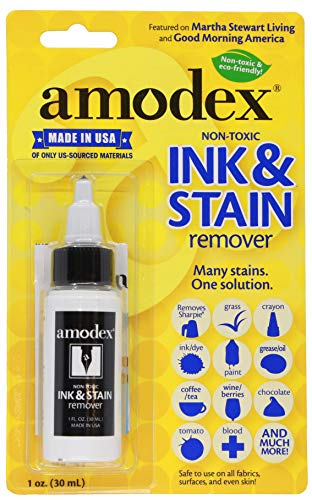
- Works Well: The ink and stain remover works on the toughest stains; from inks and ballpoint to…
- Multiple Use: The formula is designed for use on clothing, carpeting, furniture, fabric…
- Professional Strength: Ink remover uses the latest innovation for removing stains. The only SHARPIE…
Top-selling match on Amazon

- 200-Proof Denatured Alcohol, highest purity. Pure ethyl alcohol (ethanol) denatured with…
- Recommended As A Solvent, Thinner And Cleaner. Dissolves Ink And Various Other Stains…
Before you start: four checks
- Read the care label. The FTC Care Labeling Rule requires care labels to state whether to hand-wash or machine-wash, give bleach, drying and ironing instructions where relevant, and warn against care steps that would damage the item. Dry clean only means a professional, not a home method.
- Check the fibre content. Acetone, found in many nail polish removers, dissolves acetate and triacetate fabrics, according to MCI, and K-State says not to use nail polish remover on them. These fibres turn up in linings, including tie linings, and in some dressy tops.
- Test on a hidden spot. MCI recommends trying a treatment on a small area first and blotting it onto disposable towelling. An inside seam or the back of a hem works. Watch for colour lifting from the fabric itself, not just the ink.
- Set up for safety. K-State notes that denatured alcohol is flammable, should be used in a well-ventilated area and stored away from children. Open a window, keep it away from flames, stoves and heaters, and keep the cap on between uses.
How to get ink out of clothes: step by step
K-State Research and Extension describes three ways to approach an ink stain: a prewash stain remover, the paper-towel method with alcohol or cleaning fluid, and the jar method. All three finish the same way: rinse well, then wash.
Method 1: prewash stain remover (K-State)
This is the simplest starting point, especially for a small, fresh mark on washable fabric.
- Blot any wet ink with a paper towel. Do not rub.
- Apply a prewash stain remover to the stain.
- Tamp it in with a cotton ball or sponge, pressing up and down.
- Leave it for the time given on the product label.
- Rinse the area well.
- Wash as the care label directs.
- Check the spot before drying. If ink remains, move on to Method 2.
Method 2: paper towels and denatured alcohol (K-State)
This is the classic method for ballpoint and other solvent-friendly inks. Working from the back pushes the ink out onto the towel instead of through the fabric.
- Open a window or work in a well-ventilated room.
- Sponge around the outside of the stain with denatured alcohol or cleaning fluid. This helps stop the ink spreading outward.
- Lay several layers of clean paper towels on a flat surface.
- Place the stain face down on the towels.
- Apply the alcohol to the back of the stain with a cotton ball or dropper.
- Change the paper towels often. You should see ink transfer to them.
- Continue until no more ink transfers.
- Rinse the area well.
- Wash as the care label directs, and check before drying.
MCI explains that stain removal works in small steps, with each application lifting part of the stain, and that full removal can take five to seven repeats. Patience helps here more than force.
Method 3: the jar method (K-State)
K-State also describes stretching the fabric over the mouth of a jar and dripping alcohol or cleaning fluid through the stain. The jar holds the fabric taut and lets the solvent carry ink straight through, away from the rest of the garment.
- Choose a glass jar with a wide mouth.
- Stretch the stained area over the opening, stain side up, and secure it with a rubber band.
- Drip alcohol or cleaning fluid through the stain a few drops at a time.
- Pause and check progress every few drops.
- Remove the fabric and rinse it well.
- Wash as the care label directs, and check before drying.
Using rubbing alcohol (a common method)
Many people use rubbing alcohol (isopropyl alcohol) for ink because it is easy to find in a medicine cabinet. The extension source in this guide names denatured alcohol rather than isopropyl specifically, so treat rubbing alcohol as a common method. It can be used in the same way as Method 2: stain face down on paper towels, alcohol applied to the back, towels changed often, then rinse and wash. Rubbing alcohol is also flammable, so the same ventilation and fire cautions apply. Test it on a hidden spot first, as it can lift some dyes.
The MCI approach: solvents first, then water
MCI’s guidance is broader. It recommends treating ink with solvents first, naming acetone, ethanol or dry-cleaning spotting agents, and then moving on to water-based steps. If you use acetone, keep it well away from acetate and triacetate, which it dissolves. Because this approach can take time and several products, MCI suggests a dry cleaner may be the wiser choice.
Removing ink from different fabrics
Cotton and cotton blends
Cotton shirts, T-shirts and jeans are the most common victims of pocket pen leaks. They usually tolerate alcohol well, so Method 2 is a sensible start. Denim can be dense, so give the alcohol time to soak through to the paper towel.
Polyester and other synthetics
Test first, since solvents can affect some synthetic finishes. MCI’s note that polyester tends to absorb oily stains suggests oily ballpoint ink may need several rounds.
Silk, wool and delicate fabrics
Silk and wool are protein fibres and can be damaged by alkali and protein-digesting enzymes, according to MCI, and chlorine bleach dissolves them. For ink on silk, wool, rayon or acetate, a dry cleaner is the safer choice. Our guide on How to Wash a Wool Sweater Without Shrinking It covers gentle washing once the stain has been professionally treated.
Leather and outerwear
Ink on leather is a different problem from ink on fabric, and alcohol can dry out or discolour leather finishes. Our guide on How to Clean a Leather Jacket at Home covers leather care, and a professional leather cleaner is the best option for ink. For pen marks on a backpack, see How to Wash a Backpack by Hand (and Why Not the Machine), and for a puffer, How to Wash a Down Jacket Without Clumping.
Ink in the washing machine or dryer
A pen that goes through the wash can leave spots on several items at once. If you find one:
- Remove all items from the machine and keep them damp.
- Do not put anything in the dryer.
- Sort items by fabric, and set aside any that are dry clean only.
- Treat each stained item using the methods above, starting with the most valuable.
- Wipe the drum with a cloth to remove any ink residue before the next load.
If ink has already been through the dryer, K-State’s warning that laundering can set some inks applies doubly, since heat makes most stains harder to shift. Try Method 2 anyway, but be prepared for the mark to fade rather than disappear. If ink has transferred to the drum, wipe it out thoroughly before running another load.
What not to do with ink stains
- Do not wash and dry before treating. K-State notes that laundering can set some inks.
- Do not rub. MCI says rubbing can wear or tear fabric, and with ink it spreads the stain.
- Do not use acetone on acetate or triacetate. MCI and K-State both warn that it dissolves these fibres.
- Do not use solvents near flames or without ventilation. K-State notes that denatured alcohol is flammable.
- Do not mix cleaning products. Poison Control warns never to mix bleach with ammonia, or bleach with acids such as vinegar or some toilet cleaners, because the combinations produce toxic gases. Rinse fully between one product and the next. If anyone feels unwell after breathing fumes, call Poison Control at 1-800-222-1222.
- Do not use chlorine bleach on silk, wool or spandex blends. MCI notes chlorine bleach dissolves silk and wool.
When to see a dry cleaner
MCI notes that because ink treatment takes time and several products, a dry cleaner may be the wiser choice, and that a dry cleaner can spot-treat just the stain. It is the sensible route when:
- The care label says dry clean only.
- The fabric is silk, wool, rayon, acetate, leather or suede.
- The stain is permanent marker or a large leak.
- The stain has already been washed or dried.
- Home treatment has not made progress after a few rounds.
- The garment is tailored, lined or valuable.
Tell the cleaner what kind of pen made the mark, if you know, and what you have already tried. It helps them pick a solvent that will not react badly with anything already in the fabric.
Thrift note: ink stains on secondhand finds
Ink marks are common on secondhand shirts and work trousers, usually near the breast pocket or along a front hem. They can be easy to miss on dark fabrics and on prints, so check in good light before buying.
Ink on a secondhand item has almost certainly been through at least one wash, and possibly a dryer. Given K-State’s warning that laundering can set some inks, assume a thrifted ink stain will be harder to remove than a fresh one. That does not make it hopeless, but it should shape the price you are willing to pay:
- A small mark on sturdy cotton: worth trying Method 2 at home.
- A large or permanent-marker stain: buy it only if you would wear it as it is.
- Ink on silk, wool or a tailored piece: factor in a dry-cleaning visit.
A small kit of alcohol, paper towels and a stain remover makes it easy to treat new finds the day you bring them home: Stain Remover Spray Laundry on Amazon. For more on caring for secondhand clothes, see our guide on Does ThredUp Wash Clothes Before Selling Them? What to Know.
Preventing ink stains
- Check pockets before every wash. A single pen can mark a whole load.
- Cap pens and click retractables closed before pocketing them.
- Use a pen pouch in work bags and coat pockets.
- Act quickly. MCI notes that older stains are harder to remove, so treat ink as soon as you notice it.
Related stain guides
Ink often turns up alongside other marks. These guides cover the most common ones: How to Get Oil and Grease Stains Out of Clothes, How to Get Makeup Out of Clothes (Foundation, Lipstick, Mascara), How to Get Paint Out of Clothes (Water-Based, Acrylic and Oil) and How to Get Deodorant Stains Out of Clothes.
Frequently asked questions
Does rubbing alcohol remove ink from clothes?
Rubbing alcohol is a common method for ink, and many people use it with the paper-towel technique: stain face down, alcohol applied to the back, towels changed often. K-State Research and Extension specifically names denatured alcohol, along with cleaning fluid. Whichever you use, test it on a hidden spot first, use it in a well-ventilated room, keep it away from flames, then rinse and wash.
Can permanent marker be removed from clothes?
Sometimes it fades, but there is no reliable home method, and permanent inks are made to resist removal. You can try the same solvent-first approach used for ballpoint ink, testing on a hidden spot first. For anything you care about, a dry cleaner is the better first step.
How do I get ink out of clothes after washing and drying?
Try the paper-towel and alcohol method, applying alcohol to the back of the stain and changing the towels often, then rinse and wash. K-State notes that laundering can set some inks, so a washed and dried stain may only lighten. If it does not respond after several rounds, a dry cleaner may be able to help.
Is acetone safe for removing ink?
MCI lists acetone among the solvents that can treat ink, but it dissolves acetate and triacetate fabrics, which are often used in linings. K-State also says not to use nail polish remover on these fibres. Check the fibre content on the care label, test first and ventilate the room.
How do I get pen ink out of a car seat or sofa?
Upholstery is outside the scope of this clothing guide. The general principles of blotting rather than rubbing, testing first and working with ventilation still apply, but follow the furniture or vehicle maker’s cleaning instructions.
Will hairspray lift a ballpoint pen mark from a shirt?
Hairspray can lift some ink, but only because of the alcohol it contains, so applying alcohol directly is the more reliable choice. Many modern hairsprays contain less alcohol than older formulas and add resins or fragrance that can leave a sticky residue or a second mark. Denatured or rubbing alcohol on the back of the stain, with paper towels underneath and changed often, does the same job more cleanly. Rinse and wash afterwards, and check before drying.
Shop the look on Amazon
Everything you need to build a secondhand-style wardrobe, delivered. We may earn a commission on purchases.