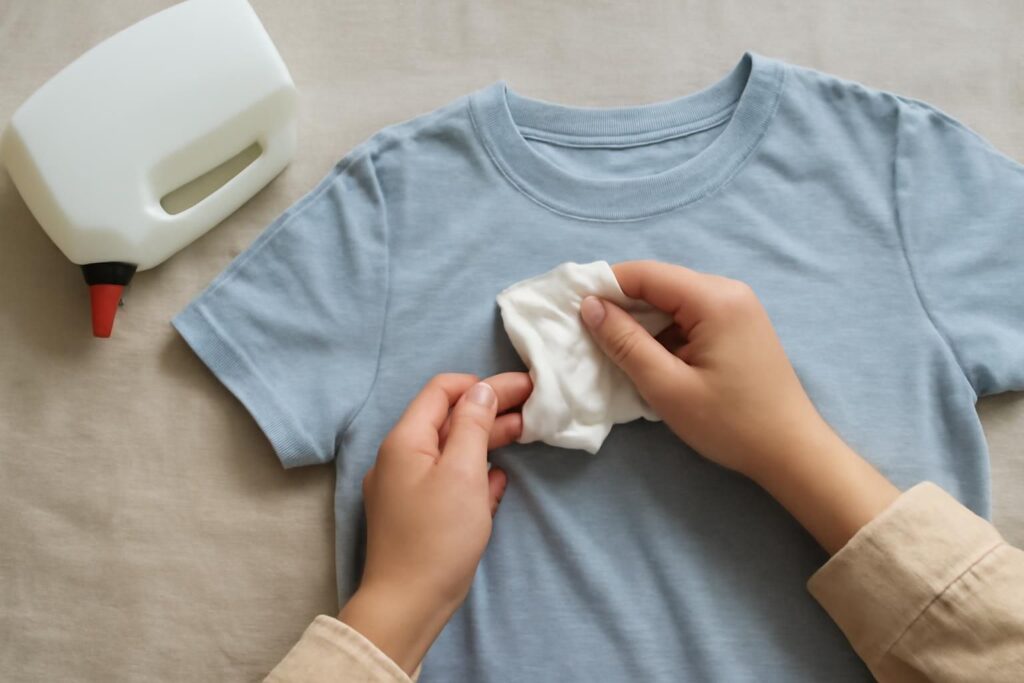
A splash at the pump or a spill while filling the lawnmower can leave clothes smelling of fuel for days. With gasoline, safety comes before the smell, so the order of steps matters.
Learning how to get gasoline smell out of clothes starts with one rule from the U.S. Fire Administration (USFA): never put items that have touched gasoline in the dryer. Gasoline is flammable, so this is not a regular stain job. Fuel is an oily substance, and the pretreating steps overlap with our guide to How to Get Oil and Grease Stains Out of Clothes, but the airing and drying rules here are stricter. The steps below are common household methods unless a source is named.
Quick answer: gasoline on clothes
- Take the item off and hang it outdoors, away from heat, sparks and flames, until the fumes fade.
- Pretreat any oily spot with liquid laundry detergent.
- Wash it by itself, following the care label.
- Air-dry outdoors or in a well-ventilated room. Never use the dryer.
The USFA dryer warning
In its report on clothes dryer fires in residential buildings, the USFA lists this safety tip: “Do not dry materials that have come into contact with anything flammable (e.g., alcohol, cooking oils, gasoline, etc.). These should be dried outdoors or in a well-ventilated room, away from heat.”
That applies even after washing. A wash cycle may not remove every trace of fuel, and the dryer’s heat is exactly what the USFA warns against. The same USFA list also advises against drying items containing foam, rubber or plastic, and against leaving a dryer running when you leave home or go to bed. Do not assume a hot wash “burns off” gasoline either; it does not make an item safe for the dryer.
What you need
- An outdoor spot to air the item, such as a clothesline or a rack on a balcony, well away from grills, pilot lights, cigarettes and other heat sources.
- Gloves to keep fuel off your skin while handling the garment, such as Nitrile Cleaning Gloves on Amazon.
- Liquid laundry detergent or a prewash stain remover. K-State Research and Extension recommends pretreating light grease and oil stains, motor oil included, with a prewash stain remover or liquid detergent, then washing in the hottest water safe for the fabric. A heavy-duty option can be found through Heavy Duty Liquid Laundry Detergent on Amazon.
- A drying rack for air-drying, for example Outdoor Clothes Drying Rack on Amazon.
Top-selling match on Amazon

- Collapsible And Space-Saving: Adjustable size, expand for large spaces, retract for small areas—fits anywhere. No…
- Sturdy And Spacious: Strong frame supports up to 130 lbs, with six locking hinges for added stability. 3…
- Upgraded Quality: Since 2022, JAUREE laundry racks for drying clothes feature thickened stainless…
Top-selling match on Amazon

- Control For Detailed Work: The 5 mil thickness balances durability and flexibility when handling small parts…
- Micro-Textured Grip: A textured surface helps you keep hold of tools and parts during automotive repairs…
- Latex-Free And Powder-Free: Made without natural rubber latex or added powder, with no powder residue left on…
Step-by-step: how to get gasoline smell out of clothes
Light splashes
- Take the item off and keep it away from heat, sparks and open flames.
- Hang it outdoors and let it air out. This can take several hours or longer.
- Once the strong fumes have faded, blot any visible wet spot with paper towels. Press rather than rub.
- Work a little liquid laundry detergent into the spot.
- Let it sit for a few minutes.
- Wash the item by itself, not with the rest of the laundry, in the hottest water the care label allows.
- Air-dry it outdoors or in a well-ventilated room, as the USFA advises.
- Sniff it once dry. If you can still smell fuel, repeat the pretreat and wash, and keep air-drying.
Heavily soaked items
Throwing away heavily soaked clothes is common advice rather than an official rule, and it is often the sensible choice. Fuel-soaked fabric is a fire risk, and a cheap work shirt is not worth that. If you decide to discard it, let it air out outdoors away from heat first, and check your local rules for disposing of items contaminated with fuel.
If the item is valuable, a professional cleaner may be an option. Tell them plainly that it contains gasoline before you hand it over.
Diesel smell on clothes
Diesel is oilier than gasoline and the smell tends to linger. The same common approach applies: air the item outdoors away from heat, pretreat with liquid detergent as you would an oil stain, wash it on its own and air-dry. Expect to repeat the cycle more than once.
Gasoline on clothes and the washing machine
A common worry is whether gasoline-contaminated clothes can go in the washer at all. Many people air the item outdoors first, until the strong fumes have faded, before it goes in the machine. Wash it alone, never with other laundry. After the cycle, run an empty cycle if a fuel smell lingers in the drum (a common tip), and keep the dryer out of the picture entirely.
What not to do
- Do not use the dryer, even after washing. This is the USFA’s specific warning.
- Do not dry near heat such as radiators, heaters or a fireplace. The USFA says outdoors or a well-ventilated room, away from heat.
- Do not add solvents. K-State notes that solvents such as denatured alcohol are flammable and need good ventilation. Adding another flammable product to a fuel-soaked garment adds risk.
- Do not mix cleaning products. Poison Control warns that bleach mixed with ammonia or acids such as vinegar releases toxic gases.
- Do not wash with other clothes or leave the item in a closed hamper indoors.
- Do not smoke or handle the item near a flame.
If someone swallows gasoline or feels unwell from the fumes, contact Poison Control or emergency services straight away.
When to see a dry cleaner
Dry-clean-only items, leather, suede and anything tailored should go to a professional rather than through home washing. Let the item air out outdoors first and tell the cleaner it has been in contact with gasoline. For leather jackets that have picked up a fuel smell, see How to Clean a Leather Jacket at Home. Gasoline on shoes is common at the pump; How to Clean Leather Shoes and Keep Them Conditioned covers leather footwear care.
Thrift note: secondhand workwear
Thrifted work jackets, coveralls and boots sometimes carry a faint fuel or oil smell from a previous owner’s job. Air the piece outdoors for a day or two before bringing it into your home, wash it alone by the care label and air-dry it. Never put it in the dryer while any fuel smell remains. For more on giving secondhand pieces a fresh start, see our Thrifted Outfits, and for other lingering odours, How to Get Odors Out of Clothes (Sweat, Body Odor and More) and How to Get Smoke Smell Out of Clothes.
Shop the look on Amazon
Everything you need to build a secondhand-style wardrobe, delivered. We may earn a commission on purchases.
FAQ
Can I put clothes with gasoline on them in the dryer?
No. The USFA says materials that have come into contact with gasoline should not go in the dryer and should be dried outdoors or in a well-ventilated room, away from heat.
How long does it take for gasoline smell to leave clothes?
It varies with the fabric and how much fuel was involved. Airing outdoors followed by one or more washes is the common approach. If the smell persists, keep airing and washing rather than using heat.
How do you get gas smell out of clothes without washing?
Airing the item outdoors, away from heat, is the usual first step and may reduce a light smell. A wash with liquid detergent is normally needed to deal with the fuel residue itself.
Should I throw away gasoline-soaked clothes?
Discarding heavily soaked items is common advice, and it is often the safer choice for inexpensive clothing. Let them air out outdoors first and follow local disposal rules.
Does baking soda help get gasoline smell out of clothes?
Baking soda is a common household tip for absorbing some of the fuel odour, but it does not remove the oily gasoline residue, so it works best alongside a detergent wash rather than instead of one. Sprinkle it on the aired-out garment or add it to the wash with liquid laundry detergent. Keep the item away from heat throughout, and air-dry it outdoors instead of using the dryer.