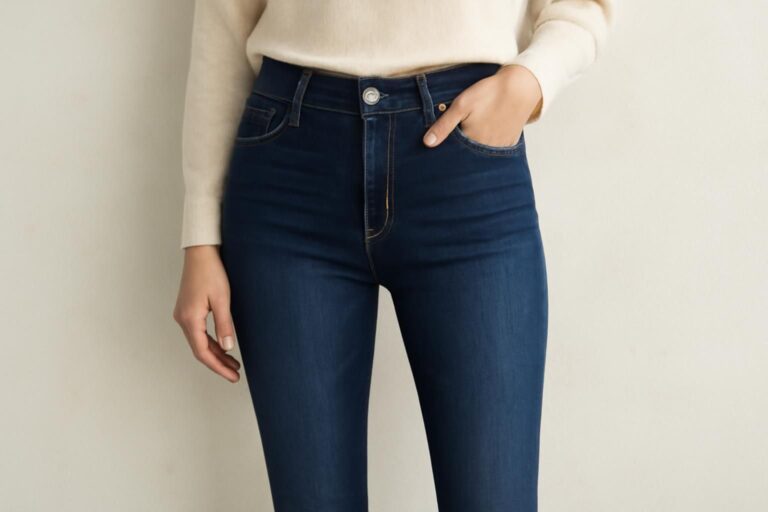
Gap is the first place most people think of for affordable jeans, and their petite line is one of the easiest to find in stores. But “accessible” and “good” are not the same thing.
Gap petite jeans deserve a more nuanced answer than a simple thumbs up or down. Gap petite denim sits in this middle ground where the price is right, the availability is great, and the fit is… almost there. If you are shopping the Petite Jeans (2026) category and thinking about Gap, here is what you need to know before you spend your money.
What Gap actually makes in petite
This is where the first surprise hits. Gap does not make every cut in petite. On many product pages, Petite appears as a fit option next to Regular and Tall, and the styles that offer it change from season to season, so the petite filter can narrow your choices quickly. These are the kinds of cuts to look for in petite:
Gap’s high rise straight and vintage slim styles (such as the High Rise ’90s Slim Straight and High Rise Vintage Slim) are the easiest place to start, because straight cuts are simple to scale down. Fuller cuts like the ’90s Loose also appear in Gap’s petite inseam listings, though sizes in looser fits can be harder to find. Beyond those, you might find seasonal drops of the bootcut, flare or slouchy taper, but availability is inconsistent.
What you may not find in petite: some of the trendier cuts Gap launches each season, which often arrive in regular lengths first or only. This is frustrating if you have been eyeing something specific on their site only to discover the petite filter kills your options, so check the fit selector on the product page before you get attached to a style.
Gap sizes its women’s jeans by waist number (the High Rise ’90s Slim Straight page, for example, lists waist sizes 23 through 35). The petite fit usually covers fewer sizes than regular, and not every waist size is offered in every length, so if you wear the ends of the range, confirm your size is available in petite before ordering.
Fit and sizing breakdown
Start with your usual waist size in other mainstream denim brands. Gap’s straight styles are described on the product pages by how they sit through the hip and thigh (the High Rise ’90s Slim Straight, for example, is “slim through the hip & thigh” with low stretch), so read the fit line before choosing a size. If a straight leg feels roomy in the thigh, that is part of the intended relaxed look rather than a sizing error.
The main sizing question with Gap petite denim is the inseam. Gap’s petite lengths are shorter than regular, but the difference from regular is modest on some styles, and the exact inseam varies by cut and is not always listed in inches on the product page. For someone who is 5’3″ to 5’4″, a petite length is usually close. For anyone 5’1″ or under, expect some cuts to still need a hem.
Compare this with brands that publish a specific petite inseam for each style, which makes it easier to know in advance whether a jean will be short enough. Gap is making a “petite” that serves the taller end of the petite range — roughly 5’2″ to 5’4″ — but leaves the shorter petites with jeans that still need hemming.
Fabric matters as much as fit. Gap’s core straight styles are mostly cotton with a little polyester and stretch (the High Rise ’90s Slim Straight lists 83% cotton, 11% polyester, 5% recycled cotton and 1% stretch, labelled low stretch). A low-stretch, mostly cotton blend like that generally keeps its shape through the day better than high-stretch denim. To limit fading on dark washes, wash inside out in cold water and skip the dryer when you can.
Cuts designed to be snug through the seat, such as a “cheeky” straight, are cut closer in the rear by design. If you are between sizes or have a fuller seat, sizing up one in those cuts is a common fix. High rises sit at or near the belly button on many petite torsos, and if you carry weight in your midsection, a snug rear combined with a very high rise can feel restrictive, so a slightly lower rise or a curvy fit may be more comfortable.
How Gap petite compares to Old Navy petite
This is the comparison everyone asks about since they are both owned by the same parent company. Our guide to Old Navy Petite Jeans has the full breakdown, and there are real differences despite the family connection.
Old Navy petite jeans are cheaper; Gap’s list prices for jeans run from around $70 to $100 at the time of writing, before its frequent sales. Old Navy’s lower prices often come with lighter, stretchier denim, which means more give but less structure, and very stretchy skinny styles such as Old Navy’s Rockstar line can bag at the knee over a long day. Gap’s lower-stretch styles are more likely to hold their shape.
Where Old Navy often wins is availability and price, and its short-inseam section is easy to browse. At Gap, petite is often a fit option on the product page rather than its own aisle, so you may need to use the filters to find it.
The fit proportions are similar but not identical, and each brand publishes its own chart. Compare the hip measurement for your size on both charts: if you have wider hips and prefer more room, the brand with the larger hip figure at your waist size is likely the better choice, regardless of price. If you want better fabric and a more structured fit, Gap is worth the premium.
Color retention is another point to weigh. Dark indigo denim fades with every wash at any price, and cheaper, lighter fabrics can show it sooner. For dark denim especially, care matters: wash inside out in cold water, wash less often, and line dry to keep the original shade longer.
The best Gap petite cuts right now
If you want one pair of gap jeans petite to start with, a high rise straight or vintage slim in petite is the safest choice. That kind of cut hits the sweet spot of trendy enough to look current, relaxed enough to be comfortable, and structured enough to dress up with a blazer. Check the inseam against your own measurement: shoppers around 5’2″ to 5’4″ are most likely to wear a petite straight without hemming. Below 5’2″, plan on a trip to the tailor.
The ’90s Loose in petite is a good second option if you can find it in stock. It is a wider, more relaxed fit, and the petite length helps it give you the oversized look without drowning a shorter frame. If you want a less slouchy look, consider sizing down one from your usual, since a loose cut already adds plenty of volume.
Be careful with mid rise boyfriend cuts in petite. A mid rise can land at an awkward point on a shorter torso, and a relaxed boyfriend fit through the thigh can make petite legs look shorter, not longer. If you want a relaxed fit, the ’90s Loose does it better. If you want that Petite Straight Leg Jeans look, the Vintage Straight is the move.
You can find most of these on Amazon as well. Gap Petite Jeans on Amazon carries several of the core cuts, sometimes at better prices than Gap’s own site, especially if you have a Prime membership.
For anyone building out a full petite denim wardrobe, it makes sense to pair one Gap piece with options from other brands — check the Best Jeans For Petite Women for a wider look at what is out there.
Shop our picks: Gap Mid Rise Vintage Slim Petite.
The verdict
Gap petite jeans are a solid middle-of-the-road option. The low-stretch, mostly cotton fabric is good for the price, the straight cuts are the easiest to get right in petite, and the brand is easy to find in stores if you want to try before you buy. But Gap loses points for a petite selection that varies by season, inseams that may still be long for shorter frames, and an online experience where petite is often a fit option you have to look for. If you are 5’2″ to 5’4″, these are a reliable choice. If you are under 5’2″, the inseam issue alone should push you toward brands that actually scale their petite proportions down far enough. Gap is playing it safe with their petite line, and for a lot of shorter women, safe is not short enough.
Shop the look on Amazon
Everything you need to build a secondhand-style wardrobe, delivered. We may earn a commission on purchases.
Browse picks on Amazon →FAQ
What is the inseam on Gap petite jeans?
It varies by style. On many Gap product pages, Petite is a fit option alongside Regular and Tall, and the exact inseam is not always listed in inches, so check the product details or ask customer service. Petite lengths generally suit the 5’2″ to 5’4″ range but may still require hemming for anyone shorter.
Are Gap petite jeans true to size?
Start with your usual waist size in straight leg cuts and read each product’s fit description. Cuts designed to be snug through the seat, like a cheeky straight, may call for sizing up, while loose cuts such as the ’90s Loose can be sized down for a less slouchy look.
How do Gap petite jeans compare to Old Navy?
Gap’s lower-stretch styles are generally more structured, and Gap costs more at list price. Old Navy is cheaper and easy to browse by short inseam. Gap is worth considering for dark washes and everyday wear; Old Navy is fine for casual weekend jeans.
Does Gap carry petite jeans in stores?
Some Gap stores carry a small petite section, but selection is extremely limited compared to online. Your best bet is ordering online with free returns or checking a Gap Factory outlet, which occasionally stocks petite cuts.
Are Gap jeans good quality for the price?
Gap jeans are solid mid-priced denim, with mostly cotton, low-stretch fabric that holds its shape better than very stretchy budget jeans. The High Rise ’90s Slim Straight, for example, lists 83% cotton, 11% polyester, 5% recycled cotton and 1% stretch. List prices run from around $70 to $100 before Gap’s frequent sales. The weaker points are fit rather than fabric: petite availability changes by season, and petite inseams can still be long for anyone under 5’2″.