Secondhand furniture is where the real thrift savings live — a $1,500 West Elm sofa for $200, a $600 solid-oak dresser for $80 — but only if you know which stores actually stock furniture and what to inspect before it enters your house.
Most casual thrifters waste time looking for furniture at the wrong stores. Salvation Army and Goodwill rotate furniture through quickly and erratically; America’s Thrift and Savers barely stock it at all. Meanwhile Habitat for Humanity ReStore has built a 900-location national network specifically around home furniture and building materials, and most shoppers have never been inside one. Secondhand furniture rewards careful buyers and punishes rushed ones, and most of the expensive mistakes come from skipping a few basic checks. Below is where to actually look, what to inspect, and what to skip regardless of price. For the full landscape of thrift chains across categories, our Thrift Store Chains hub is the starting point.
The best thrift chains for furniture, ranked
Category specialization matters more in furniture than in any other thrift category. The ranked list:
1. Habitat for Humanity ReStore (clear winner). Habitat ReStore operates around 900 locations across the US and Canada, each an independent affiliate of the Habitat network. ReStores are built around home furnishings, appliances, building materials, and decor — this is what they exist for. Inventory is deeper, better-inspected, and more predictable than any general thrift chain. Prices are usually 60–80% below retail new. Proceeds fund Habitat’s home-building mission. If you’re shopping for furniture, ReStore is the first call.
2. Second Chance Baltimore (if you’re in the Mid-Atlantic). The Baltimore flagship covered in our Second Chance Thrift Store review specializes in architectural salvage, vintage furniture, and deconstruction materials. Large warehouse-scale inventory, delivery available. Unique for pre-war pieces.
3. Community thrift shops and hospice thrifts. Smaller scale but higher inventory quality because of estate-donation pipelines. Our Hospice Thrift Store review covers why these shops punch above their weight on quality. Limited floor space means less volume per visit.
4. Salvation Army (furniture-specific locations). Some Salvation Army locations have dedicated furniture sections or separate furniture stores. Quality varies wildly. Pricing can be excellent on upholstered pieces if you can inspect carefully. See our Salvation Army Thrift Store review.
5. Estate sales and moving sales. Not technically thrift, but part of the same ecosystem. EstateSales.net lists local sales; showing up early can yield incredible prices.
6. Craigslist and Facebook Marketplace. Hyperlocal, direct from seller. Best for specific pieces you’ve already identified. No curation, no inspection — you’re on your own.
Avoid for furniture: America’s Thrift, most Goodwill locations (inventory rotates too fast and inspection is minimal), Savers (limited furniture floors), and specialty apparel thrifts (Buffalo Exchange, Crossroads, Plato’s Closet).
Habitat ReStore deep dive
Because Habitat ReStore is the clear leader in this space, worth understanding the model:
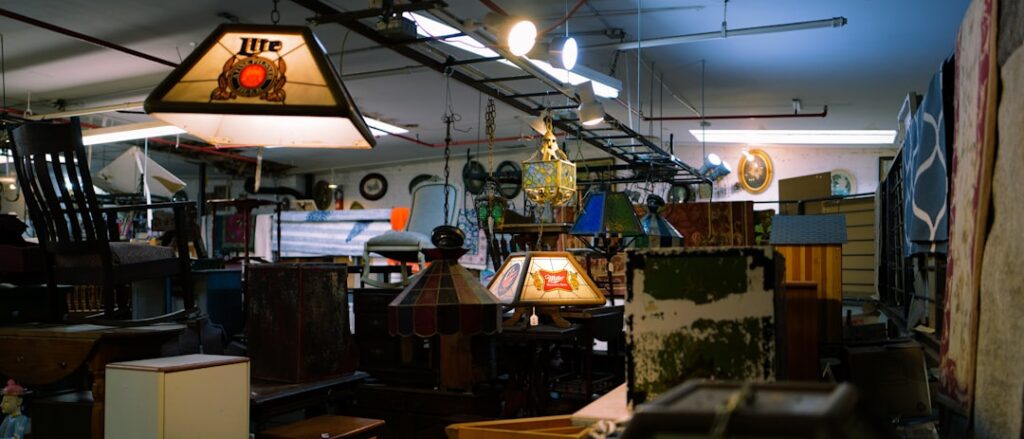
ReStores are nonprofit discount home improvement stores selling donated new and gently used building materials, appliances, furniture, and home decor. Each store is operated independently by a local Habitat affiliate, which means inventory, pricing, and size vary enormously by location. A ReStore in a major metro might be 25,000 square feet with a dedicated furniture wing; a rural ReStore might be 4,000 square feet with a dozen pieces of furniture mixed into a broader building-materials floor.
What you’ll typically find at a well-stocked ReStore:
- Sofas and loveseats ($100–450)
- Armchairs and recliners ($35–200)
- Dining tables and chair sets ($75–400)
- Dressers, chests of drawers, nightstands ($40–250)
- Desks ($30–200)
- Bed frames ($50–300)
- Bookshelves ($20–150)
- Kitchen cabinets (usually removed as whole runs, $200–800)
- Interior doors, hardware, fixtures
- Appliances (tested, sometimes with short warranties)
ReStores often offer delivery at cost — typically $50–75 locally — which is more economical than renting a truck for a single piece. Some stores also have a small design-services or consultation desk for customers refurnishing an entire room.
Find your nearest ReStore at habitat.org/restores. Coverage is broad but not universal — some small metros don’t have one.
What to inspect before buying furniture secondhand
Furniture inspection matters more than apparel inspection because the investment is larger, the rehabilitation cost higher, and the bed-bug risk real. A sensible inspection routine for every piece, in order:
1. Smell first. Stand close and inhale. Cigarette smoke, pet urine, mustiness, or chemical cleaning smells are all signs of problems. Smoke and urine are effectively unremovable from upholstery. Walk away.
2. Inspect for bed bugs (upholstered pieces only). Lift cushions. Look in seam crevices, along the tufting, and at the corners of the frame. Small brown dots (fecal staining) or tiny translucent shells (molted skins) are telltale signs. Live bugs are obvious but often absent — you’re looking for evidence. If in doubt, don’t buy. Bringing bed bugs into your house costs $1,500–3,000 to remediate. Our note: this is the one inspection that is worth a full walkaway even on a great price.
3. Structural inspection. Press down firmly on the frame. Rocking, creaking, or flex means frame damage. For wood furniture, look for wobble, loose joints, and veneer separation. Pull out drawers fully — check for broken slides and bottom-panel integrity.
4. Cushion condition (upholstered). Press a cushion. Good cushions spring back; dead cushions leave permanent imprints. Dead cushions can be replaced but it’s a $100–300 project per sofa.
5. Wood finish and surface. Water rings can be refinished. Deep scratches, gouges, and split wood are harder. Veneer lifting is a warning — it usually means water exposure that has damaged the underlying substrate.
6. Sit, lie, open, close. Sit in every chair. Lie on every sofa. Open every drawer. Close every door. Functional problems surface immediately under actual use.
7. Check for mold. Underside of furniture, back of drawers, inside cabinets. Black spotting or musty smell means mold. Mold on wood can sometimes be remediated; on fabric almost never.
A basic cleaning kit handles light issues: keep an Upholstery Cleaner And Stain Remover on Amazon and a microfiber cloth on hand for any upholstered find, plus a wood soap such as Murphy’s Oil Soap for wood surfaces. For genuine refinishing (sanding, staining), the project cost climbs quickly — factor that into your decision at purchase time.
When to skip regardless of price
Hard-no categories at any furniture thrift:
Mattresses. Bed bug risk, hygiene, structural integrity. Buy new.
Upholstered furniture with any bed bug signs. Even faint evidence.
Cribs manufactured before 2011. Federal safety regulations changed in 2011 to ban drop-side cribs and update slat-spacing standards. Older cribs don’t meet current law.
Car seats. Already covered in our Kids Thrift Store Near Me piece. Never buy secondhand.
Particleboard furniture that’s been water-damaged. Particleboard swells and loses structural integrity permanently when exposed to water. Light scratches are fine; swelling is a skip.
Anything with active pet urine. Odor and deep staining penetrate beyond what home cleaners can reach.
Upholstered chairs with spring damage. Recovering is a pro-only project. Cost exceeds replacement.
How secondhand furniture compares to cheap new
The comparison most shoppers don’t make: a $400 solid-wood dresser from the 1980s at ReStore vs. a $220 particleboard dresser from IKEA or Wayfair.
The secondhand dresser is:
- Heavier (solid wood vs. pressed board)
- More durable (will outlast 3–4 particleboard pieces)
- Repairable (can be sanded, refinished, re-pulled)
- Environmentally better (no new manufacturing)
- More forgiving of being moved (particleboard falls apart on the second move; solid wood doesn’t)
The particleboard dresser is:
- Cheaper upfront
- Lighter to move
- Available in specific dimensions and colors
- Not restorable once damaged
For any furniture you plan to keep more than 3 years, secondhand solid-wood is a better value even at 80% more upfront cost. The math shifts only if you’re furnishing a temporary apartment or a short-term rental. For broader thrift value context, Thrift Store Finds covers which categories deliver best on cost-per-year-of-use.
Transportation and delivery logistics
Furniture shopping is only useful if you can get it home. Options:
- Store delivery. Habitat ReStore almost always offers local delivery ($50–75). Salvation Army furniture stores sometimes.
- Truck rental. Home Depot, Lowe’s, and U-Haul all offer hourly pickup trucks ($19–30/hr plus mileage). Works for single pieces.
- Borrow a friend’s truck or SUV. Cheapest if available.
- Dolly.com, LugG, or similar on-demand moving apps. Two movers and a truck for 1–2 hours ($80–140). Good for heavier pieces.
- TaskRabbit. Similar to above with more flexibility.
Measure doorways, stairwells, and the intended room before buying. A sofa that won’t fit up the stairs is a $200 lesson.
The verdict
Furniture thrift is the single highest-value category in secondhand shopping, and almost nobody is doing it right. Skip the general chains — Goodwill, Salvation Army, Savers — as primary furniture stops; they rotate furniture erratically and inspection standards aren’t built around it. Go directly to Habitat for Humanity ReStore if one is in your area. Supplement with hospice thrifts and community shops for estate-sourced finds. Inspect ruthlessly — bed bugs and smoke damage are the two categories that will haunt a house, and both are findable on a careful 5-minute look. Factor transportation into your budget. And accept that solid wood furniture at 3x the price of particleboard is still the better value on anything you’ll own more than a few years. The savings stack up, the pieces look better, and you’re not paying to make new landfill when perfectly good furniture already exists.
Shop the look on Amazon
Everything you need to build a secondhand-style wardrobe, delivered. We may earn a commission on purchases.
FAQ
What is the best thrift store for furniture?
Habitat for Humanity ReStore. 900+ locations across the US and Canada, specifically built around home furnishings and building materials. Deeper inventory, better inspection, and more consistent pricing than general thrift chains.
How do I inspect used furniture for bed bugs?
Lift cushions and examine seam crevices, tufting, and corner frame joints for small brown fecal staining or tiny translucent shells (molted skins). Live bugs are obvious but often absent; you’re looking for evidence of past infestation. If in doubt, skip — remediation costs $1,500–3,000.
Is it safe to buy a used sofa at a thrift store?
Usually yes, with careful inspection. Check for bed bugs, smoke and urine odor, cushion integrity, and frame stability before buying. Skip anything that fails any of these tests. Professional cleaning after purchase handles light issues.
How much should I spend on thrift furniture?
Typical Habitat ReStore prices run 60–80% below retail new. A $1,500 retail sofa is $200–450 secondhand. A $600 dresser is $80–200. Factor in delivery costs ($50–75) and any rehabilitation budget (cleaning supplies, basic repair).
Does Goodwill have furniture?
Some Goodwill locations have furniture sections but inventory is inconsistent. Goodwill is not a primary furniture destination compared to Habitat ReStore. Check your local Goodwill’s offerings, but don’t make it the first stop for major furniture purchases.