
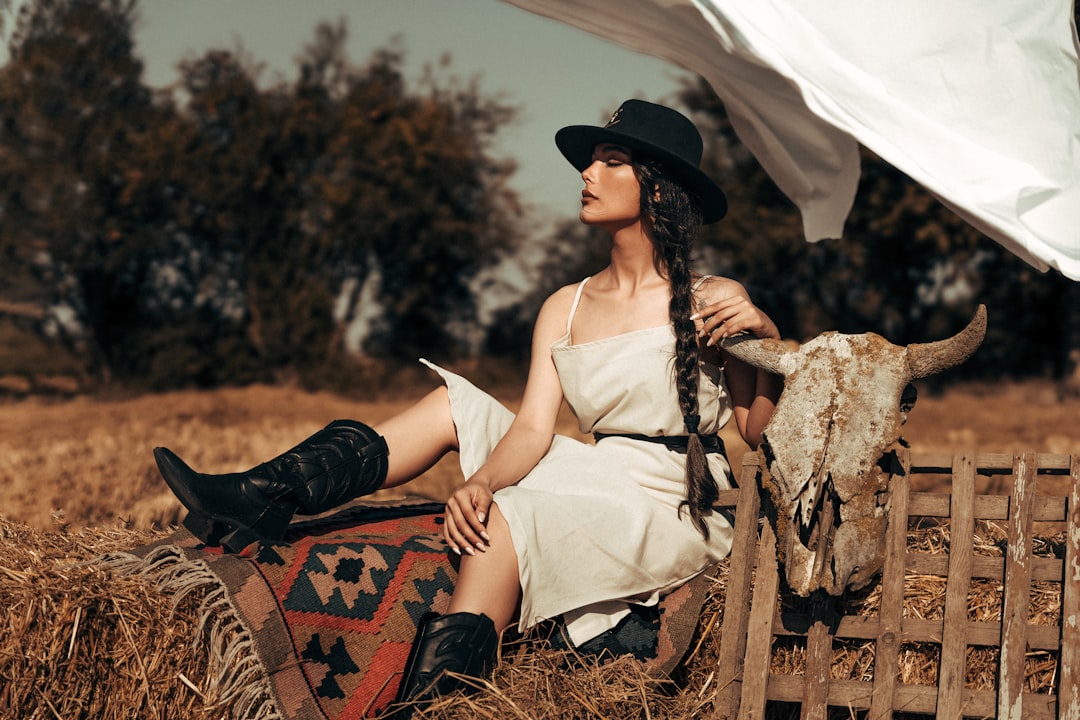
If you typed “cow girl boots” into a search bar, you are almost certainly shopping for cowgirl boots, and we are going to treat both spellings the same way through this guide. The product is identical. The shopping decision is the part that matters.
The “cow girl” two-word phrasing pulls about 9,800 monthly searches and tends to come from voice search, gift buyers, and shoppers who are new to the category. We tracked the entire women’s Western boot market for Tumbleweed Thrift readers and found that the same advice applies whether the search reads “cow girl boots,” “cowgirl boots,” “cowboy boots for women,” or “women’s western boots.” This guide breaks down the terminology question, the four price tiers, the silhouettes that actually work for first-time buyers, and the brands that earn their reputations versus the ones that coast on them. The parent index for the category is the Cowgirl and Western Boots hub, and the broader anchor guide for the category sits at Women’s Cowboy Boots.
Cow girl boots vs cowgirl boots vs cowboy boots, what’s the difference?
There is no functional difference. Cow girl with a space, cowgirl as one word, and cowboy boots for women all describe the same product. The marketing copy varies by brand and by retailer, and shoppers picked up the variations from different places. Cowboy boots is the original term going back to the late 1800s, when the silhouette emerged from the merger of Mexican vaquero footwear and Wellington-style English riding boots. The cowgirl variant emerged in the 1930s as a gendered marketing term when brands started cutting the same work boots with women’s lasts and slightly more decorative stitching. The two-word “cow girl” version is colloquial and modern; it shows up most often in voice-search results and from shoppers who are not regular Western-wear customers.
What you should actually buy is the same regardless of which spelling brought you here. Across the entire category, the buying decision is driven by four variables: budget, use case, silhouette preference, and fit nuance like calf circumference. Brand preference flows from those four. We will walk through each one in order. Throughout this guide, we use cowgirl boots and cow girl boots interchangeably to match how the actual shopper thinks about them.
Best cow girl boots for first-time buyers
If this is your first pair, the safest play is mid-tier genuine leather between $150 and $250 from a brand with a real return policy. Skip both extremes on the first purchase. The cheapest synthetic Amazon listings will fall apart inside two seasons, and a $1,500 Lucchese is a lot of money to spend on a category you are still figuring out.
For first-time buyers we recommend three picks. Ariat Fatbaby Heritage at $150 to $220 is the easiest entry point, with a slightly shorter shaft, a comfort-engineered insole, and a forgiving snip toe. Justin Gypsy or Justin classic round-toe at $180 to $250 gives you full heritage construction at a value price. Smoky Mountain at $80 to $130 is the sub-$150 pick that still uses genuine leather, though the construction sits a tier below Ariat or Justin. Verify against the brand’s current pricing here: Ariat Fatbaby Heritage Womens on Amazon.
Sizing on a first pair is where most regret happens. Order from a returns-friendly retailer (Zappos, Nordstrom, or the brand DTC site) so you can return without restocking fees if the calf circumference or toe box does not work. Order your normal shoe size first, and only adjust if the brand has a documented quirk like Justin running small in the toe or Ariat running large in Heritage cuts.
Mid-tier cow girl boots, the $150 to $400 sweet spot
This is the daily-wearer tier. Almost every shopper who eventually loves cowboy boots ends up settling here for their primary pair, and the tier rewards the spend with construction that lasts a decade.
Ariat anchors mid-tier with the Heritage Western and Round Toe Roper lines. Both use Goodyear welt construction and the brand’s proprietary Advanced Torque Stability insole. Read our deep dive on the brand at Ariat Women’s Cowboy Boots. Justin classic cuts including Cattle Drive, Bent Rail, and Stampede sit in the same tier with slightly more heritage feel and slightly less comfort technology, covered at Justin Cowgirl Boots. Dan Post fills the middle with reliable mid-tier construction and a slight edge in color and pattern variety. Idyllwind by Miranda Lambert, Boot Barn’s exclusive line, sits at the fashion-forward end of mid-tier from $150 to $300; Idyllwind boots tend to be more about the look than the lifespan, and the construction is mid-tier rather than premium.
The mid-tier delivers Goodyear welt construction, full-grain leather, and 10-plus year lifespans with proper care. That is the tier most shoppers should target if the boot will see weekly wear. Below mid-tier, lifespan drops sharply. Above mid-tier, the marginal lifespan increase slows; you are paying for craft and material quality rather than for additional years.
Premium and heritage cow girl boots, $400 to $2,000 plus
Premium and heritage cow girl boots are about craft, material, and statement value rather than incremental durability. A $500 Lucchese will last about as long as a well-cared-for $250 Justin; what you pay for is the handcrafted construction, the leather quality, and the design detail.
Lucchese is the standard at heritage luxury. Founded 1883 in San Antonio, the brand handcrafts each pair at their bench. Lower lines start around $500, the standard ready-to-wear range runs $700 to $1,500, and exotic-leather pairs in ostrich, alligator, and stingray run $1,500 to $3,000. Custom-bench Lucchese is $2,000 plus with an 8 to 12 week wait. We cover the brand at Lucchese Women’s Cowboy Boots.
Old Gringo is the bold-statement designer brand. Heavy use of color, applique, and inlay work. Standard pieces $400 to $700, statement and exotic pairs $700 to $1,500. Tony Lama is heritage premium with a more traditional aesthetic than Old Gringo, $300 to $1,000 typical. Tecovas is the DTC heritage brand, $300 to $500, sold direct without the boutique markup so the value-per-dollar is one of the strongest in this tier. Frye operates in the fashion-cowgirl premium lane with cleaner aesthetics, $300 to $600. Corral fills the mid-premium embellished slot at $200 to $500.
Cow girl boots silhouettes
The silhouette decision is more important than most first-time buyers realize, and it drives almost everything about how the boot wears day to day.
Ankle cow girl boots cut at or just above the ankle, typically a 5 to 7 inch shaft. They are the most casual silhouette and the most versatile across outfits. Cross-link to the Ankle Cowboy Boots for Women guide for the full breakdown, and the Ankle Cowgirl Boots live article on the P7 hub. Ankle silhouettes pair with everything from cuffed jeans to summer dresses, and they read more contemporary than traditional Western.
Short-shaft cow girl boots run 7 to 9 inches and sit between ankle and standard. They are easier to wear with cropped pants than mid-calf cuts and read less costume-y than tall pairs. We cover them at Short Cowboy Boots for Women and the live Short Cowgirl Boots page.
Mid-calf cow girl boots, 10 to 13 inches, are the classic silhouette and the workhorse pair if you only buy one. They tuck under straight jeans, work bare with skirts and dresses, and read traditionally Western without going full statement. Almost every Ariat Heritage and Justin classic pair lives in this height range.
Tall cow girl boots run 14 to 17 inches and read more dramatic. The Tall Cowboy Boots for Women guide covers the height-specific considerations, and the live High Cowgirl Boots page sits in the same lane. Over-the-knee versions extend past the knee and read full statement; they are niche and look best on either very tall or very petite frames.
Toe shapes, round, square, pointed
Toe shape is the variable that most determines whether you actually wear the boot or leave it in the closet. We rank them by foot-friendliness across a full day of wear.
Round toe is the most forgiving and the easiest fit on a wide range of foot shapes. It reads slightly more casual and slightly less fashion-forward than the alternatives, but it is the safest first-pair pick. Most Ariat Round Toe Roper, Justin classic round, and Lucchese round pairs use this shape.
Square toe is the modern fashion silhouette and accommodates wider forefeet. It reads more contemporary than round and slightly less heritage. The Cowboy Boots for Women Square Toe guide goes deep on the cut, and the live Wide Square Toe Cowgirl Boots piece covers wider variants. Square-toe pairs from Old Gringo, Idyllwind, and Frye dominate fashion-cowgirl wear.
Pointed toe is the most traditional and the most punishing if sizing is off. We recommend sizing up half a step for genuine pointed-toe pairs, especially in heritage cuts where the toe taper is sharper. Snip toe is the middle ground, technically pointed but truncated at the tip, which gives the visual line of pointed without the foot pressure.
Where to find cow girl boots
Boot Barn is the broadest single answer in the United States with around 250 stores nationally and Idyllwind exclusivity. Cavender’s covers Texas, Oklahoma, and adjacent Southwest states with around 95 stores and a heritage-focused assortment; pricing is similar to Boot Barn. Local Western-wear specialty stores fill regional gaps; Google Maps “western boots near me” surfaces them. Tractor Supply Co. and Rural King carry basic ranch-and-farm cowboy boots, but the assortment is limited compared to Boot Barn.
Brand DTC sites are reliable for premium pieces. Ariat.com, Tecovas.com, Lucchese.com, OldGringoBoots.com, and TonyLama.com all run their own e-commerce. Amazon offers the broadest selection at the lowest prices, and the Amazon Cowgirl Boots guide breaks down what to verify. Counterfeit risk is real on premium brands; check that the listing is sold by the brand storefront rather than a third-party seller. Nordstrom and Zappos sit in the most returns-friendly tier. The full proximity question is covered at Cowgirl Boots Nearby.
Thrift and vintage cow girl boots are a real shopping channel for patient hunters. Goodwill and Salvation Army occasionally surface premium brands at heavy discounts, and dedicated Western consignment shops in Texas, Tennessee, and the Mountain West regularly carry vintage Lucchese, Tony Lama, and Justin pairs. The Thrift Store Cowboy Boots guide covers the hunt in detail.
Common cow girl boot questions answered
Sizing variability is the single most common complaint, and the fix is brand-by-brand research before ordering. Ariat runs slightly large in Heritage cuts and true to size in Fatbaby and Roper. Lucchese runs true. Justin runs slightly small in the toe box on certain classic cuts. Old Gringo uses European sizing, where a US 8 is roughly their 38 or 38.5. Always read recent reviews on the specific line you are considering, and always order from a returns-friendly retailer the first time you try a brand.
Break-in expectations need to be realistic. Genuine leather cow girl boots take 20 to 50 wears to break in fully. The first 10 wears are stiff and sometimes uncomfortable at the heel and counter. Wears 10 to 30 are when the boot starts molding to your foot. By wear 50, the leather has shaped to your specific foot in a way no synthetic can. Plan for the break-in instead of fighting it: thick socks the first 10 wears, walk on carpet not concrete, condition every 5 to 10 wears with neutral boot oil. The Comfortable Cowboy Boots for Women guide covers the break-in process in more depth.
Leather conditioning, salt-stain prevention, and storage all matter more than first-time buyers realize. Condition genuine leather every 5 to 10 wears or whenever it starts looking dull. Use neutral boot oil on undyed leather and color-matched conditioner on dyed pairs (a clear conditioner can dull red, white, or pastel finishes). Apply waterproof spray before the first wear, especially on suede. Store with boot trees or rolled magazines to maintain shaft shape; do not stack pairs flat.
Authentic cow girl boots vs fast-fashion
The construction tier is the single biggest variable in the category, and we cover it in depth at Real Cowgirl Boots. Authentic cow girl boots use Goodyear welt construction, full-grain leather upper, and traditional silhouettes; they last 10 to 20 plus years. Fast-fashion cowgirl boots use cemented (glued) sole construction, synthetic or thin leather upper, and trend-driven silhouettes; they last 1 to 3 seasons.
The price tells you the construction tier most of the time. Below $100 you are almost always in fast-fashion territory unless you found heritage-brand clearance. From $100 to $200 the line blurs; both Smoky Mountain genuine leather and Steve Madden synthetic live in that band. Above $200 you are usually in genuine-construction territory. Above $400 you are in premium and heritage. Match the tier to your wear pattern. For festivals four times a year, fast-fashion is fine. For weekly wear, only authentic construction makes financial sense over five-year math.
Shop the look on Amazon
Everything you need to build a secondhand-style wardrobe, delivered. We may earn a commission on purchases.
FAQ
Is “cow girl boots” the same as “cowgirl boots”?
Yes. The two-word and one-word spellings refer to the same product. Search engines treat them as variants of the same query, and retailers stock the same boots under both spellings. The “cow girl” two-word version shows up most often in voice search and from newer shoppers; the standard spelling is “cowgirl.”
What is the difference between cow girl boots and cowboy boots?
Marketing language. Cowboy boots is the original term and is gender-neutral despite the name; cow girl and cowgirl emerged as women’s-specific marketing in the 1930s. The product is the same, though women’s lines often use slightly shorter shafts, slightly more decorative stitching, and a women’s last for the foot shape.
How much should I spend on my first pair of cow girl boots?
$150 to $250 is the sweet spot for a first pair. That tier gets you genuine leather, Goodyear welt construction, and a 10-year-plus lifespan from Ariat, Justin, or comparable mid-tier brands. Spending less risks fast-fashion construction; spending more risks regret if you find the category is not your everyday wear.
What size cow girl boots should I order?
Start with your normal shoe size, then adjust by brand. Ariat Heritage cuts run slightly large; Fatbaby and Roper run true. Justin runs slightly small in the toe box on some classic styles. Lucchese runs true. Old Gringo uses European sizing. Always order from a returns-friendly retailer the first time you try a brand.
How long do cow girl boots take to break in?
Genuine leather pairs take 20 to 50 wears to break in fully. The first 10 wears are stiff. Wears 10 to 30 mold to your foot. Wears 30 to 50 are when the boot becomes essentially custom-shaped. Wear thick socks early, walk on carpet not concrete, and condition every 5 to 10 wears.
The verdict
For a first pair of cow girl boots, mid-tier Ariat or Justin in a classic round-toe between $150 and $250 is the safest pick. The construction is genuine, the brands have credible return policies, and the lifespan justifies the spend over any time horizon longer than a single season. Browse current options here: Womens Cowgirl Boots Leather on Amazon.
Once you have a daily-wearer settled and broken in, add a fashion-forward second pair. Idyllwind, Frye, or Old Gringo entry pieces fill the festival and statement lane. If your budget eventually expands toward heritage luxury, Lucchese is the bench-made standard. Skip the cheapest synthetic Amazon listings; the lifespan math punishes that purchase fast. And whichever brand you start with, order from a returns-friendly retailer the first time so the fit gamble has an exit. Cow girl boots reward patience: pick the right tier, break them in honestly, and the boot rewards the spend over a decade or more.


