
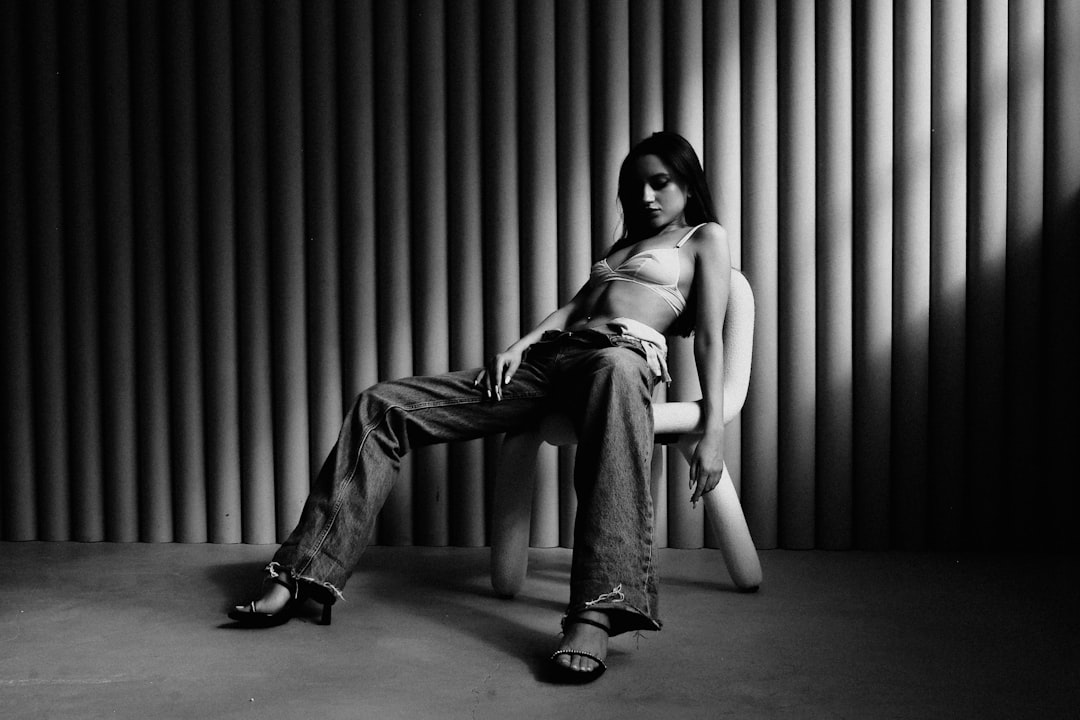
Straight leg jeans are the denim equivalent of a white t-shirt. They go with everything, they never look wrong, and most people overlook them in favor of something louder. I’ve been wearing straight leg jeans as my primary silhouette for over three years, and they quietly outperform every other cut in my closet on sheer wearability. While trends cycle through flares, barrel legs, and ultra-wide silhouettes, the straight leg just keeps working.
This guide covers what defines the straight leg silhouette, how it differs from cuts it gets confused with, and how to find a pair that fits your body and wardrobe. It’s part of our larger Denim Styles hub, where we break down every major jean silhouette side by side. If you’re trying to figure out which cut works best for you, start there and come back here once you’ve narrowed it down.
What Makes a Jean “Straight Leg”
A straight leg jean has a consistent width from the hip to the hem. The leg does not taper inward toward the ankle, and it does not widen into a flare or bootcut shape. The leg opening is essentially the same width as the thigh — typically between 14 and 17 inches, depending on the size and brand. It’s a column of fabric that runs in a clean vertical line from knee to floor.
That sounds simple, and it is. But that simplicity is exactly why the straight leg works in more contexts than any other silhouette. There’s no drama in the leg shape to fight with your outfit choices. No flare demanding platform shoes. No skinny fit requiring specific boot shapes. No wide leg needing a tucked-in top to keep proportions in check. The straight leg is neutral. It cooperates with whatever you put above and below it.
I’ve worn the same pair of dark wash straight jeans to a Saturday farmers market and a Tuesday client meeting in the same week. No other cut in my rotation crosses that range without adjustments.
Straight Leg vs. Everything Else
Straight Leg vs. Skinny
The most common confusion. A Skinny Jeans tapers from the thigh to a narrow ankle opening, usually 10 to 12 inches. A straight leg maintains width — the ankle opening is 14 to 17 inches and matches the knee width. From across the room, a relaxed skinny might look similar to a slim straight leg. Up close, the difference is obvious in the lower leg. Skinny jeans cling from calf to ankle. Straight legs hang in a line.
Straight Leg vs. Bootcut
A Bootcut Jeans is actually a modified straight leg — straight through the thigh and knee, then subtly wider from mid-calf to hem. The difference is slight (bootcut openings are 18 to 20 inches vs. 14 to 17 for straight), but it changes the visual effect. Bootcuts accommodate boot shafts underneath. Straight legs sit on top of boots or tuck in cleanly.
Straight Leg vs. Wide Leg
A Wide Leg Jeans has a wider cut throughout the entire leg, with openings from 22 inches and up. Straight legs are slimmer and closer to the body without being fitted. If wide legs create a column, straight legs create a slightly narrower column. The wide leg makes a statement. The straight leg disappears into the outfit — which is often exactly what you want.
Rise Options for Straight Leg Jeans
Straight legs come in every rise height, and the rise changes the vibe more than people expect.
High-rise straight legs are my daily preference. The waistband sits at or above the natural waist, creating a long leg line that pairs naturally with tucked or cropped tops. Our High Waisted Straight Leg Jeans goes deeper on specific pairs and brands for this rise. A high-rise straight leg in dark wash is, in my opinion, the single most versatile jean configuration you can own.
Mid-rise straight legs sit between the hip bone and natural waist. They’re more forgiving for seated comfort and work well with untucked tops. If high-rise feels restrictive on your torso, mid-rise gives you the same leg silhouette without the waistband tension. Our Mid Rise Straight Leg Jeans has specific recommendations.
Low-rise straight legs have a Y2K edge to them. They work, but they change the outfit from “effortless classic” to “intentionally retro.” I keep one pair for specific styling moments but don’t reach for them daily.
Fabric and Fit: What I Look For
I’ve bought straight leg jeans from over a dozen brands in the past three years. Here’s what I’ve learned about what actually matters in the fit.
Stretch content: 1 to 3 percent elastane is the sweet spot. Enough give to sit, crouch, and move comfortably, but not so much that the jeans stretch out and sag by mid-afternoon. I’ve found that Judy Blue lands this balance well — their straight leg options hold shape through a full day of wear without feeling rigid. My Judy Blue Jeans covers their overall quality and fit in detail.
Denim weight: Medium weight (10 to 12 oz) works year-round. Lightweight denim drapes too much and loses the clean vertical line. Heavy rigid denim looks incredible but takes weeks to break in and isn’t practical for everyday wear unless you’re committed to the process.
Leg opening: This is personal. A 14-inch opening creates a slim straight leg that reads almost like a relaxed skinny. A 17-inch opening is a roomier, more vintage straight leg. I prefer 15 to 16 inches — enough room to layer over a low boot, slim enough to look intentional rather than shapeless.
Kancan makes a straight leg that runs slightly slimmer than most brands, which works well if you want a closer fit without going full skinny. More on their approach in our Kancan Jeans Review. Vervet’s straight leg options tend toward a more relaxed, vintage-inspired fit — our Vervet Jeans Review has the details on their sizing and construction.
Styling Straight Leg Jeans
This is where the straight leg earns its reputation. The neutral silhouette means you’re styling the outfit, not working around the jeans.
Footwear: Anything works. Sneakers, loafers, ankle boots, knee-high boots, sandals, heels. I’m not being hyperbolic — the straight leg genuinely cooperates with every shoe category. The leg opening is wide enough to sit cleanly over most ankle boots but not so wide that it swallows a slim sandal. This alone makes it more versatile than flares (which need height) or skinnies (which need specific boot shapes).
Tops: Tucked, untucked, cropped, oversized — all of it. A fitted turtleneck tucked into high-rise straight legs reads polished. An oversized band tee with the same jeans reads casual. A blazer layered over either version elevates it further. The straight leg doesn’t impose a styling rule the way other silhouettes do.
Seasons: Straight legs work 12 months a year. Dark wash in fall and winter, medium or light wash in spring and summer. The silhouette doesn’t change with the season because there’s nothing trend-dependent about it. I rotate washes but never rotate away from the cut.
Where to Buy Straight Leg Jeans
The market is broad. Here’s how I think about price tiers for this silhouette.
Under $50: Amazon is a reliable starting point — Straight Leg Jeans Women High Rise on Amazon turns up options from affordable brands that are worth trying before committing to premium denim. Poshmark is even better for value: Straight Leg Jeans Women on Poshmark regularly has lightly worn pairs from Levi’s, Madewell, and boutique brands at a fraction of retail.
$50-$100: Judy Blue, Kancan, and Vervet live here. This is the sweet spot for most buyers — well-constructed stretch denim with consistent sizing and styles that last through regular wear. Most of my straight leg rotation came from this price range.
$100+: Levi’s premium lines, Madewell, Citizens of Humanity, AGOLDE. The fabric quality and construction details are genuinely better, but the straight leg silhouette is simple enough that a $60 pair and a $200 pair look comparable from across a room. The premium shows up in how the fabric ages, how the hardware holds up, and how the color retains depth over dozens of washes.
Why the Straight Leg Doesn’t Get the Attention It Deserves
I think people skip the straight leg because it doesn’t photograph as dramatically as other cuts. A flare creates movement. A wide leg makes a statement. A barrel leg is a conversation starter. The straight leg just… looks like jeans. And that’s the point.
The jean you reach for most isn’t the one that turns heads on Instagram. It’s the one that works with the boots you’re already wearing, the top you grabbed without thinking, and the jacket you threw on at the door. That’s the straight leg. It’s the default, the workhorse, the cut that never goes out of style because it was never in style in a trend-dependent way. It just exists as good denim.
I own jeans in every silhouette covered in our Denim Styles hub. When I’m getting dressed and don’t want to think about whether my jeans work with the rest of my outfit, I reach for the straight legs. Every time.
The Verdict
Straight leg jeans are the most underrated silhouette in women’s denim. They work with every shoe, every top, every body type, and every dress code from weekend casual to smart-casual office wear. The fit is forgiving without being sloppy. The silhouette is clean without being restrictive. And unlike trend-driven cuts that peak and fade, the straight leg has been a constant in denim for decades.
Start with one pair: high-rise, dark wash, medium-weight denim with 2 to 3 percent stretch. Judy Blue or Kancan for accessible pricing, Levi’s or Madewell if you want to invest a bit more. Wear it for two weeks and pay attention to how often you reach for it over everything else. The straight leg doesn’t announce itself, but it earns the rotation spot on reliability alone.
Shop the look on Amazon
Everything you need to build a secondhand-style wardrobe, delivered. We may earn a commission on purchases.
FAQ
Are straight leg jeans the same as straight fit jeans?
Yes. “Straight leg,” “straight fit,” and “straight cut” all describe the same silhouette — a jean with a consistent leg width from hip to hem, no taper, and no flare. Different brands use different terminology, but the construction is the same. If the leg opening is roughly the same width as the knee, it’s a straight leg regardless of what the label says.
Do straight leg jeans look good on curvy body types?
They look good on every body type, and that’s not a platitude. The straight leg creates a clean vertical line from the hip down, which balances wider hips and doesn’t cling to the thigh or calf the way skinny jeans do. For curvy figures specifically, a high-rise straight leg with a slightly wider leg opening (16 to 17 inches) provides the most comfortable fit while maintaining the silhouette. The key is finding a pair that fits the widest part of your hip and thigh without gapping at the waist — look for brands with stretch content and curvy-specific sizing.
What is the difference between straight leg jeans and mom jeans?
Mom jeans are typically a high-rise straight or tapered leg with a relaxed fit through the hip and thigh — they’re cut for comfort over sleekness, with a slightly baggy look. A true straight leg can be slim or relaxed, and it doesn’t taper at the ankle. Many “mom jeans” on the market today are actually tapered-leg jeans labeled with the mom jean name for trend appeal. If the ankle opening is narrower than the knee, it’s tapered, not straight.
Can I wear straight leg jeans to the office?
In most modern workplaces, absolutely. A dark wash or black straight leg in a clean, non-distressed fabric reads as polished as a trouser to most people. Pair with loafers or low-heeled boots and a structured top or blazer. The straight leg silhouette is the easiest denim cut to dress up precisely because it’s understated — there’s no flare or exaggerated width competing with your professional top half. I’ve worn straight legs to client meetings for years without a second thought.


