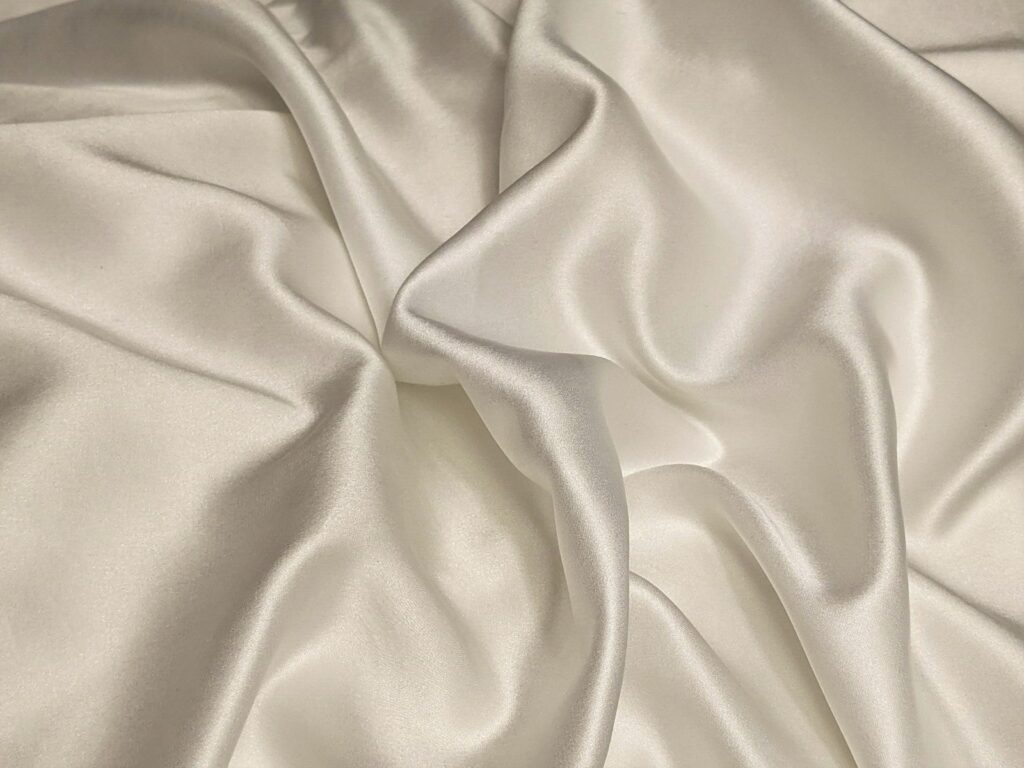
Acetate is the silky fabric tucked inside many blazers, coats and evening dresses, and it has one care rule that surprises people: keep nail polish remover well away from it.
What is acetate? It is a manufactured fibre made from cellulose acetate, a chemically modified form of plant cellulose. That makes acetate a cousin of rayon, the regenerated-cellulose fibre covered in our hub guide What Is Rayon? The Family of Fibers Made From Wood Pulp. This guide explains how the FTC defines acetate fabric and triacetate, where you will find an acetate lining, how acetate vs polyester compares, and how to care for it.
Quick answer
The FTC defines acetate as “a manufactured fiber in which the fiber-forming substance is cellulose acetate.” It is common in linings and satin-look evening fabrics. Acetone, the solvent in many nail polish removers, dissolves it, according to the Smithsonian Museum Conservation Institute.
The FTC definition of acetate and triacetate
US textile labels use the generic fibre names in the FTC’s rule at 16 CFR 303.7. That rule defines acetate as “A manufactured fiber in which the fiber-forming substance is cellulose acetate.”
The same rule adds a sub-category: “Where not less than 92 percent of the hydroxyl groups are acetylated, the term triacetate may be used as a generic description of the fiber.” In plain terms, triacetate is a more fully modified version of the same cellulose acetate, and the FTC lets it carry its own name on the label.
The word itself comes from Latin acetum, “vinegar,” according to the Online Etymology Dictionary; in chemistry, an acetate is a salt of acetic acid. That is etymology only and says nothing about how the fabric behaves.
Acetate vs rayon
Both start from cellulose, but the FTC defines them differently. Rayon is “a manufactured fiber composed of regenerated cellulose,” while acetate’s fibre-forming substance is cellulose acetate. So they are related cellulose-based fibres with separate generic names and separate care needs. You may also meet What Is Cupro? The Silky Regenerated Fiber and What Is Viscose? How It’s Made, How It Feels and How to Care for It, two other cellulose-based fibres often used for linings.
Where you will find acetate fabric
Acetate is common in linings and satin-look evening fabrics; this is common usage rather than a sourced statistic. Typical places:
- Jacket and coat linings. An acetate lining lets a jacket slide on over a shirt.
- Tie linings. The Smithsonian MCI specifically mentions tie linings when warning about acetone.
- Evening wear. Satin and taffeta-look dresses and skirts. Satin is a weave, not a fibre, as our Satin vs Silk guide explains, so check the fibre line.
- Blends. Acetate mixed with viscose or silk in dressier fabrics.
Eyewear frames are also often called “acetate,” but that is a different product, and no reputable source we could reach backed specific performance or hypoallergenic claims, so we make none here.
Acetate vs polyester
Acetate vs polyester comes up most with linings, because both are used for the job. Neither is the right answer every time.
| Acetate | Polyester | |
|---|---|---|
| FTC definition | Fibre-forming substance is cellulose acetate | Synthetic polymer, at least 85% ester of a substituted aromatic carboxylic acid |
| Starting material | Plant cellulose, chemically modified | Petroleum-derived polymer such as PET |
| Solvent warning | Smithsonian MCI: acetone dissolves acetate and triacetate | No acetone warning in our sources |
| Typical care | Often dry clean or cool hand wash, per the label | Usually machine washable, per the label |
| Feel | Silky, lustrous, drapey | Varies from silky to crisp |
If easy washing matters most, a polyester lining is often simpler to live with. If you are drawn to the drape and sheen of acetate, budget for gentler care. Read more in What Is Polyester? Pros, Cons and How to Care for It.
How to care for acetate fabric
Follow the label first. Many acetate garments say dry clean, while some allow a cool hand wash. A common method when hand washing is allowed:
- Confirm the label allows washing; if it says dry clean only, take it to a professional cleaner.
- Fill a basin with cool water and a little mild detergent.
- Swish the garment gently for a few minutes without wringing.
- Rinse in cool water.
- Roll it in a towel to press out water.
- Hang or lay flat to dry away from heat.
- Iron on low, inside out, with a press cloth if the label allows.
Keep solvents away. The Smithsonian Museum Conservation Institute and K-State Research and Extension both warn that acetone, found in many nail polish removers, dissolves acetate and triacetate fabrics. Never use acetone-based removers on polish spills on acetate; take the piece to a cleaner and point out the stain. Solvents should be used only with ventilation and away from flames, and if anyone swallows or breathes in a cleaning product, call Poison Control (1-800-222-1222 in the US). Never mix bleach with ammonia, vinegar or other cleaners.
For stains in general, test any product on a hidden spot first and avoid the dryer until the stain is gone. A gentle Delicate Wash Detergent on Amazon and a Pressing Cloth For Ironing on Amazon are useful to have on hand.
Top-selling match on Amazon

- Blouses To Quilting Projects: This pressing cloth for ironing works for dress shirts, quilt blocks, embroidered…
Top-selling match on Amazon

- Gentle: Our Hand Wash & Delicates detergent was specifically formulated for fine silks…
- Effective: For us, dirty-free cleaning is not just about clean ingredients. We formulate to get…
- Environmentally Friendly: The truth is, most cleaners today use technologies that were developed almost 100…
Thrift note: checking acetate pieces
- Read the fibre line. Look for acetate, triacetate or blends; vintage linings are often acetate.
- Inspect linings. Check for splits at the underarms and along seams, where linings take strain.
- Look for spots. Small holes or melted-looking patches may be old solvent or perfume damage.
- Check for water marks. Rings and tide lines on lustrous fabric can be hard to remove.
- Plan for cleaning. If the label says dry clean, factor that cost into the price.
A torn lining is a common tailoring job, so a great coat with a split acetate lining can still be worth buying. See Types of Fabric for other fibres you may spot on vintage labels.
Shop the look on Amazon
Everything you need to build a secondhand-style wardrobe, delivered. We may earn a commission on purchases.
FAQ
Is acetate natural or synthetic?
The FTC calls it a manufactured fibre. It is made from cellulose that has been chemically turned into cellulose acetate, so it sits between natural plant fibres and fully synthetic ones.
Can you wash acetate?
Some acetate can be hand washed in cool water, but many labels say dry clean. Follow the label.
What is the difference between acetate and triacetate?
Under the FTC rule, triacetate is cellulose acetate where at least 92 percent of the hydroxyl groups are acetylated. It is a more fully modified form with its own label name.
Why does nail polish remover damage acetate?
Acetone dissolves acetate and triacetate, according to the Smithsonian MCI. Check remover labels and keep acetone-based products away from these fabrics.
Is acetate fabric the same as silk?
Acetate is not silk: silk is a natural protein fibre made by silkworms, while acetate is a manufactured fibre made from chemically modified plant cellulose. Acetate gives a silky, lustrous, drapey look at a lower cost, which is why it is so common in linings and satin-look evening fabrics. The care rules differ, since acetone dissolves acetate while chlorine bleach and enzyme detergents damage silk. Reading the fibre line on the label is the only reliable way to tell them apart.