Vinted charges US sellers no selling fee on a standard sale, which makes it worth a look for anyone moving clothes on Poshmark or ThredUp. Here is how selling on Vinted works, what tends to sell, and how the payout compares.
Vinted has been pushing hard in the US market since announcing a major expansion in January 2026, and the seller-side pitch is simple: no commission, list for free, keep more of your sale. The reality of Vinted sell clothes is close to that promise but with nuances worth knowing before you invest time in listings. This guide covers how the seller side works according to Vinted’s help centre and price list, what to list, how to price and ship, and how it compares to the other peer-to-peer alternatives. The Brand Guides hub has the broader platform context, and Vinted Review covers the platform review in full.
Why sellers are adding Vinted
Many sellers come to Vinted from Poshmark, and the reason is the fee structure. Poshmark takes 20% of every sale of $15 or more (and a flat $2.95 below that). Vinted doesn’t charge sellers a commission at all, which means you keep the full sale price.
Here is a hypothetical to show the math: list 28 items, sell 22 at an average of about $14, and you gross roughly $308, all of which you keep on Vinted. The same 22 sales on Poshmark would lose about a fifth of that to commission on items of $15 or more, or $2.95 each on cheaper ones. The trade-off is time: you still photograph, list, answer questions, and pack every order yourself, so the per-hour return depends on how quickly you work and how fast your items sell.
How Vinted’s seller model actually works
Listing is free. No upload fees, no monthly subscriptions, no per-item costs to list.
Fee structure is buyer-side. Vinted charges buyers a “buyer protection fee” (percentage of sale + small fixed amount). This is the revenue model. Sellers aren’t charged commission on their sales.
Shipping is buyer-paid. The buyer pays shipping at checkout on top of the item price and the buyer fee. Most sellers use Vinted’s prepaid labels: when an item sells, you get a QR code to show at the post office or a printable label, so you just pack and drop off. Vinted also lists custom shipping and meet-up options.
Payouts come after delivery confirmation. Vinted holds payment until the buyer confirms everything is OK, or until the 2-day window to report a problem after delivery passes. Funds then move to your Vinted Wallet balance and become available to withdraw to a US bank account. Vinted may ask you to verify your ID before you withdraw. For order problems and disputes, see our guide to Vinted customer service.
What tends to move and what doesn’t
Likely fast sellers:
- European contemporary labels such as Sezane, priced to match Vinted’s lower price expectations.
- Madewell jeans in common sizes, with waist and inseam measurements in the listing.
- Named Anthropologie pieces such as Maeve dresses, which buyers search for by name.
- Boden knitwear and other recognizable mid-range brands in good condition.
- J.Crew outerwear in season, where an accepted offer still leaves a solid payout.
Likely slow sellers:
- Higher-priced designer-contemporary pieces such as a Ganni skirt, which may need a price drop to move.
- Basic workwear like LOFT pants, which often has to be discounted to around $12 to compete.
Often not worth listing:
- Fast-fashion pieces (Zara, H&M), which compete with very cheap listings.
- Vintage of unknown brand, which buyers struggle to search for or price.
- Items with visible wear, which invite “not as described” claims if the wear isn’t disclosed.
How to price on Vinted
A few pricing principles follow from how Vinted’s fees work:
List lower than Poshmark. Vinted buyers pay a buyer fee on top of the price, so they expect lower list prices than Poshmark buyers. Because you aren’t paying a 20% commission, you can list lower on Vinted — a piece listed at $42 on Poshmark could be listed around $32 on Vinted — and still net about the same.
Expect offers. Listings have a “Make an offer” button, and buyers use it. Build a little room into your price so you can accept reasonable offers without feeling short-changed.
Use price drops on stale listings. Members who favorited an item are the most likely buyers, so a price drop on a listing that has stalled is a simple way to bring them back before you consider paid Bumps.
Keep pricing simple. Round numbers such as $15, $20, $25 or $30 are easy for buyers to compare and leave room for offers; odd prices like $23 or $28 don’t usually add anything.
Photography and listings that worked
Vinted’s app makes listing fast. A simple workflow:
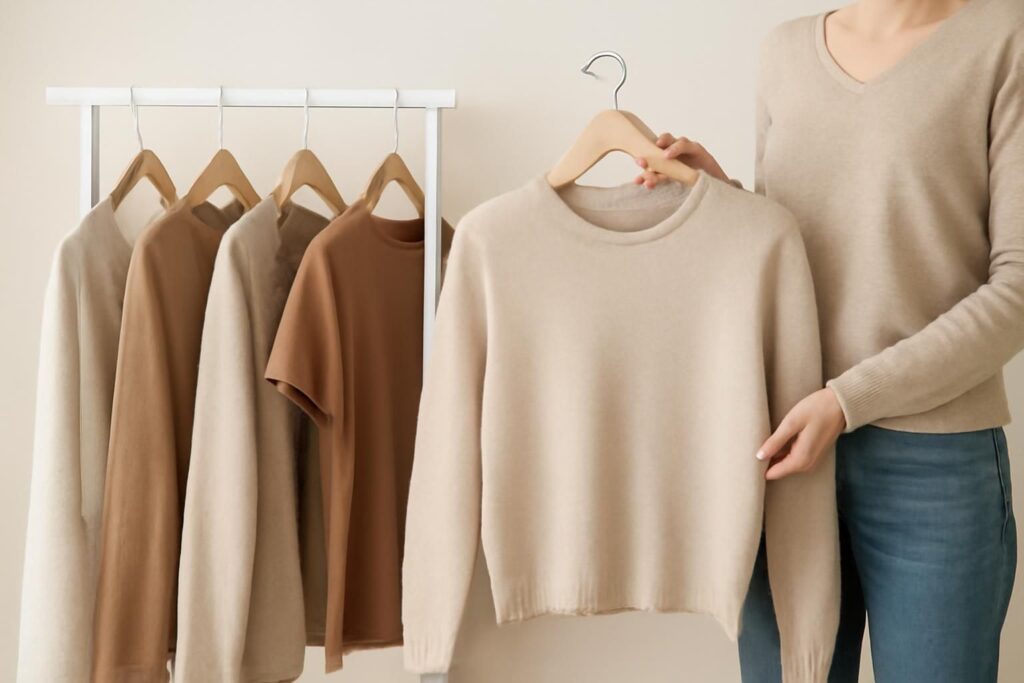
- Photograph against a plain background (white sheet or wall)
- At least 4 photos: front, back, close-up of fabric/tag, any flaws
- Title with brand, item type, size (“Madewell Perfect Vintage Jeans size 27”)
- Description covering condition, measurements, any wear
- Set the price, shipping option, and publish
Once your setup is ready, each listing takes only a few minutes. Vinted’s listing form relies on fields such as brand, size and condition rather than keyword-heavy titles.
Shipping through Vinted versus shipping yourself
Vinted’s in-app shipping labels are the default for most sellers:
Pros: Prepaid labels, QR-code drop-off or printable labels with home pickup, carriers including USPS, FedEx and SpeedX, and tracking that supports you if a buyer claims non-delivery.
Cons: The buyer pays shipping on top of the item price and the buyer fee, so heavy items like coats look more expensive at checkout. For light items, the total stays reasonable; for heavier items, shipping can deter buyers.
Using Vinted’s labels keeps the order inside its tracking and Buyer Protection system, which helps you if anything goes wrong. Shipping on your own is possible, but you lose that built-in evidence trail.
Vinted buyer behavior
A few things to expect from buyers:
European brands get attention. Vinted’s roots are in Europe, and labels like Sezane, Ba&sh, and Rouje are well known to its users. American contemporary brands (Madewell, J.Crew) are steady sellers on most resale apps.
Buyers message with questions. Expect questions about fit, fabric, and condition. Answering with measurements and extra photos quickly is the easiest way to turn a question into a sale.
Buyer protection claims happen occasionally. Buyers have 2 days after delivery to report an issue. A claim that an item simply doesn’t fit isn’t covered, while undisclosed wear can lead to a refund, so photograph and describe flaws up front.
How Vinted selling compares to other platforms
vs. Poshmark: Vinted nets more per item because there is no seller commission, while Poshmark’s larger US buyer base can mean items sell faster. Net-per-hour depends on your inventory.
vs. ThredUp Clean Out Kit: Vinted nets dramatically more per item. Selling Clothes on Thredup covers the ThredUp selling math: items selling for $5 to $19.99 pay out only about 3% to 15%, and a $14.99 service fee comes out of earnings. On Vinted, a $14 sale pays you $14.
vs. eBay: eBay auctions can pay out more per item for niche pieces, but the listing labor and customer service are higher. Vinted is faster for mid-market items.
vs. Depop: Vinted’s audience is less trend-driven than Depop’s, so trendy items may move faster on Depop. Everyday pieces move better on Vinted.
What to sell on Vinted
Works well:
- European brands (Sezane, Ba&sh, Ganni, Rouje, Boden)
- Contemporary US women’s in mid-market tier (Madewell, J.Crew, Anthropologie)
- Well-photographed pieces with clear descriptions
- Items priced competitively for the platform’s buyer expectations
Doesn’t work well:
- Fast fashion (rarely moves at any price point)
- Unknown-brand vintage (buyer uncertainty kills engagement)
- Anything priced above Poshmark-typical levels (Vinted buyers expect lower)
For a specific pick, see the Selens White Fabric Photography Backdrop 5x7ft.
The verdict
Vinted sell clothes is a worthwhile platform for sellers tired of Poshmark’s commission structure or ThredUp’s low payouts. The no-seller-commission model actually delivers on its promise, and the app’s listing flow is simple. Expect lower list prices than Poshmark but better per-item net. For high-volume sellers with contemporary brands or European-adjacent inventory, Vinted is worth adding to the rotation. It won’t replace Poshmark entirely — the buyer pool is still growing — but it meaningfully supplements it. For the cross-platform seller view, Thrift and Resale Fashion covers the thrift resale landscape. A roll of poly mailers in a couple of sizes is the most useful physical supply for selling — Vinted’s prepaid labels need a package, and quality mailers protect items in transit.
Shop the look on Amazon
Everything you need to build a secondhand-style wardrobe, delivered. We may earn a commission on purchases.
Browse picks on Amazon →FAQ
How much commission does Vinted take from sellers?
Zero seller commission on sales. Vinted’s revenue comes from the buyer-side Vinted fee (usually 5% + $0.70) and optional seller promotions such as Bumps. No seller commission is the platform’s main selling-side pitch.
How long does it take to get paid after selling on Vinted?
Payment is held until the buyer confirms everything is OK, or until the 2-day window to report a problem after delivery closes. Funds then move to Available within 2 days, and withdrawals to a US bank account take up to 5 business days.
Is Vinted better than Poshmark for selling clothes?
Depends on priorities. Per-item net is higher on Vinted (no seller commission). Time-to-sell is often faster on Poshmark. Aggregate earnings depend on your inventory and pricing strategy.
Can I sell men’s clothes on Vinted?
Yes. Vinted accepts men’s listings. The US men’s buyer pool is smaller than women’s, so movement may be slower. Listing is the same process.
Who pays postage when you sell clothes on Vinted?
The buyer pays postage on Vinted, adding the shipping cost at checkout on top of the item price and the buyer protection fee. Once an item sells, the seller gets a prepaid label, either a QR code to show at drop-off or a printable label, with carriers including USPS, FedEx and SpeedX. Because the buyer covers shipping, heavy items such as coats look pricier at checkout, which can slow their sale.
How does Vinted protect sellers from scams and unfair claims?
Vinted protects sellers mainly by keeping payment, shipping and disputes inside the app. Vinted holds the payment until the buyer confirms the order or the 2-day window to report a problem after delivery passes, and using Vinted’s prepaid labels keeps tracking inside its Buyer Protection system if a buyer claims non-delivery. Claims that an item simply doesn’t fit aren’t covered, but undisclosed wear can lead to a refund, so photograph and describe flaws up front.